Silicon Valley startups are revolutionizing fitness tech by turning workouts, recovery, nutrition, and preventive health into connected, data-driven experiences that feel personal at scale. In practical terms, fitness tech includes wearable sensors, training apps, connected home equipment, computer vision coaching, metabolic testing, and software that translates biological signals into useful guidance. Startup success in this category means more than shipping a sleek device or raising a large venture round. It means finding durable product-market fit, proving that users stay engaged, building trust around health data, and creating outcomes people can feel in daily life, whether that is better sleep, lower resting heart rate, improved adherence, or reduced injury risk.
I have worked with founders, growth teams, and product operators in connected wellness, and the most important shift I have seen is the move from generic tracking to adaptive coaching. Early fitness products counted steps and calories. Today’s best startup platforms combine accelerometers, photoplethysmography, gyroscopes, GPS, computer vision, and behavior design to answer specific questions: How hard should I train today? Am I recovering well? Is my form safe? Which habits are actually moving my biometrics? That change matters because consumers are no longer buying gadgets alone. They are buying clarity, accountability, convenience, and measurable progress.
This topic sits at the intersection of consumer technology, digital health, and subscription software, which makes it especially important inside the broader Tech Innovations and Startups landscape. Global demand for preventive health is rising, employers are under pressure to manage healthcare costs, and younger consumers expect services to be personalized in real time. Meanwhile, sensors have become cheaper, machine learning models have become more capable, and cloud infrastructure makes continuous analysis possible. The result is a wave of companies that are reshaping how people train at home, in gyms, at work, and in clinical-adjacent programs. Understanding the leading advancements and startup success patterns in fitness tech helps founders, investors, operators, and readers separate sustainable innovation from short-lived novelty.
From activity tracking to intelligent coaching
The first major advancement is the transition from passive monitoring to decision support. Early wearables popularized by Fitbit normalized daily step counts and sleep summaries, but startups in Silicon Valley pushed beyond basic dashboards. Companies such as WHOOP built engagement around recovery scores, strain targets, and heart rate variability trends, giving users a framework for balancing effort and rest. Oura made readiness and sleep quality mainstream by packaging nocturnal biometric analysis into a ring form factor people would actually wear overnight. Tonal and Tempo extended this logic into strength training by combining sensors and software to guide sets, resistance, pace, and progression.
The reason this shift is powerful is simple: raw data rarely changes behavior, but context often does. A resting heart rate number means little unless the system explains how it compares with your baseline and what action to take. The strongest startups design around this reality. They turn fragmented signals into recommendations that are timely, legible, and hard to ignore. In product terms, that means onboarding flows that establish baselines, feedback loops that reward consistency, and machine learning systems that personalize recommendations without overwhelming the user. It also means choosing metrics carefully. Heart rate variability can be helpful for trend analysis, but it is noisy at the individual level and should not be treated as a standalone clinical verdict. Good companies communicate that nuance clearly.
Key technologies driving modern fitness platforms
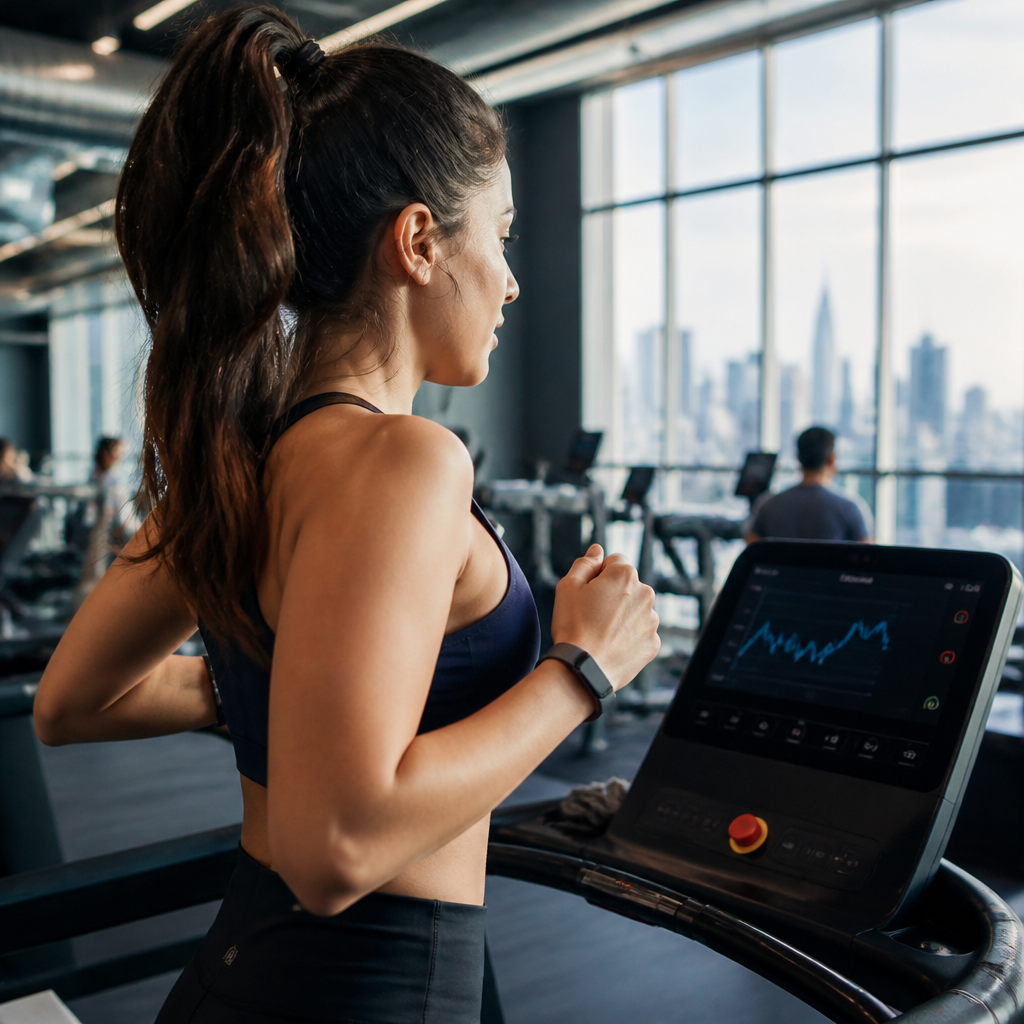
Several technologies explain why startup innovation accelerated so quickly. Wearable biosensors have improved in accuracy and battery efficiency, enabling continuous tracking of heart rate, blood oxygen saturation, skin temperature, motion, and sleep stages. Computer vision lets smartphones and cameras estimate pose and movement quality during workouts, making real-time form correction possible without expensive laboratory equipment. Connected resistance systems use digital weights, electromagnetic resistance, or motorized load control to create adaptive strength experiences in small spaces. AI-based recommendation engines process large volumes of training and recovery data to personalize plans, while cloud APIs allow startups to integrate with Apple Health, Health Connect, Garmin, Strava, and electronic coaching tools.
Metabolic health is another major frontier. Startups using continuous glucose monitors, food logging, and coaching workflows have helped consumers connect meals, stress, sleep, and exercise to glucose response, even though CGMs remain most validated for diabetes care rather than broad consumer optimization. Hydration testing, sweat analysis, and respiratory measurement are also expanding. Some companies pair at-home hardware with telehealth oversight or certified coaching, creating hybrid models that feel more actionable than a standalone app. The winning pattern is not technology for its own sake. It is selective integration of hardware, software, and service into one experience that reduces friction while increasing confidence.
| Innovation area | What startups changed | Real-world example | Main user benefit |
|---|---|---|---|
| Wearables | Shifted from counting activity to scoring recovery and readiness | WHOOP and Oura | Better daily training decisions |
| Connected strength | Added adaptive resistance and guided programming | Tonal | Efficient home strength training |
| Computer vision | Enabled form analysis through cameras and phones | Tempo and AI coaching apps | Safer movement and technique feedback |
| Metabolic tracking | Linked glucose and habits to coaching workflows | Levels and similar platforms | More personalized nutrition insight |
| Community platforms | Turned fitness into a social, creator-led experience | Strava and class ecosystems | Higher motivation and retention |
Why Silicon Valley is uniquely suited to fitness tech
Silicon Valley gives fitness startups a rare combination of advantages: engineering talent, venture capital, hardware expertise, distribution partnerships, and a culture that rewards fast iteration. Consumer health products need more than elegant software. They require firmware, supply chain management, sensor calibration, subscription economics, app design, privacy controls, and often complex customer support. Founders in the Valley can access specialists across each layer, from semiconductor veterans to growth marketers experienced in subscription retention.
There is also a strong ecosystem effect. A startup building a recovery wearable can hire former Apple hardware engineers, integrate with iPhone health frameworks, advertise through creator networks, and raise from investors who understand both consumer apps and medical-adjacent regulation. That density speeds learning. It also raises the bar. Users expect polished onboarding, seamless pairing, reliable Bluetooth performance, and analytics that feel believable. In my experience, the companies that stand out are the ones that treat reliability as a feature. If a heart rate strap drops sessions, if a scale sync fails, or if a recovery score feels random, trust erodes immediately. In fitness tech, trust compounds or collapses faster than in many other categories.
Startup success patterns: what separates winners from hype
Successful fitness startups usually share five traits. First, they solve a repeat problem, not a one-time curiosity. People may try a body scan once, but they pay monthly for coaching, programming, accountability, or convenient access. Second, they build a habit loop. Push notifications alone do not create retention; users return when the product helps them make a decision every day or every week. Third, they validate outcomes. That can be through improved adherence, reduced churn, stronger engagement cohorts, published validation studies, or partnerships with coaches and healthcare organizations. Fourth, they price around perceived value, often using a device-plus-subscription model that aligns hardware margins with recurring revenue. Fifth, they know their wedge. A startup does not need to own all of wellness on day one. It can start with runners, postpartum training, strength beginners, corporate wellness, or metabolic coaching and expand from there.
Peloton remains a useful case study even though it is not a Silicon Valley startup in the strict geographic sense. It proved that community, charismatic instruction, and beautifully integrated hardware-software design could change home fitness behavior at scale. Silicon Valley founders learned from that playbook and adapted it. Tonal focused on premium strength training. Future emphasized one-on-one coaching through an app. ClassPass demonstrated flexible access across studios, then pivoted through demand shocks. Each example shows a core rule of startup success: durable growth comes from solving a clear user job with an experience that is materially better than fragmented alternatives.
Challenges, regulations, and the future of advancement
Not every innovation succeeds, and the category has real constraints. Hardware businesses face inventory risk, returns, quality control issues, and expensive customer acquisition. Sensor accuracy varies by skin tone, fit, movement, and use case, which is why validation matters. If a startup drifts into medical claims without adequate evidence or clearance, regulatory exposure rises quickly. In the United States, companies must distinguish wellness guidance from diagnosis or treatment and understand when Food and Drug Administration oversight may apply. Privacy is equally critical. Biometric and health-adjacent data require strong consent flows, transparent policies, secure storage, and disciplined vendor management.
Looking ahead, the next wave of advancements will likely center on multimodal intelligence. Instead of analyzing sleep, movement, or nutrition in isolation, startups will combine them into a unified readiness and behavior model. More products will adapt workouts automatically based on fatigue, menstrual cycle patterns, injury history, and schedule constraints. Computer vision will improve movement screening and rehabilitation support. Employers and insurers may expand incentives for evidence-based digital fitness programs that reduce absenteeism and cardiometabolic risk, though proving savings will remain difficult. The startups that win this next phase will pair technical ambition with restraint. They will avoid overstating what their data can prove, focus on user outcomes, and make healthy behavior easier rather than more obsessive.
Silicon Valley startups are revolutionizing fitness tech because they are turning disconnected tools into intelligent systems that guide action, personalize effort, and fit naturally into modern life. The biggest advancements are not just smaller sensors or prettier apps. They are better feedback loops, stronger integration between hardware and software, and business models built around ongoing results. The clearest startup success stories show the same pattern: solve a frequent need, earn trust through reliability and evidence, and create an experience people want to return to week after week.
As a hub for advancements and startup success within Tech Innovations and Startups, this topic connects to wearables, digital health, AI coaching, connected hardware, creator-led communities, and preventive care. That breadth is exactly why it deserves close attention. Fitness tech is no longer a niche gadget market. It is becoming a meaningful layer of consumer health infrastructure, influencing how people train, recover, sleep, eat, and measure progress. For founders, the opportunity is still large, but execution discipline matters more than hype. For readers, the takeaway is straightforward: watch the companies that combine credible data, useful coaching, and habit-forming design. Those are the startups most likely to define the next decade of fitness.
If you are exploring this subtopic further, use this hub as your starting point and dive deeper into connected equipment, wearable analytics, digital therapeutics, and startup growth strategy. The most important question is not which product looks futuristic. It is which solution consistently helps people move better, feel better, and stay engaged long enough for real results.
Frequently Asked Questions
How are Silicon Valley startups changing the fitness tech industry?
Silicon Valley startups are reshaping fitness tech by moving it beyond simple step counting and calorie estimates into a much more connected, personalized, and data-driven experience. Instead of treating exercise, recovery, nutrition, and preventive health as separate categories, many startups are building platforms that combine them into a single ecosystem. A user might wear a sensor that tracks heart rate variability, sleep quality, movement patterns, and training load, then receive recommendations through an app that adjusts workouts, suggests recovery strategies, and even guides food choices based on real-time physiological data.
This shift matters because it makes fitness technology more actionable. Earlier fitness products often focused on raw metrics without much context. Today’s startups are using artificial intelligence, machine learning, computer vision, and cloud software to interpret data and turn it into practical guidance. That can mean adaptive coaching, injury-risk alerts, personalized mobility plans, or exercise recommendations based on fatigue and readiness. The result is a more individualized experience that feels like having a coach, trainer, and health analyst available at all times.
Another major change is accessibility at scale. Startups are taking tools that were once limited to elite athletes, clinics, or performance labs—such as metabolic testing, movement analysis, and recovery monitoring—and delivering them through consumer-friendly apps and connected devices. This democratization of advanced health insights is a core reason Silicon Valley has become so influential in fitness tech. The real innovation is not just in the hardware itself, but in how software connects biological signals to everyday decisions in a way that is useful, engaging, and easy to understand.
What technologies are driving the biggest innovations in modern fitness tech?
Several technologies are fueling the current wave of innovation, and the most successful startups usually combine multiple tools rather than relying on a single device or feature. Wearable sensors are one of the biggest foundations. Smartwatches, rings, chest straps, and biometric patches can continuously measure heart rate, sleep, activity, temperature, blood oxygen trends, and other signals. These sensors generate large amounts of data that, on their own, are interesting but not always meaningful. The real breakthrough comes when startups apply software intelligence to interpret the data and provide clear next steps.
Artificial intelligence and machine learning are especially important because they allow fitness platforms to detect patterns over time and personalize recommendations. Instead of offering every user the same training plan, AI-driven systems can adjust programming based on consistency, recovery, performance history, and goals. Computer vision is another major area of growth. Startups are using smartphone cameras, webcams, and embedded cameras in connected equipment to analyze form, count repetitions, and offer real-time feedback during workouts. This brings a coaching layer to home fitness that was previously difficult to replicate outside a gym or training studio.
Connected hardware also plays a central role. Smart bikes, rowers, strength systems, mirrors, and recovery devices are increasingly part of a broader digital platform rather than standalone products. In addition, metabolic testing and continuous health monitoring are helping startups bridge the gap between fitness and wellness. By measuring how the body responds to exercise, stress, sleep, and food, these tools support more precise guidance. Cloud infrastructure and mobile app design tie everything together, making it possible to deliver a seamless experience across devices, data sources, and user touchpoints. In short, the biggest innovations are coming from the integration of sensors, software, personalization, and connected user experiences.
Why is personalization so important in fitness technology?
Personalization is essential because no two people respond to exercise, recovery, nutrition, and stress in exactly the same way. Traditional fitness programs often rely on broad averages, but averages can be misleading when applied to individuals with different goals, schedules, ages, movement patterns, and health backgrounds. Silicon Valley startups have recognized that users are more likely to stay engaged and see results when fitness technology adapts to them instead of forcing them into a generic system.
In practice, personalization can show up in many forms. A platform may change workout intensity based on sleep quality and recovery metrics. It may recommend lower-impact movement after detecting fatigue or asymmetry. It may adjust nutrition guidance depending on energy expenditure, glucose responses, or training volume. It may even tailor coaching style, reminders, and progress tracking to what best motivates the user. This kind of adaptation makes the experience feel more relevant, which improves retention and long-term adherence—two factors that matter just as much as innovation in determining whether a startup succeeds.
Personalization also creates a stronger connection between data and outcomes. Users are more likely to trust technology when they see that insights reflect their real-world experience. For example, if a wearable detects poor recovery and the app recommends a lighter session on a day when the user already feels drained, that builds confidence in the system. Over time, this feedback loop can help users make smarter decisions, reduce overtraining, improve consistency, and better understand their own bodies. That is one of the most valuable promises of modern fitness tech: not just tracking behavior, but helping people train and live in a more informed way.
What makes a fitness tech startup successful beyond launching a sleek device?
Success in fitness tech requires much more than attractive hardware, strong branding, or a large funding round. Many startups can create a polished device, but far fewer build a product ecosystem that consistently delivers value over time. In this space, lasting success usually comes from solving a real user problem in a way that is easy to adopt, easy to understand, and hard to abandon once integrated into daily life. That often means pairing hardware with excellent software, clear insights, habit-forming design, and an experience that improves rather than complicates the user’s routine.
Retention is one of the clearest indicators of real product strength. If users stop wearing the device, cancel the subscription, ignore the recommendations, or fail to understand the metrics, the startup has not truly solved the problem. The strongest companies focus on turning data into behavior change. They present information in a way that feels actionable instead of overwhelming, and they create feedback loops that reward consistency. This can include personalized coaching, goal tracking, social accountability, guided programs, or integrations with broader health platforms and consumer devices.
Trust is another critical factor. Fitness startups increasingly operate at the intersection of wellness and health, which means users expect accuracy, privacy, transparency, and responsible claims. A successful company needs to communicate what its technology can and cannot do, protect sensitive personal data, and validate its product through research, partnerships, or measurable outcomes. In addition, business model resilience matters. Startups that depend solely on novelty may struggle, while those that create recurring value through subscriptions, coaching, enterprise wellness partnerships, or integrated health services are often better positioned for growth. Ultimately, the winners in this category are not just building gadgets—they are building sustainable behavior-change platforms.
How could the future of fitness tech evolve as Silicon Valley startups keep innovating?
The future of fitness tech is likely to become even more predictive, integrated, and preventive. Rather than simply reporting what happened during a workout, next-generation platforms will increasingly anticipate what a user needs before problems arise. That could include early warnings about fatigue, stress overload, poor recovery, movement inefficiencies, or changing health markers that influence performance. As algorithms improve and datasets grow, recommendations may become more precise and more context-aware, taking into account not just exercise history, but sleep, work stress, travel, nutrition habits, and long-term wellness trends.
We are also likely to see stronger convergence between consumer fitness products and broader healthcare infrastructure. Startups are already blurring the line between training optimization and preventive health by using biological data to support better daily decisions. In the future, fitness platforms may play a larger role in helping users manage chronic risk factors, identify unhealthy patterns earlier, and coordinate with medical or coaching professionals when needed. This does not mean every fitness app becomes a medical tool, but it does suggest that the boundary between performance, wellness, and health management will continue to narrow.
At the same time, the user experience will likely become more seamless. Instead of asking people to manually piece together data from multiple apps and devices, platforms may unify training, recovery, nutrition, and behavior insights in one place. Smart home equipment, wearables, vision-based coaching, and digital health dashboards could work together to create an always-on support system that feels both intelligent and unobtrusive. The most important long-term trend is that fitness tech is moving from passive tracking toward active guidance. As Silicon Valley startups continue to innovate, the biggest opportunity will be helping people make better decisions consistently, with technology that feels less like a gadget and more like a trusted partner in everyday health.