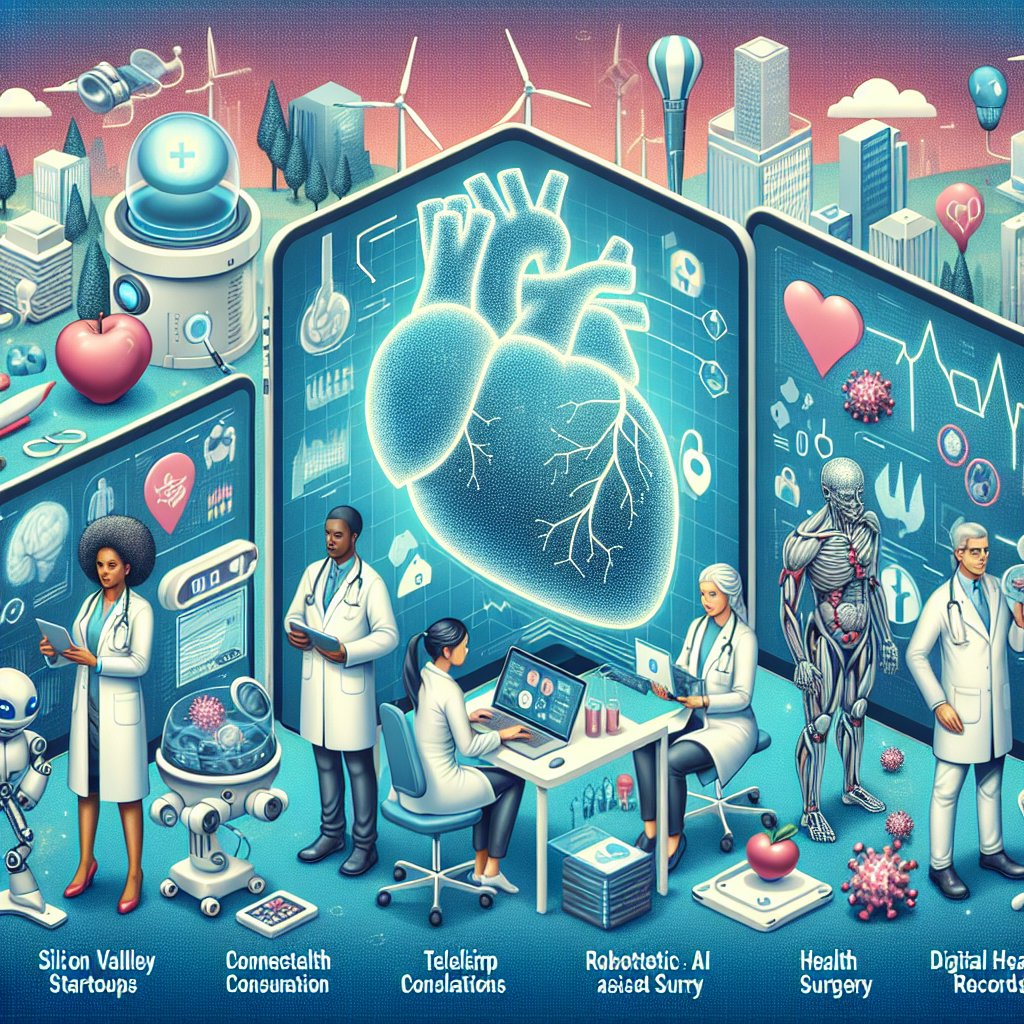
Silicon Valley has long been the epicenter of technological innovation. Over the years, it has given rise to countless startups that have transformed industries from finance to entertainment. Now, it’s healthcare’s turn. A growing number of Silicon Valley startups are revolutionizing the way healthcare is delivered, harnessing the power of technology to improve patient outcomes, streamline processes, and reduce costs. This article explores how these startups are driving change and what it means for the future of healthcare.
Introduction
The healthcare industry has historically been resistant to change. Burdened by regulatory compliance, antiquated systems, and a general aversion to risk, many healthcare institutions have been slow to adopt new technologies. Enter Silicon Valley – the cradle of innovation and a hub for audacious startups that are not afraid to disrupt the status quo. Driven by a combination of cutting-edge technology, venture capital, and an entrepreneurial spirit, Silicon Valley startups are poised to redefine healthcare. They promise to make healthcare more accessible, efficient, and patient-centric.
One of the primary reasons behind this shift is the influx of venture capital into the healthcare sector. In recent years, venture capital firms have poured billions of dollars into digital health startups. From telemedicine platforms to AI-driven diagnostic tools, these startups are on a mission to solve some of healthcare’s most pressing challenges. This tectonic shift is also supported by the increased accessibility of advanced technologies like artificial intelligence, machine learning, and blockchain, which offer unprecedented opportunities for innovation.
This article delves into several pivotal areas where Silicon Valley startups are making a significant impact, including telemedicine, AI in diagnostics, personalized medicine, health data management, and wearable technology. Additionally, we’ll explore the challenges and future outlook of these groundbreaking innovations.
Telemedicine: Bridging the Gap
Telemedicine has been one of the most transformative areas of innovation in healthcare. The concept is simple yet revolutionary: providing medical care remotely via telecommunications technology. What was once a niche service has now become mainstream, largely accelerated by the COVID-19 pandemic. Silicon Valley startups like Teladoc, Doctor on Demand, and Heal are at the forefront of this transformation.
Telemedicine startups have democratized access to healthcare. Patients can now consult with doctors from the comfort of their homes, reducing the need for physical visits and thus minimizing the risk of contagious diseases. For people living in rural areas with limited access to healthcare facilities, telemedicine can be a game-changer. Interestingly, it’s not just general consultations that can be done remotely; specialties like mental health, dermatology, and cardiology are also seeing significant telemedicine adoption.
The convenience factor cannot be overstated. Telehealth platforms typically offer features like online appointment booking, electronic prescriptions, and follow-up care, all within a user-friendly interface. By integrating these features, startups are aiming for an end-to-end solution that prioritizes patient well-being and satisfaction.
However, scaling telemedicine comes with its own set of challenges, particularly in terms of regulatory hurdles and reimbursement policies. Yet, the potential benefits far outweigh these obstacles, making telemedicine a crucial component in the future of healthcare.
AI in Diagnostics: A New Era
Artificial Intelligence (AI) is another area where Silicon Valley startups are making waves. AI’s ability to analyze vast amounts of data quickly and accurately holds immense potential for diagnostics. Companies like Aidoc, PathAI, and Zebra Medical Vision are leveraging AI to improve diagnostic accuracy and speed.
For instance, AI algorithms can analyze medical images such as X-rays, MRIs, and CT scans to detect anomalies that might be missed by the human eye. This can be particularly beneficial in fields like radiology and pathology, where timely and accurate diagnosis is crucial. By reducing the workload on physicians, AI can also help in alleviating burnout among healthcare professionals.
AI’s role extends beyond image analysis. It’s also being used to predict disease outbreaks, personalize treatment plans, and even assist in surgical procedures. Startups focusing on AI in diagnostics aim to create tools that support physicians in making better-informed decisions, ultimately improving patient outcomes.
Despite the promising advancements, ethical considerations, data privacy, and regulatory issues pose significant challenges. Nonetheless, the successful integration of AI in diagnostics could mark a new era in healthcare, characterized by enhanced precision and efficiency.

Personalized Medicine: Tailoring Treatment
Personalized medicine represents a shift from the traditional one-size-fits-all approach to treatment. This innovative field uses genetic, environmental, and lifestyle factors to tailor treatments to individual patients. Silicon Valley startups like 23andMe, Tempus, and Helix are pioneering efforts in this domain.
The concept of personalized medicine is rooted in genomics. By analyzing a patient’s genetic makeup, doctors can gain insights into how they might respond to certain medications or what diseases they are predisposed to. This enables healthcare providers to design more effective and customized treatment plans.
Beyond genomics, personalized medicine also incorporates data from wearables, electronic health records, and even social determinants of health. The objective is to create a holistic view of the patient, thereby facilitating truly individualized care. For example, startups like Omada Health are using data-driven approaches to tackle chronic conditions like diabetes and hypertension.
While the potential benefits are enormous, barriers such as high costs, data privacy concerns, and complex regulatory landscapes must be navigated. Regardless, the rise of personalized medicine could herald a future where treatments are not only more effective but also more humane.
Health Data Management: The Backbone
The importance of effective health data management cannot be overstated. In an era where data is king, managing, storing, and analyzing health data poses significant challenges and opportunities. Silicon Valley startups like Innovaccer, Health Catalyst, and Komodo Health are stepping up to address these issues.
Health data management startups focus on creating platforms that can integrate and streamline disparate data sources. The goal is to provide a seamless flow of information between healthcare providers, patients, and other stakeholders. Effective data management can lead to better decision-making, improved patient outcomes, and operational efficiencies.
One of the most promising applications of health data management is predictive analytics. By analyzing patterns in the data, machine learning models can predict potential health issues before they occur, enabling preventive care. This proactive approach is not only cost-effective but also enhances the overall quality of care.
Despite the promise, the management of sensitive health data comes with its own set of challenges, including stringent privacy regulations like HIPAA and concerns over data breaches. Nonetheless, advancements in secure data management technologies are likely to overcome these hurdles, paving the way for a more data-driven healthcare system.
Wearable Technology: Monitoring Health in Real-Time
Wearable technology is another area where Silicon Valley startups are making significant strides. Companies like Fitbit, Apple, and Garmin have revolutionized the way we monitor our health. From tracking physical activity to monitoring heart rate and sleep patterns, wearable devices provide real-time data that can be invaluable for both patients and healthcare providers.
Startups in the wearable tech space are continuously pushing the boundaries of what’s possible. Newer devices come equipped with advanced sensors that can measure a variety of health metrics, including blood oxygen levels, electrocardiograms (ECGs), and even detect atrial fibrillation (AFib). This continuous monitoring can be particularly beneficial for managing chronic conditions and providing early warnings for critical health issues.
Integration with mobile health apps and platforms further amplifies the utility of wearable technology. These apps can analyze the data collected by wearables, providing insights and recommendations based on trends and patterns. For instance, a wearable could alert a user to irregular heartbeats, prompting an immediate consultation with a healthcare professional.
Despite their potential, wearables face hurdles in the form of data accuracy, user adoption, and regulatory approval. Nonetheless, the growing adoption of wearable technology promises to make healthcare more proactive and personalized, transforming how we manage our health on a daily basis.
Conclusion
Silicon Valley startups are undeniably at the forefront of reinvigorating the healthcare industry. Through innovations in telemedicine, AI diagnostics, personalized medicine, health data management, and wearable technology, they are crafting a more efficient, accessible, and patient-centric healthcare ecosystem. These advancements are not merely concepts but are already showing real-world benefits in patient care and operational efficiencies.
Yet, the journey is fraught with challenges. Regulatory hurdles, data privacy concerns, and ethical considerations are significant barriers that need careful navigation. Moreover, the healthcare industry’s inherent resistance to change can slow down the adoption of these groundbreaking technologies. However, with continued investment in innovation and a willingness to address these challenges head-on, the potential benefits far outweigh the obstacles.
The convergence of technology and healthcare marks an exciting era, one where the promise of better health outcomes is not merely aspirational but attainable. As venture capital continues to fuel this wave of innovation, we can expect further advancements that will set new benchmarks in healthcare delivery.
In summary, the healthcare landscape is undergoing a seismic shift, driven by the entrepreneurial zeal and technological prowess of Silicon Valley startups. As we move forward, the collaboration between healthcare providers, tech innovators, and regulatory bodies will be crucial in realizing the vision of a smarter, more efficient, and patient-focused healthcare system.