Silicon Valley has become one of the most influential laboratories for water conservation technology, turning drought pressure, venture funding, and advanced engineering into practical systems that help cities, farms, businesses, and homeowners use less water. Water conservation means reducing unnecessary consumption while maintaining health, productivity, and ecosystem stability, and innovative tech solutions include software, sensors, connected devices, treatment systems, and data platforms that improve how water is measured, moved, reused, and protected. This matters because freshwater supplies are increasingly stressed by population growth, aging infrastructure, pollution, and climate volatility. In California, those forces are immediate and visible: shrinking snowpack, longer dry periods, and groundwater depletion have pushed regulators, utilities, and startups to act faster. I have worked with teams evaluating smart building controls and utility analytics, and the consistent lesson is simple: organizations save meaningful volumes of water only when they can see usage clearly, detect waste quickly, and automate response. Silicon Valley excels at those three capabilities. The region combines semiconductor design, cloud computing, artificial intelligence, satellite imaging, industrial Internet of Things networks, and strong startup ecosystems into water tools that can scale well beyond Northern California. For readers exploring cutting-edge tech, this hub article explains where the most important innovations are happening, what problems they solve, which companies and methods define the space, and how these technologies fit together into a modern water conservation strategy. It also serves as a practical map for deeper research across startups, infrastructure, agricultural technology, building systems, and environmental data.
Smart sensing and leak detection are redefining water efficiency
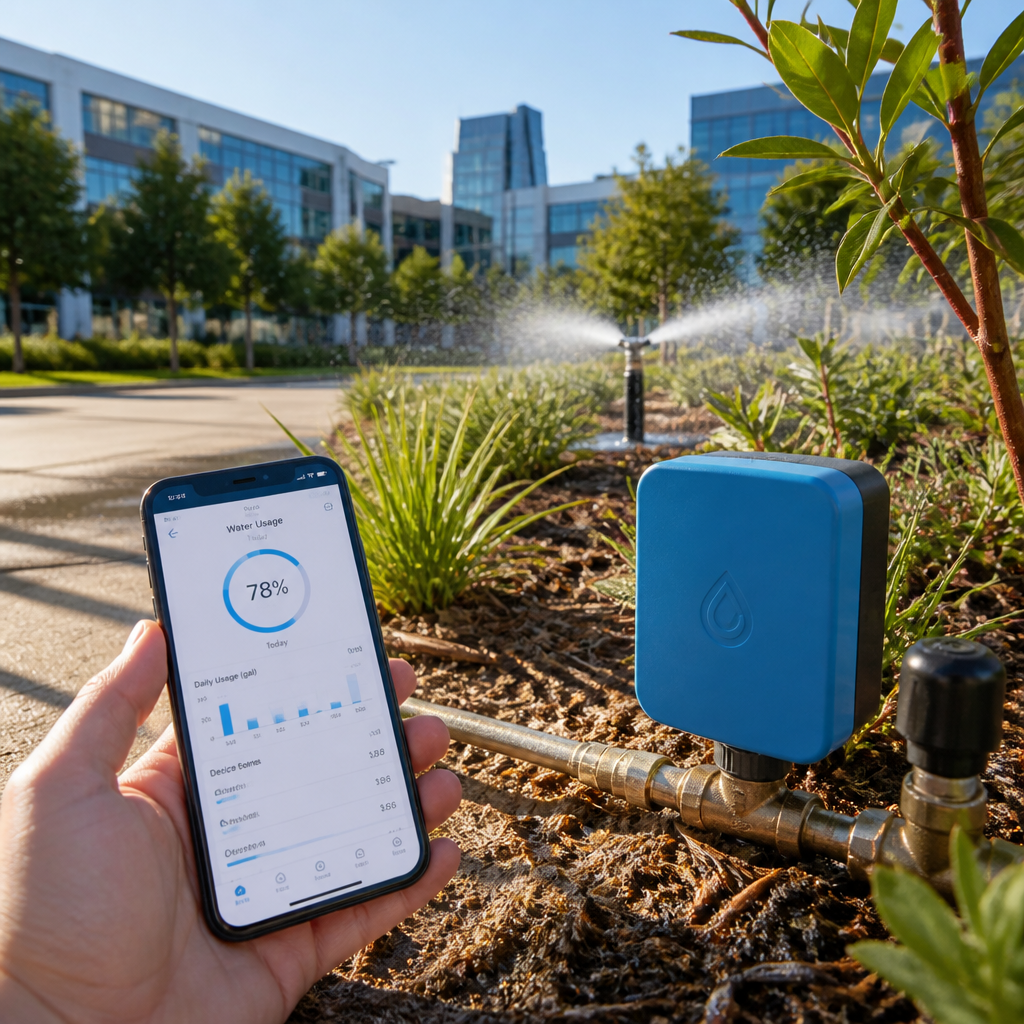
The fastest path to water conservation is often stopping losses that users never intended. In homes, multifamily buildings, campuses, and municipal networks, hidden leaks can waste thousands of gallons before anyone notices. Silicon Valley companies have focused heavily on this problem because sensor costs have fallen, wireless connectivity is reliable, and machine learning can now distinguish normal demand from anomalies. Smart meters from firms such as WaterSmart, which was acquired by VertexOne, helped popularize customer-facing analytics by converting utility billing data into actionable usage insights. Newer systems add high-frequency flow monitoring, pressure sensing, and edge-based alerts. Phyn, based in California, uses pressure waveform analysis to identify fixture signatures and notify property owners when unusual flow suggests a leak. Alert Labs and similar vendors pair shutoff valves with cloud dashboards, allowing immediate intervention instead of waiting for manual inspection.
For utilities, network leak detection is more complex because losses occur across miles of buried pipe. Startups and established firms increasingly use acoustic sensors, correlators, and satellite data to find non-revenue water. Innovators such as FIDO Tech apply AI to acoustic signals, while companies like Utilis use synthetic aperture radar from satellites to detect subsurface leaks by identifying moisture anomalies. The conservation impact can be substantial. The American Water Works Association has long identified non-revenue water management as a core operational priority, and utilities that move from reactive repair to continuous monitoring can reduce water loss, pumping energy, and road disruption at the same time. In plain terms, better leak detection matters because the cheapest gallon of water is the one that never has to be treated and delivered twice.
AI and data platforms are helping utilities predict demand and optimize supply
Water utilities traditionally operated with fragmented data: meter reads in one system, treatment data in another, work orders in a third, and customer communication somewhere else entirely. Silicon Valley’s major contribution has been to unify these streams and turn them into operational intelligence. Modern water data platforms ingest information from advanced metering infrastructure, SCADA systems, weather feeds, pressure zones, reservoir levels, and customer service records. They then apply analytics to forecast demand, target conservation outreach, and improve distribution efficiency. Companies such as Siemens, Xylem Vue, and Autodesk have all influenced the digital water stack, but Valley-style software firms pushed especially hard on usability, API integrations, and decision automation.
One practical use case is short-term demand forecasting. During heat waves, irrigation spikes can strain local systems, especially where storage and pumping capacity are tight. AI models trained on historical demand, evapotranspiration rates, and neighborhood patterns can predict where and when usage will rise. Utilities then adjust pressure, staffing, treatment schedules, and conservation messaging before the peak hits. Another use case is drought response. Instead of broad public warnings, platforms can identify customer segments with the highest discretionary use and tailor notices or rebates accordingly. This precision improves conservation results while reducing friction with low-use households.
Data quality remains the limiting factor. Utilities still struggle with legacy infrastructure, missing telemetry, and inconsistent asset records. In my experience, the best projects start by cleaning data definitions and validating sensor performance before promising advanced AI outcomes. Predictive systems are powerful, but only when the inputs are trustworthy and the staff has workflows to act on the outputs.
Agricultural technology is cutting water use where demand is highest
Agriculture accounts for the largest share of human water use in many regions, so Silicon Valley’s water conservation story would be incomplete without agtech. Precision irrigation has evolved from basic timers into sensor-rich systems that combine soil moisture probes, weather stations, computer vision, and remote valve control. Companies such as CropX, Ceres Imaging, and Arable provide tools that help growers irrigate based on actual crop need rather than habit or fixed calendars. That distinction is critical. Overwatering wastes water, leaches nutrients, raises energy costs, and can even reduce yield by stressing roots.
Ceres Imaging, headquartered in California, uses aerial imagery and analytics to detect variability within orchards and vineyards, showing where irrigation is uneven or plant stress is emerging. CropX integrates in-field sensors with agronomic models, giving growers recommendations by soil type, crop stage, and local conditions. Arable’s field devices combine weather, crop, and irrigation data into a single platform. These systems matter most in high-value crops where precision can justify technology costs, but hardware prices continue to fall and subscription models have improved adoption.
The main challenge is integration with on-farm reality. Irrigation decisions also depend on labor availability, water rights, pumping constraints, and grower judgment developed over decades. The strongest agtech products do not try to replace that expertise. They make it more precise by showing where field conditions differ from assumptions. In drought-prone regions, that translates into measurable conservation without forcing uniform cutbacks across entire operations.
Water reuse and decentralized treatment are becoming practical at the building scale
Conservation is not only about using less once; it also means using water more than once when health and economics allow it. Silicon Valley has accelerated interest in on-site reuse through membrane systems, real-time monitoring, and building automation. Graywater systems recycle water from sinks, showers, and laundry for irrigation or toilet flushing. Blackwater treatment goes further, processing wastewater from toilets and kitchens into nonpotable water for reuse within large buildings or campuses. Firms such as Epic Cleantec in San Francisco have gained attention for building-scale water reuse systems that help developers reduce potable demand and sewer discharge.
These systems are increasingly relevant in commercial towers, mixed-use developments, and institutional campuses where plumbing design and centralized operations make reuse feasible. Advanced treatment commonly involves membrane bioreactors, filtration, disinfection, and digital monitoring to verify quality. Standards from organizations such as NSF and guidance embedded in local plumbing codes are essential because public trust depends on safety, not novelty. The tradeoff is cost and complexity. Reuse systems need capital investment, trained maintenance, regulatory approval, and space within the building footprint. They are not a universal answer for every property. Still, where water rates are high, sewer charges are significant, or resilience is a design priority, decentralized reuse can materially reduce freshwater demand.
Consumer and business water tech now spans devices, software, and strategy
Homeowners and businesses often ask which technologies are most useful, and the answer depends on the type of demand, scale of operations, and payback horizon. Silicon Valley’s ecosystem offers options ranging from simple smart irrigation controllers to enterprise-grade analytics. The strongest conservation programs layer multiple tools rather than relying on one product.
| Technology | Primary users | Main conservation benefit | Typical limitation |
|---|---|---|---|
| Smart leak detectors with auto shutoff | Homes, multifamily, small business | Stops continuous losses quickly | Requires compatible plumbing and connectivity |
| Smart irrigation controllers | Homes, campuses, commercial landscapes | Adjusts watering to weather and soil conditions | Savings depend on proper zoning and maintenance |
| Advanced metering and customer analytics | Utilities and large property portfolios | Reveals usage patterns and targets waste | Needs clean billing and meter data |
| Precision agriculture platforms | Growers and farm managers | Irrigates by crop need, not fixed schedule | Adoption varies by crop value and training |
| On-site water reuse systems | Large buildings and campuses | Reduces potable demand through recycling | Higher capital, regulatory, and maintenance burden |
For households, EPA WaterSense labeled fixtures and weather-based irrigation controllers usually deliver the most straightforward savings. For businesses, submetering and leak alerts often outperform fixture retrofits alone because they reveal operational problems that standard audits miss. For utilities, customer engagement platforms become more effective when paired with rebate programs, AMI rollouts, and drought-rate design. In other words, the best technology choice is rarely isolated hardware; it is a system that connects data, behavior, and operations.
What makes Silicon Valley uniquely effective in water innovation
Silicon Valley’s edge is not just invention. It is the ability to commercialize technical ideas quickly through venture capital, enterprise partnerships, university research, and experienced founders who understand sensors, software, and scaling. Stanford research has influenced water treatment, remote sensing, and environmental engineering talent pipelines. Major cloud providers have made it easier for startups to process large environmental datasets without building their own infrastructure. Corporate buyers in California also create a demanding test market because water scarcity is not abstract there; it shapes building codes, agricultural planning, and utility regulation.
That said, water technology moves more slowly than consumer apps for good reason. Utilities are risk-averse because public health and service continuity are at stake. Farmers need proof that tools work across seasons, soils, and price cycles. Building owners demand reliable payback. The winning companies are the ones that combine Valley speed with infrastructure discipline: pilot projects, validated savings, standards compliance, cybersecurity, and service support. Readers using this hub as a starting point should track not only product claims, but also deployment history, independent verification, interoperability, and total cost of ownership. That is how innovative tech becomes durable water conservation, rather than a promising demo.
Innovative tech solutions for water conservation from Silicon Valley are reshaping how water is monitored, managed, and reused across the entire economy. The core pattern is consistent: better visibility through sensors and meters, better decisions through analytics and AI, and better outcomes through automation, precision control, and safe reuse. Leak detection cuts immediate waste. Utility data platforms improve forecasting and targeted conservation. Agricultural technology reduces irrigation inefficiency where water demand is greatest. Building-scale treatment systems turn wastewater into a usable resource. Each category solves a different part of the water challenge, and the strongest strategies combine them instead of treating conservation as a single-device purchase. Silicon Valley remains a critical hub because it joins software expertise, hardware engineering, capital, and a real-world drought environment that forces practical innovation. For anyone exploring cutting-edge tech under the broader startup landscape, this topic deserves close attention because the next decade of water resilience will be built on digital infrastructure as much as physical pipes and pumps. Use this hub as your roadmap, then evaluate specific tools by savings evidence, operational fit, regulatory requirements, and long-term maintenance needs. Start with measurement, prioritize leak prevention, and expand into smarter irrigation, analytics, or reuse where the economics support it.
Frequently Asked Questions
What kinds of water conservation technologies are coming out of Silicon Valley?
Silicon Valley is producing a wide range of water conservation technologies that go far beyond traditional low-flow fixtures or basic irrigation timers. Much of the innovation centers on combining hardware, software, and real-time data to help users understand exactly where water is being used, wasted, or lost. Common examples include smart leak detection systems for homes and commercial buildings, soil moisture sensors for farms and landscapes, AI-driven irrigation platforms, water monitoring dashboards for utilities, and advanced treatment and recycling systems that make non-potable reuse more practical. These tools are designed to reduce unnecessary consumption while preserving performance, whether that means keeping crops healthy, maintaining commercial operations, or ensuring residential comfort.
Another major area of development involves connected infrastructure. Sensors placed throughout buildings, campuses, and water distribution networks can detect pressure changes, abnormal flow, and equipment inefficiencies before they become major problems. Instead of waiting for a visible leak or a spike in a monthly bill, users can receive alerts in minutes and respond quickly. Silicon Valley companies are also building analytics platforms that turn raw water data into practical recommendations, such as adjusting irrigation schedules based on weather forecasts, identifying inefficient fixtures, or prioritizing maintenance in aging municipal systems. The result is a smarter, more proactive approach to conservation that helps reduce waste at every scale.
How do smart sensors and data platforms actually help save water?
Smart sensors and data platforms save water by making usage visible, measurable, and actionable. In many homes, businesses, and public systems, water waste goes unnoticed because people lack detailed, real-time information. A small underground leak, an irrigation schedule that runs during rainfall, or a cooling system operating inefficiently can waste large volumes of water for weeks or months before anyone notices. Sensors solve that problem by continuously tracking flow rates, pressure, moisture levels, tank levels, temperature, and other operating conditions. Once the data is collected, software platforms interpret it and identify patterns that indicate overuse, leakage, or poor timing.
The real value comes from turning data into decisions. For example, a smart irrigation platform can combine soil moisture readings, plant type, slope, sun exposure, and local weather forecasts to determine exactly when and how much to water. In a commercial building, a monitoring platform might flag unusual overnight water use that suggests a hidden leak or malfunctioning fixture. Utilities can use network-level analytics to locate water losses in distribution systems, manage demand more effectively, and improve long-term planning. Instead of relying on estimates or fixed schedules, water users can respond to actual conditions. That precision is what makes these systems so effective: they reduce overwatering, catch losses early, and support continuous efficiency improvements over time.
Why is Silicon Valley such an important hub for water conservation innovation?
Silicon Valley is uniquely positioned to lead water conservation innovation because it brings together several powerful forces in one place: recurring drought pressure, a culture of rapid experimentation, strong engineering talent, and access to venture capital. Water scarcity in California has created a practical need for better conservation tools, especially for cities, businesses, property owners, and agricultural users trying to do more with less. At the same time, the region has deep expertise in software development, sensors, cloud computing, artificial intelligence, and connected devices. That combination makes it possible to approach water not just as a utility issue, but as a data, automation, and infrastructure challenge that technology can meaningfully improve.
Another reason Silicon Valley matters is its ability to scale ideas quickly. A promising water solution can move from pilot project to commercial deployment faster when startups, investors, municipalities, universities, and large enterprise customers are all part of the same ecosystem. Technologies can be tested in office campuses, residential developments, industrial facilities, and nearby agricultural regions, then refined using real-world feedback. This environment encourages practical innovation rather than purely theoretical research. In other words, Silicon Valley is not only inventing new water-saving tools; it is also creating the conditions that help those tools become viable, investable, and widely adopted.
Can these technologies make a difference for homeowners and small businesses, or are they mainly for cities and large farms?
These technologies can absolutely make a difference for homeowners and small businesses, and in many cases they are becoming easier and more affordable to adopt. Residential leak detectors, smart shutoff valves, connected irrigation controllers, and water use monitoring apps are increasingly designed for everyday users rather than technical specialists. For a homeowner, that can mean getting an alert if a toilet is running continuously, if a pipe begins leaking behind a wall, or if outdoor irrigation is operating during a rain event. These tools help prevent both water waste and property damage, which makes the return on investment especially compelling in drought-prone or high-cost water markets.
Small businesses can benefit in similar ways, particularly if they manage landscaping, food service, lodging, light manufacturing, or multi-tenant facilities. A restaurant may use monitoring tools to spot abnormal kitchen water use, while an office building may use sensor data to optimize cooling towers or restroom fixtures. Even relatively simple upgrades can create meaningful savings when they are paired with better visibility and automation. While large cities and farms often use more complex systems, the underlying principle is the same at every scale: better information leads to better water decisions. As prices come down and products become more user-friendly, smaller users are playing an increasingly important role in the broader water conservation landscape.
What is the long-term impact of innovative water conservation technology on communities and the environment?
The long-term impact can be significant because water conservation technology strengthens resilience at multiple levels. For communities, using water more efficiently helps reduce stress on reservoirs, aquifers, imported supplies, and treatment infrastructure. That matters during drought, but it also matters year-round as populations grow, climate variability increases, and aging systems become more difficult and expensive to maintain. Technologies that detect leaks early, optimize demand, and enable water reuse can delay or reduce the need for costly new supply projects. They also help utilities and local governments plan more effectively by providing clearer insight into consumption patterns and infrastructure performance.
Environmental benefits are equally important. Conserving water can reduce withdrawals from rivers and groundwater basins, helping protect ecosystems, wetlands, and wildlife habitats that depend on stable water availability. In many cases, efficient water use also lowers the energy required for pumping, heating, treatment, and distribution, creating a secondary climate benefit. Over time, the most important contribution of Silicon Valley-style innovation may be its shift in mindset: from reacting to shortages after they happen to managing water intelligently before crises emerge. When software, sensors, treatment systems, and connected devices are integrated into everyday operations, conservation becomes more consistent, measurable, and scalable. That creates a stronger foundation for sustainable growth in homes, businesses, agriculture, and entire urban regions.