Silicon Valley has shaped modern gaming technologies more than any other region, serving as the meeting point for semiconductor design, software engineering, venture capital, cloud infrastructure, and consumer hardware. In practical terms, gaming technologies include the chips that render graphics, the engines that simulate worlds, the networks that deliver multiplayer play, the tools that build games, and the business platforms that distribute them. When people ask why innovation in games moves so quickly, the answer usually starts here: Silicon Valley concentrates talent, money, research, and risk tolerance in one ecosystem. I have worked with startup teams building developer tools and interactive products, and the pattern is consistent. Advances rarely come from a single invention. They emerge when graphics processors improve, cloud costs fall, creators get better middleware, and investors fund companies willing to challenge established publishers. That combination matters because games are now larger than a niche entertainment category. They influence artificial intelligence, virtual production, online commerce, creator economies, and social platforms. Understanding Silicon Valley’s role helps founders, developers, and players see how cutting-edge tech moves from lab concepts to everyday gaming experiences.
As a hub within Tech Innovations & Startups, this article maps the major forces behind that progress. It explains how chipmakers such as NVIDIA and AMD have pushed graphics and AI acceleration; how Apple, Google, and Meta have influenced mobile, spatial, and platform design; how Unity and other Bay Area software firms lowered barriers to development; and how cloud providers enabled live services and scalable multiplayer. It also examines startup culture, venture funding, and the tradeoffs that come with platform concentration. If you are exploring cutting-edge tech in gaming, Silicon Valley is not just one topic among many. It is the connective tissue linking hardware breakthroughs, developer ecosystems, business models, and emerging interfaces.
Semiconductors and graphics computing built the modern gaming stack
The foundation of advanced gaming technology is compute power, and Silicon Valley’s strongest contribution has been graphics and parallel processing. NVIDIA, founded in Santa Clara in 1993, helped redefine game performance through the GPU, a processor designed to handle many calculations at once. That mattered first for 3D rendering, then for physics simulation, upscaling, and machine learning features used in games today. Real-time ray tracing, for example, became practical for consumers only when GPU hardware and software matured together. Players see better reflections and lighting, but the deeper story is architectural: specialized cores, improved memory bandwidth, and software layers such as CUDA and RTX made sophisticated rendering feasible at scale.
AMD, with deep roots in Silicon Valley culture even as its footprint spans multiple regions, also helped standardize high-performance gaming through CPU and GPU competition. Console hardware from Sony and Microsoft relies heavily on AMD system-on-chip design, showing how Valley-driven chip innovation affects gaming far beyond the PC market. Competition between NVIDIA and AMD has accelerated frame generation, image reconstruction, and power efficiency. Those advances benefit indie developers as much as blockbuster studios because middleware and engines now expose capabilities that once required custom rendering teams. In direct terms, better chips mean larger worlds, smarter nonplayer characters, and lower latency across many devices.
Game engines and developer tools changed who can build games
Hardware alone does not create a thriving gaming ecosystem. Silicon Valley and the broader Bay Area helped popularize the software layer that lets teams turn ideas into playable products faster. Unity, founded in Copenhagen but long headquartered in San Francisco, became one of the most influential engines because it made cross-platform development accessible to smaller studios. Instead of building rendering, input, animation, audio, and deployment pipelines from scratch, teams could start with a mature runtime and editor. That shift compressed development timelines and widened participation. Mobile studios, educational developers, and independent creators especially benefited because they could prototype quickly and publish across iOS, Android, PC, and consoles.
I have seen firsthand how tool quality changes strategic decisions. A startup with six people can now create a vertical slice that once would have required a midsize studio, largely because engines, analytics dashboards, asset stores, and continuous integration workflows are readily available. Bay Area companies contributed heavily to this stack through version control services, monetization SDKs, crash reporting, user acquisition tools, and collaborative design platforms. The result is not merely convenience. It is a structural reduction in the cost of experimentation. That is one reason Silicon Valley became so important to gaming innovation: it repeatedly turns specialist capabilities into standard tools.
| Technology area | Key Silicon Valley contribution | Practical effect on games |
|---|---|---|
| GPUs and AI acceleration | NVIDIA graphics architecture, ray tracing, DLSS-style upscaling | Higher frame rates, better lighting, smarter performance optimization |
| Game engines | Unity ecosystem and toolchain innovation | Faster development and easier multi-platform release |
| Cloud infrastructure | Scalable services from Google Cloud and other providers | Reliable multiplayer, live events, and backend analytics |
| Mobile platforms | Apple App Store economics and device standards | Mass global distribution for mobile games |
| XR and spatial computing | Meta headset investment and platform research | More immersive interfaces and experimental gameplay |
Cloud, networking, and live operations transformed games into services
One of the biggest shifts in gaming was the move from packaged products to continuously updated services. Silicon Valley accelerated that transition through cloud platforms, observability tools, and data infrastructure. Multiplayer games require matchmakers, authentication, low-latency server orchestration, anti-cheat systems, telemetry pipelines, and content delivery networks. Startups once had to assemble these pieces manually. Now they can rely on managed infrastructure from major providers and specialized middleware vendors. That lowers operational risk and helps studios launch globally without owning physical server fleets.
Google’s influence extends beyond search and advertising into mobile ecosystems, developer tooling, and cloud services used by game studios. Even though Google Stadia failed commercially, its technical investment advanced discussion around streaming architectures, input latency mitigation, and edge delivery. Failure in Valley terms often still moves the field forward because teams, code, and ideas get recycled into new ventures. Meanwhile, live-service leaders use analytics to tune retention, detect churn signals, and balance virtual economies in near real time. This is where gaming intersects with broader startup disciplines: data science, A/B testing, subscription optimization, and community lifecycle management. The strongest studios now operate like software companies, and Silicon Valley normalized that model.
Mobile, platforms, and distribution rewrote the business of play
If GPUs built visual fidelity, smartphones expanded the addressable market. Apple’s iPhone and App Store changed gaming distribution by turning a general-purpose device into the world’s most important gaming platform by user volume. The technical standards around touch input, accelerometers, secure payments, and app deployment created predictable conditions for developers. Small teams could reach millions of users without retail publishing deals. That was a profound break from the old console-dominated structure. Games such as Monument Valley, Clash Royale, and Genshin Impact succeeded on different models, but all benefited from app store distribution norms established in Silicon Valley.
Platform power also introduced tension. Fees, discoverability challenges, privacy changes, and policy enforcement can radically affect developer economics. Apple’s App Tracking Transparency framework, for instance, disrupted mobile user acquisition strategies by limiting cross-app tracking. That improved consumer privacy but made growth more expensive for many studios. This tradeoff is typical of Silicon Valley’s influence: the region creates enabling platforms, then exercises gatekeeping authority over them. Developers gain access to scale but surrender some control over margin, ranking visibility, and customer relationships. Anyone studying gaming technologies needs to understand that technical progress and platform dependence often arrive together.
Virtual reality, augmented reality, and AI point to the next frontier
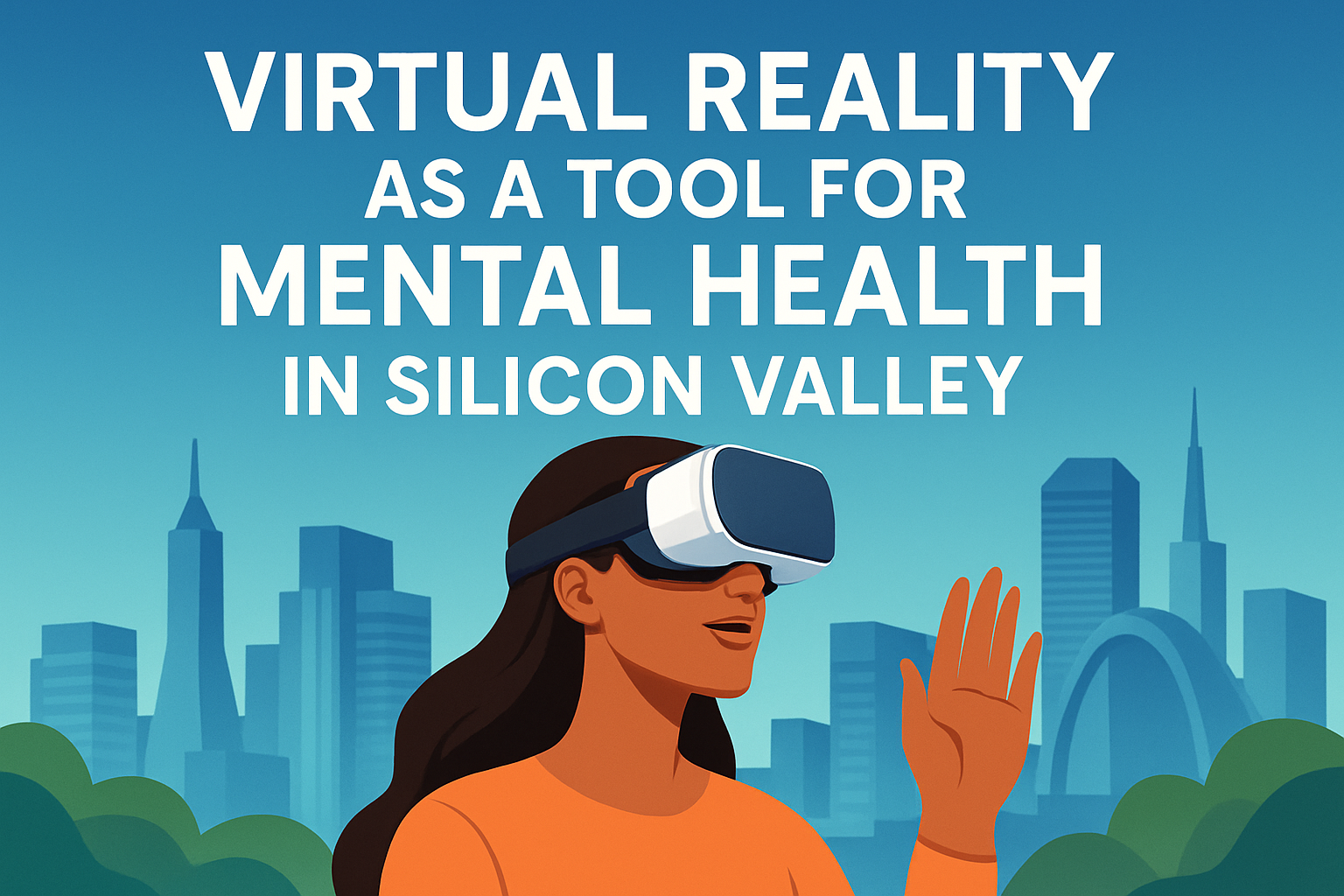
Silicon Valley remains central to emerging interfaces because it can fund long-horizon bets that many publishers cannot justify alone. Meta has spent billions on virtual and mixed reality hardware, operating systems, developer incentives, and research into hand tracking, optics, and social presence. Apple’s spatial computing strategy has added another layer of competition around high-resolution displays, low-latency passthrough, and premium interaction design. Although VR adoption is still smaller than mobile or console gaming, the technical gains are real. Better inside-out tracking, foveated rendering, and lighter headsets have improved comfort and broadened design possibilities.
Artificial intelligence is another decisive area. NVIDIA’s hardware leadership, combined with Bay Area research culture, has made AI-assisted animation, procedural asset generation, moderation, testing, and localization increasingly practical. Used well, AI can shorten content pipelines and improve responsiveness in live games. Used poorly, it can create generic assets, IP disputes, or unbalanced economies. The best teams treat AI as a production multiplier rather than a replacement for design judgment. That balanced approach reflects a lesson Silicon Valley often learns the hard way: breakthrough tools create value only when integrated into disciplined workflows, clear ethics, and sustainable products.
Why startups, capital, and research density keep Silicon Valley influential
Silicon Valley’s lasting advantage is not just any single company. It is density. Stanford research, experienced operators, specialized legal firms, chip talent, cloud expertise, and venture investors sit within one network. A gaming startup can hire graphics engineers, pitch seed funds, test monetization ideas, and partner with platform companies without leaving the region’s orbit. That reduces friction in the earliest stages of innovation. It also explains why gaming technology often advances through tooling, infrastructure, and adjacent services, not only through hit games themselves.
The key takeaway is simple: Silicon Valley’s role in the advancement of gaming technologies is foundational, ongoing, and broader than most players realize. It powers the chips inside devices, the engines developers rely on, the cloud systems behind multiplayer, the mobile stores that distribute games, and the experimental platforms shaping VR, AR, and AI. For anyone following Tech Innovations & Startups, this hub should frame the rest of your exploration into cutting-edge tech. Use it as a starting point to examine semiconductors, engines, cloud gaming, mobile ecosystems, and spatial computing in greater depth. The better you understand this ecosystem, the better you can spot where gaming innovation is heading next.
Frequently Asked Questions
Why has Silicon Valley become such a major force in the advancement of gaming technologies?
Silicon Valley became a central driver of gaming technology because it concentrates nearly every ingredient needed to accelerate innovation in one region. Game technology does not evolve in isolation. It depends on faster semiconductor design, more capable graphics processing, improved networking, sophisticated software tools, cloud infrastructure, mobile platforms, and access to capital. Silicon Valley has long been a place where those pieces develop side by side. Chip companies, software firms, platform providers, startup founders, researchers, and investors have historically worked in close proximity, which makes it easier for ideas to move from concept to product quickly.
That ecosystem matters because gaming is one of the most technically demanding forms of consumer technology. A modern game can require advanced GPUs for real-time rendering, CPUs for simulation and game logic, cloud systems for matchmaking and live services, and development engines that help teams build complex virtual worlds efficiently. Silicon Valley has repeatedly supplied the foundational technologies behind these layers. Its companies have helped define graphics hardware, mobile computing, online infrastructure, app distribution, and the engineering culture that supports rapid experimentation.
Another reason is feedback speed. When hardware engineers, software developers, and platform operators are building related technologies in the same innovation network, gaming benefits. Graphics advancements influence engine design, cloud services reshape multiplayer architecture, and mobile hardware changes how games are built and monetized. Silicon Valley’s importance comes not from a single invention, but from its ability to connect multiple technology sectors that all feed directly into modern gaming.
How has Silicon Valley influenced gaming hardware such as chips, graphics processors, and devices?
Silicon Valley’s influence on gaming hardware is profound because the region has been a global center for semiconductor innovation and consumer device development. At the most basic level, video games rely on hardware capable of processing massive amounts of visual, physical, and interactive data in real time. Advances in CPUs and GPUs have enabled richer environments, higher frame rates, more detailed textures, realistic lighting, and increasingly complex artificial intelligence. Much of the broader culture and infrastructure around chip design, fabrication partnerships, and performance optimization has roots in the Valley’s technology ecosystem.
Graphics processing is especially important. Modern gaming experiences depend on hardware built to handle rendering workloads efficiently, whether on PCs, consoles, smartphones, or cloud servers. Silicon Valley companies and talent networks have played a major role in pushing graphics architectures forward, allowing games to move from simple 2D experiences to expansive 3D worlds with advanced effects such as ray tracing, dynamic shadows, and real-time physics simulation. These improvements do not just make games look better; they also expand what designers can create.
The region has also had a major impact on gaming through consumer hardware categories beyond dedicated gaming machines. Smartphones, tablets, wearables, and connected devices changed the way games are accessed and played. Silicon Valley helped turn mobile hardware into a legitimate gaming platform by advancing processors, touch interfaces, sensors, batteries, wireless connectivity, and operating systems. As a result, gaming expanded far beyond traditional consoles and PCs, reaching billions of users. In that sense, Silicon Valley did not merely improve gaming hardware; it broadened the very definition of what gaming hardware could be.
What role has Silicon Valley played in the development of game engines, software tools, and developer platforms?
Silicon Valley has been deeply influential in the software side of gaming because the region excels at building platforms, tools, and scalable development environments. Games are not created only through artistic vision; they are also built through highly technical systems that manage rendering, physics, animation, scripting, networking, audio, and user interfaces. As development costs and technical complexity increased, the need for powerful engines and efficient production tools became essential. Silicon Valley’s engineering culture helped drive the rise of software frameworks and developer ecosystems that make modern game production faster and more flexible.
Game engines benefit from the same principles that shaped the Valley’s software industry more broadly: modularity, iteration, scalability, and platform compatibility. Developers increasingly rely on tools that allow teams to prototype quickly, collaborate across locations, deploy to multiple devices, and update games continuously after launch. This shift aligns closely with Silicon Valley’s software-first mindset. The region also helped normalize practices such as cloud-based workflows, integrated analytics, live service management, and user testing pipelines, all of which now play a major role in game development.
Equally important, Silicon Valley supported the rise of developer platforms and distribution ecosystems. App stores, middleware services, backend tools, monetization systems, and software development kits made it easier for independent creators and large studios alike to reach global audiences. That lowered barriers to entry while also raising technical standards. In practical terms, Silicon Valley’s contribution has been to industrialize and modernize the software infrastructure behind games, making development more accessible, more data-driven, and more scalable than in earlier eras.
How has Silicon Valley changed online gaming, multiplayer experiences, and cloud-based play?
Silicon Valley has played a defining role in online gaming by helping build the internet infrastructure, cloud services, and networking technologies that multiplayer games depend on. Online play requires far more than a game client and an internet connection. It depends on server architecture, latency management, matchmaking systems, account services, payment platforms, content delivery networks, anti-cheat measures, voice communication, and analytics. Many of the foundational technologies behind these systems were pioneered or commercialized by companies rooted in Silicon Valley’s broader technology ecosystem.
As online games became more ambitious, the Valley’s expertise in distributed computing became increasingly important. Massive multiplayer environments, competitive esports titles, and always-online live-service games need robust backend systems that can scale to millions of players. Cloud computing transformed this landscape by giving developers flexible access to storage, processing power, and geographic distribution. That made it easier to launch global games, handle player surges, deliver updates, and maintain persistent worlds without building all infrastructure from scratch.
Silicon Valley also influenced the business and technical model of gaming through streaming and cloud gaming. Instead of relying entirely on local hardware, cloud-based play shifts much of the processing to remote servers, potentially making high-end games more accessible across devices. While the model continues to evolve, it reflects the Valley’s larger pattern of turning computing into a networked service. The same regional strengths that advanced enterprise cloud services also helped push gaming toward connected, continuously updated, cross-platform experiences. In short, Silicon Valley helped transform gaming from a standalone product into an ongoing digital service.
Why do gaming innovations often seem to move so quickly when Silicon Valley is involved?
Gaming innovation often accelerates in Silicon Valley because the region is structured for rapid iteration. New ideas can move quickly from research lab to startup, from startup to funded company, and from company to market-ready platform. That speed comes from a combination of technical talent, venture capital, competitive pressure, and a culture that rewards experimentation. In gaming, where performance expectations rise constantly and consumer tastes evolve fast, this environment can significantly shorten the path between emerging technology and real-world adoption.
Another reason is cross-industry spillover. Gaming technologies frequently advance because they borrow from breakthroughs originally developed for other sectors, such as artificial intelligence, cloud computing, mobile processors, computer vision, spatial computing, or machine learning. Silicon Valley is one of the few places where those industries are deeply interconnected. A graphics improvement intended for professional computing may improve game rendering. A networking breakthrough for enterprise software may enhance multiplayer stability. A mobile hardware innovation may unlock entirely new game genres. This interconnectedness allows gaming to benefit from innovation happening well beyond the game industry itself.
Finally, Silicon Valley moves quickly because it combines invention with commercialization. It is not only a place where technology is developed; it is also where products are packaged, scaled, marketed, and integrated into broader digital ecosystems. That matters for gaming because a technical breakthrough only changes the industry when developers can adopt it and consumers can access it. Silicon Valley’s real advantage is its ability to align engineering, funding, platform distribution, and consumer hardware around emerging opportunities. That is why the region has remained so influential in pushing gaming technologies forward at a remarkable pace.