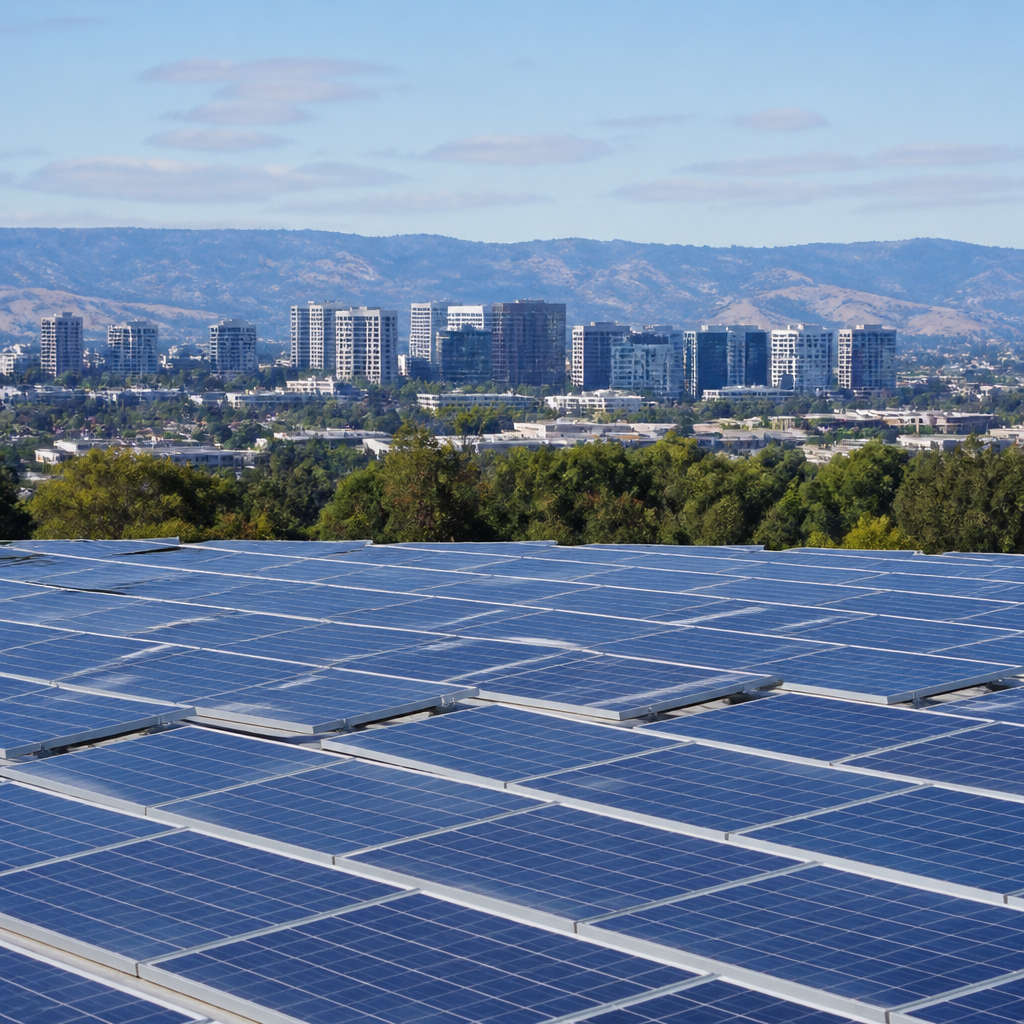
Silicon Valley and the future of clean energy investments are increasingly linked because the region’s venture culture, engineering talent, and appetite for scale are reshaping how climate technologies are funded and commercialized. In this context, clean energy investments include capital placed into renewable power, batteries, grid software, electric mobility, carbon management, efficiency systems, and industrial decarbonization. Mastering entrepreneurship within this market means understanding more than fundraising; it requires product discipline, regulatory literacy, capital strategy, and the ability to move from pilot projects to bankable infrastructure. I have worked with founders raising early climate rounds and with operators trying to turn promising prototypes into repeatable revenue, and the pattern is clear: success comes when technical ambition is matched by commercial realism. This matters because the clean energy transition is no longer a niche sustainability story. It is a global industrial shift driven by falling solar and battery costs, grid modernization needs, corporate procurement, and public policy such as the Inflation Reduction Act in the United States and Fit for 55 measures in Europe. For entrepreneurs and investors, the opportunity is enormous, but so is the complexity, making this hub essential.
Why Silicon Valley Leads Clean Energy Entrepreneurship
Silicon Valley leads clean energy entrepreneurship because it combines three assets that are difficult to replicate in one place: risk-tolerant capital, deep technical networks, and experience building companies through uncertainty. Traditional energy investors often prefer predictable cash flows from operating assets. Valley investors are more willing to finance unproven technologies at the seed and Series A stage, especially when a founding team can show a breakthrough in cost, speed, or system performance. That willingness has funded battery chemistry startups, virtual power plant platforms, heat pump software, EV charging networks, and advanced materials companies that would have struggled to get an early hearing from conventional infrastructure funds.
The region also benefits from a dense talent graph. Engineers move between Stanford labs, large technology companies, national labs, and startups, carrying expertise in machine learning, semiconductors, robotics, and power systems. This cross-pollination matters because many of the best clean energy businesses are not pure energy plays. A grid optimization company may rely on AI forecasting. A battery manufacturer may need advanced manufacturing software. A carbon accounting startup may be built on enterprise SaaS discipline. Silicon Valley has repeatedly shown that breakthroughs often happen when one industry’s toolset is applied to another industry’s bottleneck.
There is another reason Silicon Valley remains central: it understands platforms. Clean energy entrepreneurship increasingly rewards companies that orchestrate hardware, software, finance, and services rather than selling one standalone product. Tesla demonstrated this with vehicles, charging, software updates, and energy storage. Enphase built durable value by pairing microinverters with monitoring, installer relationships, and energy management. These examples show why founders should think in systems, not devices. Investors back companies that can own a critical layer of the value chain and compound advantages over time.
What Investors Look for in Clean Energy Startups
Investors in clean energy startups ask a different set of questions than investors in consumer apps. They still care about team quality, market size, and traction, but they examine technical differentiation, deployment friction, unit economics, regulatory dependencies, and capital intensity with unusual rigor. In partner meetings, I have seen strong founders lose momentum because they could not answer basic commercialization questions: Who signs the contract? How long is the sales cycle? What certification is required? What proof does a utility or industrial buyer need before deployment? In climate markets, those details are often the business.
A compelling startup usually presents a clear wedge. For example, rather than claiming it will “decarbonize the grid,” a company might start by helping commercial buildings reduce peak demand charges through load orchestration. That solves a concrete problem with a measurable return on investment. Once the company has data, customer references, and recurring revenue, it can expand into demand response, storage controls, and broader energy management. This sequencing is important because many clean energy categories are large but operationally fragmented. Founders who enter with a narrow pain point earn the right to broaden later.
Investors also distinguish between venture-scale opportunities and project-scale businesses. A solar developer can build a profitable company, but if growth depends mainly on raising more project finance, some venture firms will question whether the business fits their model. By contrast, software for interconnection analysis or battery analytics can scale faster with less balance-sheet burden. Neither path is inherently better. The key is alignment between the company model and the investor base. Entrepreneurs who understand that distinction avoid cap table mismatches that create pressure at the wrong time.
How to Master Entrepreneurship in Clean Energy Markets
Mastering entrepreneurship in clean energy begins with choosing the right market entry point. Founders should target problems where customers already feel financial pain, not just abstract climate concern. High electricity prices, unreliable backup power, fleet fuel costs, demand charges, methane leakage, and permitting delays are all examples of urgent pain points that support buying decisions. The most fundable startups do not ask customers to act altruistically. They save money, reduce risk, improve compliance, or unlock revenue while delivering emissions benefits as a consequence.
Execution discipline is equally important. Clean energy startups often die between prototype success and scaled deployment because they underestimate permitting, utility interconnection, procurement cycles, or manufacturing yield issues. A founder building a long-duration storage company needs a commercialization roadmap that includes lab validation, third-party testing, safety certifications such as UL standards where applicable, pilot design, procurement partners, and bankability evidence. A software founder selling into utilities should prepare for twelve- to twenty-four-month sales cycles and learn how requests for proposals, cybersecurity reviews, and commission oversight affect purchasing. Entrepreneurship in this field rewards founders who treat operational detail as strategy.
Capital strategy must also match the product path. Many climate businesses need blended funding: venture equity for innovation, grants for technical milestones, customer prepayments for pilots, equipment leasing for deployments, and later-stage project finance or asset-backed structures. The U.S. Department of Energy Loan Programs Office, ARPA-E, state energy offices, and utility innovation programs can all play catalytic roles. Good founders map these non-dilutive and structured capital options early. They do not rely solely on equity rounds to solve every financing problem.
| Startup type | Typical customer | Main proof point investors want | Common risk |
|---|---|---|---|
| Grid software | Utilities, aggregators | Pilot data showing reliability gains or cost savings | Slow enterprise sales cycles |
| Battery technology | Manufacturers, developers | Energy density, cycle life, safety, and manufacturability | Scale-up and yield challenges |
| EV charging | Fleets, property owners | Utilization rates and installation economics | Infrastructure deployment complexity |
| Carbon management | Industrial firms, enterprises | Verified measurement and compliance value | Policy and standards uncertainty |
Where the Best Clean Energy Investments Are Emerging
The best clean energy investments are emerging where digital intelligence meets physical infrastructure. Grid software is one leading category because renewable penetration, electrification, and distributed energy resources have made forecasting and orchestration more valuable. Companies that help utilities manage congestion, optimize distributed storage, or improve interconnection studies are solving urgent system bottlenecks. Another strong category is industrial decarbonization. Heavy industry accounts for a large share of global emissions, yet many processes still lack cost-effective low-carbon substitutes. Startups working on low-temperature heat, process controls, alternative fuels, and efficiency retrofits can build substantial businesses because the customer pain is operational, not merely reputational.
Energy storage remains central, but the opportunity is broader than cell manufacturing. Battery management systems, recycling, second-life applications, thermal management, and financing tools all address important bottlenecks. In mobility, software for fleet electrification, charging optimization, and route planning can create faster returns than hardware-heavy bets alone. Building technologies are also gaining attention as heat pumps, smart panels, and demand flexibility become more important in electrified homes and commercial properties.
Geography is widening as well. Silicon Valley still shapes early-stage financing, but founders increasingly build in Houston, Boston, Denver, Austin, and overseas hubs such as London, Berlin, and Tel Aviv, where energy expertise and industrial partnerships are strong. That shift is healthy. Clean energy entrepreneurship benefits from proximity to utilities, manufacturers, and project developers, not just software talent. The future belongs to startups that can combine Valley-style speed with sector-specific execution in the field.
Risks, Tradeoffs, and What Smart Founders Do Next
Clean energy investing carries real risks. Policy support can accelerate markets, but regulation can also change. Hardware margins can compress. Supply chains for critical minerals and power electronics remain exposed to geopolitics. Customer adoption may lag even when the technology works. Founders who ignore these realities often overpromise. The stronger approach is to design resilience into the business model. That means diversifying suppliers, reducing dependence on one incentive, proving economics without ideal assumptions, and building products that integrate with incumbent systems rather than demanding total replacement on day one.
For entrepreneurs who want to master this field, the playbook is practical. Start with a painful, quantifiable problem. Validate with customers before expanding the roadmap. Build a financing strategy that matches technical and deployment milestones. Learn the standards, procurement rules, and approval pathways that govern your market. Use pilots as evidence, not vanity projects. And study category leaders such as Tesla, Enphase, NextEra Energy, Schneider Electric, and Fluence to understand how durable clean energy companies balance innovation with execution.
Silicon Valley and the future of clean energy investments will continue to influence how the next generation of founders builds companies at the intersection of climate, infrastructure, and venture capital. The biggest winners will not be those with the boldest pitch alone. They will be the entrepreneurs who turn engineering breakthroughs into trustworthy products, repeatable sales, and scalable economics. If you are building in this space, use this hub as your starting point, then go deeper into fundraising, go-to-market strategy, and operational scale with discipline.
Frequently Asked Questions
1. Why is Silicon Valley becoming such an important force in clean energy investments?
Silicon Valley matters in clean energy because it brings together three things that are unusually powerful when combined: risk-tolerant capital, deep technical talent, and a culture built around scaling new ideas quickly. Traditional energy investing often focused on large infrastructure projects, long development cycles, and predictable returns. By contrast, Silicon Valley investors are used to backing technologies early, funding product iteration, and helping companies move from prototype to market leadership fast. That mindset is increasingly shaping how clean energy technologies are financed and commercialized.
The region also has a strong advantage in software, semiconductors, artificial intelligence, advanced manufacturing, and systems engineering. Those capabilities are highly relevant to modern climate solutions. Clean energy is no longer just about building solar farms or wind projects. It now includes battery management platforms, grid optimization software, EV charging networks, carbon accounting tools, industrial electrification systems, and hardware-enabled software businesses that improve energy efficiency and decarbonization outcomes. Silicon Valley is especially effective at spotting these crossovers between digital innovation and physical infrastructure.
Another reason the region has become influential is that climate technology increasingly requires entrepreneurship that bridges science, product development, regulation, and market design. Founders need to understand not only how to build a better technology, but also how to navigate utility procurement, corporate sustainability demand, supply chain constraints, and policy incentives. Silicon Valley’s startup ecosystem is well suited to that challenge because it offers access to specialized investors, experienced operators, research institutions, and strategic partners that can help climate companies grow beyond the lab and into commercial deployment.
2. What types of clean energy investments are attracting the most attention from Silicon Valley investors?
Investor attention is spreading across a broad clean energy landscape, but several categories stand out. Batteries and energy storage remain a major focus because they are central to integrating renewable power, improving grid resilience, and supporting electric transportation. Investors are interested not only in new battery chemistries, but also in manufacturing technologies, battery analytics, recycling, and second-life applications. The appeal is clear: storage solves practical bottlenecks in the energy transition and can create large, defensible markets.
Grid software and energy intelligence platforms are also attracting strong interest. As power systems become more decentralized and more complex, utilities, businesses, and consumers need better tools to manage demand, forecast generation, optimize distributed energy resources, and respond to price signals in real time. This is a natural area for Silicon Valley, where software-first thinking and data-driven business models are deeply embedded. Investors often see these companies as more capital-efficient than heavy infrastructure plays, though success still depends on strong customer adoption and regulatory alignment.
Electric mobility continues to draw capital as well, particularly in charging infrastructure, fleet electrification, power electronics, and software platforms that improve charging reliability and economics. Beyond transportation, there is growing interest in carbon management, industrial decarbonization, and efficiency systems. These include carbon capture technologies, low-carbon fuels, heat pumps, building optimization tools, and industrial process innovations for sectors such as cement, steel, and chemicals. Many of these opportunities are challenging, but they address enormous emissions sources, which means successful companies can have both significant climate impact and major commercial upside.
Overall, Silicon Valley investors are increasingly looking for businesses that combine technical defensibility, large market demand, and a realistic path to scale. The most attractive clean energy investments are often those that can show clear economics, measurable emissions benefits, and a strategy for moving from pilot projects to repeatable deployment.
3. How is investing in clean energy different from investing in traditional software startups?
Clean energy investing is often very different from backing a pure software company, even when the startup includes a strong software component. In software, product development cycles can be relatively fast, customer testing is often inexpensive, and scaling can happen with limited physical infrastructure. In clean energy, many companies must deal with hardware validation, manufacturing challenges, safety requirements, permitting, project finance, and integration into real-world systems such as buildings, vehicles, factories, or electric grids. That usually means more capital, longer timelines, and more execution risk.
Another major difference is that clean energy companies often operate in markets shaped by regulation, incentives, and infrastructure constraints. A great product is not always enough on its own. Founders may need to understand interconnection rules, utility rate structures, tax credits, emissions reporting standards, procurement practices, and public policy trends. This makes market entry more complex, but it can also create strong competitive advantages for companies that learn how to navigate those systems effectively.
Returns can still be very attractive, but the path is rarely as simple as the classic software playbook of building, launching, and scaling through low-cost customer acquisition. Investors in clean energy usually spend more time evaluating technical readiness, unit economics, supply chain resilience, capital intensity, and commercialization milestones. They also pay close attention to whether a startup can secure strategic partnerships with manufacturers, developers, utilities, industrial customers, or government-backed programs.
For entrepreneurs, mastering this market means recognizing that climate innovation sits at the intersection of technology, operations, finance, and policy. The best founders are not just inventors. They are disciplined commercial builders who understand how to reduce risk at each stage, prove real customer value, and align their growth strategy with the realities of energy markets.
4. What should entrepreneurs understand before raising money for a clean energy startup in Silicon Valley?
Entrepreneurs should begin with a clear understanding that investors want more than a compelling climate mission. They want evidence that the company can solve a real market problem, achieve meaningful differentiation, and scale into a large business. In practical terms, that means founders need to explain not only the technology, but also who the customer is, why that customer will buy now, how adoption will happen, and what barriers could slow growth. A strong clean energy pitch connects emissions impact with strong economics rather than treating sustainability as a stand-alone selling point.
Founders should also be realistic about capital strategy. Some clean energy businesses can follow a venture-style model efficiently, especially those centered on software, services, or modular systems. Others require patient capital, project finance, government support, or strategic corporate partnerships because they involve factories, physical deployment, or long validation cycles. One of the most common mistakes is raising from investors whose expectations do not match the business model. A battery materials company, a grid analytics platform, and an industrial heat decarbonization startup may all sit under the climate-tech umbrella, but they often need very different financing approaches.
Another key issue is credibility. In Silicon Valley, investors move quickly, but in clean energy they still expect deep technical fluency and honest milestone planning. Entrepreneurs should be prepared to discuss performance data, commercialization roadmaps, regulatory assumptions, cost-down pathways, and go-to-market sequencing in detail. It is especially important to show how the company will move from pilot programs to repeatable revenue. Investors have seen many climate startups generate excitement in demonstrations but struggle in deployment. What stands out is a team that understands this gap and has a practical strategy to cross it.
Finally, founders should recognize that relationships matter. The Silicon Valley ecosystem can offer far more than capital, including introductions to talent, pilot customers, manufacturing partners, and follow-on investors. Entrepreneurs who communicate clearly, respond well to scrutiny, and show they can balance mission with disciplined execution are often better positioned to build lasting support around the company.
5. What does the future of clean energy investments look like in Silicon Valley?
The future is likely to be broader, more disciplined, and more commercially grounded than earlier waves of cleantech investing. Silicon Valley is still interested in breakthrough ideas, but investors are now placing greater emphasis on deployment pathways, cost competitiveness, and business models that can survive real market conditions. That means the next phase of clean energy investment will probably reward companies that combine innovation with practical execution rather than relying on hype alone.
One major trend is the convergence of digital technologies with energy and industrial systems. Artificial intelligence, machine learning, advanced sensors, robotics, and power electronics are being applied to grid operations, building efficiency, manufacturing, storage, and transportation. This plays directly to Silicon Valley’s strengths and opens the door to startups that can optimize energy systems in ways that were not previously possible. Investors are especially interested in solutions that improve reliability, reduce waste, and create measurable cost savings while also lowering emissions.
Another important shift is that climate investment is expanding beyond consumer-facing technologies into harder sectors such as industrial heat, heavy transport, carbon removal, and resilient infrastructure. These areas are more complex, but they represent some of the largest opportunities for both emissions reduction and long-term enterprise value. As a result, investors are becoming more comfortable with blended capital stacks, longer commercialization timelines, and partnerships that involve corporations, governments, and infrastructure players alongside venture firms.
In the years ahead, Silicon Valley will likely continue to shape the market by backing startups that can turn complex climate challenges into scalable businesses. The strongest opportunities will probably come from companies that understand how to integrate technology innovation with policy awareness, operational discipline, and customer-driven economics. In other words, the future of clean energy investments will not belong only to bold inventors. It will belong to entrepreneurs who know how to build durable companies in one of the most important markets of the century.