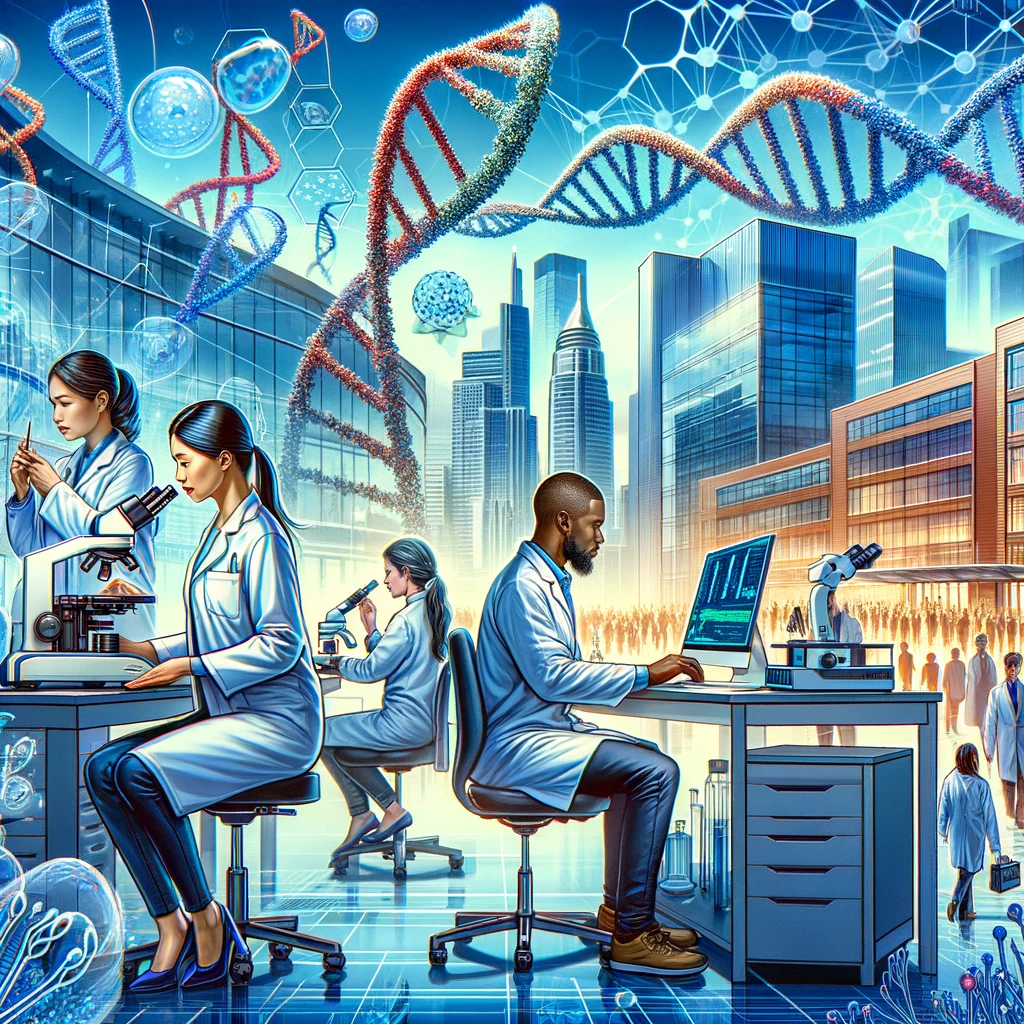
The world of healthcare is undergoing a significant transformation, powered largely by advancements in artificial intelligence (AI). This evolution is no accident; it is the result of concerted efforts by technology hubs like Silicon Valley, where innovation and disruption are constants in the landscape. When we talk about AI-driven healthcare, we refer to the use of AI technologies to enhance the accuracy, efficiency, and accessibility of healthcare services. These can range from AI algorithms that analyze medical images faster and more accurately than a human radiologist, to virtual assistants capable of scheduling appointments and answering patient queries. The key terms in this discourse—AI, healthcare, and Silicon Valley—highlight a junction where cutting-edge technology meets crucial human need. Understanding this intersection is vital, as it offers solutions to some of healthcare’s most pressing challenges, such as reducing costs, improving outcomes, and expanding access to underserved areas. Silicon Valley, synonymous with technology and innovation, plays a pivotal role in this transformation by investing in startups, developing novel technologies, and fostering an environment ripe for collaboration. As we delve into the technological strides facilitated by Silicon Valley, we uncover the myriad ways it is reshaping healthcare, thereby changing how we perceive and attain well-being.
AI in Medical Imaging: Transforming Diagnostics
One of the most significant areas where AI is making a profound impact is in medical imaging. From X-rays to MRIs, diagnostic imaging technologies are crucial for identifying diseases early. Traditionally, these images require skilled radiologists to interpret, a process that can be time-consuming and prone to human error. Enter Silicon Valley’s AI innovations, which offer the potential to enhance diagnostic accuracy and efficiency. A prime example is the development of deep learning algorithms capable of identifying abnormalities in medical images with remarkable precision. Google’s DeepMind has collaborated with Moorfields Eye Hospital to develop an AI system that can detect over fifty eye diseases by analyzing retinal scans, which speeds up the diagnostic process and can potentially save patients from going blind. This example underscores how AI, supported by the computational power and innovative prowess of Silicon Valley, can match or even surpass human experts in certain diagnostic tasks.
Telemedicine and Virtual Health Assistants
Silicon Valley is redefining the patient-doctor relationship by pioneering advancements in telemedicine and virtual health assistants. These technologies aim to make healthcare more accessible by overcoming geographical barriers, a significant benefit for patients in remote or underserved areas. Companies like Teladoc and HealthTap, rooted in Silicon Valley innovation, provide platforms for virtual consultations, enabling patients to receive medical advice from the comfort of their homes. Moreover, virtual health assistants powered by AI, such as Apple’s Siri and Amazon’s Alexa, are increasingly capable of answering medical inquiries and assisting with routine health management tasks. This democratization of healthcare access exemplifies Silicon Valley’s role in integrating cutting-edge technologies into daily healthcare practices, making healthcare interaction more user-friendly and efficient.
Personalized Medicine: Tailoring Treatments with Data
Personalized medicine is another promising frontier in AI-driven healthcare, where Silicon Valley’s role is notable. By analyzing vast datasets from various sources, AI can help tailor medical treatments to the individual patient’s genetic makeup, lifestyle, and other personal factors. Companies like 23andMe have been at the forefront, offering genetic testing that provides insights into a person’s health risks and ancestral origins, helping doctors to craft personalized health plans. The application of AI in personalized medicine is not only about treatment but also about preventive care, as algorithms can predict potential genetic disorders before they manifest. This proactive approach, nurtured in the innovation-friendly environment of Silicon Valley, represents a shift towards more efficient and effective healthcare.
AI-Driven Drug Discovery: Reducing Costs and Time
The pharmaceutical industry faces the challenge of high costs and lengthy timelines in drug discovery and development. AI technologies, driven by the ingenuity of Silicon Valley, promise to revolutionize this sector by significantly reducing the time and cost associated with bringing new drugs to market. Organizations like Atomwise are using AI to predict how different drugs will react at the molecular level, vastly speeding up the initial screening process of drug discovery. This capability minimizes the need for costly and time-consuming laboratory tests. Through these innovations, AI accelerates innovation cycles in drug discovery, making it possible to develop treatments faster and more sustainably, thus addressing one of the major bottlenecks in the healthcare industry.
AI Ethics and Privacy Concerns
The advancement of AI in healthcare, while promising, brings with it concerns about ethics and privacy, topics that Silicon Valley also actively addresses. Implementing AI necessitates handling vast amounts of sensitive data, making data privacy a crucial concern. Companies and policymakers in Silicon Valley are striving to balance innovation with the ethical implications of AI technologies. Initiatives to enhance cybersecurity, anonymize patient data, and comply with regulations like the Health Insurance Portability and Accountability Act (HIPAA) are paramount in maintaining patient trust. Additionally, developing algorithms that ensure fair treatment across diverse populations without bias is essential in fostering equitable healthcare practices. The ongoing dialogue around AI ethics and privacy reflects Silicon Valley’s commitment to responsible innovation, aimed at ensuring these technologies serve humanity’s best interests.
| AI Application | Benefit | Example Company |
|---|---|---|
| Medical Imaging | Improved diagnostic accuracy | DeepMind |
| Telemedicine | Increased healthcare accessibility | Teladoc |
| Personalized Medicine | Tailored treatment plans | 23andMe |
| Drug Discovery | Reduced time and cost | Atomwise |
The Future of AI in Healthcare
As we look towards the future, the integration of AI into healthcare will likely become even more profound, with Silicon Valley continuing to lead this transformative journey. Emerging technologies such as natural language processing, autonomous robotic surgery, and AI-driven patient management systems promise to further blur the lines between technology and healthcare. For example, researchers are exploring AI algorithms capable of predicting disease outbreaks by analyzing social media and search engine data, a development that could revolutionize public health strategies. The convergence of AI and healthcare symbolizes a shift towards more predictive, personalized, and preventive medical care. By fostering collaborations between tech companies, medical professionals, and regulatory bodies, Silicon Valley not only accelerates innovations but also acts as a catalyst for widespread adoption and implementation of these new paradigms.
Conclusion: Embracing the AI Healthcare Revolution
In conclusion, Silicon Valley’s role in the advancement of AI-driven healthcare is both transformative and indispensable. By embracing the potential of AI, Silicon Valley has positioned itself at the forefront of a healthcare revolution that offers enhanced diagnostic capabilities, greater accessibility, personalized treatment options, more efficient drug discovery processes, and robust ethical standards. As healthcare continues to evolve in response to these technological breakthroughs, it offers immense promise in improving patient outcomes, lowering costs, and broadening accessibility to quality care. For stakeholders, from patients and healthcare providers to policymakers and technology developers, embracing AI’s potential requires staying informed and engaged. By doing so, they can harness AI’s full potential to reshape the future of healthcare, ensuring these innovations benefit as many people as possible. As such, the call to action for readers is clear: remain open to these emerging technologies, support initiatives that promote responsible use, and lobby for policies that protect patient interests. Together, these steps will help us navigate and realize the full promise of AI in transforming healthcare.
Frequently Asked Questions
1. What is the role of Silicon Valley in the advancement of AI-driven healthcare?
Silicon Valley, known as the technology epicenter of the world, plays a pivotal role in advancing AI-driven healthcare. This region is home to some of the most innovative tech companies and brightest minds dedicated to pushing the boundaries of what’s possible with technology. One of the significant contributions of Silicon Valley is its nurturing environment for start-ups and tech giants alike, which fosters the development of groundbreaking AI technologies that enhance healthcare services.
These companies invest millions into research and development to create AI models capable of diagnosing diseases with high precision, predicting patient outcomes, and even facilitating drug discovery at unprecedented speeds. For instance, AI algorithms developed in Silicon Valley have shown promise in interpreting medical imaging, gradually transforming how radiologists diagnose conditions. Moreover, the cooperative eco-system encourages collaboration between tech firms and healthcare providers, leading to solutions that are practical and scalable. Ultimately, Silicon Valley functions as a catalyst, accelerating the integration of AI technologies into everyday healthcare practices, which results in more accurate, efficient, and accessible medical care for people worldwide.
2. What challenges does Silicon Valley face in integrating AI into healthcare?
While the role of Silicon Valley in integrating AI into healthcare is transformative, it’s not without its challenges. Firstly, there’s the issue of data privacy and security. Healthcare data is incredibly sensitive, and with AI systems needing vast amounts of data to learn and improve, ensuring this data is protected is crucial. Companies must comply with stringent regulations such as HIPAA in the United States, which adds a layer of complexity to AI development.
Additionally, there’s the problem of integrating AI solutions into existing healthcare infrastructures, which are often outdated and not designed to support advanced technologies. This can result in interoperability issues, where new AI systems struggle to communicate with or work alongside older systems. There’s also the challenge of bias in AI algorithms, which can arise if the data used to train these models isn’t diverse or representative enough, leading to unequal or unfair outcomes.
Lastly, there’s a significant hurdle in scaling AI solutions globally. While Silicon Valley may have ready access to resources and cutting-edge tech, it’s crucial to ensure that these innovations can be applied in various healthcare systems across different socio-economic environments. This involves overcoming both infrastructure limitations and variances in healthcare policies and practices around the world.
3. How has AI from Silicon Valley impacted patient care and outcomes?
AI technologies from Silicon Valley have significantly impacted patient care and outcomes in various ways. AI-driven solutions enhance the accuracy of diagnoses by analyzing medical data such as images, test results, and patient histories with remarkable precision, often surpassing human capabilities. This means that diseases can be detected earlier, allowing for timely intervention and improving the likelihood of successful treatment.
Additionally, AI aids in personalizing patient care plans. By sifting through vast amounts of data, AI systems identify which treatments are likely to be the most effective for individual patients based on their unique genetic makeup, health history, and lifestyle factors. This personalized approach results in more effective treatments and fewer side effects, improving overall patient outcomes.
Moreover, AI technologies facilitate continuous monitoring and real-time alerts, which are particularly beneficial for managing chronic diseases. Wearable devices and smart health monitors powered by AI can track vital signs and detect anomalies, notifying physicians and patients of potential issues before they escalate. This proactive care can prevent emergency situations, significantly enhancing patients’ quality of life.
4. What are some notable AI-driven healthcare projects originating from Silicon Valley?
Silicon Valley has birthed numerous innovative AI-driven healthcare projects that are making a mark globally. One well-known initiative is Google’s DeepMind, which is used in various projects like predicting patient deterioration in hospitals and improving the accuracy of medical imaging interpretations. Another significant project is IBM Watson Health, a division of IBM located in Silicon Valley, which aims to harness the power of AI to understand and unlock insights from vast amounts of data, aiding in everything from oncology to genomics.
Similarly, Project Baseline by Verily (an Alphabet company) aims to map human health and uses AI to understand the changing boundaries of healthy versus disease states better. Additionally, companies like PathAI, based in part in Silicon Valley, are using state-of-the-art image recognition technologies to assist pathologists in diagnosing diseases accurately and quickly, thereby reducing diagnostic errors.
These projects showcase how Silicon Valley’s blend of technology and healthcare expertise is creating advanced solutions that potentially redefine traditional healthcare paradigms. The continual focus on robust R&D and strategic partnerships ensures that these projects not only succeed but also scale to benefit a broader audience globally.
5. What does the future look like for AI-driven healthcare, with Silicon Valley at the helm?
The future of AI-driven healthcare, steered in large part by Silicon Valley innovation, looks incredibly promising. We can expect continued advancements in personalized medicine, whereby treatments are increasingly tailored to the individual’s genetic information, lifestyle, and preferences, significantly increasing treatment success rates and reducing adverse reactions.
AI will undoubtedly enhance predictive analytics, providing healthcare professionals with better tools to forecast outbreaks, disease progression, and even patient admissions, which can help mitigate risks and optimize resource allocation. AI-enabled robotics and automated systems in surgeries could reduce human error and increase precision, leading to quicker recovery times and fewer complications.
The synergy between AI and healthcare will likely expand into more areas like mental health, with AI assisting in providing personalized mental health care plans, and even being able to predict and prevent crisis situations before they occur. Virtual health assistants powered by AI could become commonplace, providing patients with quick, reliable health advice and support without needing to visit a healthcare facility.
With Silicon Valley’s relentless pursuit of innovation and excellence, combined with its robust ecosystem of tech talent and capital, AI-driven healthcare stands on the precipice of breakthroughs that could redefine how we think about health, wellness, and medicine on a global scale.