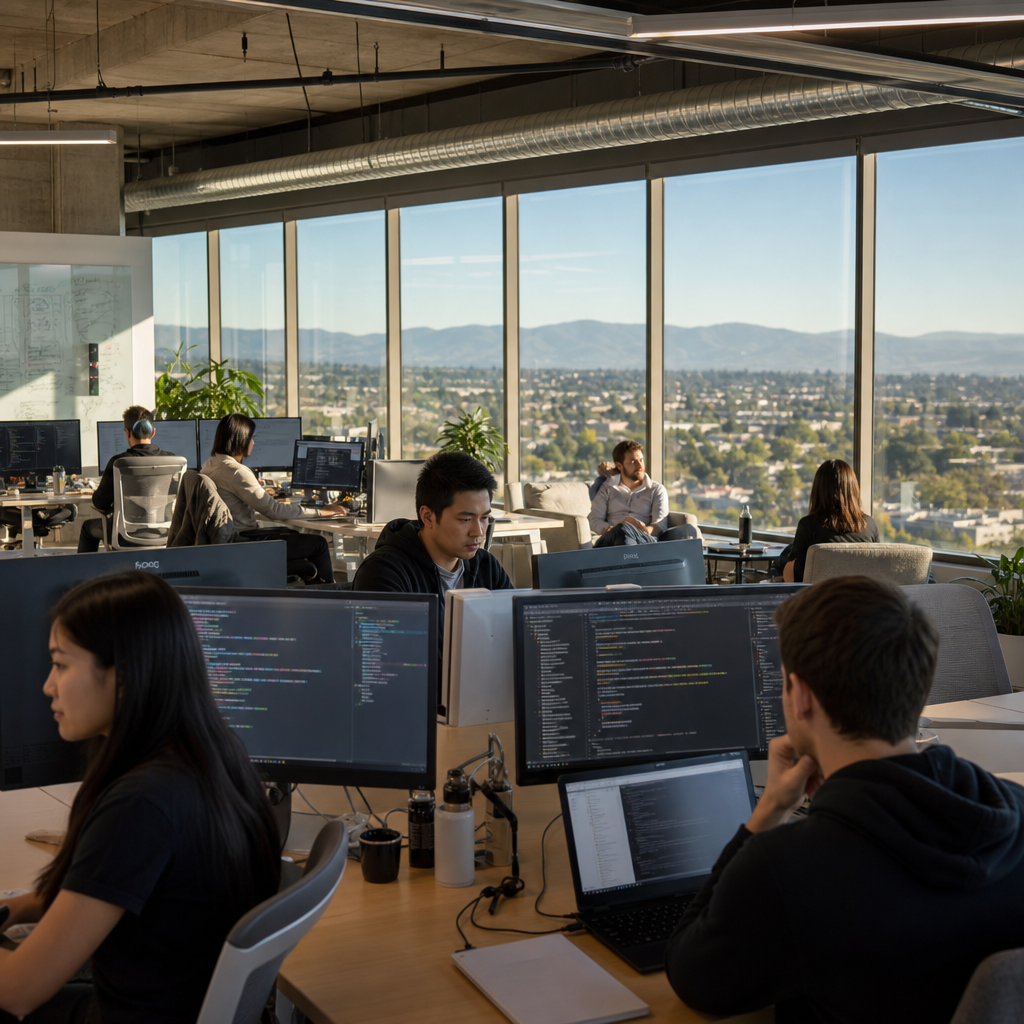
Silicon Valley’s success in software engineering is not a mystery reserved for a handful of startups; it is a repeatable system built on disciplined learning, fast feedback, strong technical fundamentals, and deliberate career development. In this hub for expanding knowledge and skills, I will explain the practices I have seen teams use to turn curious developers into high-impact engineers. Software engineering here means more than writing code. It includes system design, testing, collaboration, product thinking, security, performance, and the ability to learn new tools without losing judgment. Expanding knowledge and skills matters because the field changes constantly: cloud platforms evolve, frameworks rise and fall, and user expectations keep climbing. Engineers who keep learning become more effective, more resilient in job markets, and more valuable to their teams. The central lesson from Silicon Valley is simple: elite engineers treat learning as part of the job, not as an occasional extra. They build habits, environments, and feedback loops that make improvement inevitable rather than accidental.
Build deep fundamentals before chasing tools
The strongest engineers I have worked with in fast-moving companies share one trait: they rely on fundamentals when trends change. A new JavaScript framework may dominate for three years, but data structures, algorithms, networking, operating systems, databases, and distributed systems remain useful for decades. This is why successful teams still ask candidates to explain time complexity, indexing strategies, caching tradeoffs, TCP latency, and concurrency bugs. These are not academic rituals. They are daily engineering concerns. When an application slows under load, knowledge of memory allocation, query planning, and asynchronous execution solves the problem faster than trial and error.
Deep fundamentals also accelerate learning. If you understand how compilers, runtimes, and protocols work, switching from Python to Go or from REST to gRPC becomes manageable because the underlying ideas are familiar. I have seen engineers waste months memorizing framework syntax while avoiding core concepts, then struggle when their stack changes. By contrast, engineers who know relational modeling, CAP tradeoffs, eventual consistency, and observability can adapt across products and companies. A practical way to expand knowledge is to pair every tool with the principle beneath it. When you learn Kubernetes, study scheduling, container isolation, service discovery, and rollout strategy. When you learn React, study state management, rendering behavior, accessibility, and browser performance. Tools open doors, but principles keep them open.
Learn through deliberate practice, not passive consumption
Reading articles and watching conference talks can inspire you, but they rarely create durable engineering skill on their own. Silicon Valley teams improve through deliberate practice: focused repetition on tasks that stretch ability, followed by review and correction. That means writing code, shipping features, debugging incidents, and revisiting decisions with evidence. I have coached junior engineers who spent hours consuming tutorials yet avoided building complete systems. Their progress accelerated only when they started implementing authentication, rate limiting, pagination, test suites, CI pipelines, and production monitoring in small projects.
Deliberate practice works because software engineering is applied knowledge. For example, to get better at system design, do not only read about message queues. Build a small job-processing service using Redis, RabbitMQ, or Amazon SQS. Measure retries, dead-letter behavior, throughput, and failure modes. To improve code quality, refactor a module with high cyclomatic complexity, add unit and integration tests, and compare defect rates before and after. To sharpen debugging, reproduce a memory leak locally, use profiling tools, and document the root cause. The best learning loops are concrete, measurable, and slightly uncomfortable. They force you to think, not just recognize familiar terminology.
Use a structured growth system for expanding knowledge and skills
What separates top engineering organizations from average ones is not raw intelligence; it is the presence of systems that turn learning into routine behavior. Successful engineers usually combine four inputs: a study plan, project-based practice, feedback from stronger peers, and regular reflection. Without structure, learning becomes reactive and fragmented. One week you skim articles on microservices, the next week you explore machine learning prompts, and neither becomes usable expertise. A structured approach prevents this drift and makes professional development cumulative.
The table below outlines a practical growth system that mirrors how high-performing teams train engineers. It works for students, self-taught developers, and experienced professionals who want to stay current without chasing every trend.
| Learning area | What to do | Recommended tools or standards | Outcome |
|---|---|---|---|
| Core computer science | Review algorithms, data structures, networking, OS concepts, and database design weekly | CLRS, Designing Data-Intensive Applications, PostgreSQL docs | Stronger problem solving and better design decisions |
| Hands-on building | Create projects with authentication, APIs, tests, deployment, and monitoring | Docker, GitHub Actions, Terraform, Prometheus | Practical skill that transfers to real teams |
| Code quality | Practice code reviews, refactoring, linting, and test strategy | ESLint, SonarQube, pytest, JUnit | Cleaner code and fewer production defects |
| Systems thinking | Study scaling, caching, queuing, failure recovery, and observability | OpenTelemetry, Redis, Kafka, SRE workbook | Readiness for larger systems and incidents |
| Career feedback | Seek mentor review, postmortem input, and quarterly skill assessments | Career ladders, 360 feedback, engineering rubrics | Clear priorities and faster advancement |
This kind of framework turns “learn more” into executable steps. It also creates internal linking opportunities across an educational resources hub: one article can go deeper on system design, another on code reviews, another on debugging, another on cloud deployment. As a hub topic, expanding knowledge and skills should guide readers from broad strategy to focused practice areas that map to actual engineering work.
Master feedback loops: code review, incidents, and metrics
In Silicon Valley, improvement happens fastest where feedback is fast and specific. Code review is the most visible example. Good review is not nitpicking style while ignoring architecture. It checks correctness, readability, security, test coverage, maintainability, and operational risk. The best reviewers explain reasoning: why a query may lock heavily, why a shared mutable state may race, why an abstraction increases cognitive load, or why a dependency introduces supply-chain risk. Over time, these comments become an informal curriculum for the team.
Production incidents are another powerful teacher when handled correctly. Elite teams treat outages and regressions as learning opportunities, not blame sessions. A strong postmortem identifies the timeline, contributing factors, failed assumptions, customer impact, and preventive actions. I have seen engineers improve rapidly after tracing a real incident involving a bad feature flag rollout, missing alert threshold, or unbounded retry storm. Those lessons stick because they connect design choices to business consequences. Metrics complete the loop. Track deployment frequency, mean time to recovery, error rates, p95 latency, test flakiness, and escaped defects. Metrics do not replace judgment, but they make progress visible. When engineers can see that a new caching strategy reduced response time from 420 milliseconds to 130, learning becomes concrete.
Develop product sense and communication, not just coding speed
One of Silicon Valley’s least discussed secrets is that software engineering success depends heavily on non-coding skills. Engineers who rise fastest understand users, business goals, tradeoffs, and cross-functional communication. Product sense means asking the right question before building the wrong feature efficiently. Why does this user flow exist? What metric should improve? What is the cheapest experiment that can validate the idea? A technically elegant implementation that solves the wrong problem is still failure.
Communication multiplies technical skill. Engineers need to write design docs, explain options, estimate uncertainty, and align with product managers, designers, security teams, and executives. Clear writing often reveals clear thinking. At several companies, major architecture decisions required concise documents outlining context, proposed changes, alternatives, risks, migration plans, and rollback strategy. Engineers who could frame tradeoffs plainly became trusted faster than those who were brilliant but opaque. Expanding knowledge and skills therefore includes writing, presenting, and listening. If you want to move from implementer to technical leader, practice summarizing complex issues in simple language without losing accuracy.
Create a personal curriculum that compounds over time
Long-term growth rarely comes from random effort. It comes from a personal curriculum that matches your goals and evolves with the market. Start by choosing one primary direction for the next six to twelve months: backend engineering, frontend performance, mobile development, data engineering, DevOps, security, or machine learning infrastructure. Then define supporting topics. A backend-focused engineer might study API design, PostgreSQL indexing, caching, queues, container deployment, and observability. A frontend-focused engineer might prioritize rendering performance, accessibility, state architecture, design systems, and browser tooling.
Keep the curriculum small enough to finish and concrete enough to measure. Use a weekly cadence: one concept to study, one project task to implement, one artifact to share, and one reflection on what changed. Artifacts matter because they prove learning. They can be a GitHub repository, a design doc, a benchmark report, a postmortem summary, or a presentation. Public artifacts also help with hiring. Recruiters and hiring managers trust demonstrated work more than generic claims about passion. The core secret is consistency. Engineers who improve the most are usually not the ones making dramatic one-week sprints. They are the ones who keep compounding knowledge month after month, until their judgment looks effortless.
Silicon Valley’s secrets to success in software engineering are practical, not mystical. Build fundamentals first, practice deliberately, use structured learning systems, tighten feedback loops, strengthen communication, and follow a personal curriculum that compounds. Expanding knowledge and skills is the hub that supports every other part of an engineering career because better learning leads to better code, better systems, and better opportunities. You do not need a famous company to use these methods. You need discipline, measurable practice, and the willingness to learn from real work. Start by auditing your current gaps, choosing one focus area, and building a twelve-week plan that produces visible artifacts. Then keep going. In software engineering, sustained learning is the closest thing to a durable competitive advantage.
Frequently Asked Questions
What makes Silicon Valley software engineers consistently successful?
What stands out most is that successful engineers in Silicon Valley rarely rely on raw talent alone. They work inside a repeatable system that rewards disciplined learning, quick iteration, and strong execution. The best teams treat software engineering as a full-stack professional skill set: writing maintainable code, designing reliable systems, testing thoroughly, communicating clearly, and making sound product decisions under uncertainty. Success comes from building a feedback-rich environment where engineers can ship, measure, learn, and improve continuously.
Another major factor is the emphasis on fundamentals. High-performing engineers usually have a strong grasp of data structures, algorithms, system design, debugging, version control, testing strategy, and performance tradeoffs. These fundamentals matter because they make engineers adaptable. Tools, frameworks, and trends change quickly, but engineers who understand core principles can learn new technologies faster and apply them more effectively. In practice, this means teams hire and promote people who can think clearly, break down hard problems, and make decisions that scale.
Culture also plays a decisive role. Successful engineering organizations normalize code reviews, design discussions, postmortems, documentation, and cross-functional collaboration. Engineers are expected to ask questions, challenge assumptions respectfully, and share what they learn. That creates an environment where knowledge compounds over time instead of staying trapped in individual heads. In short, Silicon Valley success is less about a secret shortcut and more about a disciplined operating model that turns consistent habits into long-term engineering impact.
Why is fast feedback considered so important in software engineering teams?
Fast feedback matters because it shortens the distance between action and learning. In software engineering, the longer a team waits to discover a flaw in code, architecture, product thinking, or team coordination, the more expensive that flaw becomes. Silicon Valley teams work hard to reduce that delay. They use automated tests, continuous integration, staging environments, observability tools, feature flags, peer reviews, customer analytics, and rapid release cycles so engineers can detect problems early and improve quickly.
This applies at every level of the work. At the code level, fast feedback means catching bugs through unit tests, integration tests, linting, and code review before they reach production. At the system level, it means tracking performance, uptime, error rates, and latency so teams can see how real systems behave under load. At the product level, it means understanding whether a feature actually solves a user problem instead of assuming that shipping something automatically creates value. The strongest teams do not guess for long; they validate quickly.
Fast feedback also accelerates professional growth. Engineers improve faster when they can see the consequences of their technical decisions, receive actionable review comments, and iterate on designs before they become deeply embedded. This creates a learning loop: build, observe, reflect, refine. Over time, that loop produces better judgment, stronger technical instincts, and more confidence. That is one of the central reasons Silicon Valley organizations move quickly without relying only on speed for its own sake. Their advantage comes from how efficiently they convert feedback into better engineering outcomes.
How do strong technical fundamentals contribute to long-term career growth?
Strong technical fundamentals create leverage. They allow engineers to handle complexity without becoming dependent on one language, one framework, or one company’s way of doing things. In Silicon Valley, engineers who advance over time usually have a deep understanding of software basics: how code executes, how systems communicate, how data is stored and retrieved, how failures happen, and how tradeoffs affect reliability, scalability, and maintainability. These principles remain useful no matter how the tooling changes.
Fundamentals are especially important when engineers move beyond straightforward implementation work. As careers progress, the problems become less about syntax and more about architecture, prioritization, debugging unclear failures, decomposing systems, and making decisions with incomplete information. An engineer with strong fundamentals can reason about why a system is slow, why a service is failing under load, how to model data cleanly, or when a simple solution is better than a sophisticated one. That ability is what separates someone who can complete tasks from someone who can lead technical execution.
They also improve credibility and mobility. Engineers with a solid foundation tend to interview better, onboard faster, contribute across teams more easily, and adapt to new stacks without losing momentum. This is one reason many Silicon Valley companies place heavy emphasis on computer science principles, design thinking, and problem-solving during hiring and promotion. Mastering the basics may not look flashy, but it is often the most reliable path to sustained career growth, broader opportunities, and higher-impact engineering work.
How do collaboration and communication shape software engineering success?
Software engineering is fundamentally a team sport. Even highly skilled programmers struggle to create lasting impact if they cannot collaborate effectively with other engineers, product managers, designers, security teams, data teams, and stakeholders. In Silicon Valley, one of the most underrated success factors is the ability to communicate technical ideas clearly, align around priorities, and make tradeoffs visible. Great engineers do not just write good code; they help teams make better decisions together.
This shows up in everyday work. Clear communication improves design reviews, planning meetings, incident response, sprint execution, and long-term architecture decisions. When engineers can explain why a technical choice matters, what risks exist, what alternatives were considered, and what assumptions need validation, teams move faster with less confusion. Documentation plays an important role here as well. Written design docs, onboarding guides, runbooks, and postmortems reduce repeated mistakes and help organizations scale knowledge across time and teams.
Strong collaboration also improves quality. Many defects in software do not come from a lack of coding ability; they come from unclear requirements, hidden dependencies, poor handoffs, and assumptions that were never discussed. Teams that communicate early and often catch these issues before they turn into expensive failures. That is why Silicon Valley’s most effective engineers build influence not by dominating conversations, but by creating clarity, inviting feedback, and helping others contribute at a higher level. Communication is not separate from engineering excellence; it is one of its core components.
What practical habits can developers adopt to apply Silicon Valley’s approach to success?
Developers can start by building a structured learning system instead of relying on occasional bursts of motivation. That means setting aside regular time to strengthen fundamentals, study real-world system design, read source code, review architecture decisions, and reflect on technical tradeoffs. It also means practicing deliberate improvement: after each project, identify what went well, what failed, what was misunderstood, and what skill would have made the work easier. Engineers who improve steadily usually treat growth as part of the job, not as something extra they do only when convenient.
Another essential habit is creating faster feedback loops in personal and team workflows. Write tests, seek code reviews early, break work into smaller increments, deploy safely, and measure results in production. Ask for feedback not only on code, but also on design quality, communication, prioritization, and execution. Developers who learn fastest tend to expose their thinking early enough for others to improve it. Waiting until everything feels perfect usually slows growth and hides important mistakes until they are harder to fix.
Finally, invest deliberately in professional maturity. Learn how to document decisions, participate in design discussions, understand business context, mentor others, and own outcomes instead of just tasks. Pay attention to reliability, maintainability, observability, and user impact, not just implementation speed. The Silicon Valley model works because it develops engineers who can think broadly and execute deeply. Any developer can begin applying that model by combining strong fundamentals, consistent practice, rapid feedback, and clear communication into daily habits that compound over time.