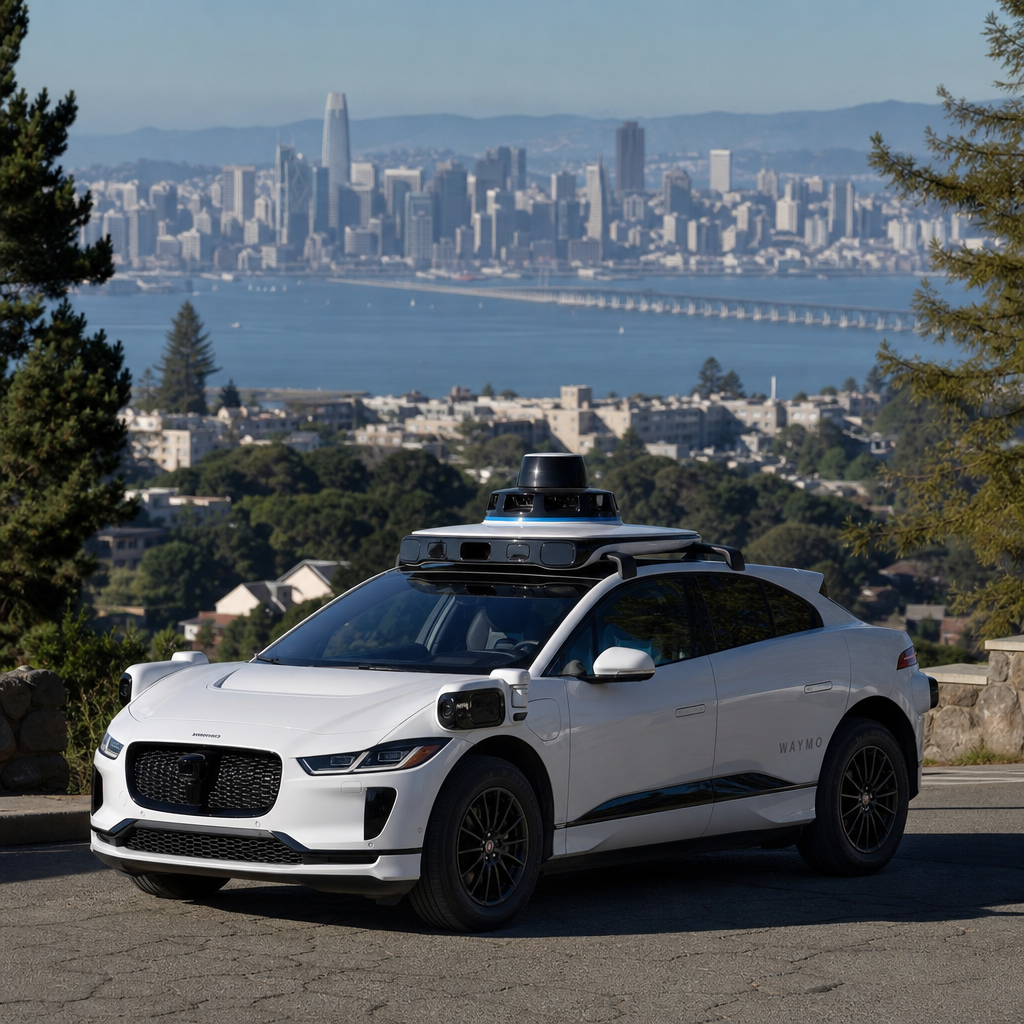
Silicon Valley’s view of autonomous vehicle technology is shaped as much by entrepreneurship and venture capital as by sensors, software, and safety regulation. In practice, the future of self-driving systems is not a single product category; it is a stack of businesses spanning chips, mapping, simulation, fleet operations, robotics middleware, insurance, and logistics. When investors, founders, and operators in the Valley talk about autonomous vehicles, they usually mean systems that can perform part or all of the driving task using cameras, radar, lidar, onboard compute, machine learning models, and high-definition localization. They also distinguish between advanced driver assistance, which supports a human driver, and higher autonomy, where the system controls the vehicle under defined conditions. That distinction matters because the path to revenue, risk, and regulation changes at each level. For entrepreneurs building companies in this space, the lesson is broader than transportation. Autonomous vehicle tech is a live case study in mastering entrepreneurship: identify a painful problem, validate the timing, build around constraints, and align capital strategy with technical reality.
From years of watching founders pitch mobility platforms, I have seen the same hard truth repeat itself: brilliant technology does not create a durable company unless the go-to-market model, safety case, and unit economics are equally strong. This is why autonomous vehicles matter to the wider entrepreneurship and venture capital conversation. They show how innovation moves from research lab to startup to public road, and how venture-backed companies must balance ambition with execution. The sector has also become a reference point for evaluating deep tech startups in general. Questions that investors ask AV founders now echo across climate tech, AI infrastructure, robotics, and defense technology: Is the market ready, does the team understand regulation, can the product be validated with real data, and is the capital intensity justified by the potential return? Silicon Valley’s take on the future of autonomous vehicle tech is therefore also a practical blueprint for mastering entrepreneurship in complex markets.
The Valley’s Core Thesis: Autonomy Will Arrive Through Narrow, Valuable Use Cases
The dominant Silicon Valley thesis today is not that every private car will become fully self-driving overnight. It is that autonomy will first win in constrained environments where the economics are obvious and the operating domain is narrow. That means robotaxis in mapped urban zones, autonomous trucking on repeat highway routes, delivery vehicles on fixed corridors, industrial shuttles on private campuses, mining haul trucks, and warehouse yard operations. Founders who frame autonomy as a targeted business solution generally raise money more effectively than those who describe it as a distant universal platform.
This shift reflects lessons learned from the last decade. Companies such as Waymo, Cruise, Aurora, Motional, Nuro, and Kodiak showed that real-world deployment requires far more than model accuracy on benchmark datasets. It requires redundancy, edge-case handling, remote assistance procedures, incident response, and expensive operational discipline. Silicon Valley respects bold vision, but it funds milestones. The startups attracting attention now are those that can define an operational design domain clearly, measure disengagements and interventions honestly, and show where gross margin can eventually emerge.
For entrepreneurs outside mobility, this pattern is instructive. The best startups do not start by solving everything. They start by owning a painful wedge. In autonomous vehicles, that wedge may be middle-mile freight in the Sun Belt, where weather is favorable and routes are predictable. In another market, the equivalent wedge might be compliance automation for one regulated workflow. Mastering entrepreneurship means narrowing scope until execution becomes provable.
Why Venture Capital Backs AV Startups Despite the Cost
Autonomous vehicle companies are expensive to build. They need specialized talent, safety drivers or teleoperators, sensor hardware, simulation infrastructure, high-performance compute, and long testing cycles. Yet Silicon Valley keeps backing the category because the upside is system-level. If a company can reliably automate transport, it can reshape labor costs, asset utilization, delivery speed, and consumer convenience across industries worth trillions of dollars.
Investors also know that enabling layers can become major businesses even if full autonomy takes longer than expected. Nvidia became central through compute platforms. Mobileye built a major business by scaling driver assistance and mapping before fully autonomous deployment. Applied Intuition gained traction by focusing on simulation and vehicle software tooling, serving automakers and defense customers. These examples matter for founders because they reveal a core venture principle: in emerging markets, picks-and-shovels businesses often commercialize earlier than category-defining end products.
| Segment | Primary Customer | Why Investors Care | Example Opportunity |
|---|---|---|---|
| Robotaxi platforms | Urban riders and fleet operators | Massive market if utilization is high | Autonomous ride-hailing in geofenced districts |
| Autonomous trucking | Logistics carriers | Clear labor and efficiency gains | Hub-to-hub highway freight |
| AV software tools | OEMs and developers | Earlier revenue, recurring contracts | Simulation, validation, scenario testing |
| Sensors and compute | Vehicle manufacturers | Platform leverage across many programs | Lidar modules, AI chips, domain controllers |
For anyone studying entrepreneurship, the capital lesson is clear. Investors do not only fund the final vision; they fund credible sequences. A founder who can show how today’s product finances tomorrow’s ambition has a stronger story than one who relies on distant scale alone.
What Technology Leaders Believe Will Actually Differentiate Winners
In Silicon Valley, there is less fascination now with flashy demos and more attention on the full autonomy stack. Winning teams differentiate through data quality, systems engineering, safety architecture, and operational learning loops. Cameras, radar, and lidar each have strengths and weaknesses. Cameras provide rich visual information but can struggle in poor visibility. Radar performs well in adverse weather and detects velocity effectively. Lidar gives precise depth but adds cost and integration complexity. The serious question is not which sensor is fashionable. It is how a company fuses inputs, validates outputs, and creates redundancy appropriate to its operating domain.
Leaders also focus on simulation because public-road testing alone is too slow and too risky. Mature programs use scenario-based validation, synthetic data generation, and replay frameworks to test rare events such as sudden cut-ins, obscured pedestrians, or emergency vehicles approaching from behind. Standards and frameworks from organizations such as SAE International and ISO influence how companies define levels of autonomy and functional safety. ISO 26262 remains foundational for automotive functional safety, while newer work around safety of the intended functionality has become essential when machine learning systems behave correctly according to code but still fail in ambiguous real-world conditions.
This is where mastering entrepreneurship becomes more than hustle. Great founders build organizations that can learn faster than the problem changes. In AV, that means converting every intervention, near miss, and environmental anomaly into product improvement. In any startup, the same principle holds: feedback loops beat slogans.
The Business Model Reality: Operations Matter as Much as Algorithms
One of Silicon Valley’s clearest conclusions is that autonomous vehicle companies are operations businesses disguised as software businesses. A robotaxi service needs charging or fueling, cleaning, maintenance, dispatch, customer support, permitting, depot management, and city relationships. An autonomous trucking network needs transfer hubs, remote monitoring, freight brokerage integration, and roadside service plans. The software may be the breakthrough, but operations determine whether the economics survive contact with reality.
That is a foundational entrepreneurship lesson. Many founders underestimate what it takes to move from prototype to reliable service delivery. In board meetings, I have repeatedly seen investors push teams to answer simple questions with brutal precision: What does a trip cost? What causes downtime? How many people support each autonomous vehicle today, and how many can support it at scale? Until those metrics improve, technical progress does not translate into venture-scale returns.
Nuro offers a useful example of strategic focus. Instead of starting with passenger transport, it emphasized low-speed autonomous delivery, reducing several safety and service complexities. Waymo’s commercial progress in Phoenix and other cities shows the value of gradual geographic expansion. By contrast, programs that expanded narrative before proving operations often faced resets. The entrepreneurial takeaway is timeless: sequence expansion after process control, not before.
Regulation, Trust, and the Founder’s Credibility Test
No discussion of the future of autonomous vehicle tech is complete without regulation and public trust. In Silicon Valley, sophisticated founders no longer treat regulation as an external obstacle to be fought later. They treat it as part of product design and market entry. State motor vehicle rules, federal vehicle safety oversight, local permitting, data privacy expectations, and incident reporting all shape how an AV business launches.
Public trust is equally decisive. After high-profile crashes or recalls, confidence can erode quickly, even when the underlying technology continues to improve. That is why credible companies publish safety frameworks, describe testing methods, and communicate limitations clearly. Overclaiming autonomy is one of the fastest ways to lose both regulatory goodwill and customer confidence. The strongest founders I have worked with speak plainly about where the system performs well, where it does not, and what safeguards exist.
This credibility test applies across entrepreneurship. Markets reward founders who can combine ambition with precision. If your product touches safety, finance, health, or public infrastructure, trust is not a marketing layer. It is the business model.
What Entrepreneurs Can Learn From the AV Sector Right Now
Silicon Valley’s take on autonomous vehicle technology ultimately comes down to disciplined optimism. The opportunity is real, but the winners will be the companies that solve constrained problems, build trust, and earn the right to expand. For founders mastering entrepreneurship, AV offers a sharp playbook. Start with a painful use case. Know the economics before scaling. Build enabling infrastructure, not just the headline product. Respect regulation early. Treat operations as a core competency. Most of all, create feedback systems that turn real-world complexity into a competitive advantage.
As a hub for mastering entrepreneurship, this topic matters because it connects innovation strategy, fundraising, product management, risk, and execution in one demanding market. Autonomous vehicles are not just about the future of transportation. They are about how serious companies are built when the technology is difficult, the stakes are high, and the market is watching. Study this sector closely and you will understand more than mobility. You will understand how venture-scale entrepreneurship actually works. Use that lens to evaluate your own idea, tighten your wedge, and build a company that earns belief through evidence.
Frequently Asked Questions
1. How does Silicon Valley define the future of autonomous vehicle technology?
In Silicon Valley, the future of autonomous vehicle technology is rarely viewed as just a consumer self-driving car. Instead, it is understood as a much broader technology and business stack that includes semiconductors, sensing hardware, perception software, mapping, simulation, robotics platforms, connectivity, fleet orchestration, insurance, logistics, and compliance infrastructure. That perspective matters because it changes how founders build companies and how investors evaluate opportunities. Rather than betting only on a single “winner” in autonomous cars, Valley thinking often focuses on the enabling layers that can serve multiple vehicle types and multiple industries.
This is why discussions about autonomous systems in the Valley often include robotaxis, autonomous trucking, warehouse vehicles, sidewalk delivery robots, industrial mobility platforms, and advanced driver assistance systems. The belief is that autonomy will arrive in phases, with different use cases reaching commercial viability at different times. A tightly geofenced delivery route, for example, may become practical far sooner than fully autonomous operation everywhere under all weather and traffic conditions. Silicon Valley’s defining assumption is that autonomy is not one breakthrough moment but a gradual commercialization of tools, platforms, and services that together improve how vehicles perceive, decide, and operate in the real world.
2. Why do startups and investors in Silicon Valley focus on the “stack” around autonomous vehicles instead of only self-driving cars?
The reason is simple: the autonomous vehicle market is too complex and too capital-intensive to be reduced to a single product category. Building a fully autonomous system requires many interdependent technologies, and each layer can become a valuable standalone business. A company making low-power AI chips, high-definition maps, synthetic training data, simulation software, safety validation systems, or fleet management tools may have a clearer path to revenue than a company trying to launch a general-purpose autonomous car platform all at once. Silicon Valley tends to reward this modular approach because it creates more ways to scale, partner, and adapt as the market evolves.
Investors also know that timelines in autonomy can be longer than early hype suggested. By backing the broader stack, they diversify risk. If one deployment model takes longer to mature, the underlying technology may still be useful in adjacent markets such as industrial robotics, smart infrastructure, commercial trucking, agriculture, or defense applications. This stack-oriented mindset reflects a classic Valley pattern: support the platform layers that power many downstream applications. In practical terms, that means the future of autonomous vehicle tech is being built not only by vehicle makers, but also by infrastructure providers, software firms, and operational technology companies that make autonomy commercially deployable.
3. What technologies are considered most important to the next generation of autonomous vehicles?
Silicon Valley generally sees autonomous progress as the product of several technologies improving together rather than one component solving everything on its own. Core areas include sensors such as cameras, radar, and lidar; onboard compute capable of processing massive data streams in real time; machine learning models for perception and prediction; localization and mapping systems; simulation environments for testing edge cases; and robust safety frameworks that can monitor performance and trigger fallback behaviors when necessary. The companies attracting the most attention are often the ones improving reliability, reducing cost, or making these systems easier to integrate at scale.
Just as important is the software infrastructure around the driving system. Autonomous vehicles depend on training pipelines, data labeling, scenario generation, over-the-air updates, remote operations, cybersecurity protections, and middleware that allows hardware and software components to work together cleanly. Valley operators also pay close attention to energy efficiency, because the computing demands of autonomy can add significant power and thermal burdens. Over time, the winners may not be the companies with the flashiest demo, but those that can deliver a dependable, cost-effective system that performs repeatedly in constrained real-world environments. That is why the next generation of AV tech is expected to be defined by system integration, validation, and operational discipline as much as by headline-grabbing AI advances.
4. What role do safety regulation and real-world deployment play in Silicon Valley’s outlook on autonomous vehicles?
Safety regulation is central to the Valley’s current view of autonomy, even if the culture is often associated with speed and disruption. After years of ambitious promises across the industry, there is now much more emphasis on proving reliability through measurable performance, controlled pilots, and carefully scoped deployments. Silicon Valley companies increasingly recognize that regulators, city officials, insurers, commercial partners, and the public all need evidence that autonomous systems can operate safely and predictably. That means real-world deployment is no longer just a product milestone; it is part of the trust-building process that determines whether a company can expand.
In practice, this has pushed many firms toward geofenced operations, fixed delivery corridors, highway freight routes, and business-to-business applications where variables can be controlled more tightly. These environments allow companies to validate performance, gather operational data, and refine safety cases before attempting broader rollouts. Regulation is not viewed only as a barrier; in many cases, it acts as a filter that rewards technically serious companies with strong documentation, testing discipline, and risk management. From a Silicon Valley standpoint, the future of AVs will belong to organizations that can combine software iteration with rigorous safety engineering and transparent engagement with regulators and communities.
5. Which autonomous vehicle business models does Silicon Valley believe are most likely to succeed first?
Silicon Valley tends to be pragmatic about where autonomous vehicle technology can make money first. Rather than assuming that privately owned fully self-driving cars will become mainstream overnight, many founders and investors expect earlier success in commercial use cases with clear economics. Autonomous trucking on long highway routes, last-mile delivery in structured environments, industrial and warehouse autonomy, and robotaxi services in limited urban zones are frequently cited as the strongest early opportunities. These categories offer repeatable routes, high utilization, and a more direct connection between automation and cost savings, all of which make them attractive from a business perspective.
There is also strong interest in “picks and shovels” models that support the broader industry, including simulation platforms, fleet software, autonomy chips, teleoperations, insurance products, and logistics optimization tools. These businesses can benefit from the expansion of autonomy without carrying the full burden of operating vehicles themselves. That is a very Silicon Valley way of thinking: instead of asking only which company will build the ultimate autonomous car, the market asks which companies will power, insure, manage, and optimize the ecosystem around it. As a result, the Valley’s most grounded view of the future is that autonomous vehicle technology will scale first where operational constraints are manageable and unit economics are compelling, then expand outward as the technology, public trust, and regulatory frameworks mature.