Nestled in the heart of Northern California, Silicon Valley stands as the global hotspot for technology innovation and startup activity. The combination of prestigious universities, forward-thinking companies, and talented entrepreneurs has resulted in an environment that constantly churns out cutting-edge innovations. Among these technological breakthroughs, smart home technology has emerged as a significant area of focus. From voice-controlled assistants to intelligent lighting systems, the latest gadgets coming out of Silicon Valley are revolutionizing the concept of home living by making it smarter, more efficient, and increasingly interconnected.
The quest for smarter homes started with basic automation systems that could control lights or adjust the thermostat. However, recent advances have pushed the boundaries far beyond these humble beginnings. Today, the latest smart home innovations provide seamless integration of home appliances, delivering conveniences that were once the stuff of science fiction. Led by tech giants and ambitious startups, Silicon Valley’s contributions to smart home technology are enhancing the way we live at an unprecedented pace.
Yet, the term “smart home” encompasses a broad spectrum of devices and systems. From security cameras that identify intruders to refrigerators that track your groceries, the landscape of smart home technology is both vast and varied. Given the rapid pace at which these innovations are evolving, staying updated with the latest trends is crucial for anyone looking to make their home smarter. This article aims to delve deep into some of the most groundbreaking smart home technologies emerging from Silicon Valley, exploring how these advancements are setting new benchmarks for modern living.
AI-Powered Voice Assistants: The Hub of Smart Homes
The advent of AI-powered voice assistants like Amazon’s Alexa, Google Assistant, and Apple’s Siri has significantly propelled the smart home revolution. What started as mere digital assistants for setting reminders and checking the weather now serve as the central nervous system for a wide range of smart home devices. These voice-activated technologies have become integral to managing smart home ecosystems, controlling everything from lights and thermometers to security cameras and entertainment systems with simple voice commands.
As Silicon Valley continues to push the envelope, advancements in natural language processing and machine learning are making these assistants even smarter and more intuitive. Companies are constantly updating their AI algorithms to understand context better and execute more complex tasks. For instance, new updates allow these assistants to recognize different household members, adapting their responses and functionalities to suit individual preferences.
Moreover, the integrations are becoming more seamless. Today’s smart home hubs offer compatibility with a myriad of third-party devices, creating a unified control system that enhances usability and convenience. As these voice assistants continue to evolve, expect even more personalized and efficient user experiences. They will not only execute commands but also anticipate needs based on routines and preferences, epitomizing the true essence of a “smart” home.
Smart Security Systems: Safety First
Security has always been a top priority for homeowners, and Silicon Valley has responded to this need with a slew of innovative smart security solutions. These range from advanced surveillance cameras and smart locks to comprehensive security systems that offer real-time monitoring and alerts directly to your smartphone. Through the power of artificial intelligence and machine learning, these security systems are becoming not just preventative but also predictive.
Modern smart cameras, for instance, are equipped with facial recognition technology, enabling them to differentiate between known family members and potential intruders. They can trigger specific actions – such as alerting you or the authorities – based on real-time analysis of the captured footage. Likewise, smart locks offer unprecedented control over home access, allowing you to lock or unlock doors remotely, issue temporary digital keys to guests, and even receive notifications when someone enters or exits your home.
Furthermore, the integration of these systems has never been easier. Many smart security solutions are designed to work seamlessly with other smart home devices, providing a comprehensive security network that is both robust and user-friendly. By centralizing control through a single interface, be it a smartphone app or a voice assistant, managing home security has become a hassle-free experience.
Smart Lighting and Energy Management
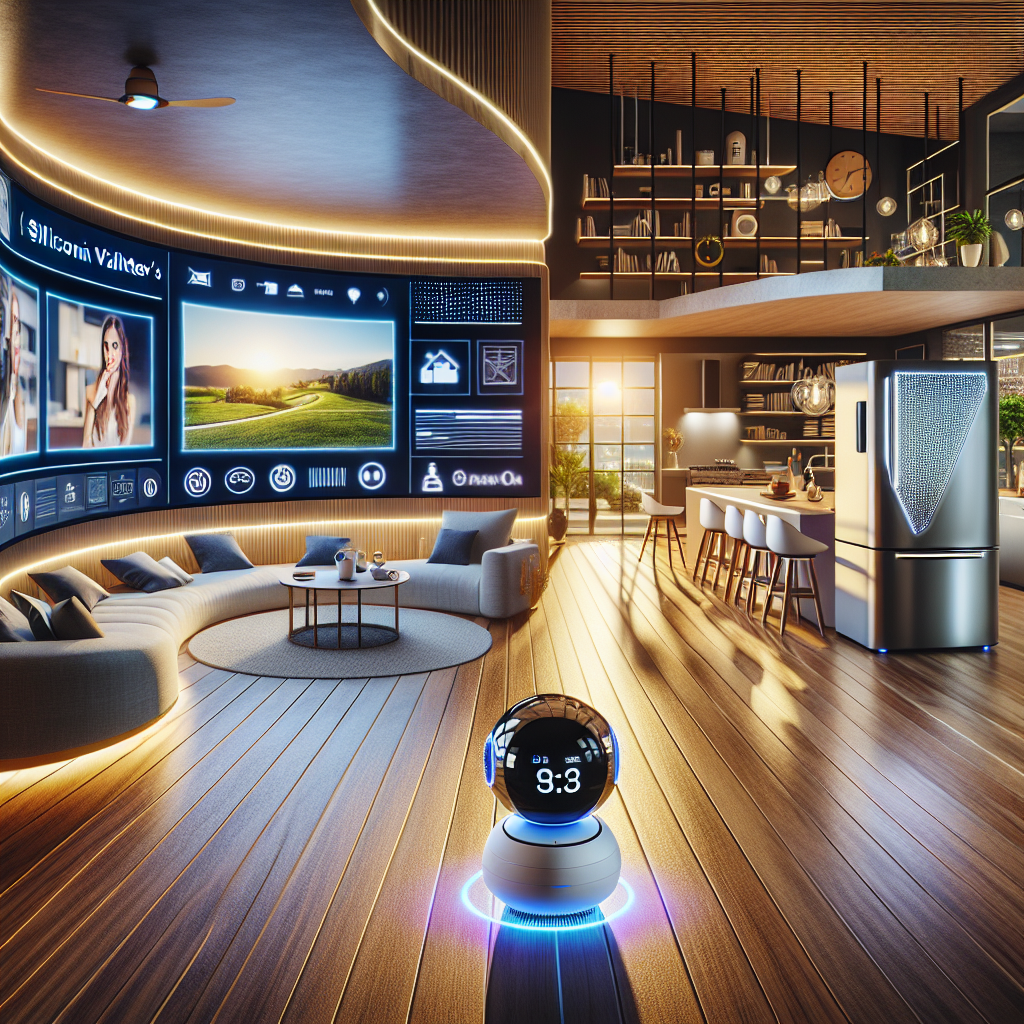
Ever walked into a room and had the lights adjust to the perfect brightness or temperature? This is no longer a luxury but a standard feature in today’s smart homes, thanks to intelligent lighting and energy management systems. Innovations in this field are aimed at creating both a comfortable living environment and reducing energy consumption, thereby addressing the growing demand for sustainable living solutions.
Silicon Valley startups are at the forefront of developing smart lighting systems that adapt to your daily routines and preferences. These systems use motion sensors and ambient light detectors to adjust the lighting automatically, optimizing comfort and energy use. Imagine lights that gradually dim as you prepare for bed, or brighten when you walk into a dark room. Such innovations not only enhance convenience but also contribute to energy efficiency.
On the energy management front, smart thermostats have become increasingly advanced. Devices like the Nest Learning Thermostat go beyond simple schedule-based programming by learning your habits and adjusting the temperature accordingly. They can even communicate with other smart devices in your home to optimize energy usage further. These smart systems provide detailed energy usage reports, helping homeowners understand their consumption patterns and make informed decisions to reduce their carbon footprint.
The Future of Smart Kitchens
Kitchens are undergoing a tech transformation, becoming the next frontier for smart home innovations. Silicon Valley is spearheading this transformation with a suite of smart kitchen appliances designed to make cooking and meal management more convenient and efficient. From intelligent ovens that cook food to perfection to smart refrigerators that help manage your grocery inventory, the future of cooking is bright— and smart.
Smart ovens, like the June Oven, use artificial intelligence to recognize what you’re cooking and suggest optimal settings for best results. These ovens can be programmed remotely via your smartphone, allowing you to monitor and adjust cooking times and temperatures from anywhere. It’s like having a personal chef in your kitchen, ensuring every meal is perfectly cooked.
Refrigerators are also getting smarter. Many now come with built-in cameras that let you check your inventory from your smartphone while shopping. Some models even create grocery lists based on what’s missing, ensuring you never run out of essential items. Additionally, these fridges can suggest recipes based on the ingredients currently available, minimizing food waste and making meal planning a breeze.
Entertainment: The Smart Home Theater Experience
Home entertainment has also seen remarkable advancements, thanks to innovations emerging from Silicon Valley. The latest smart home theaters offer immersive experiences that rival commercial cinemas, bringing the ultimate movie-watching experience right into your living room. From ultra-high-definition projectors and surround sound systems to streaming devices with AI capabilities, the smart home theater is a testament to how far technology has come in enhancing our leisure time.
Smart TVs, for example, are no longer just about high-resolution displays. They incorporate AI algorithms to suggest content based on viewing habits, integrate with voice assistants for hands-free control, and even adjust picture settings based on ambient lighting conditions. Streaming devices like Roku and Apple TV offer seamless integrations with other smart home devices, allowing for a cohesive entertainment experience that can be controlled from a single interface.
Additionally, advancements in sound technology have led to the development of smart speakers and soundbars that provide immersive audio experiences. These devices often come with voice assistant capabilities, enabling control over other smart home gadgets through voice commands. Enhanced by technologies like Dolby Atmos, these sound systems make every movie night an unforgettable experience.
Conclusion
Silicon Valley continues to be the epicenter of technological innovation, driving the evolution of smart home technology at a breakneck pace. From AI-powered voice assistants and advanced security systems to intelligent lighting, energy management, smart kitchens, and state-of-the-art entertainment systems, the innovations coming from this region are profoundly transforming the way we live.
As these technologies become more integrated and intuitive, the vision of a fully connected smart home is rapidly becoming a reality. Homeowners can look forward to a future where their homes not only meet but anticipate their needs, making everyday living more convenient, efficient, and enjoyable. The advancements in smart home technology are not just about adding new gadgets but creating a harmonized ecosystem that enhances overall quality of life.
While the current innovations are already impressive, the future holds even greater potential. With continuous advancements in artificial intelligence, machine learning, and IoT (Internet of Things), the possibilities are virtually limitless. As Silicon Valley continues to push the boundaries, we can expect even more groundbreaking smart home technologies that will redefine modern living.