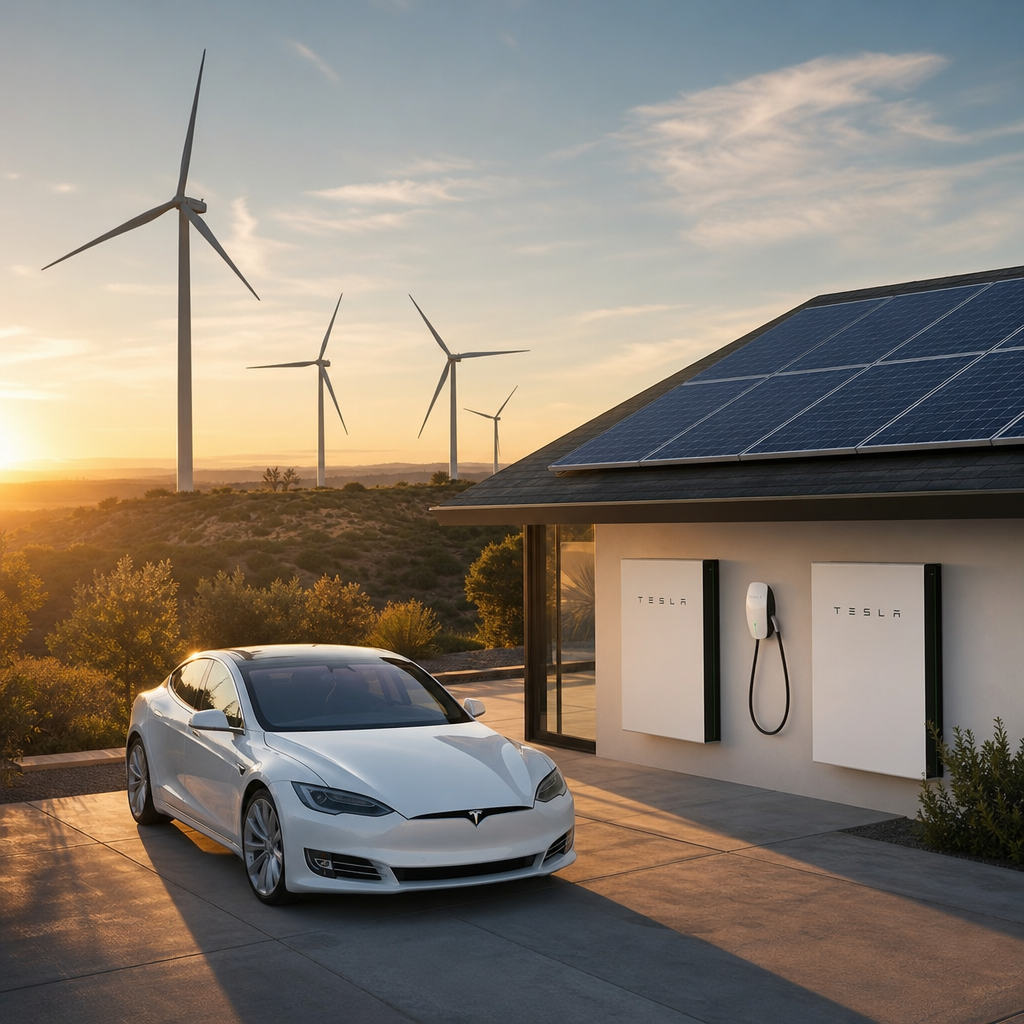
Tesla’s visionary approach to renewable energy and transportation has reshaped how consumers, utilities, and automakers think about electrification. In the Company Spotlights universe, few Movers and Shakers have influenced multiple industries at once as deeply as Tesla. The company is best known for electric vehicles, yet its broader mission centers on accelerating the world’s transition to sustainable energy through generation, storage, software, and charging infrastructure. Understanding Tesla requires defining several key terms. Renewable energy refers to power generated from naturally replenishing sources such as sunlight and wind. Electrified transportation replaces internal combustion engines with battery-powered drivetrains. Energy storage captures electricity for later use, balancing variable generation from solar and wind. Grid services are functions that help stabilize power systems, including frequency regulation, peak shaving, and backup support.
I have worked with fleets, charging deployments, and distributed energy planning, and Tesla stands out because it does not treat cars, batteries, solar, and software as isolated products. It designs them as a connected operating system for energy use. That matters because transportation and electricity are converging. Road vehicles account for a substantial share of global energy-related emissions, while grids increasingly rely on intermittent renewable resources. A company that can lower battery costs, expand charging access, and make home or utility storage practical can influence emissions, energy security, and consumer economics at scale. This hub article maps Tesla’s role across those dimensions and provides the context readers need before diving into deeper pieces on manufacturing, policy, leadership, technology, and market strategy.
Tesla matters not only because it sells popular electric cars, but because it changed expectations for what an electric company can be. Before Tesla, many automakers treated battery vehicles as compliance products with limited range, modest performance, and weak branding. Tesla reframed the category around software, fast charging, over-the-air updates, and vertically integrated design. In renewable energy, it pushed batteries from niche backup hardware toward mainstream grid assets. For investors, regulators, energy planners, and drivers, Tesla is a reference point in discussions about battery supply chains, charging standards, vehicle economics, distributed energy resources, and the pace of decarbonization.
How Tesla connected clean energy generation, storage, and mobility
Tesla’s central strategic insight is that clean transportation becomes far more valuable when paired with clean electricity and intelligent storage. The company’s solar offerings, including residential solar and Solar Roof, aim to generate electricity on-site. Powerwall stores that electricity for home use during peak pricing periods or outages. Megapack and Powerpack serve commercial and utility applications, storing large amounts of energy to reduce grid stress and integrate renewables. Tesla vehicles then become the consumption layer, using electricity generated or shifted through this ecosystem.
In practice, this integrated model solves several real-world problems. A homeowner with rooftop solar often exports midday energy when production is high and household demand is low. Without storage, much of that value depends on local net metering rules, which are increasingly less favorable in some states. With a Powerwall, more solar energy can be used after sunset, improving self-consumption and resilience. On the utility side, Megapack installations can absorb excess renewable generation and discharge during evening peaks, reducing reliance on gas peaker plants. Projects in California, Texas, and Australia have shown how grid-scale batteries can respond in milliseconds, a speed conventional thermal generation cannot match.
Tesla’s transportation strategy fits directly into that energy architecture. Electric vehicles shift fuel demand from gasoline to electricity. If charging occurs when renewable generation is abundant or when rates are low, the economic and environmental benefits improve. Tesla’s software layer helps manage this timing. Scheduled charging, route-aware energy forecasting, and real-time battery management make electric mobility more predictable for users. That integration is why Tesla is more accurately viewed as an energy and infrastructure company with a major automotive business, not simply an automaker.
Why Tesla transformed the electric vehicle market
Tesla changed the electric vehicle market by proving that battery cars could be desirable, high-performance, and practical for long-distance travel. The original Roadster established technical credibility by delivering sports-car acceleration from lithium-ion batteries. Model S then moved the brand into the premium sedan segment with long range, minimalist design, and software-centric controls. Model 3 and Model Y expanded Tesla’s reach into higher-volume categories, particularly compact sedans and crossover utility vehicles, where global demand is strongest.
Several factors explain Tesla’s impact. First, battery efficiency and powertrain engineering gave its vehicles competitive range per kilowatt-hour. Second, over-the-air software updates turned ownership into an evolving product experience rather than a static hardware purchase. Third, the Supercharger network reduced range anxiety by offering fast, reliable charging on travel corridors. Fourth, Tesla simplified the user interface around navigation, energy estimates, and route planning in ways legacy automakers were slow to match.
The economic effect spread beyond Tesla buyers. Competing automakers accelerated electric programs, invested in battery plants, and redesigned platforms for dedicated EV architectures. Governments used Tesla’s market success as evidence that consumers would adopt electric vehicles if range, charging, and product quality improved. Suppliers also responded. Battery producers expanded cell manufacturing, charging firms scaled hardware and software services, and mining companies reevaluated long-term demand for lithium, nickel, and graphite.
| Area | Tesla approach | Industry effect |
|---|---|---|
| Vehicle design | Battery-first platforms, software-led controls | Pushed rivals toward dedicated EV architectures |
| Charging | Branded fast-charging network with route integration | Raised expectations for charging reliability and convenience |
| Energy storage | Home and utility batteries tied to renewable generation | Made batteries central to grid modernization plans |
| Manufacturing | Vertical integration, gigafactories, cell innovation | Intensified global race for battery scale and localization |
The role of batteries, factories, and supply chains
If Tesla has a core competency, it is industrializing batteries across multiple product lines. Battery cells determine vehicle range, charging speed, weight, and cost, while pack integration affects safety, thermal performance, and manufacturability. Tesla’s gigafactory model addresses these constraints by colocating high-volume production, reducing logistics costs, and improving process control. Facilities in Nevada, Shanghai, Berlin, Texas, and elsewhere illustrate a strategy built around manufacturing scale as a competitive advantage.
Battery chemistry choices also matter. Lithium iron phosphate cells are often used where cost, longevity, and thermal stability are priorities, while nickel-rich chemistries can support higher energy density. Tesla has used different chemistries across models and markets, reflecting practical tradeoffs rather than ideology. The company has also emphasized pack-level design innovations, structural battery concepts, and casting methods aimed at reducing parts count and assembly complexity.
However, battery leadership comes with risks. Supply chains depend on minerals with volatile pricing, geopolitical concentration, and environmental scrutiny. Responsible sourcing, recycling, and second-life applications are therefore not optional topics. In fleet and infrastructure planning, I have seen how battery availability can delay vehicle programs or storage deployments even when customer demand is strong. Tesla’s scale helps, but it does not eliminate exposure to mining constraints, permitting timelines, or trade policy. This is one reason the company invests heavily in supplier agreements, manufacturing localization, and process efficiency.
Tesla Energy, grid resilience, and the case for storage
Tesla Energy is often overshadowed by the vehicle business, yet it addresses one of the most important constraints in renewable energy: intermittency. Solar panels generate when the sun shines, and wind farms produce when wind conditions cooperate. Electricity demand, by contrast, follows human activity patterns that rarely align perfectly with generation. Storage bridges that gap. Batteries charge when power is abundant and discharge when demand rises or supply tightens.
For homeowners, the value proposition is resilience and bill management. A Powerwall can keep essential loads running during outages and reduce dependence on expensive peak-period electricity. For businesses, storage can lower demand charges and provide backup capacity. For utilities, large battery systems can defer transmission upgrades, smooth renewable output, and provide fast-response ancillary services. The Hornsdale Power Reserve in South Australia, using Tesla battery technology, became an early high-profile example of grid batteries delivering frequency control and reserve capacity faster than conventional assets.
Storage is not a universal solution. Duration matters. Lithium-ion systems are excellent for short- to medium-duration applications, but they are less suited to very long seasonal storage than some emerging alternatives. Economics also depend on market design, tariff structures, and local reliability conditions. Still, in grids with growing solar penetration, battery storage is now a mainstream planning tool, and Tesla helped normalize that shift.
Leadership, brand power, and the limits of the vision
Tesla’s influence is inseparable from leadership and brand visibility. Elon Musk’s public profile, ambitious targets, and willingness to challenge industry assumptions drew attention that most energy companies never receive. That visibility accelerated adoption, attracted engineering talent, and kept electrification in the news cycle. At the same time, Tesla’s brand became identified with speed, disruption, and direct engagement with customers, bypassing conventional dealership structures.
Yet any serious assessment must include limits and tradeoffs. Product quality consistency has faced scrutiny at different points. Regulatory investigations, labor questions, executive communication risks, and shifting pricing strategies have all affected perception. Autonomy claims have generated particular debate, because advanced driver assistance requires precise communication about capabilities and driver responsibility. In transportation planning and fleet procurement, those nuances matter. Buyers need clear data on safety, total cost of ownership, service access, charging compatibility, depreciation, and operational fit, not just bold narratives.
For readers exploring Movers and Shakers, Tesla is best understood as a case study in how one company can force change across adjacent sectors. It made electric vehicles aspirational, made batteries central to renewable energy planning, and pressured incumbents to move faster. Follow the related Company Spotlights articles in this hub to examine Tesla’s manufacturing playbook, energy storage business, charging strategy, leadership decisions, and competitive impact in greater detail. The main lesson is simple: when transportation, power generation, and software are designed together, the path to a lower-carbon economy becomes more practical, more scalable, and harder for the rest of the market to ignore.
Frequently Asked Questions
What makes Tesla’s approach to renewable energy and transportation different from that of a traditional automaker?
Tesla stands apart because it does not operate as a conventional car company that simply happens to sell electric vehicles. Its strategy is built around a much broader ecosystem designed to support sustainable energy from end to end. That means Tesla is not only manufacturing EVs, but also developing battery storage systems, solar energy products, charging infrastructure, and software platforms that tie these technologies together. Instead of treating transportation, power generation, and energy storage as separate industries, Tesla approaches them as interconnected parts of a single transition away from fossil fuels.
This systems-level thinking is a major reason Tesla has had such an outsized impact. A consumer can drive a Tesla vehicle, charge it at home, supplement that electricity with rooftop solar, store excess energy in a Powerwall, and use Tesla software to manage the experience. On a larger scale, utilities and businesses can deploy megapack battery systems to stabilize grids and support renewable integration. That kind of vertical integration gives Tesla more control over performance, user experience, and innovation speed than most traditional automakers, which often rely heavily on suppliers and focus narrowly on vehicle sales.
Another differentiator is Tesla’s emphasis on software and over-the-air updates. The company treats vehicles and energy products as evolving platforms rather than static products. New features, efficiency improvements, and user interface changes can be delivered remotely, extending the value of the product after purchase. This mindset has helped redefine customer expectations not just for EVs, but for modern mobility and energy technology as a whole.
How has Tesla influenced the adoption of electric vehicles around the world?
Tesla has played a central role in making electric vehicles desirable, credible, and commercially viable for a mass audience. Before Tesla gained prominence, EVs were often viewed as niche products with limited range, modest performance, and little consumer appeal. Tesla changed that perception by proving that electric cars could be fast, stylish, technologically advanced, and practical for everyday use. Its vehicles helped shift the market conversation from compromise to aspiration, which encouraged both consumers and competitors to take electrification more seriously.
The company’s influence extends beyond its own sales figures. Tesla effectively pushed the broader auto industry to accelerate EV development timelines, invest more heavily in battery technology, and commit publicly to electrification strategies. Many legacy automakers expanded their electric programs in response to Tesla’s momentum and the market pressure it created. In that sense, Tesla’s impact has been catalytic: it has not only sold EVs, but also forced a strategic reset across the global automotive sector.
Tesla also helped solve practical barriers to EV adoption by building charging infrastructure and emphasizing long-range battery performance. The growth of dependable fast-charging networks, especially Tesla’s own Supercharger ecosystem, reduced range anxiety and made long-distance electric travel more realistic. Combined with a strong brand identity, direct-to-consumer sales model, and high-profile product launches, Tesla turned electric mobility into a mainstream conversation. Its role in normalizing EV ownership has been one of the most significant shifts in modern transportation.
Why are Tesla’s energy storage and solar businesses important to its overall mission?
Tesla’s mission has always been larger than selling cars. Its energy storage and solar businesses are essential because the transition to sustainable transportation only reaches its full potential when the electricity powering that transportation also becomes cleaner and more resilient. Electric vehicles reduce tailpipe emissions, but pairing them with renewable generation and battery storage creates a much more comprehensive sustainability model. That is why Tesla invests in products like Powerwall, Powerpack, Megapack, and solar systems alongside its vehicle lineup.
Energy storage is especially important because renewable sources such as solar and wind are intermittent by nature. Batteries help store excess energy when generation is high and release it when demand rises or generation falls. This capability supports households during outages, helps businesses manage energy costs, and gives utilities tools to stabilize the grid. Tesla’s large-scale storage deployments have demonstrated that batteries can serve as critical infrastructure, not just backup power devices. In many markets, grid-scale storage is becoming increasingly important as renewable penetration increases.
Solar products complement this strategy by expanding access to distributed clean energy generation. For homeowners, the combination of solar panels or solar roof systems with battery storage can reduce dependence on the grid and improve energy resilience. For Tesla, the real significance lies in creating a more integrated clean-energy lifestyle in which transportation, electricity generation, and storage reinforce one another. This holistic approach supports the company’s long-term vision of accelerating the transition to sustainable energy on both the consumer and utility levels.
What role does Tesla’s charging infrastructure play in its success and broader industry impact?
Tesla’s charging infrastructure has been one of the company’s most strategically important advantages. Early in the EV market’s development, one of the biggest obstacles to adoption was uncertainty about where and how drivers would recharge, particularly on longer trips. Tesla addressed this challenge by investing in its own charging network rather than waiting for third-party infrastructure to mature. The Supercharger network became a powerful competitive differentiator because it gave Tesla owners a more seamless and reliable charging experience than many early EV drivers had access to elsewhere.
This infrastructure strategy did more than support Tesla customers; it also helped build public confidence in electric mobility. A robust charging network makes EV ownership feel practical rather than experimental. It reassures consumers that electric vehicles can handle commuting, road trips, and daily convenience needs. By solving this piece of the ownership puzzle, Tesla helped remove one of the most persistent psychological barriers to EV adoption: range anxiety. The company understood that a compelling vehicle alone would not be enough without a dependable ecosystem behind it.
In the broader industry context, Tesla’s charging model has influenced how automakers, governments, and infrastructure providers think about scalability and user experience. As charging standards evolve and networks expand, Tesla’s early investment looks increasingly visionary. It showed that infrastructure is not a side issue in transportation electrification; it is a foundational requirement. The company’s willingness to treat charging as an integral part of the product experience helped set a benchmark that the rest of the industry has had to meet.
What are the biggest challenges and opportunities facing Tesla as it continues to shape renewable energy and transportation?
Tesla’s future is defined by both enormous opportunity and significant complexity. On the opportunity side, global demand for cleaner transportation, grid modernization, battery storage, and renewable energy integration continues to grow. Governments, corporations, and consumers are all under increasing pressure to reduce emissions and invest in more sustainable systems. Tesla is well positioned in several of these markets because it already has brand recognition, manufacturing experience, software expertise, and a product portfolio that spans multiple parts of the energy transition.
At the same time, Tesla faces intensifying competition from legacy automakers, new EV startups, battery manufacturers, and energy technology firms. What was once a relatively open field is now crowded with companies investing heavily in electrification. Tesla must continue improving manufacturing efficiency, lowering costs, and maintaining product quality while scaling globally. It also faces scrutiny around supply chains, battery materials, regulatory compliance, labor issues, and execution risk in new product categories. As the company grows, maintaining the speed and boldness that defined its rise becomes more difficult.
Still, Tesla’s biggest strength may be its ability to think across industries rather than within a single market silo. If it can continue linking vehicles, charging, storage, software, and renewable generation into a coherent ecosystem, it may remain one of the most influential forces in the clean-energy transition. The larger significance of Tesla is not just that it builds electric cars or batteries, but that it helped reframe what an energy and transportation company can be. That vision continues to create both disruptive potential and high expectations for what comes next.