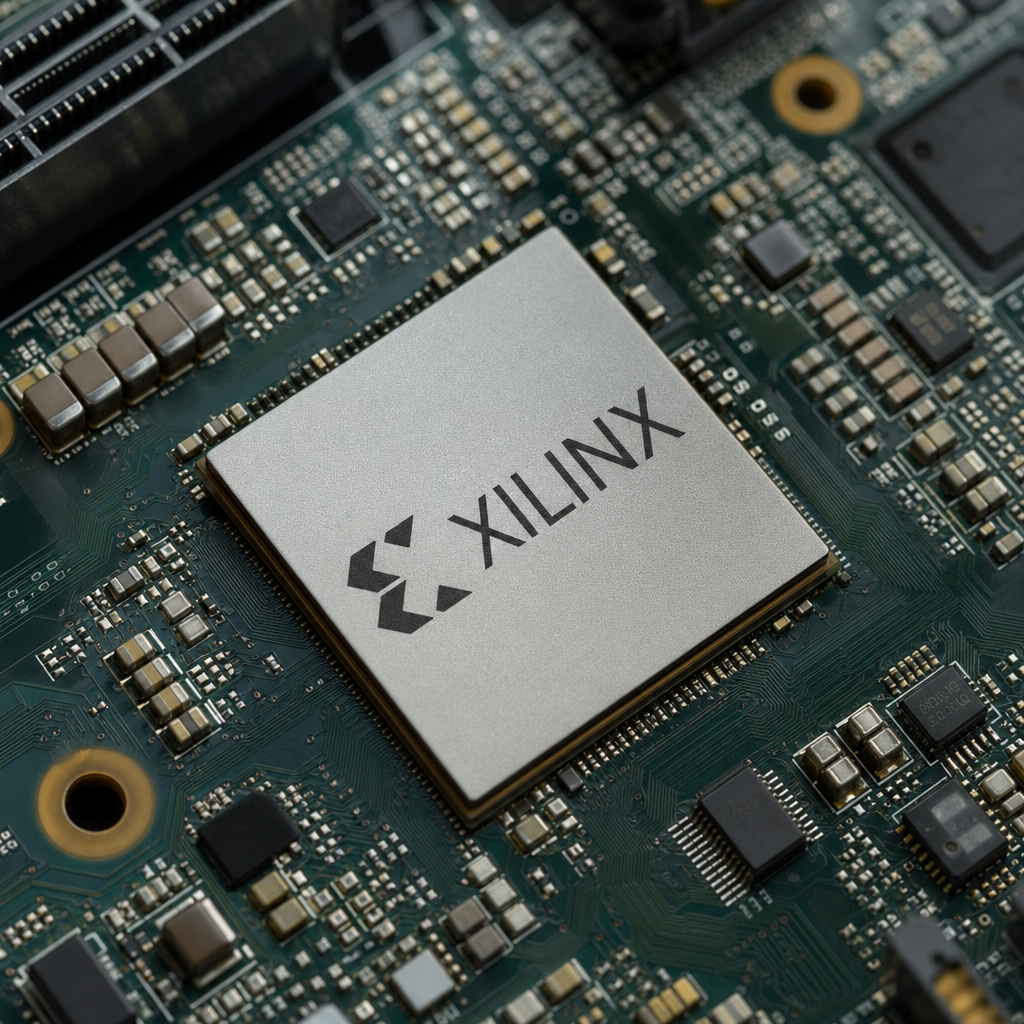
Xilinx’s influence on programmable logic devices reaches far beyond one company’s product catalog; it helped define how modern digital systems are designed, prototyped, and deployed. In the context of company spotlights and a deeper look at corporate giants, Xilinx stands out because its history mirrors the rise of reconfigurable computing itself. Programmable logic devices, or PLDs, are integrated circuits whose hardware behavior can be configured after manufacturing, unlike fixed-function chips such as ASICs. That category includes simple logic devices, complex programmable logic devices, field-programmable gate arrays, and adaptive platforms that combine programmable fabric with processors and specialized acceleration blocks. Xilinx, founded in 1984 and later acquired by AMD in 2022, is widely credited with commercializing the FPGA in a way that changed electronics engineering.
Why does that matter? Because PLDs shortened development cycles, lowered the risk of hardware innovation, and made it practical to update digital logic without spinning a new chip. In my experience working around embedded design teams, Xilinx tools and devices repeatedly showed up at the exact points where flexibility mattered most: early prototyping, uncertain standards, industrial control, aerospace validation, telecom upgrades, and high-performance acceleration. Engineers chose them when requirements were moving targets. That practical value is the real reason Xilinx belongs in any serious discussion of corporate giants. Its influence can be measured not only in market share or product families, but in design methodology, semiconductor competition, and the expectation that hardware should increasingly behave like software: adaptable, iterative, and field-updatable.
As a hub article for diving deeper into corporate giants, this page explains how Xilinx shaped the PLD market, why its technical decisions mattered, how it compared with rivals, and what lessons its trajectory offers for understanding the semiconductor industry. If you are exploring company spotlights, Xilinx is an ideal anchor because it connects invention, manufacturing strategy, software ecosystems, and end-market adoption in one story.
How Xilinx Defined the FPGA Category
Xilinx did not invent the entire idea of programmable logic, but it established the FPGA as a commercially important category. Earlier programmable devices existed, including PROMs, PALs, and GALs, yet they were narrower in capability. The breakthrough came with a dense array of configurable logic blocks connected through programmable routing, allowing one device to implement complex digital systems. Xilinx’s XC2064, introduced in 1985, is generally recognized as the first commercially successful FPGA. That launch changed the economics of digital design. Instead of committing to a custom ASIC too early, engineers could verify architectures in programmable hardware and, in many cases, ship products using the FPGA itself.
The company’s impact came from pairing architecture with usable development tools. Hardware only becomes influential when engineers can compile designs, place and route them, verify timing, and program boards with reasonable confidence. Xilinx built that supporting environment over decades, evolving from schematic-based flows to HDL-centric development using VHDL and Verilog, then later to higher-level synthesis and platform-based design. The significance of that progression is easy to underestimate. A programmable chip without a workable toolchain remains a lab curiosity. Xilinx made programmable logic part of mainstream engineering practice.
Another reason Xilinx defined the category was its willingness to target demanding applications. Telecom infrastructure, military systems, video processing, medical imaging, automotive driver assistance, and industrial automation all needed devices that balanced flexibility with deterministic performance. Xilinx consistently addressed those needs with faster transceivers, larger logic capacity, embedded memory, DSP slices, and hard processor blocks. The result was a broad market education campaign through products themselves: they taught industries what FPGAs could do.
Key Innovations That Expanded Programmable Logic
Xilinx’s influence is best understood through a series of innovations that moved PLDs from glue logic into system-level computing. One major step was the transition from basic logic arrays to richer architectures containing block RAM and dedicated DSP resources. Those additions mattered because many real workloads, from FIR filtering to packet inspection, depend on repeated arithmetic and fast local memory. General-purpose lookup tables alone are inefficient for that class of work. By integrating hardened resources, Xilinx improved performance per watt and made FPGAs viable in signal processing and communications.
A second milestone was the integration of processors. Families such as Zynq combined ARM cores with FPGA fabric, letting developers partition work between software and hardware in one device. In practical terms, a control plane could run Linux while the programmable logic handled motor control loops, vision pipelines, or low-latency network functions. I have seen this architecture reduce board complexity dramatically because it removes the need for a separate processor plus FPGA pair. It also changed who could use programmable logic, bringing in embedded software teams that previously avoided pure FPGA platforms.
Xilinx also pushed high-speed serial connectivity and packaging technology. As networking standards advanced from gigabit links to 10G, 25G, and beyond, transceivers became central. The company invested heavily in signal integrity, clocking, and IP blocks that allowed system designers to implement protocols without starting from scratch. This mattered in data centers and telecom, where standards evolve faster than custom silicon programs can keep up.
| Innovation area | Xilinx contribution | Practical effect |
|---|---|---|
| FPGA architecture | Configurable logic blocks with scalable routing | Enabled complex post-manufacturing hardware design |
| Embedded memory and DSP | Block RAM and DSP slices in mainstream families | Improved efficiency for signal processing and buffering |
| SoC integration | Zynq devices with ARM processors plus programmable fabric | Unified software and hardware development on one chip |
| High-speed I/O | Advanced serial transceivers and protocol IP | Accelerated adoption in telecom and data infrastructure |
| Adaptive computing | Versal ACAP architecture | Expanded FPGA concepts into heterogeneous acceleration |
More recently, the Versal adaptive compute acceleration platform extended the company’s philosophy into heterogeneous computing. Rather than treating the FPGA as only programmable gates, Xilinx packaged scalar engines, adaptable hardware, AI engines, memory hierarchy, and network-on-chip resources into a coordinated platform. That design acknowledged a market reality: modern workloads are mixed, and no single compute model is optimal for everything.
Xilinx Versus Rival Corporate Giants
No company spotlight on Xilinx is complete without comparing it with major rivals, especially Altera, now part of Intel, and to a lesser extent Lattice and Microchip in adjacent programmable logic segments. Xilinx and Altera spent decades in a close competitive cycle. Xilinx often emphasized broad portfolio leadership, strong tool maturity, and aggressive pursuit of communications and embedded markets. Altera built its own loyal base in telecom, industrial, and data applications, often competing on architecture efficiency and design flow preferences. In practice, many engineering teams selected between the two based on IP availability, timing closure experience, supply agreements, and internal familiarity rather than headline specifications alone.
Xilinx’s advantage frequently came from ecosystem depth. Vivado became a standard environment for many advanced FPGA projects, while Vitis reflected the industry push toward software-defined acceleration. Evaluation kits, reference designs, partner IP, and long support horizons also helped. When a company builds not just chips but a dependable workflow, procurement risk declines. That is especially important in aerospace, defense, and industrial automation, where product lifecycles can last more than a decade.
Lattice followed a different path, focusing more on low-power and smaller-form-factor devices, while Microchip’s programmable logic portfolio, strengthened through the Microsemi acquisition, remained notable in aerospace and defense for radiation tolerance and reliability-focused offerings. These differences highlight Xilinx’s strategic position: it consistently aimed at the high-value center of programmable computing, where performance, flexibility, and ecosystem breadth justified premium adoption.
Real-World Industries Shaped by Xilinx
Xilinx influenced industries by giving them a practical bridge between fixed-function hardware and general-purpose processors. In telecommunications, base stations and optical transport systems relied on Xilinx devices for protocol adaptation, forward error correction, packet processing, and interface changes as standards evolved from 3G to 4G and into 5G. Operators needed upgrade paths without replacing entire hardware platforms, and programmable logic made that possible.
In automotive systems, Xilinx entered advanced driver-assistance applications where parallel processing and deterministic latency are essential. Camera inputs, sensor fusion paths, and in-vehicle networking benefit from hardware acceleration that can be customized for evolving algorithms. In industrial automation, Xilinx devices frequently handled motor control, machine vision, and real-time fieldbus interfacing. These are environments where downtime is expensive and predictable behavior matters more than raw peak benchmark numbers.
Data centers became another important chapter. Before specialized AI chips dominated headlines, Xilinx demonstrated that FPGAs could accelerate search, compression, encryption, recommendation, and network offload tasks. Microsoft’s Project Catapult is one of the clearest examples. By deploying FPGAs in its data center infrastructure, Microsoft showed that reconfigurable acceleration could deliver meaningful gains for Bing search and network functions at scale. That public proof point elevated the entire category and validated years of Xilinx positioning around adaptable compute.
Lessons From Xilinx’s Corporate Strategy
Xilinx teaches several broader lessons about corporate giants in semiconductors. First, category creation is rarely enough; sustained influence comes from building tools, ecosystems, and developer trust around the core product. Second, flexible hardware wins when standards are unsettled or workloads change faster than silicon design cycles. Third, partnerships matter. Xilinx worked across foundries, board vendors, IP providers, cloud platforms, and enterprise customers, which expanded its reach far beyond what standalone chip sales would suggest.
The AMD acquisition underscored another lesson: boundaries between CPUs, GPUs, and programmable logic are blurring. Heterogeneous computing is now a mainstream strategy, not a niche idea. Xilinx brought AMD deep expertise in adaptive hardware, embedded systems, and specialized acceleration for networking, edge inference, and signal processing. That combination reflects where the broader market is headed.
Why Xilinx Remains Essential in Company Spotlights
For anyone diving deeper into corporate giants, Xilinx remains essential because its legacy explains how reconfigurable hardware became central to modern electronics. It transformed programmable logic devices from specialist components into strategic platforms used across telecom, automotive, aerospace, industrial systems, and cloud infrastructure. Its major contribution was not just a family of chips, but a durable design philosophy: when requirements evolve, hardware should be able to evolve with them.
The key takeaway is straightforward. Xilinx influenced programmable logic devices by commercializing the FPGA, expanding it with memory, DSP, processors, and adaptive acceleration, and proving its value in real systems where flexibility and performance had to coexist. That impact still shapes the semiconductor industry today through product architectures, development tools, and the broader move toward heterogeneous computing. If you are building out your understanding of company spotlights, use Xilinx as a hub case study, then continue to related profiles on AMD, Intel, Lattice, and Microchip to see how competing strategies shaped the programmable logic market.
Frequently Asked Questions
What made Xilinx so important in the history of programmable logic devices?
Xilinx became a defining force in programmable logic devices because it helped turn reconfigurable hardware from a niche idea into a practical mainstream technology. Before programmable logic reached maturity, many digital systems depended on fixed-function chips or custom ASICs, which could be expensive, slow to develop, and difficult to revise once manufactured. Xilinx helped change that model by advancing field-programmable gate arrays, or FPGAs, as a flexible alternative that allowed engineers to configure hardware behavior after fabrication. That was a major shift in how designers approached performance, prototyping, and product iteration.
Its importance also comes from timing. Xilinx emerged as demand was growing for more adaptable digital systems in telecommunications, industrial control, automotive electronics, defense, and computing infrastructure. By offering devices that could be repeatedly reprogrammed, Xilinx gave engineers a way to test architectures, deploy updates, and shorten development cycles without committing immediately to a custom chip. In practical terms, that reduced risk while encouraging experimentation.
Just as important, Xilinx did not influence the market only through silicon. It helped shape the surrounding design ecosystem, including development software, IP cores, reference designs, and engineering workflows. That ecosystem lowered the barrier to entry for programmable logic and made FPGA-based design more accessible to a larger range of companies and applications. As a result, Xilinx’s influence extends beyond its own products: it helped establish the expectations, tools, and design culture that still define programmable logic development today.
How did Xilinx help change the way modern digital systems are designed?
Xilinx changed modern digital design by promoting a workflow in which hardware could be treated as something adaptable rather than permanently fixed. Traditionally, hardware development often required long design cycles followed by fabrication steps that locked functionality into silicon. With Xilinx programmable logic, engineers could implement, test, and modify digital circuits after the chip had already been manufactured. That introduced a level of design agility that was previously much harder to achieve in hardware projects.
This flexibility had several major consequences. First, it accelerated prototyping. Design teams could validate interfaces, timing, and system behavior on real hardware much earlier in the development process. Second, it made iteration less costly. If requirements changed, standards evolved, or bugs appeared, the logic could often be updated through reconfiguration rather than a full hardware redesign. Third, it enabled hardware-software co-development, where embedded processors, custom logic, and high-speed interfaces could be built together in a more integrated way.
Xilinx also helped expand the role of hardware acceleration. Instead of relying only on general-purpose processors, system architects could offload specific tasks into programmable logic for better throughput, lower latency, or deterministic behavior. That idea became especially influential in networking, signal processing, machine vision, and data center workloads. In that sense, Xilinx did more than sell programmable devices; it helped normalize the idea that digital systems could be architected as evolving platforms, combining software flexibility with hardware-level performance.
Why are FPGAs and other PLDs associated so closely with Xilinx?
FPGAs and programmable logic devices are closely associated with Xilinx because the company was one of the most visible and influential pioneers in commercializing and advancing the category. While programmable logic has a broader history that includes several device types such as PALs, GALs, CPLDs, and FPGAs, Xilinx became especially well known for demonstrating the power and scalability of FPGA technology. Over time, the company became almost synonymous with the idea of configurable digital hardware for many engineers, educators, and system designers.
That close association comes from both technical leadership and market presence. Xilinx introduced device families that addressed a wide range of performance and complexity levels, from relatively modest logic needs to highly sophisticated systems with embedded processing, memory resources, DSP blocks, and high-speed transceivers. This broad portfolio allowed programmable logic to move from simple glue logic and interface bridging into demanding applications such as communications infrastructure, aerospace systems, video processing, and advanced embedded platforms.
Another reason is educational influence. Countless engineers learned programmable logic design using Xilinx tools, evaluation boards, and training materials. Universities, development labs, and commercial design teams often used Xilinx platforms for teaching and prototyping, which reinforced the company’s role in shaping how people understood FPGA design. When a company influences not just products but also the language, workflows, and learning path around a technology, its name naturally becomes tightly linked with the technology itself.
In what industries did Xilinx have the biggest impact with programmable logic?
Xilinx had a major impact across multiple industries, but some sectors benefited especially strongly from programmable logic’s blend of flexibility and performance. Telecommunications is one of the clearest examples. Network equipment often must support evolving standards, high data throughput, and specialized signal processing, all areas where FPGAs are particularly valuable. Xilinx devices allowed telecom manufacturers to adapt hardware designs more rapidly and bring infrastructure products to market without waiting for custom silicon development.
Industrial and embedded systems also saw significant benefits. In factory automation, robotics, vision systems, and motor control, programmable logic can deliver deterministic real-time behavior and custom interfacing that is difficult to match with software alone. Xilinx helped make those solutions more practical by offering devices capable of integrating control logic, communication interfaces, and acceleration functions into a single reconfigurable platform.
The company also had major influence in aerospace and defense, where long product lifecycles, mission-specific customization, and field update capability are especially important. In automotive and video applications, Xilinx devices supported advanced sensing, processing, and connectivity functions. More recently, data centers and AI-related workloads highlighted another aspect of the company’s impact: programmable hardware as an accelerator for specialized computation. Across all of these industries, Xilinx’s contribution was not just enabling one product class, but showing that adaptable hardware could solve real commercial problems at scale.
What is Xilinx’s long-term legacy in programmable logic and reconfigurable computing?
Xilinx’s long-term legacy lies in proving that reconfigurable computing is not simply a temporary engineering convenience, but a foundational approach to building digital systems. The company helped establish the idea that hardware can remain flexible after manufacturing, allowing systems to evolve with new standards, new workloads, and new market demands. That principle has had lasting implications for product development, system architecture, and even business strategy, because it gives organizations more room to respond to change without starting from scratch.
Its legacy also includes the maturation of the FPGA ecosystem. Modern programmable logic design depends not only on configurable chips, but on synthesis tools, place-and-route software, verification flows, reusable IP, development boards, and integration with embedded processors and software stacks. Xilinx played a central role in building and refining that ecosystem, which made programmable logic more practical for mainstream engineering teams. In many ways, the company helped transform FPGAs from specialized components into strategic platforms.
Perhaps most importantly, Xilinx influenced how engineers think. It encouraged designers to view hardware as something that could be optimized, updated, and tailored to specific tasks long after fabrication. That mindset paved the way for broader acceptance of hardware acceleration, heterogeneous computing, and adaptable system architectures. Whether discussed in the context of classic PLDs, modern FPGAs, or the broader rise of reconfigurable computing, Xilinx remains one of the companies most responsible for shaping the field’s technical direction and commercial relevance.