The future of space technology is being shaped as much by classrooms, maker labs, and startup incubators as by launchpads, and Silicon Valley sits at the center of that educational shift. In this context, the learning curve refers to the structured path people follow from basic STEM exposure to advanced capability in orbital mechanics, robotics, semiconductor design, remote sensing, and mission operations. I have worked with technical education programs tied to aerospace employers, and the pattern is clear: students succeed fastest when theory, tools, and real mission problems are connected early. That matters because space systems have become software-defined, data-intensive, and commercially driven. Satellites now support navigation, climate monitoring, agriculture, finance, and defense, which means the industry needs more than astronauts and rocket scientists. It needs coders, materials engineers, technicians, policy analysts, cybersecurity specialists, and teachers who can translate complex concepts into practical skills. Silicon Valley’s educational contributions are especially important because the region combines research universities, venture-backed companies, community colleges, and nonprofit STEM programs within one talent ecosystem. This article serves as a learning curve hub for understanding how that ecosystem prepares people for the next era of space technology and why those educational models matter far beyond Northern California.
Why Silicon Valley matters to space education
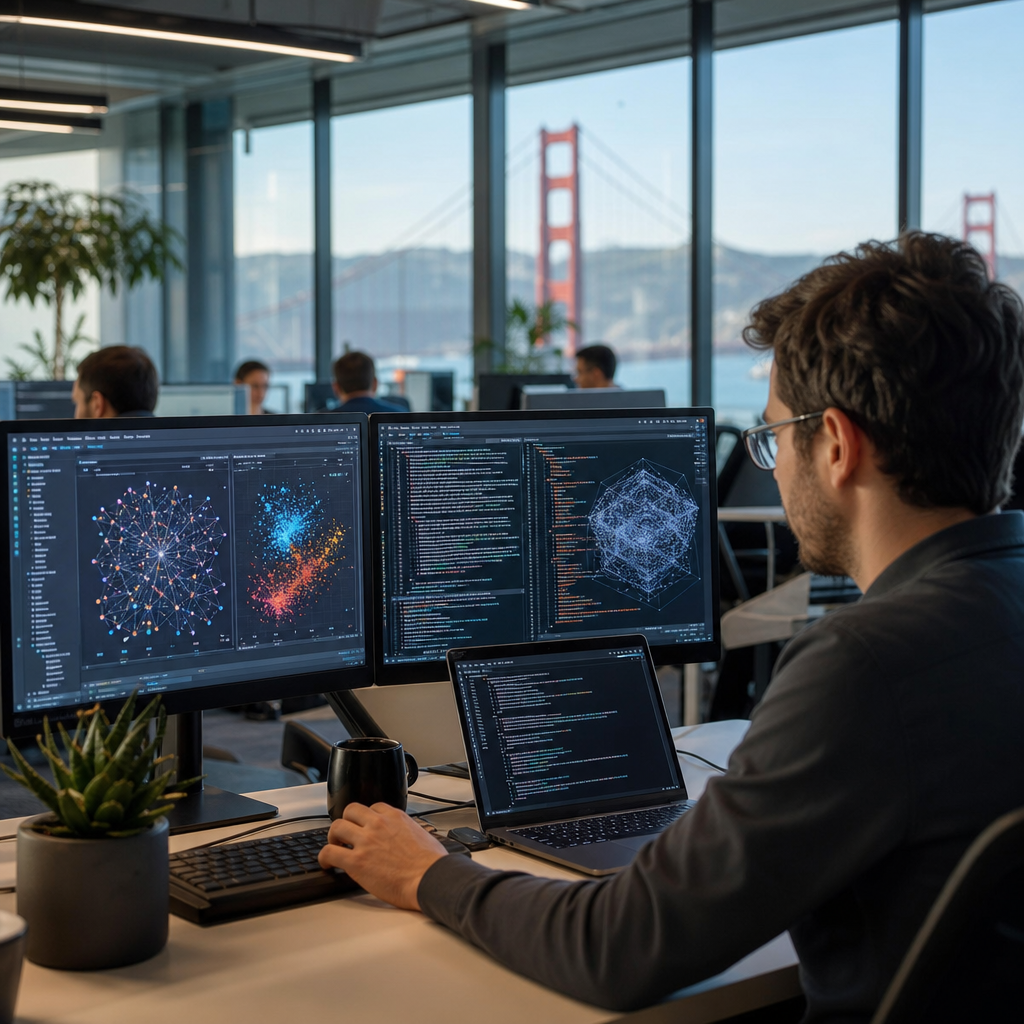
Silicon Valley matters because it connects education directly to the technologies redefining aerospace. Traditional space programs were dominated by government agencies and large defense contractors with long development cycles. Today, companies building small satellites, onboard computers, propulsion systems, Earth observation platforms, and autonomous robotics use fast iteration borrowed from the software world. That changes how people must learn. Students need fundamentals such as physics and calculus, but they also need exposure to agile development, systems engineering, clean-room procedures, simulation environments, and data pipelines. In practice, this means educational institutions in the region often emphasize project-based work over passive lecture formats.
Stanford University, Santa Clara University, San Jose State University, and nearby University of California campuses feed this model through aerospace research, electrical engineering, computer science, and machine learning programs. Community colleges contribute just as much by training technicians in electronics, manufacturing, CAD, and quality assurance. I have seen employers value a candidate who can solder, document test results, and work through a failure review as highly as one who can discuss theory. That is one of Silicon Valley’s most useful lessons for the future of space technology: the talent pipeline is strongest when advanced research and hands-on technical education develop together.
The modern learning curve for space technology
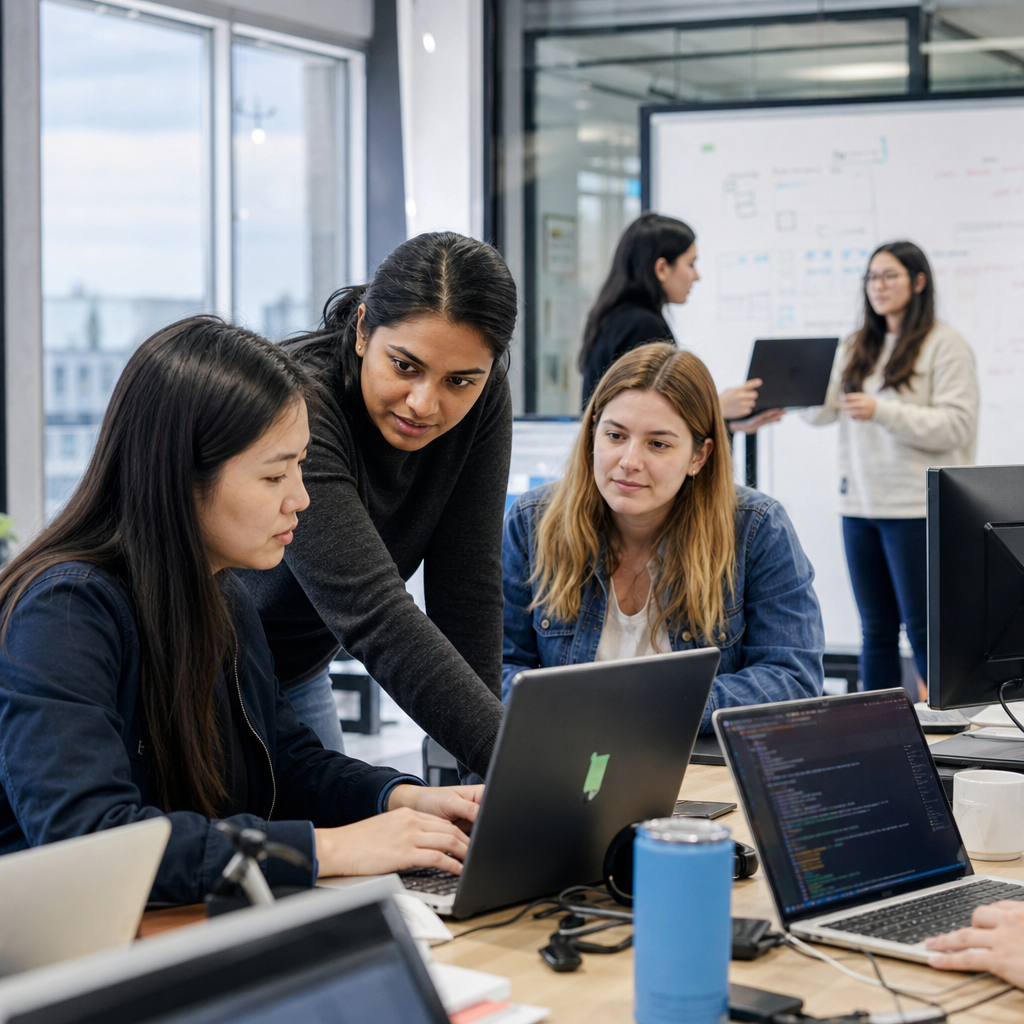
The learning curve in space technology is no longer linear. A student may begin with coding in Python, move into CubeSat design, then specialize in guidance, navigation, and control or satellite imagery analytics. Another may start in a machine shop, learn composite fabrication, and later support spacecraft structures. The most effective educational pathways build competency in layers: foundational science, digital tools, multidisciplinary teamwork, and domain specialization. In Silicon Valley, those layers often appear early through robotics competitions, maker spaces, hackathons, and university labs connected to real startup problems.
For beginners, the first step is usually conceptual fluency. Learners must understand what satellites do, how rockets reach orbit, why power budgets matter, and how communication links fail. Once that base is built, the next step is tool fluency: MATLAB or Python for modeling, SolidWorks or Fusion for design, Git for version control, and hardware platforms such as Arduino, Raspberry Pi, or FPGA boards for prototyping. After that comes system thinking. Space missions fail when teams optimize one subsystem and ignore the rest, so students need experience balancing mass, thermal limits, radiation tolerance, latency, battery capacity, and cost. Silicon Valley education programs are effective when they expose these tradeoffs early instead of treating them as advanced topics.
| Learning stage | Main skills | Typical Silicon Valley example | Space career outcome |
|---|---|---|---|
| Foundation | Physics, algebra, coding basics | STEM camps, school robotics clubs | Preparedness for technical coursework |
| Applied tools | CAD, Python, electronics, data analysis | Maker labs, community college labs | Prototype and test support roles |
| Systems integration | Subsystem tradeoffs, documentation, teamwork | CubeSat teams, capstone design projects | Entry-level aerospace engineering roles |
| Specialization | GNC, RF, propulsion, remote sensing, AI | University research labs, startup internships | Mission-focused technical careers |
Universities, labs, and startup ecosystems as talent engines
Higher education in and around Silicon Valley contributes to space technology by turning abstract research into workforce-ready capability. Stanford has long influenced aerospace through aeronautics, astronautics, materials science, AI, and sensing research. NASA Ames Research Center in Mountain View strengthens the regional learning environment through collaborations in autonomy, astrobiology, supercomputing, and airspace systems. When students can move between classrooms, research groups, and internships, they learn the pace and standards of mission-driven work.
Startup ecosystems add something universities alone cannot: immediate exposure to constraints. A student interning at a satellite startup learns quickly that every design decision must survive schedule pressure, component shortages, launch integration requirements, and investor scrutiny. In educational terms, that compresses the learning curve. Concepts such as fault tolerance, radiation hardening, and design for manufacturability stop being textbook phrases and become operational necessities. I have watched interns become far more effective once they participate in design reviews, anomaly discussions, and test campaigns. Silicon Valley excels here because startup density creates repeated opportunities to practice high-stakes technical decision-making.
What students actually need to learn for the next generation of missions
The future of space technology depends on specific competencies, not generic STEM enthusiasm. First, software literacy is essential. Satellites increasingly rely on embedded systems, autonomous operations, onboard data processing, and secure communications. Second, data literacy matters because Earth observation constellations generate large geospatial datasets that must be processed, validated, and interpreted. Third, systems engineering is nonnegotiable. Standards, interfaces, requirements traceability, and verification plans are what keep a mission coherent. Fourth, hardware competence still matters deeply. Spacecraft are physical systems exposed to vibration, vacuum, thermal cycling, and radiation, so students must understand test methods and material behavior.
Cybersecurity is another area where educational programs must move faster. Space assets are networked assets, and uplink vulnerabilities, supply chain risks, and software weaknesses can have mission-level consequences. Learners should also understand spectrum regulation, export controls, and space policy because technical decisions are shaped by legal and commercial realities. The best programs teach these topics through integrated projects. For example, a student team designing a small imaging satellite should calculate orbit parameters, model power consumption, write command software, document failure modes, and discuss licensing constraints. That combination mirrors industry far better than isolated coursework.
How Silicon Valley broadens access to space learning
One reason Silicon Valley’s educational contributions matter is that they lower barriers to entry. Space used to feel inaccessible to anyone outside elite institutions or military pathways. Today, lower-cost sensors, open-source software, online courses, and standardized small satellite platforms have widened participation. A motivated learner can study orbital mechanics through public lectures, practice programming with open datasets, and build electronics prototypes without a million-dollar lab. Regional nonprofits, after-school STEM initiatives, and community college transfer pathways are important because they translate access into progression.
That said, access is not the same as equity. Hardware is still expensive, internships in high-cost regions can exclude talented students, and advanced labs remain unevenly distributed. Strong hub programs address this by connecting scholarships, mentorship, industry partnerships, and stackable credentials. I have seen the biggest gains when students are not only taught content but also shown how to navigate the profession: how to build a portfolio, present design work, document test results, and speak confidently in technical interviews. The future of space technology will be stronger if educational systems keep widening the pipeline without lowering technical standards.
Lessons educators and employers can apply now
Several lessons from Silicon Valley are practical for any educational institution building a space learning curve. Start with authentic problems. Students engage more deeply when asked to design a power subsystem, classify satellite imagery, or diagnose a communications fault than when they only memorize formulas. Use industry tools early, even at introductory levels, because familiarity reduces onboarding time later. Build cross-disciplinary teams, since real missions require software, mechanical, electrical, and analytical skills to work together. Make documentation part of grading, because configuration control and test reporting are core professional habits, not administrative extras.
Employers also have responsibilities. Internship programs should include structured mentoring rather than treating students as temporary labor. Companies can support capstone projects, donate hardware, provide guest lecturers, and open selected datasets for education. They should communicate the specific skills they need, whether that is RF testing, FPGA development, thermal analysis, or geospatial machine learning. Educational resources improve fastest when feedback loops are short. When faculty, students, and employers compare outcomes honestly, curricula become more relevant and the talent pipeline becomes more resilient.
Silicon Valley’s educational contributions show that the future of space technology will be built by learning systems that are practical, interdisciplinary, and closely tied to real missions. The core lesson of this learning curve hub is simple: people enter the field through many doors, but they advance fastest when fundamentals, tools, teamwork, and industry context are taught together. Universities, community colleges, research centers, startups, and nonprofits each play a distinct role, and the strongest results come when those roles connect rather than compete. For readers exploring educational resources, this topic is the foundation for every deeper article on skills, programs, tools, and career pathways. If you want to prepare students or yourself for the next generation of space work, map the learning curve clearly, prioritize hands-on projects, and build links between education and mission reality. Start with one concrete step today: choose a space-related skill, find a project-based learning path, and begin practicing it consistently.
Frequently Asked Questions
How is Silicon Valley influencing the future of space technology through education?
Silicon Valley is influencing the future of space technology by treating education as a core part of innovation rather than as a separate pipeline that begins only after college. The region’s schools, universities, maker spaces, startup accelerators, and employer-sponsored training programs often work together to move learners from early STEM exposure into highly specialized aerospace skills. That matters because modern space systems depend on interdisciplinary knowledge. A student who starts with coding or electronics in a classroom can eventually build competence in satellite communications, robotics, embedded systems, data analysis, and mission planning. In Silicon Valley, that progression is often more visible and more structured than in other regions because industry demand, venture-backed experimentation, and educational access are closely connected.
Another major contribution is the normalization of project-based learning. Instead of treating aerospace as a distant, elite field, many educational environments in the Valley encourage students to design prototypes, analyze sensor data, participate in robotics competitions, work with small satellites, or contribute to research-oriented teams. This hands-on model mirrors the way actual space technology is developed: iteratively, collaboratively, and across disciplines. It helps learners understand that the future of space exploration is not built only by astronauts and rocket scientists, but also by software engineers, chip designers, materials specialists, systems integrators, geospatial analysts, and operations professionals.
Silicon Valley also contributes by accelerating the learning curve. Learners are often exposed early to the tools and concepts that are now central to the space economy, including AI-enabled autonomy, semiconductor manufacturing, remote sensing, simulation, cloud computing, and advanced fabrication. Because these technologies are already embedded in the local innovation ecosystem, educational programs can align more quickly with real workforce needs. The result is a talent development model that helps shape the future of space technology not just by producing graduates, but by creating adaptable problem-solvers who are prepared to work on satellites, launch systems, planetary robotics, Earth observation platforms, and next-generation communications infrastructure.
What does the “learning curve” mean in space technology education, and why is it important?
In this context, the learning curve refers to the structured pathway that takes someone from broad STEM exposure to advanced aerospace capability. It is not a single class or degree, but a sequence of skill-building stages. A learner may begin with math, physics, coding, and engineering basics, then move into electronics, mechanics, and data systems, and eventually specialize in orbital mechanics, robotics, semiconductor design, remote sensing, avionics, or mission operations. This progression is important because space technology is technically demanding and highly integrated. People need both foundational knowledge and repeated practical application in order to contribute effectively.
The reason the learning curve matters so much is that the space sector can no longer rely on a narrow training model. Today’s aerospace landscape includes commercial launch providers, satellite internet companies, Earth observation firms, defense contractors, climate-tech organizations, and research institutions. Each of these needs talent with different strengths, but all depend on strong technical fundamentals. A well-designed learning curve helps learners build confidence without being overwhelmed. It also gives educators and employers a way to map readiness: what someone should know at the introductory stage, what they should practice at the intermediate stage, and what specialized capabilities are required for advanced roles.
Silicon Valley’s educational contribution is especially notable here because it often supports this curve through layered experiences. Students may encounter science clubs, coding camps, engineering electives, community college pathways, university labs, internships, incubator programs, and employer partnerships in a single regional ecosystem. That continuity reduces the gap between theory and application. It also helps students see a future in the field earlier, which is essential for retention. In practical terms, a strong learning curve creates a more diverse, better-prepared aerospace workforce and speeds the development of the systems that will define the future of space technology.
Which skills are most important for students who want to work in the future space industry?
Students preparing for the future space industry need a blend of technical depth, systems thinking, and practical problem-solving. On the technical side, strong foundations in mathematics, physics, computer science, and engineering remain essential. From there, high-value skills include programming, embedded systems, control theory, robotics, circuit design, data analysis, simulation, and materials understanding. As space systems become more software-defined and data-intensive, learners who can work across hardware and software are particularly valuable. Knowledge of orbital mechanics, communications systems, geospatial data, propulsion concepts, and autonomous operations can also become important depending on the role.
One area that deserves special attention is semiconductor and electronics education. Much of space technology depends on advanced sensors, radiation-tolerant electronics, onboard computing, and communications hardware. Silicon Valley’s strength in chip design and device engineering gives students a significant advantage if they are trained to connect these disciplines to aerospace applications. The same is true for remote sensing and data interpretation. Satellites generate massive amounts of information, and future professionals need to know how to capture, process, analyze, and apply that data for navigation, environmental monitoring, defense, agriculture, disaster response, and commercial intelligence.
Just as important are non-technical capabilities. The best aerospace teams rely on people who can communicate clearly, document rigorously, test methodically, and collaborate across specialties. Mission success often depends on understanding interfaces, constraints, deadlines, and failure modes. Students who learn how to work in cross-functional teams, present technical findings, and think in terms of systems rather than isolated components are often better prepared than those with narrow knowledge alone. That is one reason project-based educational models in Silicon Valley have had so much influence: they teach students not just what to build, but how real engineering decisions are made under pressure, with limited resources, and with mission-level consequences.
Why are maker labs, startup incubators, and industry partnerships so valuable in aerospace education?
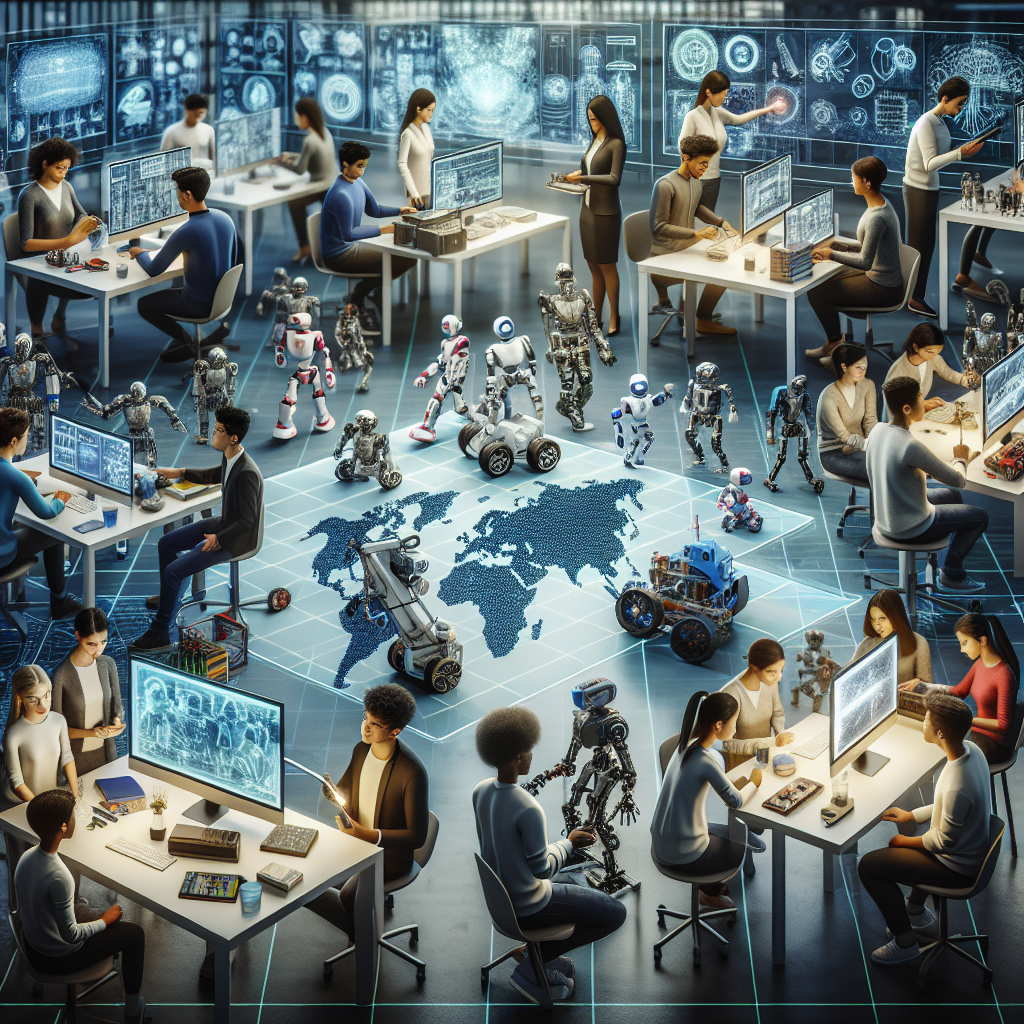
Maker labs, startup incubators, and industry partnerships are valuable because they turn abstract learning into applied capability. Aerospace is not a field where theoretical knowledge alone is enough. Students learn more effectively when they can prototype, test, fail, revise, and try again in environments that resemble real development cycles. Maker labs provide access to tools such as 3D printers, CNC machines, electronics benches, robotics kits, and software platforms. These spaces help learners understand fabrication limits, component integration, troubleshooting, and design iteration. In space technology, that kind of experience is incredibly important because even small mistakes in systems thinking can create major failures later.
Startup incubators add another dimension by exposing students and early-career professionals to fast-moving problem environments. In these settings, they see how technical innovation connects to market needs, funding realities, product timelines, and regulatory constraints. That perspective is increasingly relevant in space, where many breakthroughs come from commercial companies building launch systems, small satellites, onboard software, imaging platforms, and mission support tools. Learners who experience this environment understand earlier that aerospace innovation is not only about scientific discovery; it is also about execution, scalability, reliability, and team coordination.
Industry partnerships are often the bridge that makes the entire educational pathway credible and effective. When employers help shape curriculum, offer mentors, provide internships, or collaborate on capstone projects, students gain a clearer view of what the field actually requires. Programs tied to aerospace employers are especially helpful because they reveal the recurring pattern seen in successful talent development: learners progress faster when they can connect classroom concepts to mission-relevant applications. Partnerships also help educators update programs to reflect current tools and workflows, whether in flight software, systems engineering, semiconductor verification, robotics integration, or Earth observation analytics. In short, these environments do more than enrich education; they help build a workforce capable of advancing the future of space technology at speed and at scale.
How can educational institutions better prepare students for careers in space technology?
Educational institutions can better prepare students for careers in space technology by designing clearer, more intentional pathways from introductory STEM learning to specialized aerospace readiness. That starts with strong fundamentals, but it should not stop there. Schools and colleges need to show students how math, physics, coding, electronics, and engineering design connect directly to satellites, launch systems, robotics, remote sensing, chip development, and mission operations. When learners understand the relevance of what they are studying, they are more likely to persist through difficult material and pursue advanced opportunities.
Curriculum should also be more interdisciplinary and project-centered. Space technology is a systems field, so students benefit from working on challenges that require mechanical, electrical, software, and analytical thinking at the same time. Capstone projects, small satellite programs, robotics teams, simulation exercises, and collaborative design reviews can all help. Institutions should also invest in modern tools and teaching methods, including data platforms, CAD environments, embedded programming, AI-assisted analysis, and hands-on lab work. These experiences make the learning curve more realistic and more aligned with industry expectations.
Finally, institutions should build stronger bridges to the surrounding innovation ecosystem. That means partnering with aerospace companies, research centers, community colleges, technical bootcamps, and startup networks to create internships, mentorship programs, dual-enrollment options, and applied research experiences. It also means expanding access so that the future of space technology is shaped by a broader range of talent. Silicon Valley’s biggest educational lesson may be that the strongest space workforce is not created by a single institution acting alone. It is created by a connected ecosystem that helps learners progress step by step from curiosity to competence to contribution. When education