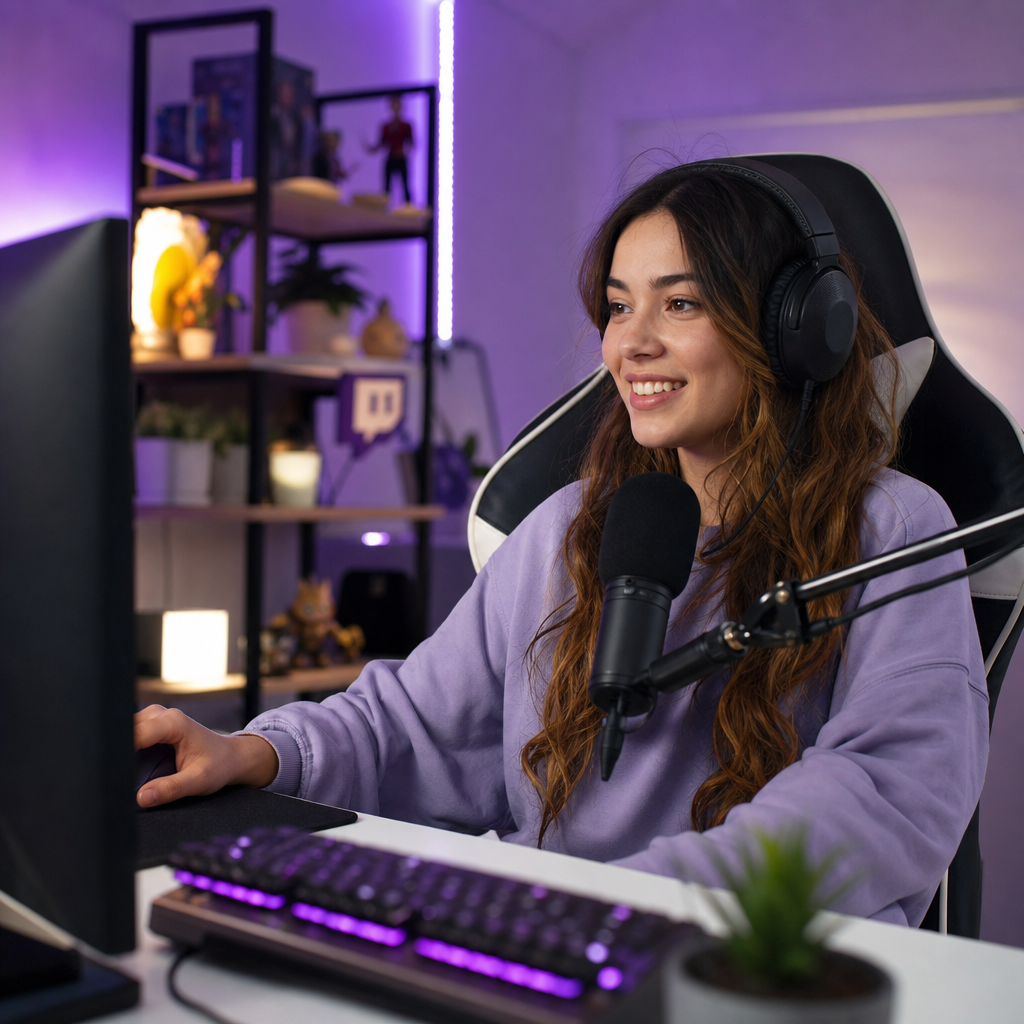
Twitch has transformed live streaming from a niche hobby into a global media format, and its influence on gamer culture now reaches entertainment, marketing, esports, music, and community building. Founded in 2011 as a spinout from Justin.tv and acquired by Amazon in 2014 for $970 million, Twitch became the default venue for live gameplay, creator-driven commentary, and real-time fan interaction. In practical terms, Twitch is a live video platform built around concurrent viewing, chat participation, subscriptions, advertising, and creator tools that make audiences part of the show. That last point matters most. Unlike traditional video, where viewers watch passively, Twitch turns spectators into participants through chat, emotes, channel points, raids, polls, moderation, and donations. I have worked with creator-led content strategies for gaming brands, and Twitch consistently stands apart because community behavior shapes the product experience as much as the video feed itself.
Understanding Twitch requires defining a few core ideas. A streamer is the broadcaster running a live channel. A viewer is not simply an audience member but a real-time contributor through chat and engagement signals. An affiliate or partner is a creator eligible for monetization through subscriptions, Bits, ads, and sponsorships. Categories organize content, from marquee game titles like Fortnite, League of Legends, and Grand Theft Auto V to broader formats such as Just Chatting, Music, and IRL. Twitch culture refers to the shared language, norms, memes, etiquette, and community expectations that have developed on the platform over more than a decade. This matters because Twitch is not only a company spotlight story; it is a case study in how digital platforms create cultural economies. For brands, creators, and publishers building within Company Spotlights or studying Movers and Shakers, Twitch is a central example of how a platform can redefine both audience behavior and business models.
Twitch’s importance comes from scale and influence rather than novelty alone. According to publicly cited industry reporting from Stream Hatchet and similar analytics firms, Twitch has repeatedly led Western live-streaming watch time even as YouTube and Kick increased competition. Its dominance in gaming categories helped normalize livestream launches, charity events, speedrunning marathons, esports co-streams, and creator collaborations as core internet entertainment formats. Major publishers now plan release windows with streamer access in mind, while game designers increasingly account for spectatability, creator modes, and viewer-friendly loops. In other words, Twitch changed not only how games are watched but how they are marketed and even designed. For anyone exploring movers and shakers in digital media, Twitch earns hub-page status because its platform decisions continue to ripple across creators, communities, and the wider games industry.
How Twitch Built the Modern Live-Streaming Model
Twitch succeeded because it combined technical reliability, category-based discovery, and a social layer that made each stream feel alive. Early on, the platform benefited from broadband improvements and from gaming’s natural fit with long-form live video. Competitive matches, speedruns, role-playing servers, and open-ended sandbox games all reward real-time commentary. Twitch then added features that reinforced repeat engagement: follows for alerts, subscriptions for recurring support, emotes for community identity, and raids for creator-to-creator audience transfers. Those tools encouraged network effects. Streamers helped other streamers grow, viewers stayed for hours instead of minutes, and communities began forming around personalities as much as games.
The Amazon acquisition expanded Twitch’s operational capacity, even though it also raised expectations around monetization and policy enforcement. Integration with Amazon Prime, later Prime Gaming, gave users a free channel subscription and periodic in-game perks, which meaningfully boosted creator support and platform stickiness. At the same time, Twitch invested in moderation systems, partner programs, and ad products that made the business more mature, if sometimes more corporate. From experience auditing creator funnels, I have seen Twitch outperform short-form social platforms when the goal is depth rather than reach. A ten-second clip can generate awareness, but a three-hour stream builds loyalty, inside jokes, and repeat spending. That distinction explains why Twitch remains structurally important despite intense competition for creator attention.
Twitch and the Evolution of Gamer Culture
Twitch did not invent gamer culture, but it reorganized it around live participation. Before Twitch, gaming communities gathered in forums, fan sites, LAN events, and recorded video platforms. Twitch collapsed those spaces into a continuous social layer where audiences could watch a tournament, ask a streamer about settings, learn a strategy, celebrate a world-first achievement, and support a charity drive in one sitting. The result was a culture built on immediacy. Terms, memes, and emotes spread rapidly because thousands of viewers experienced the same moment together. That is why Twitch chat can feel opaque to outsiders yet intensely communal to regulars.
The platform also broadened who counted as a gaming personality. Pro players remained important, but speedrunners, variety entertainers, lore experts, VTubers, challenge runners, and community organizers all found sustainable niches. Categories such as Just Chatting and Music expanded Twitch beyond gameplay without severing it from gaming culture. In practice, many viewers move fluidly between game streams and personality-led content because Twitch identity is community-centered, not format-centered. This shift has had real consequences for the industry. Developers now brief creators before launches, esports leagues rely on co-streaming personalities to increase reach, and mod teams function like miniature media operations with clear rules, escalation processes, and audience expectations.
Movers and Shakers: The People and Forces Behind Twitch’s Influence
Twitch’s story is driven by a mix of founders, creators, publishers, advertisers, and community moderators. Justin Kan and Emmett Shear were instrumental in the platform’s early direction, but Twitch’s long-term power came from creators who turned channels into media brands. Tyler “Ninja” Blevins helped push livestreaming into mainstream celebrity culture during Fortnite’s peak. Imane “Pokimane” Anys built a model for diversified creator entrepreneurship spanning live content, brand deals, and audience trust. Félix “xQc” Lengyel showed the commercial value of high-frequency streaming and reactive variety programming. Esports organizations such as Team Liquid and Riot Games demonstrated that official broadcasts and creator ecosystems could reinforce each other rather than compete directly.
Moderators and community managers are equally important movers and shakers, even if they are less visible. In every serious Twitch operation I have reviewed, moderation quality directly affected retention, sponsor suitability, and streamer burnout. A fast-growing channel without clear rules often becomes unreadable and unsafe, which reduces long-term value. Meanwhile, publishers like Blizzard, Epic Games, and FromSoftware have benefited when their games generated strong live-viewing loops, whether through ranked play, difficult boss fights, or emergent social moments. Twitch’s impact, then, is not the product of one celebrity or one executive decision. It is the outcome of interconnected actors who shape discovery, tone, safety, and commercial viability across the platform.
| Force shaping Twitch | How it changes the platform | Real-world example |
|---|---|---|
| Top creators | Drive audience behavior, trends, and monetization norms | Ninja popularizing Fortnite streams for mainstream viewers |
| Game publishers | Influence category spikes through launches, drops, and events | Riot Games using esports broadcasts and creator co-streams |
| Moderation teams | Protect chat quality, brand safety, and community retention | Large channels deploying bot filters and escalation rules |
| Platform features | Create incentives for participation and recurring support | Subscriptions, Bits, raids, and channel points |
| Advertisers and sponsors | Fund creator growth but push professionalization | Peripheral brands backing tournament streams and integrations |
Business Model, Creator Economics, and Brand Opportunity
Twitch monetization is straightforward on paper and nuanced in practice. Revenue comes primarily from subscriptions, advertising, Bits, sponsorships, affiliate sales, and off-platform funnels such as Patreon, merchandise, YouTube, and Discord communities. The subscription model is especially important because it creates recurring income and a visible signal of community commitment. However, creator earnings are uneven. A small percentage of channels capture a large share of hours watched, while mid-tier creators often depend on diversified revenue instead of platform payouts alone. That unevenness is common across creator economies, but on Twitch it is intensified by the amount of live time required to remain competitive.
For brands, Twitch works best when activations respect the live environment. Forced midstream scripts usually underperform because viewers can immediately detect inauthenticity. Strong campaigns align with creator identity and audience expectations: a hardware brand sponsoring a speedrunner’s setup review, an RPG publisher giving streamers early access to showcase mechanics, or a food and beverage company backing a charity marathon where sponsorship adds production value instead of interrupting it. Measurement should go beyond raw impressions. Smart teams track concurrent viewership, chat sentiment, click-through behavior, promo code use, branded emote adoption, and post-stream content lift across other channels. Twitch can be extremely effective, but only when strategy accounts for community trust and format fit.
Challenges, Competition, and What Comes Next
Twitch also faces persistent challenges. Moderation at scale remains difficult, especially around harassment, hate speech, doxxing risks, and evasive behavior. Creator burnout is a structural issue because live success often rewards long hours and constant availability. Revenue tensions, including ad load, subscription splits, and policy changes, periodically strain creator relations. Competition from YouTube Live, TikTok Live, and Kick has pushed streamers to diversify distribution, negotiate contracts, and treat platform dependence more cautiously. From an operational standpoint, that is healthy. No serious creator business should rely on one platform for audience access, payments, and discoverability.
Even with those pressures, Twitch remains influential because it owns a specific kind of digital attention: participatory, appointment-based, community-driven viewing. The future likely includes more multi-platform publishing, more creator-led media companies, and deeper integration between livestreams and commerce. Features such as drops, extensions, and interactive overlays already point in that direction. We will also continue to see non-gaming sectors borrow Twitch mechanics, from sports watchalongs to live shopping and education streams. Twitch’s strongest advantage is cultural infrastructure. It taught millions of users how to behave in live online communities, and that behavioral template now shapes the wider creator internet.
Twitch’s transformation of live streaming and gamer culture is best understood as a shift in both media format and social behavior. It created a model where creators broadcast in real time, communities respond instantly, and value is generated through participation as much as through content itself. That model changed game marketing, influenced design priorities, elevated new types of personalities, and gave brands a direct route into highly engaged communities. It also introduced real tradeoffs: intense labor demands, moderation complexity, and increasing competition. Those issues should be acknowledged because they are part of the platform’s real legacy, not exceptions to it.
As a hub within Company Spotlights and the broader Movers and Shakers subtopic, Twitch deserves close study because it shows how one platform can reshape an entire industry’s expectations. If you want to understand modern creator economics, community-led entertainment, or the evolving business of games, Twitch is one of the essential reference points. Explore the related articles in this subtopic to examine the executives, creators, publishers, and market forces that continue to define where live streaming goes next.
Frequently Asked Questions
1. What is Twitch, and why has it become so important in live streaming and gamer culture?
Twitch is a live video streaming platform best known for gameplay broadcasts, creator-led commentary, and real-time audience interaction through chat. Launched in 2011 as a spinout from Justin.tv and later acquired by Amazon in 2014 for $970 million, Twitch helped move live streaming from a niche internet activity into a mainstream digital media format. Its importance comes from how effectively it combines live video, community participation, and creator personality into a single experience. Instead of simply watching a pre-recorded video, viewers can respond to events as they happen, talk with other fans, and engage directly with streamers in the moment.
That real-time structure changed gamer culture in a major way. Twitch turned gameplay into entertainment, made spectatorship a central part of gaming, and gave creators a direct path to building loyal communities around their content. It also became the default venue for esports competitions, charity streams, speedrunning events, music performances, and “just chatting” content. In other words, Twitch is not only a platform for playing games in public; it is a social media environment, a broadcast network, a fan community hub, and a business ecosystem all at once. Its influence now extends well beyond gaming into marketing, entertainment, music, and online culture more broadly.
2. How did Twitch transform live streaming from a hobby into a global media format?
Twitch transformed live streaming by making it accessible, interactive, and culturally relevant at scale. Before Twitch, live broadcasting online existed, but it was fragmented and often difficult for creators and audiences to use consistently. Twitch simplified the process and centered the experience around shared live moments. Streamers could broadcast gameplay or commentary to large audiences, while viewers could participate instantly through chat, emotes, subscriptions, and donations. That combination created an environment where live content felt more personal and dynamic than traditional video platforms.
Another major factor was timing. Twitch rose alongside the growth of esports, influencer culture, gaming hardware, and high-speed internet connections. As more people became comfortable watching others play games, Twitch provided the infrastructure and community language to support that behavior. It normalized the idea that live gameplay could be both entertainment and social interaction. Over time, the platform expanded beyond gaming into talk shows, music, art, sports-adjacent content, and lifestyle streams, proving that live streaming could serve many formats, not just one. This helped establish live streaming as a global media category with its own stars, monetization systems, event culture, and audience expectations.
3. In what ways has Twitch influenced gamer culture and online communities?
Twitch has had a deep impact on gamer culture by reshaping how players discover games, interact with personalities, and participate in communities. It made gaming more public and more communal. Instead of experiencing games alone or only discussing them after the fact, players and fans can now watch live reactions, strategy breakdowns, speedruns, competitive matches, and casual play sessions in real time. This created a culture where games are not just products to play, but shared events to discuss, remix, and celebrate together.
The platform also helped develop new forms of internet language and behavior. Emotes, chat memes, inside jokes, community rituals, and streamer-specific terminology have become core parts of online communication. Twitch communities often form around individual creators, but they also connect around specific games, genres, causes, and subcultures. That has made Twitch a powerful community-building platform, where viewers often feel like active participants rather than passive audiences. At the same time, Twitch has influenced how developers market games, how esports teams build fandom, and how creators cultivate identity and loyalty. Its impact on gamer culture is visible not only in what people watch, but in how they speak, interact, and define belonging online.
4. Why is Twitch so valuable for creators, brands, and the esports industry?
Twitch is valuable because it creates a highly engaged live audience environment that is difficult to replicate elsewhere. For creators, the platform offers multiple ways to build a business through subscriptions, ad revenue, sponsorships, bits, donations, affiliate links, and community support. More importantly, it allows creators to build strong parasocial relationships with their audiences. Live interaction gives viewers a sense of closeness and immediacy, which often leads to higher loyalty, stronger retention, and deeper community identity than pre-recorded formats alone.
For brands, Twitch offers access to highly attentive niche and mainstream audiences, especially in gaming, tech, entertainment, and youth-oriented markets. Marketing on Twitch can feel more authentic when integrated through creators, live activations, event sponsorships, product demos, or chat-driven promotions. Brands are not just buying impressions; they are entering communities where trust and personality matter. For esports, Twitch has been especially transformative because it provides a natural home for live tournaments, commentary, highlights, and fan discussion. Esports depends on real-time excitement, and Twitch’s concurrent viewing model supports that perfectly. The platform has helped elevate esports into a spectator industry while giving organizations, players, and event operators a direct line to passionate global audiences.
5. What makes Twitch different from other video and social platforms?
The biggest difference is that Twitch is built around live, concurrent participation. Many video platforms focus primarily on on-demand viewing, polished uploads, or short-form content discovery. Twitch, by contrast, is designed around the idea that what is happening right now matters. The stream, the chat, the reactions, and the unpredictability of live content are central to the experience. Viewers are not simply consuming content after it is edited; they are witnessing and influencing moments as they unfold.
Twitch also stands out because community is not just an add-on feature. Chat is a defining part of the platform’s identity, and that shapes the entire creator-viewer relationship. The audience contributes energy, humor, feedback, and momentum in real time, making the stream feel collaborative. In addition, Twitch’s culture is heavily personality-driven. People often return not just for a specific game or topic, but for the creator’s style, the community atmosphere, and the shared rituals that develop over time. That mix of live presence, creator intimacy, audience participation, and subcultural identity is what makes Twitch distinctive. It is not merely a site for broadcasting video; it is a live digital gathering space that has helped redefine entertainment and gamer culture in the internet era.