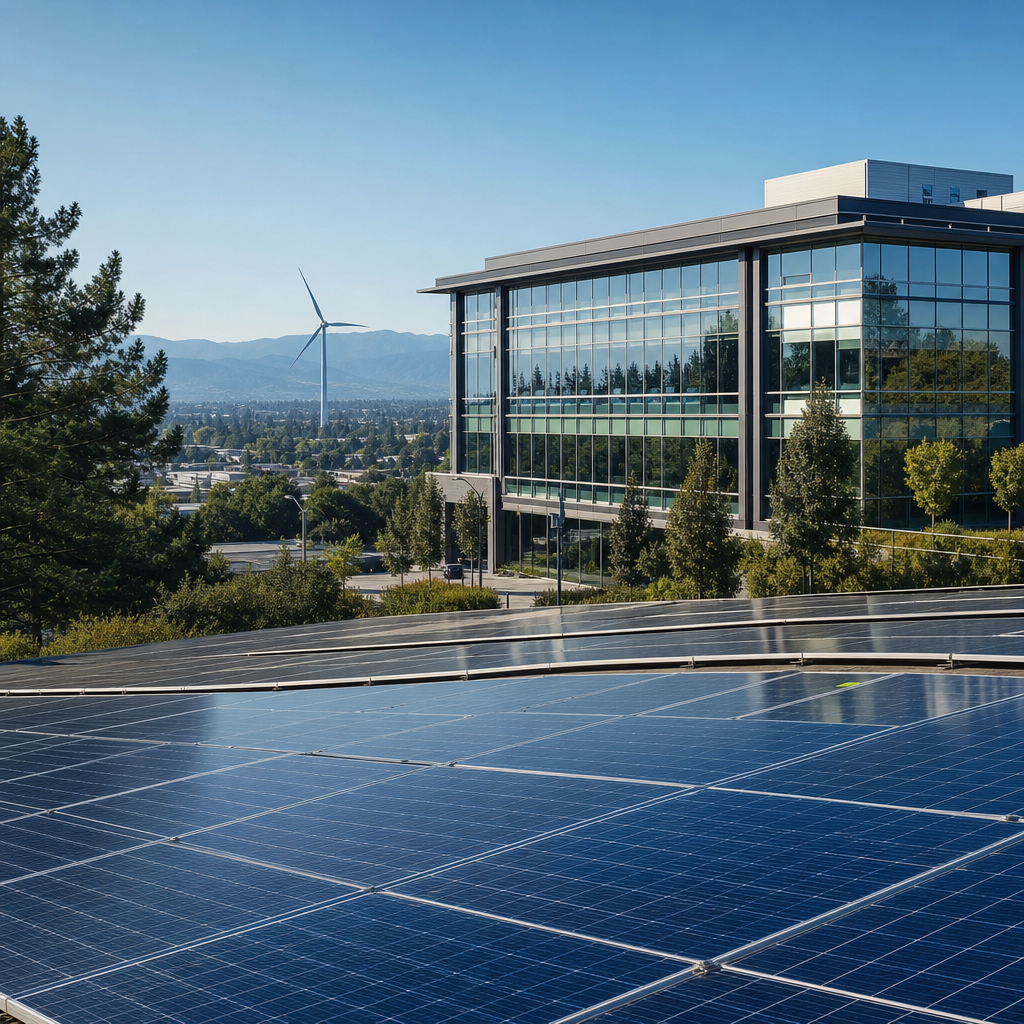
Silicon Valley has become one of the world’s most important launchpads for clean energy startups because it combines technical talent, risk-tolerant capital, large industrial customers, and a culture that treats hard problems as commercial opportunities. In this context, clean energy startups include companies working on solar, batteries, grid software, electric mobility, carbon management, hydrogen, building electrification, and industrial decarbonization. A hotspot is not simply a place with many new companies; it is an ecosystem where founders can recruit quickly, test products with early adopters, raise successive funding rounds, and form partnerships that shorten the path from prototype to scale.
That combination matters now because energy is no longer a niche sustainability theme. It sits at the center of economic competitiveness, national security, manufacturing strategy, and climate policy. Utilities need more flexible grids. Data centers need reliable low-carbon power. Households want lower bills and resilience during outages. Heavy industry faces pressure to cut emissions without losing productivity. Having worked with venture-backed climate companies, I have seen that the winners are rarely those with the best lab result alone. They are the teams that can connect science, software, regulation, project finance, and customer education. Silicon Valley remains unusually strong at making those connections.
For entrepreneurs and investors, understanding why Silicon Valley is a hotspot for clean energy startups is useful beyond regional curiosity. It explains how innovation clusters form, where capital is moving, and why certain business models gain traction faster than others. It also reveals an important truth: clean energy innovation succeeds when hardware, software, policy, and finance reinforce one another. That interplay is exactly what makes this entrepreneurship and venture capital hub relevant. Founders looking at energy markets need to understand not only technology risk, but also procurement cycles, interconnection bottlenecks, incentive structures, and the discipline required to scale infrastructure businesses responsibly.
Deep Talent, Research Density, and Commercialization Speed
Silicon Valley’s first advantage is concentration of talent. Stanford, UC Berkeley, SLAC National Accelerator Laboratory, and nearby national labs produce researchers in materials science, power electronics, chemistry, computer science, and mechanical engineering. Just as important, the region has experienced operators who know how to turn technical breakthroughs into products customers will buy. In clean energy, that commercialization layer is critical. A battery chemistry breakthrough is not a company until someone solves manufacturability, quality control, safety certification, supply chain design, and bankability.
The Valley also benefits from cross-pollination between sectors. Engineers who built cloud infrastructure now work on grid analytics. Autonomous systems veterans join companies optimizing solar inspection or industrial efficiency. Semiconductor expertise supports power management chips, inverters, and advanced control systems. This movement of people creates startups that do more than invent equipment; they build integrated systems. For example, many successful energy software companies pair machine learning with utility-grade forecasting, pricing intelligence, and demand response automation. That blend is easier to assemble in a region where software and systems engineering are abundant.
Another reason commercialization moves faster here is founder access to informal knowledge. Early-stage teams can speak with product leaders from Tesla, Sunrun, Enphase, Bloom Energy, ChargePoint, and dozens of enterprise software firms that have already navigated scaling challenges. Advice on procurement, channel strategy, permitting, or enterprise sales is often available through investor networks and alumni circles. In practice, this compresses learning cycles. Instead of spending a year discovering why a utility pilot stalled, a founder can learn in one conversation how to structure success metrics, cybersecurity reviews, and integration milestones.
Venture Capital Appetite and New Funding Models
Silicon Valley is a hotspot for clean energy startups because it has investors willing to fund long timelines and technical risk when the market case is compelling. Traditional software investors once avoided energy because capital intensity, regulation, and deployment cycles looked unattractive compared with SaaS. That view changed as batteries improved, solar costs fell dramatically, electric vehicle adoption accelerated, and climate policy created durable demand signals. Today, firms such as Breakthrough Energy Ventures, Lowercarbon Capital, Kleiner Perkins, Khosla Ventures, DCVC, and Prelude Ventures actively back climate and energy companies across stages.
Capital in this market is no longer one-size-fits-all. Seed rounds often support prototype development, pilot design, and first hires. Growth rounds may fund manufacturing, project development, or sales expansion. Beyond equity, startups can access venture debt, tax equity partners, project finance, equipment leasing, and special purpose vehicles designed for assets such as batteries or charging networks. That matters because many energy companies fail when they try to fund infrastructure with pure venture equity. In Silicon Valley, founders are more likely to find investors who understand the distinction between financing a technology platform and financing deployed assets.
The region also normalizes the portfolio approach required in climate investing. Sophisticated investors know some categories, such as fusion or next-generation geothermal, may need patience, while software for energy management can scale faster. They underwrite accordingly. This realism helps founders position their companies correctly. A grid software startup should present annual recurring revenue quality and integration pathways. A materials company should emphasize performance data, certification roadmap, and manufacturing milestones. In both cases, Silicon Valley investors tend to reward clarity on time horizons, margin structure, and regulatory exposure.
| Startup area | Why Silicon Valley supports it | Typical funding pattern |
|---|---|---|
| Grid software | Strong AI and enterprise talent, utility partnerships | Seed to Series B venture rounds |
| Batteries | Materials research, manufacturing advisors, EV ecosystem | Venture plus strategic and project capital |
| EV charging | Fleet customers, software expertise, infrastructure investors | Equity with debt or asset-backed structures |
| Carbon management | Corporate buyers, measurement software, policy insight | Early venture, then offtake-backed growth |
Policy Signals, Market Demand, and Corporate Buyers
Innovation alone does not make a clean energy cluster. Demand does. California has long created strong market signals through renewable portfolio standards, vehicle emissions rules, building codes, storage targets, and distributed energy incentives. Federal policy has added more momentum through investment and production tax credits, loan programs, and manufacturing support. Founders in Silicon Valley operate in an environment where policy is not abstract background noise. It shapes pricing, customer payback periods, permitting timelines, and regional expansion strategy.
Corporate demand is equally important. Large technology companies in and around Silicon Valley are major buyers of clean power, energy management tools, carbon accounting systems, backup storage, and fleet electrification solutions. Data center operators sign power purchase agreements and seek round-the-clock carbon reduction strategies. Commercial building owners want automation platforms that cut peak demand charges. Logistics companies need charging and route optimization. These customers provide startup founders with pilot sites, reference accounts, and detailed feedback that improves product-market fit.
I have repeatedly seen enterprise buyers in the region act as development partners rather than passive customers. They will test a building control platform across multiple sites, share interval data, and push the startup to integrate with existing systems such as Schneider Electric, Siemens, or Honeywell controls. That pressure can be painful, but it creates products ready for national deployment. The result is a virtuous cycle: demanding customers improve startup offerings, and better offerings attract more investment.
Infrastructure for Scaling: Networks, Talent Mobility, and Strategic Partners
Silicon Valley’s strength is not just invention or funding; it is the infrastructure around company building. Specialized law firms understand energy procurement, intellectual property, project contracts, and tax incentives. Recruiters know how to find battery manufacturing leaders, grid interconnection experts, and enterprise sales executives. Accelerators, climate fellowships, and founder communities create warm introductions that would otherwise take months. For a first-time entrepreneur, this support can determine whether the company reaches a credible pilot or runs out of time.
Talent mobility is another underappreciated advantage. When one clean energy startup shuts down, engineers and operators often remain in the region and join another company, carrying lessons on safety, deployment, pricing, and customer objections. That recycles expertise into the ecosystem. The semiconductor industry did this for decades, and clean energy is following a similar pattern. Dense labor markets reduce hiring friction and preserve institutional knowledge, which is especially valuable in sectors where mistakes in certification, permitting, or field service are expensive.
Strategic partners also cluster nearby. Utilities, engineering firms, contract manufacturers, climate-focused nonprofits, and major corporate venture arms all have a presence. A startup commercializing an advanced inverter, for example, may need a manufacturing partner, a standards testing path under UL requirements, pilot access through a utility, and distribution through installers. Being in Silicon Valley does not solve every step, but it raises the odds that founders can assemble the chain quickly. This is why many companies headquartered elsewhere still keep business development, fundraising, or executive functions in the Valley.
The Limits of the Ecosystem and What Founders Should Do Next
Silicon Valley is not perfect for every clean energy startup. Costs are high, competition for talent is intense, and some businesses need to be closer to factories, mines, ports, or project sites than to Sand Hill Road. Manufacturing-heavy startups may find stronger operational advantages in Texas, the Midwest, Southeast Asia, or Europe. Utility sales cycles can still be slow. Interconnection queues remain painful. Climate hardware companies often need far more capital than software investors initially expect. Treating the Valley as a guaranteed shortcut is a mistake.
The practical lesson is to use Silicon Valley for what it does best: early technical validation, fundraising, strategic partnerships, and experienced hiring. Then build a footprint that matches the business model. A grid analytics company may thrive with engineering in the Bay Area and utility teams nationwide. A battery company might keep corporate leadership and investor relations in the Valley while locating pilot manufacturing near suppliers and lower-cost labor. The smartest founders embrace innovation and investment without becoming captive to geography.
Silicon Valley is a hotspot for clean energy startups because it compresses the distance between invention, capital, customers, and scale. That advantage has helped create companies in solar, storage, electrification, and carbon management that influence markets far beyond Northern California. For entrepreneurs, the core takeaway is clear: winning in clean energy requires more than a breakthrough technology. It requires ecosystem leverage, disciplined financing, regulatory fluency, and customer-first execution. Use this hub as a starting point, then explore adjacent topics in entrepreneurship and venture capital to sharpen your market strategy, fundraising plan, and path to durable growth.
Frequently Asked Questions
Why has Silicon Valley become such a strong hub for clean energy startups?
Silicon Valley stands out because it offers a rare combination of ingredients that clean energy companies need in order to move from idea to scale. First, it has deep pools of technical talent, including engineers, software developers, data scientists, hardware specialists, and experienced founders who know how to build complex products under uncertainty. That matters in clean energy because many of the biggest opportunities sit at the intersection of physical infrastructure and digital intelligence, whether the company is optimizing the electric grid, designing battery systems, improving industrial efficiency, or building software for building electrification.
Second, the region has a long-established venture capital ecosystem that is unusually comfortable funding ambitious, high-risk technologies. Clean energy startups often require patience, large pilot programs, and business models that do not look like traditional software from day one. Investors in Silicon Valley are more likely to understand that solving difficult energy and climate problems can produce category-defining companies, even if the path involves hardware, regulation, utility partnerships, or industrial customers. That willingness to back hard problems is one of the main reasons the region continues to attract founders in solar, storage, hydrogen, carbon management, and electrified transportation.
Third, Silicon Valley gives startups direct access to major customers, partners, and early adopters. Large technology companies, manufacturers, logistics operators, real estate owners, and infrastructure players in and around the region are increasingly looking for tools to reduce energy costs, improve resilience, and meet emissions goals. For a startup, that creates an environment where customer discovery, pilot deployment, and enterprise sales conversations can happen faster. In other words, Silicon Valley is not just a place where clean energy ideas are invented; it is a place where they can be tested in the market and refined quickly.
What makes Silicon Valley different from other regions that also support climate and energy innovation?
A true hotspot is more than a city with some investors and a few promising startups. Silicon Valley is different because it has a dense, self-reinforcing ecosystem that brings together talent, capital, research, customers, advisors, and a culture of iteration in one place. In many other regions, one or two of those ingredients may exist, but not all of them with the same intensity. A place might have strong university research but limited startup capital, or industrial demand but less entrepreneurial support. Silicon Valley’s strength comes from the concentration and interaction of all these elements at once.
Another major difference is the region’s operating mindset. Silicon Valley has a long history of turning technically difficult challenges into scalable businesses. That cultural pattern matters in clean energy, where startups often need to rethink old industries rather than simply launch a new app. Founders in the Valley are surrounded by people who understand rapid prototyping, product-market fit, strategic partnerships, and growth under uncertainty. Even when a clean energy startup is working on hardware, power electronics, industrial software, or grid infrastructure, it can still benefit from this startup playbook.
The ecosystem also creates compounding advantages over time. Experienced operators from one clean energy company often become angel investors, executives, or mentors at the next. Venture firms develop pattern recognition around energy markets. Corporate buyers become more open to pilot programs. Specialized legal, recruiting, and technical service providers learn the sector. This density lowers friction for new companies entering the market. That is why Silicon Valley remains especially influential in clean energy innovation, even as other regions also build strong and increasingly important climate-tech communities.
Which types of clean energy startups are most likely to thrive in Silicon Valley?
Silicon Valley is particularly well suited to startups that combine advanced technology with scalable commercial potential. Grid software companies are a strong example, because they rely on data science, machine learning, forecasting, optimization, and enterprise software design, all of which align with the region’s core strengths. Startups building tools for utilities, distributed energy management, virtual power plants, demand response, and energy analytics can often find both technical talent and customer interest in the Valley’s network.
Battery and electrification startups also tend to benefit from the ecosystem, especially when they need expertise in materials, controls, manufacturing strategy, and software integration. This includes companies working on battery management systems, charging infrastructure, electric mobility platforms, home energy systems, and building electrification technologies such as heat pump optimization or load management. These businesses often need to bridge hardware and software, and Silicon Valley has a strong track record of supporting exactly that kind of hybrid innovation.
At the same time, the region is a fertile ground for newer categories such as carbon management, industrial decarbonization, hydrogen platforms, and climate-focused financial or operational software. Startups in these areas benefit when they can frame a hard technical challenge as a measurable business improvement for customers, whether that means lower fuel costs, reduced emissions, more resilient operations, or compliance with evolving regulations. Silicon Valley tends to reward companies that can take a very large problem and break it into a commercial product with a clear path to adoption, which is why so many different clean energy segments continue to emerge there.
How important is venture capital to the growth of clean energy startups in Silicon Valley?
Venture capital is extremely important, but its role goes beyond simply supplying cash. Clean energy startups often face long development cycles, expensive prototypes, demonstration projects, and complex go-to-market strategies. A battery company may need pilot deployments before reaching full commercial scale. A grid software startup may need time to navigate utility procurement cycles. A carbon management platform may need to prove its economics with industrial customers before rapid expansion is possible. In these cases, risk-tolerant capital is what allows a startup to survive long enough to validate its technology and business model.
In Silicon Valley, venture capital can also accelerate learning and access. Investors often introduce founders to customers, recruiters, technical experts, future investors, and strategic partners. The best clean energy investors understand that startups in this sector need more than generic startup advice. They need support on regulatory timing, infrastructure partnerships, supply chain strategy, demonstration financing, and commercialization in industries that move more slowly than consumer software. Because Silicon Valley has a relatively mature base of climate and energy investors, founders can often find backers who recognize these differences and still believe in outsized long-term returns.
That said, venture capital alone does not make a region a hotspot. It works because it is embedded in a broader ecosystem with talent, research, customer demand, and entrepreneurial infrastructure. Capital is powerful when it is paired with people who know how to build, test, sell, and scale. Silicon Valley’s advantage is that funding is closely connected to the rest of the startup machinery. For clean energy founders, that can mean faster iteration, stronger partnerships, and a better chance of turning technical breakthroughs into durable companies.
Does being a clean energy hotspot mean every successful startup has to be based in Silicon Valley?
No. Many successful clean energy companies are founded and scaled in other parts of the United States and around the world, especially in regions with strong manufacturing capacity, supportive policy environments, utility innovation, or access to specific natural and industrial resources. Clean energy is a global industry, and different geographies offer different advantages. For example, some companies benefit from being near factories, energy infrastructure, ports, research institutions, or heavy industry customers rather than near Sand Hill Road.
What Silicon Valley offers is not exclusivity, but concentration. It provides one of the world’s most effective environments for launching and accelerating clean energy startups because so many key ingredients are nearby and connected. Founders can hire technical teams, raise capital, meet enterprise customers, test commercial narratives, and tap into experienced startup networks in a relatively compressed ecosystem. That does not mean every company should build there, but it does explain why so many early-stage ventures choose to start there or maintain a strong presence in the region.
In practice, many of the strongest clean energy startups use a distributed model. They may raise money and build leadership teams in Silicon Valley while conducting manufacturing, field deployment, pilot testing, or industrial partnerships elsewhere. That hybrid approach reflects the reality of modern clean energy innovation. Silicon Valley remains a hotspot because it is exceptionally good at company formation, talent aggregation, and early commercialization, even when the full business eventually spans multiple regions and markets.