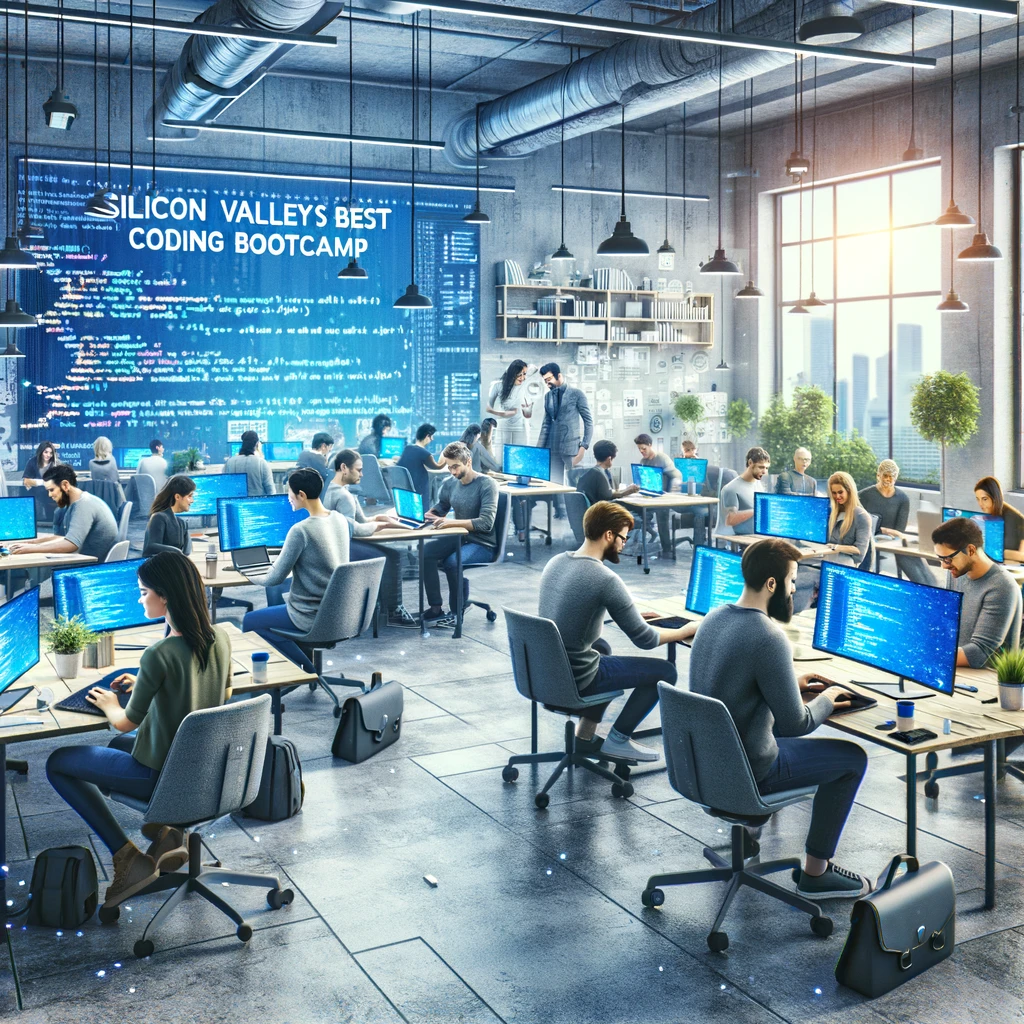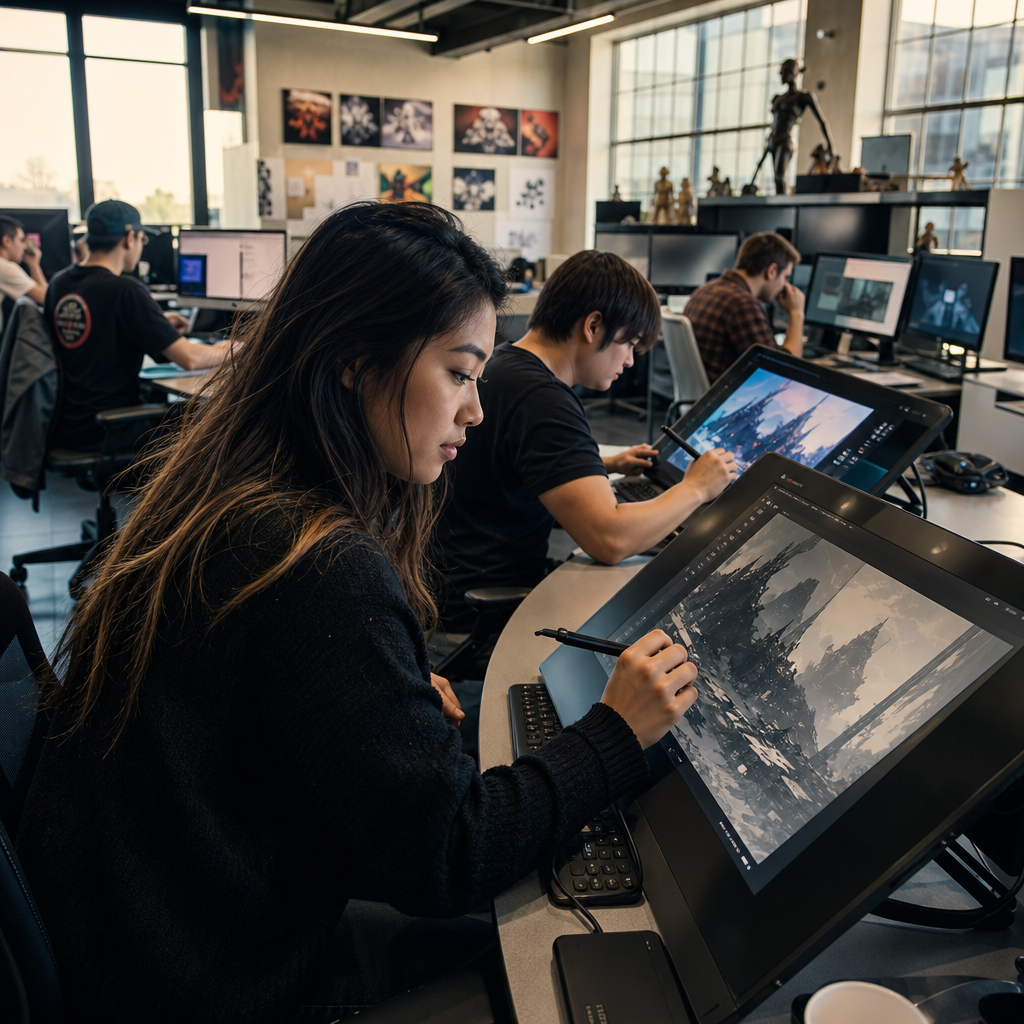
Silicon Valley’s approach to digital art and design education blends technical fluency, studio practice, and career relevance into a model built for fast-changing creative industries. In this context, digital art includes illustration, animation, interactive media, game assets, motion graphics, and visual storytelling created with software and connected devices. Design education covers graphic design, product design, user experience, interface systems, branding, and the research methods that shape effective visual decisions. As someone who has worked with design teams, bootcamps, and university programs tied to Bay Area employers, I have seen that the region treats creativity as a practical skill set, not an isolated talent. Students are expected to learn tools, critique work, present rationale, and adapt to new platforms quickly. That matters because employers no longer hire only for software proficiency; they hire for judgment, collaboration, and the ability to solve communication problems across screens, products, and audiences. For learners exploring educational resources, this hub topic is essential because expanding knowledge and skills in digital art and design now requires a broader map than a single course can provide. Strong programs connect foundational drawing, typography, color, and composition with prototyping, coding awareness, portfolio development, and industry feedback. They also teach students how to keep learning after formal instruction ends, which is often the difference between early momentum and career stagnation.
Why Silicon Valley’s model stands out
Silicon Valley’s model of digital art and design education stands out because it is tightly linked to product development, startup culture, and continuous iteration. In many traditional art programs, students spend most of their time refining craft within a single discipline. In the Valley, students still study fundamentals, but they do so alongside workflows used in real teams. A graphic design student might move from typographic systems into Figma component libraries. An illustrator may learn Adobe Photoshop and Procreate while also preparing assets for motion or web delivery. A user experience student is taught not only layout and hierarchy, but also user interviews, accessibility checks, usability testing, and handoff practices with developers. This interdisciplinary pressure changes how people learn.
The strongest schools and training providers in the region borrow methods from Stanford’s design thinking culture, human-centered design research, and agile product development. That means students are taught to define a problem, generate multiple concepts, prototype quickly, and test with users before polishing. The classroom critique becomes less about personal taste and more about evidence: did the design improve comprehension, engagement, or task success? This approach is valuable for expanding knowledge and skills because it makes learning cumulative. A student can connect visual principles to product strategy, marketing performance, and customer behavior, which increases both employability and creative range.
Core skills every learner must build
Any serious hub on digital art and design education should start with the skills that transfer across specialties. First are the visual foundations: composition, scale, contrast, hierarchy, typography, color theory, spacing, grid systems, and image-making. These are not optional basics. I have reviewed portfolios from applicants who knew advanced software shortcuts but could not establish clear hierarchy or readable layouts, and those gaps limited them more than any missing plugin. Second are process skills: research, sketching, moodboarding, iteration, critique, version control, file organization, and presentation. In professional environments, a strong process often matters as much as the final artifact because teams need to understand how decisions were made.
Third are technical tools. Adobe Creative Cloud remains central for many roles, especially Photoshop, Illustrator, InDesign, After Effects, and Premiere Pro. Figma dominates interface design and collaborative prototyping. Blender has become a major entry point for 3D and motion work because it is powerful and accessible. Procreate is common for illustration. Web-aware designers benefit from understanding HTML, CSS, responsive behavior, and design systems even if they never become front-end developers. Fourth are strategic capabilities: audience analysis, accessibility, storytelling, brand consistency, and measurement. A designer creating an onboarding flow, campaign graphic, or animated explainer must know what success looks like and how users will encounter the work.
| Skill Area | What Students Learn | Common Tools | Career Impact |
|---|---|---|---|
| Visual foundations | Hierarchy, typography, color, composition, grids | Adobe Illustrator, InDesign | Improves clarity and aesthetic control |
| Interface design | Wireframes, components, prototypes, accessibility | Figma, FigJam | Supports product and UX roles |
| Motion and media | Animation, timing, storyboards, video editing | After Effects, Premiere Pro, Blender | Expands content and brand opportunities |
| Research and testing | User interviews, usability tests, feedback synthesis | Miro, Maze, Google Forms | Builds evidence-based decision making |
How programs teach through projects and portfolios
Project-based learning is the clearest signature of Silicon Valley’s educational style. Students do not just complete exercises; they build case studies that resemble real client or product scenarios. A course may ask learners to redesign a mobile checkout flow, create an identity system for a climate startup, animate a short product teaser, or develop a game environment asset pipeline from concept to render. The assignment usually includes constraints such as deadlines, target users, device contexts, and performance goals. Those constraints matter because they mirror workplace reality. In my experience mentoring junior designers, the students who progressed fastest were not those with the most polished single images, but those who could explain tradeoffs, show iterations, and connect design choices to outcomes.
Portfolio development is therefore not an afterthought; it is built into instruction from the beginning. Effective programs teach students to document research, sketches, dead ends, revisions, and final deliverables as a coherent narrative. Employers want to see how a learner frames problems and improves ideas. A portfolio for digital art and design education should show breadth early and specialization later. For example, a learner might begin with branding, illustration, UI design, and motion studies, then gradually emphasize product design, visual design, or 3D art depending on career goals. This hub area of educational resources should help readers identify which supporting articles to pursue next: portfolio strategy, software tutorials, critique methods, accessibility standards, and industry-specific design paths.
The role of industry partnerships and mentorship
Another defining strength of the region is proximity to practitioners. Universities, extension schools, online academies, and cohort-based programs frequently use guest lecturers from companies such as Adobe, Google, Apple, Meta, Autodesk, and leading startups. That access changes the quality of feedback. Students hear how design reviews work inside product teams, how motion designers collaborate with marketers, or how visual systems scale across global platforms. Mentorship also shortens the distance between classroom expectations and hiring expectations. A mentor can point out that a portfolio lacks measurable outcomes, that typography choices undermine trust, or that a prototype ignores keyboard navigation and WCAG accessibility requirements.
Industry partnerships are especially important for expanding knowledge and skills because they keep curricula current. Five years ago, many programs underemphasized design systems, variable components, and collaborative cloud workflows. Today, those are standard. The same is true for inclusive design, cross-functional communication, and AI-assisted ideation. Good educators do not teach tools as static endpoints. They show students how to evaluate a new tool, test it in a workflow, and decide whether it improves quality or speed. That mindset prepares learners for careers where software changes constantly but core judgment remains the asset employers value most.
Where learners should focus next
For readers using this page as a hub under Educational Resources, the smartest next step is to match learning goals with a structured skill path. Beginners should start with drawing fundamentals, typography, layout, color, and digital imaging before branching into specialties. Intermediate learners should add interface design, motion basics, research methods, and portfolio writing. Advanced learners should deepen specialization through design systems, 3D pipelines, advanced prototyping, accessibility audits, brand governance, or creative direction. In each phase, deliberate practice matters more than passive course consumption. Rebuild existing interfaces, analyze title sequences, recreate editorial layouts, and seek critiques from experienced professionals. Every strong portfolio I have seen reflects repetition, not random inspiration.
Silicon Valley’s approach works because it treats digital art and design education as a living practice tied to tools, teams, and outcomes. It values craft, but it also insists on communication, evidence, and adaptability. For anyone focused on expanding knowledge and skills, that combination is the main benefit: you learn how to make compelling work and how to keep growing as platforms, audiences, and technologies change. Use this hub as your starting point, then move into deeper resources on software mastery, portfolio development, UX research, motion design, branding, and accessibility. Choose one skill gap, build one project around it, and improve through feedback.
Frequently Asked Questions
What makes Silicon Valley’s approach to digital art and design education different from traditional art and design programs?
Silicon Valley’s model stands out because it treats creativity and technology as inseparable. Rather than teaching digital art and design as isolated studio disciplines, programs shaped by this environment often connect illustration, animation, motion graphics, interface design, branding, product thinking, and interactive media to the real tools, workflows, and challenges used in modern creative industries. Students are not only asked to make compelling visual work; they are expected to understand audiences, platforms, usability, iteration, and how design functions inside products, services, games, media experiences, and digital ecosystems.
Another key difference is speed and adaptability. Traditional programs may emphasize foundational craft over long timelines, while Silicon Valley-influenced education typically mirrors industries that evolve rapidly. That means students often work with current software, collaborative platforms, prototyping systems, and emerging technologies while learning how to adapt when tools change. The emphasis is less on mastering one fixed process and more on building a flexible creative practice grounded in problem-solving, visual communication, and technical fluency.
There is also a strong career-facing dimension. Students are commonly encouraged to think in terms of portfolios, user needs, production pipelines, interdisciplinary teamwork, and industry outcomes from the beginning of their training. In practical terms, that can mean building app interfaces alongside visual systems, creating animation for digital products, developing game assets with attention to user experience, or combining storytelling with interaction design. The result is an educational approach that prepares students not just to make art or design artifacts, but to contribute meaningfully in fast-changing professional environments.
Which skills are usually emphasized in digital art and design education influenced by Silicon Valley?
Programs shaped by Silicon Valley priorities usually emphasize a broad but integrated skill set. On the creative side, students develop visual fundamentals such as composition, color, typography, layout, storytelling, image-making, motion, and form. These remain essential because strong digital work still depends on the ability to communicate clearly and create experiences that are visually coherent, memorable, and emotionally effective. Whether a student is creating brand systems, interactive prototypes, animated sequences, or game environments, core design judgment remains central.
What expands the skill profile is the technical layer. Students are often expected to become comfortable with industry-standard digital tools for illustration, interface design, prototyping, animation, editing, 3D workflows, and collaborative production. Equally important is learning how digital systems behave. In many settings, that includes understanding responsive interfaces, interaction patterns, design systems, asset pipelines, accessibility principles, and the logic of designing for screens, devices, and connected experiences. The goal is not necessarily to turn every creative student into an engineer, but to help them speak the language of digital production and collaborate effectively with developers, product teams, and stakeholders.
Research and critical thinking are also major priorities. Silicon Valley-style design education often asks students to investigate users, test ideas, iterate quickly, and defend decisions with evidence. That means skills such as user research, journey mapping, prototyping, feedback analysis, and presentation become just as valuable as drawing or visual polish. Combined, these capabilities prepare students for careers where success depends on both original creative vision and the ability to design for real-world use, scale, and impact.
How does this educational approach prepare students for careers in creative technology and digital media?
It prepares students by aligning learning with the realities of contemporary creative work. In digital media and creative technology fields, employers increasingly look for people who can move between concept development, visual execution, collaboration, and iterative improvement. Silicon Valley’s educational mindset supports that by placing students in project-based environments where they solve practical problems, respond to feedback, and build work that reflects how products and media are actually developed. Instead of focusing only on isolated assignments, students often create portfolio pieces that demonstrate process, strategy, and adaptability.
This approach also helps students understand the contexts in which their work will live. A motion designer may need to think about brand consistency across platforms. A digital illustrator may need to create assets for interactive environments rather than static print use. A UX or product design student must account for user behavior, accessibility, testing, and business goals. A student interested in games or animation may need to understand pipelines, collaboration across roles, and the demands of real-time or cross-platform production. Education that mirrors these conditions gives students a more realistic sense of industry expectations and workplace dynamics.
Career readiness is strengthened further through exposure to critique, teamwork, and iteration. Students learn how to present ideas clearly, justify creative decisions, revise work without losing vision, and function as part of multidisciplinary teams. These are essential habits in studios, startups, agencies, entertainment companies, and product organizations. By combining creative depth with practical application, the Silicon Valley model equips graduates for a wide range of roles, including digital artist, motion designer, brand designer, UI designer, UX designer, product designer, visual storyteller, game asset artist, and interactive media creator.
Why are studio practice and technical fluency both important in digital art and design education?
Studio practice and technical fluency are both essential because digital art and design require more than either expressive creativity or software competence alone. Studio practice builds the artistic and conceptual foundation. It teaches students how to generate ideas, refine aesthetics, study references, experiment with materials and formats, respond to critique, and develop an individual creative voice. This is where students learn to make work that is not only functional, but also meaningful, persuasive, and visually distinct. Without this grounding, digital work can become technically polished but conceptually weak.
Technical fluency, however, determines whether ideas can be executed effectively in contemporary media environments. In Silicon Valley’s educational context, students must often move from concept to prototype to production-ready asset using professional tools and workflows. They may need to create interface systems, animated graphics, interactive experiences, or digital illustrations optimized for specific devices and platforms. Technical fluency helps them work efficiently, understand constraints, collaborate with other specialists, and produce outcomes that are usable in real settings. It also gives them confidence to explore new mediums as technologies evolve.
The strongest programs do not treat these as competing priorities. Instead, they integrate them. A student might sketch concepts by hand, develop a visual system digitally, test it in an interactive prototype, revise it based on feedback, and present the final work with strategic rationale. That combination reflects the demands of today’s creative industries, where originality, craft, and production capability must work together. In that sense, the balance between studio practice and technical skill is one of the defining strengths of Silicon Valley’s approach.
What should students look for in a digital art and design program inspired by Silicon Valley values?
Students should look for a program that combines strong creative foundations with real digital relevance. A good sign is a curriculum that teaches visual fundamentals such as typography, composition, storytelling, design systems, and concept development alongside software workflows, prototyping, interaction design, motion, and digital production methods. The best programs do not chase trends superficially; they help students understand enduring design principles while also preparing them to work with changing tools and platforms. This balance is especially important in fields like UX, branding, animation, interactive media, and game art, where both craft and adaptability matter.
It is also worth evaluating how much the program emphasizes project-based learning and interdisciplinary collaboration. Silicon Valley-influenced education is often strongest when students work on real or realistic problems, engage in critique, and learn to collaborate across roles. Programs that include portfolio development, user research, iterative design, presentation practice, and feedback loops typically provide better preparation for industry. Students should also ask whether the curriculum addresses accessibility, human-centered design, emerging media, and the relationship between creative work and business or product strategy, since these are increasingly important in professional practice.
Finally, students should consider outcomes and learning environment. Useful indicators include faculty with current industry knowledge, access to up-to-date tools, opportunities for internships or client-based projects, and a culture that values experimentation as much as execution. A strong program should help students leave with more than finished pieces; they should graduate with a portfolio that shows process, problem-solving, technical range, and creative identity. In the Silicon Valley context, that combination is often what makes the difference between being software-aware and being genuinely prepared for a sustainable, forward-looking career in digital art and design.