
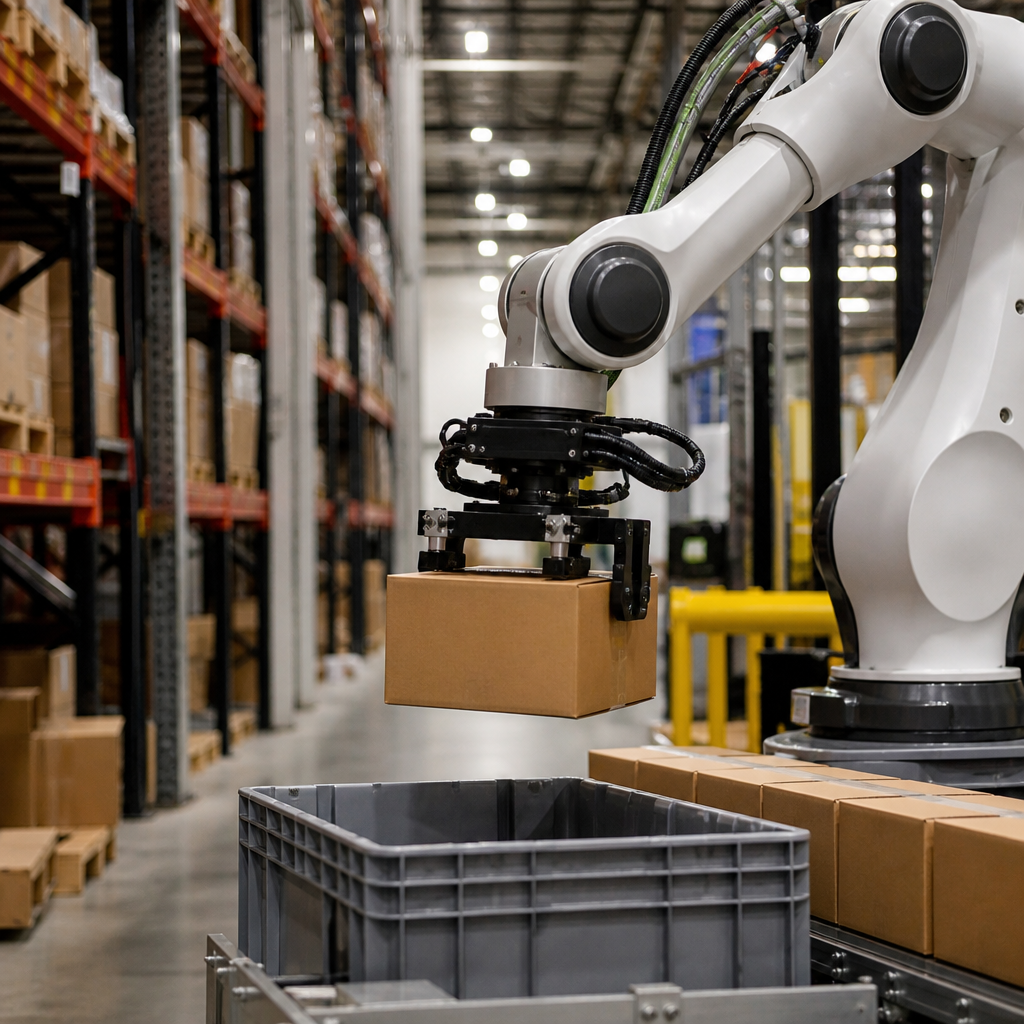
Dexterity is one of the most closely watched warehouse robotics companies in Redwood City because it focuses on one of automation’s hardest problems: giving industrial machines humanlike dexterity in fast-moving distribution environments. In practical terms, dexterity means the ability to grasp, move, orient, and place many different objects reliably, even when packaging changes, lighting varies, or upstream processes create disorder. That matters because modern warehouses are under pressure from labor shortages, rising parcel volumes, tighter same-day delivery expectations, and stricter safety requirements. I have worked with fulfillment operators evaluating robotic picking, palletizing, and trailer unloading systems, and the same lesson appears repeatedly: hardware alone is not enough. Real warehouse automation depends on perception, motion planning, controls, and system integration working together at production speed. Redwood City has become a notable base for this work, and Dexterity stands out for building full-stack robotic systems aimed at tasks that used to resist automation.
As a Company Spotlights hub for Robotics & Autonomy, this article explains what Dexterity does, how its warehouse robots work, where they fit in logistics operations, and what buyers should understand before deploying similar systems. It also serves as a foundation for related coverage of robotic arms, autonomous mobile robots, machine vision, end effectors, warehouse execution software, and labor planning. The key question most readers ask is simple: how is Dexterity automating warehouses in a way that is commercially useful today? The short answer is that the company combines industrial robotic arms, advanced vision, force-aware manipulation, and software orchestration to handle repetitive material movement tasks in distribution centers. The longer answer requires looking at the operating problems inside warehouses, the technical approach behind flexible manipulation, and the economic tradeoffs that determine whether automation succeeds at scale.
What Dexterity Builds and Why It Matters
Dexterity develops robotic systems designed for logistics environments where objects are not perfectly uniform and where uptime, throughput, and safety determine return on investment. Rather than targeting only a single fixed task under ideal lab conditions, the company has emphasized applications such as truck loading and unloading, depalletizing, singulation, and parcel handling. These are high-friction warehouse processes because cartons arrive with mixed dimensions, labels can be partially obscured, cases may deform under load, and trailer interiors are often chaotic. In many facilities, these jobs are physically demanding and have high turnover, which makes them prime candidates for automation.
The importance of this approach is easy to see in parcel and retail distribution. A warehouse may process thousands of stock keeping units in a single shift, and package geometry can shift seasonally as suppliers change box formats or dunnage. Traditional industrial automation performs best when every item arrives in a known pose within a tightly engineered cell. Dexterity’s value proposition is different: use perception and manipulation intelligence so the robot can cope with variation instead of requiring the warehouse to eliminate it first. That distinction is central to robotics and autonomy in logistics. The most valuable systems are often not those that move fastest in ideal conditions, but those that recover gracefully from edge cases without constant human intervention.
How Warehouse Dexterity Works in Practice
In warehouse robotics, dexterity is the coordinated ability to perceive an item, decide on a grasp strategy, execute a motion safely, verify success, and adapt if conditions change. A practical system typically includes 3D cameras or depth sensors, industrial arms with multiple degrees of freedom, specialized end effectors such as vacuum grippers or hybrid grippers, force and torque sensing, and a software layer that translates business rules into robotic actions. Dexterity has been associated with full-stack control, meaning the company does not treat vision, grasping, motion, and orchestration as isolated modules. That matters because warehouses are dynamic systems. If the perception stack identifies a carton edge incorrectly, the gripper and motion planner must still avoid collisions, recover, and keep flow moving.
From deployments I have reviewed across the sector, the strongest warehouse robots share several traits. First, they detect object boundaries in clutter, not just on clean conveyor presentations. Second, they choose grasp points based on package stability, not just reachability. Third, they monitor pick success in real time so failed lifts do not cascade into jams downstream. Fourth, they integrate with warehouse control systems, programmable logic controllers, and safety architectures such as area scanners, e-stops, and fenced zones. Dexterity’s relevance comes from addressing these operational realities rather than presenting robotics as a standalone gadget. In logistics, manipulation intelligence is only valuable when it survives contact with actual warehouse variance.
Core Warehouse Use Cases for Robotics & Autonomy
Warehouse automation demand is strongest where tasks are repetitive, ergonomically difficult, and expensive to staff reliably. Trailer unloading is a leading example. Manual unloaders work in heat, dust, and unstable floor conditions while handling packages of inconsistent weight and shape. A robotic unloading system can reduce strenuous lifting and create steadier flow into sortation. Another major use case is depalletizing mixed cases for store replenishment or downstream picking. Human workers can do this flexibly, but fatigue affects consistency. Robots do not tire, and with robust vision they can sustain predictable rates over long shifts.
Parcel induction and singulation are also important. In these processes, a robot separates and presents individual packages for scanning, sorting, or conveyor transfer. That is deceptively difficult because polybags, glossy cartons, crushed boxes, and label placement all interfere with reliable handling. Palletizing sits on the outbound side of the warehouse and benefits from robots that can stack cases according to destination, weight distribution, and trailer cube utilization. Dexterity’s positioning within Robotics & Autonomy makes sense because these use cases sit at the intersection of manipulation, perception, and execution software.
| Warehouse task | Why it is hard to automate | How robotic dexterity helps |
|---|---|---|
| Trailer unloading | Mixed cartons, shifting stacks, poor visibility | 3D vision, adaptive grasping, continuous recovery logic |
| Depalletizing | Variable case sizes, unstable loads, damaged packaging | Force-aware picks, pose estimation, careful layer removal |
| Singulation | Touching items, polybags, random orientation | Item separation, dynamic pick points, verification sensing |
| Palletizing | Changing order profiles, stack stability requirements | Placement planning, orientation control, repeatable motion |
The Technology Stack Behind Dexterity Systems
A useful way to understand Dexterity is to view it as a convergence of robotics engineering disciplines. The perception layer interprets raw sensor data to identify objects, free space, and contact risks. Machine vision in logistics often relies on RGB-D cameras, point cloud processing, and neural models trained to recognize package surfaces under inconsistent lighting. The manipulation layer selects a feasible grasp and evaluates whether suction, friction, and object rigidity support a stable lift. The motion layer generates collision-free arm trajectories while respecting joint limits, acceleration profiles, and cycle time targets. Above that, orchestration software decides what task should happen next based on queue state, system health, and upstream or downstream bottlenecks.
End effectors deserve special attention because they often determine whether a robot is commercially viable. Vacuum tools work well on many cartons but struggle with porous, torn, or irregular surfaces. Mechanical grippers can handle edge cases better but may reduce speed or require more clearance. The best warehouse cells often combine methods or allow tool changes. Safety engineering is equally important. Industrial robots operating around people must satisfy risk assessment requirements under standards such as ISO 10218, and system designers typically build in guarding, light curtains, scanners, and lockout procedures. The headline story may be artificial intelligence, but warehouse buyers win or lose on boring details like mean time between failures, spare parts access, and recovery workflows after a bad pick.
Business Impact, Limits, and What Buyers Should Evaluate
The business case for warehouse robotics usually rests on throughput stability, labor reallocation, safety improvement, and operating cost predictability. A robot may not replace every worker in a process, but it can remove the most strenuous touches and smooth peak-season staffing pressure. In high-volume operations, even modest improvements in trailer turn time or parcel flow can compound across an entire network. Buyers should ask specific questions: what pick success rate is achieved on real production mixes, not demos; how many stock keeping units or packaging formats are supported; what happens when cartons are crushed or labels cover likely suction zones; how long does commissioning take; and who owns integration with the warehouse control system?
There are limitations. Robots still struggle with extreme edge cases, low-quality inbound packaging, and workflows that were never standardized enough to support automation. Capital expense is significant, and successful deployment often requires upstream process discipline, data connectivity, and change management on the warehouse floor. That said, the direction of travel is clear. Redwood City robotics companies such as Dexterity are pushing automation beyond fixed, repetitive tasks toward adaptable material handling that responds to real-world variance. For logistics leaders, the lesson is not simply to buy a robot. It is to map labor pain points, volume patterns, packaging variability, and system integration requirements, then deploy robotics where dexterity delivers measurable operational value. If you are building out your Company Spotlights research on Robotics & Autonomy, use Dexterity as a reference point and continue into the related articles linked from this hub.
Frequently Asked Questions
What does “dexterity” mean in warehouse robotics, and why is it so difficult to achieve?
In warehouse robotics, dexterity refers to a machine’s ability to handle a wide variety of objects with the adaptability people naturally bring to manual work. That includes grasping items of different sizes, shapes, weights, and surface textures, then moving, orienting, and placing them correctly even when conditions are less than ideal. In a real distribution center, items may arrive crushed, shifted, wrapped in reflective plastic, mixed together in random orientations, or presented in inconsistent lighting. A robot that works only when every item is perfectly staged is useful in a lab, but not especially valuable in a live warehouse.
This is difficult because warehouse environments are dynamic and messy. Packaging changes frequently, SKUs multiply, conveyors create unpredictable spacing, and upstream processes often introduce disorder rather than neat uniformity. Human workers can make fast adjustments based on touch, vision, and experience. Replicating that with industrial hardware and software requires advanced machine vision, motion planning, force control, real-time decision-making, and end effectors that can successfully handle many products without damaging them. That is why dexterity is considered one of the hardest problems in automation and also one of the most commercially important.
Why is Dexterity in Redwood City getting so much attention in the warehouse automation market?
Dexterity is attracting attention because it is focused on a high-value problem that many warehouses still struggle to automate reliably. A lot of fulfillment and distribution work remains dependent on people because the tasks involve irregular items, rapidly changing conditions, and decisions that are difficult to standardize. Companies that can solve those bottlenecks stand to play an important role in the next phase of warehouse automation, especially as labor constraints, service-level expectations, and throughput demands continue to rise.
What makes the company especially notable is its emphasis on practical industrial dexterity rather than narrowly defined robotics demos. In fast-moving warehouse operations, success is not just about whether a robot can pick up an item once. It is about whether the system can do it repeatedly, at speed, across changing inventory mixes, while maintaining accuracy, minimizing downtime, and integrating into existing workflows. That focus aligns closely with what operators actually need: flexible automation that performs under real operating pressure. For that reason, Redwood City’s robotics scene often draws attention from logistics leaders, investors, and technology watchers looking for systems that can scale beyond pilot programs.
How can dexterous warehouse robots improve operations in fast-moving distribution environments?
Dexterous robots can improve warehouse performance in several important ways. First, they help increase throughput by taking on repetitive handling tasks that need to happen quickly and consistently. If a robot can reliably pick, orient, sort, or place a wide variety of goods, warehouses can move products through packing, palletizing, depalletizing, induction, and other material-handling stages with less interruption. That can be especially valuable during peak demand periods when volumes spike and service expectations remain high.
Second, dexterous automation can improve accuracy and consistency. Human teams are highly capable, but repetitive, high-speed tasks can lead to fatigue-related errors over long shifts. Robots designed for these environments can maintain steady performance across extended operating windows, which supports cleaner handoffs between processes and more predictable downstream outcomes. Third, these systems can enhance resilience by helping warehouses adapt to labor shortages, shifting order profiles, and tighter delivery windows. Rather than replacing every human role, many deployments are aimed at moving people away from the most repetitive or physically demanding tasks and allowing them to focus on exception handling, supervision, and higher-value work. In that sense, dexterous robotics is often as much about operational flexibility as it is about labor savings.
What kinds of warehouse tasks are best suited for a company focused on robotic dexterity?
The best use cases are usually tasks where item variability and disorder have historically made automation difficult. Examples include picking mixed items from bins or conveyors, singulating products that arrive in cluttered arrangements, orienting packages before downstream processing, loading and unloading containers, and palletizing or depalletizing goods that are not perfectly uniform. These are the types of workflows where traditional fixed automation may struggle because it often depends on tightly controlled inputs.
A company focused on dexterity is especially relevant when operations cannot guarantee consistency. Warehouses may process cartons with changing dimensions, soft goods in polybags, irregular consumer products, or packages with labels, tape, and reflective surfaces that complicate vision systems. In these environments, the ability to detect, grasp, reposition, and place items reliably can unlock meaningful automation value. The strongest opportunities tend to be where variability is high, volume is significant, and operational delays are expensive. That is why dexterous robotics is often discussed in connection with modern e-commerce, retail replenishment, parcel handling, and other fast-paced logistics settings where speed and adaptability are both critical.
What should warehouse operators evaluate before adopting dexterous robotics systems?
Warehouse operators should start by looking beyond headline claims and focusing on fit with the actual process. The first question is whether the robotics system can handle the real product mix, not just ideal sample items. That means evaluating SKU diversity, packaging variability, damage rates, presentation randomness, environmental conditions, and required throughput. Operators should also assess exception handling: what happens when an item is hard to identify, difficult to grasp, or arrives in an unexpected orientation? In warehouse automation, edge cases are not rare events; they are part of daily operations.
It is also important to examine integration requirements and operational economics. A promising robotic cell needs to work with existing conveyors, warehouse control systems, software layers, safety protocols, and maintenance practices. Leaders should ask how quickly the system can be deployed, how performance is measured, how updates are delivered, and what level of on-site support is required. From a business standpoint, the most useful evaluation includes not only labor impact, but also throughput gains, quality improvements, uptime expectations, flexibility across workflows, and the ability to scale to additional sites. In short, operators should view dexterous robotics not as a standalone machine purchase, but as an operational capability that must prove itself in live warehouse conditions over time.