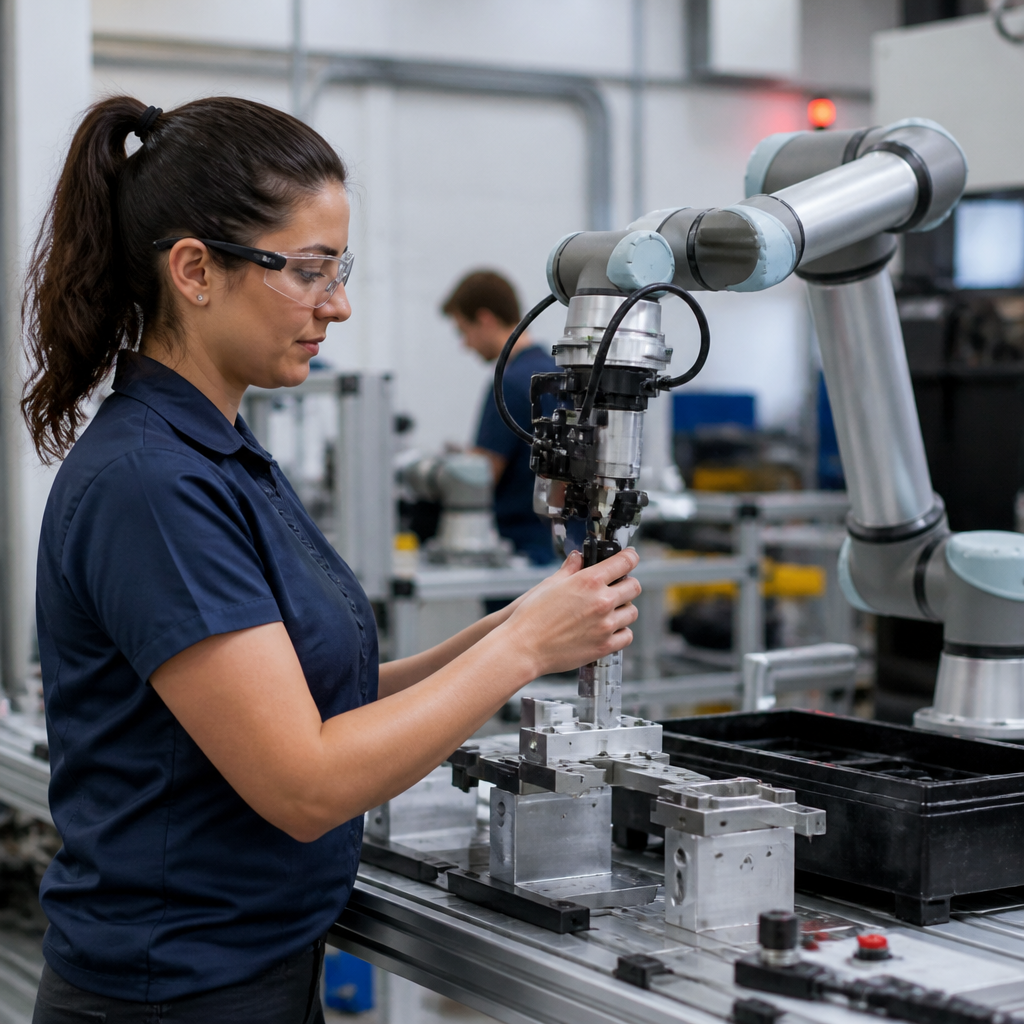
Robust AI is redefining automation by proving that collaborative robotics can create practical value without chasing the fully autonomous ideal that dominates many technology headlines. In manufacturing, logistics, healthcare, and field operations, collaborative robotics refers to machines designed to work safely alongside people, share tasks, and adapt to real production constraints rather than replace every human decision. That distinction matters because most real workplaces are messy, variable, and governed by cost, safety, and uptime targets that punish brittle systems. I have seen automation projects stall not because the robot arm lacked precision, but because the workflow around it changed weekly, operators were not consulted, or the vision system failed under ordinary lighting shifts. Robust AI enters this gap with a different operating philosophy: build systems that handle uncertainty, recover gracefully, and keep humans in the loop where judgment still outperforms software. As a hub for Robotics & Autonomy, this article explains why collaborative robotics is taking a different path to automation, how that path works in practice, and what business leaders should evaluate when comparing vendors, deployments, and long-term strategy.
What robust AI means in collaborative robotics
Robust AI in robotics means dependable performance under real-world variation, not just success in a controlled demo. In practice, that includes perception models that tolerate occlusion, control systems that degrade safely, task planners that account for uncertainty, and interfaces that let human workers intervene without breaking the whole process. Standards such as ISO 10218 for industrial robot safety and ISO/TS 15066 for collaborative robot operation frame this work by defining force limits, separation monitoring, and risk assessment requirements. A collaborative robot, or cobot, is therefore not simply a smaller robot arm with rounded edges. It is part of a socio-technical system that blends force sensing, machine vision, motion planning, safety-rated monitored stop functions, and operator training. Companies that understand this build cells around real tasks like machine tending, kitting, inspection, or palletizing instead of promising universal autonomy.
That difference is central to the path companies like Robust AI have pursued. Rather than optimizing for fully driverless operation in every circumstance, many collaborative robotics firms target bounded autonomy: clear task definitions, controlled operating envelopes, and predictable escalation to humans. In warehouses, for example, a mobile robot may navigate aisles independently yet still rely on associates for exception handling, item verification, or final manipulation. This is not a compromise in the negative sense. It is often the fastest route to measurable productivity because edge cases do not disappear in live environments. They accumulate. Packaging changes, floor markings fade, Wi-Fi fluctuates, and seasonal labor turns over. A robust system is one that keeps delivering through those disruptions, with maintenance procedures, telemetry, and workflow design built into the product from day one.
Why collaborative robotics is diverging from full automation
The collaborative path is gaining traction because the economics of automation are determined by total system performance, not by the percentage of labor removed. Executives often begin with a simple question: why not automate everything? The answer is that full autonomy raises integration complexity, validation costs, liability exposure, and operational fragility. A robot that can theoretically perform ten tasks but requires extensive reprogramming, perimeter guarding, and specialist support may deliver less value than a cobot that performs three tasks reliably every shift. In my experience, plant managers and operations leaders care most about throughput, quality, cycle time consistency, and time to recovery after faults. Collaborative robotics addresses these priorities directly by keeping people engaged where they add the most value.
Consider e-commerce fulfillment. Fully autonomous picking remains difficult because SKU variability, deformable packaging, and bin presentation create hard perception and grasping problems. Companies such as Locus Robotics and 6 River Systems built strong businesses by guiding human pickers more efficiently instead of eliminating them entirely. The same pattern appears in manufacturing. Universal Robots expanded the cobot market by enabling relatively simple deployment for screwdriving, inspection, and light assembly, particularly in small and midsize facilities that could not justify traditional industrial robot integration. These examples show that the divergent path is not anti-automation. It is selective automation: use autonomy where it is mature, pair it with people where flexibility is still essential, and design the handoff carefully.
Core technologies that make robust collaborative systems work
Collaborative robotics depends on a stack of technologies that must function together, not in isolation. Perception typically combines RGB cameras, depth sensing, lidar, force torque sensors, and encoder data. Control layers may use classical methods such as PID loops, model predictive control, and simultaneous localization and mapping, alongside learned models for object detection or grasp selection. Middleware like ROS 2 helps teams integrate sensing, navigation, and fleet coordination, while industrial environments often require PLC connectivity through protocols such as EtherNet/IP, PROFINET, or OPC UA. The important point is that robust AI is rarely a single model. It is a layered architecture with redundancy, fallback modes, and observability.
Data strategy matters just as much as algorithms. Strong robotics companies capture failure cases systematically, retrain on long-tail scenarios, and validate updates before pushing them to production. They also instrument the system so customers can see battery health, mission completion rates, intervention frequency, and blocked-path events. In one warehouse deployment I reviewed, the difference between a mediocre and a successful mobile robotics rollout came down to exception taxonomy. Once operators could label delays as congestion, missing inventory, barcode failure, or human override, the team fixed root causes instead of blaming the robot generically. That is what robust AI looks like on the ground: not magic intelligence, but disciplined engineering around uncertainty.
| Automation approach | Best use case | Main strength | Main limitation |
|---|---|---|---|
| Traditional industrial robots | High-volume, repeatable production | Speed and precision | Low flexibility after line changes |
| Collaborative robots | Mixed workflows with human interaction | Fast deployment and adaptability | Lower payload or speed in some tasks |
| Autonomous mobile robots | Material movement in dynamic facilities | Route flexibility without fixed infrastructure | Traffic and exception management complexity |
| Humanoid or general-purpose systems | Unstructured, multi-task environments | Theoretical task breadth | High cost and immature reliability |
Real-world applications across Robotics & Autonomy
As the hub for Robotics & Autonomy within Company Spotlights, this page should anchor how collaborative systems show up across industries. In manufacturing, cobots commonly support CNC tending, adhesive dispensing, welding assistance, quality inspection, and end-of-line packaging. Automotive suppliers use them when product mix changes too often for hard automation to remain economical. In logistics, autonomous mobile robots move totes, racks, and replenishment stock while people perform picks, audits, and exception handling. In healthcare, robotic carts and assistive platforms transport linens, medications, or meals through hospitals where hallways are active and routes change constantly. Agriculture uses autonomy for targeted spraying, monitoring, and harvesting support, but human crews still handle delicate judgment calls around crop quality and weather conditions.
Each application illustrates the same principle: task decomposition beats grand promises. Instead of asking a robot to run an entire operation, successful teams split work into sensing, transport, manipulation, verification, and escalation stages. Robust AI performs best when every stage has clear success criteria and a fallback path. A hospital delivery robot, for instance, does not need to understand medicine broadly. It needs reliable mapping, elevator integration, secure compartment access, and a way to request help when a corridor is blocked. That narrower scope is exactly why adoption has accelerated. Buyers are paying for operational outcomes, not for science projects.
How to evaluate collaborative robotics vendors and deployments
Companies exploring Robotics & Autonomy should assess vendors on deployment realism, integration capability, and service model, not just on demonstration videos. Start with workflow fit. What specific task is being automated, what is the current cycle time, and how often does that task change? Then examine environment readiness: floor conditions, lighting consistency, connectivity, ERP or WMS integration, and safety governance. Request metrics that matter in production, including mean time between intervention, mission success rate, uptime, pick accuracy, and time to recover from sensor or localization faults. If a vendor cannot discuss failure modes in concrete terms, that is a warning sign.
It is also essential to scrutinize change management. Operators, technicians, and supervisors determine whether collaborative robotics succeeds after launch. The best deployments include training, role clarity, and interface design that reduces cognitive load instead of adding another dashboard no one trusts. Financially, evaluate total cost of ownership rather than unit price. Include integration labor, grippers or end effectors, software licenses, maintenance, spare parts, cybersecurity controls, and facility modifications. A lower-cost robot with weak support can become expensive quickly. By contrast, a vendor with strong remote diagnostics, documented APIs, and proven reference sites may reduce risk enough to justify a higher initial quote.
The future of robust AI and collaborative automation
Collaborative robotics is taking a different path to automation because it aligns with how operations actually improve: incrementally, measurably, and with resilience built in. Robust AI matters more than flashy autonomy because real businesses need systems that survive variability, integrate with existing processes, and earn trust shift after shift. The strongest companies in Robotics & Autonomy are not asking machines to do everything at once. They are combining perception, controls, safety engineering, and human workflow design to automate the right parts of the job. That approach shortens payback periods, lowers deployment risk, and creates data foundations for deeper automation later.
For leaders evaluating this market, the key takeaway is simple: prioritize reliability, bounded use cases, and vendor transparency over grand claims of human-free operation. Collaborative robotics works best when autonomy is applied where it is mature and people remain central where judgment, dexterity, or exception handling still matter. As you explore Company Spotlights across this subtopic, use this hub to compare platforms, understand deployment patterns, and identify the firms building durable value in Robotics & Autonomy. The next step is practical: map one high-friction workflow in your operation, define the exceptions, and assess whether a robust collaborative system can improve it now.
Frequently Asked Questions
What does “robust AI” mean in the context of collaborative robotics?
In collaborative robotics, robust AI refers to systems that can perform reliably in real-world conditions instead of only in controlled demos or narrowly defined lab environments. A robust system is designed to handle variation, imperfect inputs, changing workflows, and the presence of human coworkers without failing when conditions become less predictable. That is a major distinction from the popular idea that the most valuable form of automation must be fully autonomous. In practice, many workplaces are dynamic, cluttered, time-sensitive, and dependent on human judgment, so the most useful AI is often the kind that supports consistent performance within that complexity rather than trying to eliminate people from the process entirely.
Robust AI in collaborative robotics is also about resilience and practicality. It combines perception, planning, safety controls, and task execution in ways that tolerate uncertainty and allow the machine to recover from small errors or ask for human intervention when necessary. Instead of pretending every edge case can be solved through autonomy alone, collaborative systems are built around the reality that people remain essential sources of context, decision-making, and adaptability. That approach often leads to stronger business outcomes because companies can deploy automation sooner, with less disruption, and gain measurable improvements in throughput, safety, and quality without waiting for a perfect autonomous solution that may not fit their environment.
Why is collaborative robotics taking a different path from the fully autonomous vision of automation?
Collaborative robotics is taking a different path because real operations rarely resemble the idealized conditions that full autonomy depends on. In manufacturing, logistics, healthcare, and field operations, processes change, materials vary, layouts shift, and unexpected exceptions appear constantly. A fully autonomous system usually requires high levels of standardization, extensive mapping, predictable inputs, and tightly controlled workflows to function at scale. Many organizations simply do not have those conditions, and creating them can be expensive, slow, or operationally unrealistic. Collaborative robotics accepts that reality and is designed to deliver value inside imperfect environments instead of waiting for those environments to be engineered around the machine.
This different path is also strategic. Collaborative systems focus on dividing work intelligently between humans and machines. Robots can take repetitive, physically demanding, precision-oriented, or ergonomically risky tasks, while people handle exceptions, supervision, judgment calls, and nuanced decision-making. That division often produces faster deployment timelines and higher adoption because employees can work with the system rather than feeling replaced by it. It also reduces the technical burden of trying to automate every edge case. Rather than asking, “Can the robot do everything?” collaborative robotics asks, “Can the robot do the right things consistently enough to improve the whole workflow?” In many industries, that question leads to more durable and economically sound automation decisions.
What are the biggest advantages of collaborative robotics for businesses today?
The biggest advantage is that collaborative robotics can generate practical value much earlier than more ambitious autonomous systems. Businesses do not need to redesign every process or wait for a breakthrough in generalized machine intelligence to benefit. They can automate targeted parts of a workflow such as picking, packing, inspection, material handling, assembly assistance, or clinical support tasks while keeping humans involved where flexibility is essential. This makes implementation more manageable and lowers the risk of disruption. Companies often see gains in productivity, consistency, labor utilization, and worker safety because repetitive or strenuous work can be shifted to machines while employees move into higher-value activities.
Another major advantage is adaptability. Collaborative robots are often easier to integrate into existing environments and can be reconfigured as needs change. That matters in sectors where demand fluctuates, product mixes evolve, or staffing challenges affect operations. Instead of building automation around one rigid use case, organizations can deploy systems that scale gradually and improve over time. There are also workforce benefits. Collaborative robotics can reduce injury risk, ease labor shortages, and improve retention by making jobs less physically taxing and more focused on oversight and problem-solving. From an investment perspective, this path is attractive because it ties automation to immediate operational realities. Businesses can measure return on investment through reduced downtime, better process stability, and improved output quality rather than betting everything on a long timeline toward full autonomy.
How do collaborative robots stay safe while working alongside people?
Safety in collaborative robotics is achieved through a combination of system design, sensing, control logic, physical limitations, and operational planning. These robots are typically engineered to detect nearby people, limit force or speed when needed, stop when a hazard is identified, and operate within carefully defined safety parameters. Depending on the application, they may use cameras, depth sensors, force sensing, proximity detection, vision systems, and programmed geofencing to understand where people are and how the robot should respond. The goal is not simply to prevent contact, but to make interaction predictable and manageable in active workplaces where people and machines share space or sequence tasks closely together.
Just as important, safety is not only a hardware issue. It depends on workflow design, risk assessment, employee training, compliance with industry standards, and clear human-machine role definitions. Well-deployed collaborative systems are introduced with attention to how tasks are handed off, what happens when exceptions occur, and when a human should intervene. In healthcare or field operations, for example, safe collaboration may involve decision support and supervised autonomy rather than continuous physical proximity. In manufacturing and logistics, it may involve speed reductions in shared zones, monitored stops, and guided task coordination. The most effective collaborative robotics programs treat safety as an ongoing operational discipline, not a one-time feature. That is one reason robust AI matters so much: the system must behave reliably not just when everything goes right, but when people move unpredictably, conditions change, or the environment becomes more complex.
Which industries are seeing the most impact from collaborative robotics, and why?
Manufacturing remains one of the most visible areas of impact because collaborative robotics fits naturally into assembly, inspection, machine tending, packaging, palletizing, and quality control. These environments often combine repetition with variability, making them ideal for systems that can automate specific tasks while still relying on human flexibility. Logistics is another major area, especially in fulfillment centers and warehouses where robots can support picking, sorting, transport, and inventory movement without requiring every part of the facility to be fully autonomous. In both sectors, collaborative systems help organizations respond to labor pressure, improve throughput, and maintain consistency under changing demand.
Healthcare is also emerging as an important domain because the stakes are high and human judgment cannot simply be removed from the equation. Collaborative robotics can assist with transport, routine support functions, rehabilitation, lab processes, and clinician-facing workflows while keeping people in control of care decisions. Field operations such as agriculture, utilities, construction, and infrastructure inspection are equally significant because they are inherently messy and variable. Weather, terrain, lighting, material conditions, and safety concerns make full autonomy difficult, but collaborative systems can still provide strong value through guided assistance, remote operation support, and semi-autonomous task execution. Across all of these industries, the common thread is that the best automation opportunity often lies not in replacing humans outright, but in building systems that can work with them effectively under real-world constraints.