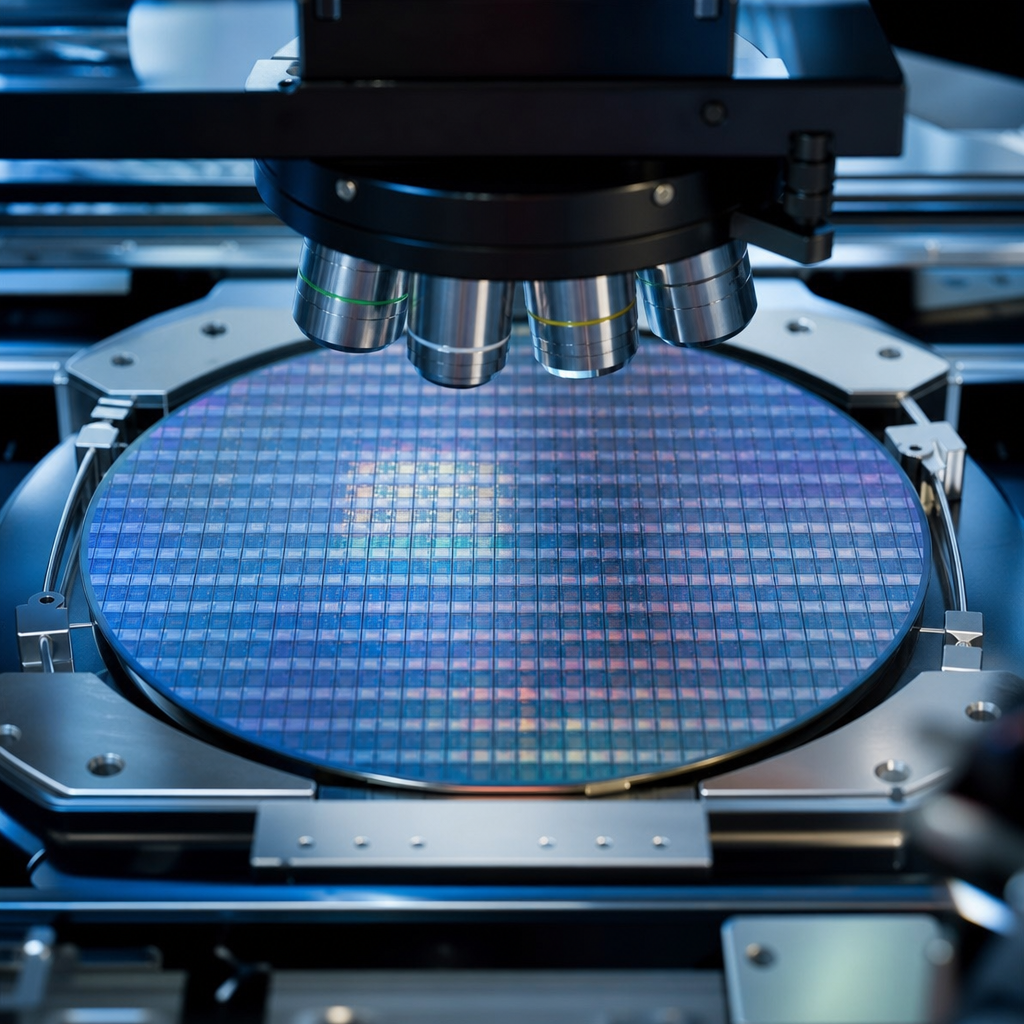
Intel has shaped modern computing more than almost any other semiconductor company, and its influence reaches from personal laptops to data centers, factories, cars, and national industrial policy. In a Company Spotlights hub focused on Movers and Shakers, Intel deserves close attention because it is both a technology pioneer and a case study in how scale, manufacturing discipline, and strategic missteps can redefine an industry. Processor technology, in simple terms, refers to the design and production of central processing units and related chips that execute instructions, manage workloads, and increasingly accelerate artificial intelligence, graphics, networking, and security functions.
I have worked with Intel-based systems in enterprise rollouts, workstation benchmarking, and server procurement reviews, and one lesson keeps repeating: Intel matters not just because it sells chips, but because it sets expectations for platform compatibility, software optimization, and manufacturing credibility. When buyers ask what makes a processor leader, the answer is never clock speed alone. It includes instruction set advances, process technology, packaging, memory support, power efficiency, supply resilience, and the ability to move an ecosystem of motherboard vendors, cloud providers, operating system developers, and application teams in the same direction. Intel sits at the center of those forces.
That position makes Intel especially important within Movers and Shakers coverage. The company has led, fallen behind, and fought back in full public view. Its story explains why semiconductor leadership is difficult to sustain, why fabrication capacity matters as much as chip architecture, and why governments now treat advanced processors as strategic infrastructure. For readers exploring related Company Spotlights, Intel also connects naturally to articles on AMD, NVIDIA, TSMC, Microsoft, and major cloud vendors because processor roadmaps influence every adjacent layer of computing.
How Intel Became a Processor Powerhouse
Intel was founded in 1968 by Robert Noyce and Gordon Moore, with Andy Grove later becoming central to its operating discipline and market execution. The company first built its reputation in memory, then changed computing history with the microprocessor. The 4004, released in 1971, is widely recognized as the first commercial microprocessor. Later families, especially x86 chips such as the 8086, 80286, 80386, and 80486, established a software-compatible path that still defines much of enterprise and PC computing. Intel’s long-term advantage came from combining architecture design with manufacturing control, allowing it to coordinate performance, yield, and volume.
The company’s rise accelerated during the PC era through the Wintel ecosystem, where Intel processors and Microsoft software became the default business standard. That pairing mattered because procurement teams prioritize compatibility and support risk. Intel reinforced the advantage through branding, channel incentives, and a steady cadence of higher performance parts. In practical terms, if a corporation standardized on Intel desktops and servers, IT teams could validate fewer hardware permutations, software vendors could target common instruction sets, and OEMs could design around predictable chip roadmaps. Scale then funded more research, fabs, and marketing, creating a self-reinforcing cycle.
Intel also built trust through platform engineering. Features such as Hyper-Threading, Turbo Boost, vPro, ECC memory support in workstation and server segments, and later integrated AI acceleration were not isolated product bullets; they were part of a broader effort to make processors easier to deploy and manage at scale. That is one reason Intel remained deeply embedded in business infrastructure even when consumer sentiment shifted.
Core Technologies That Define Intel’s Processor Strategy
Intel’s processor strategy rests on several technical pillars: architecture, process nodes, packaging, interconnects, security, and workload-specific acceleration. Architecture determines how efficiently a chip executes instructions. Process technology affects transistor density, power characteristics, and manufacturing cost. Packaging links multiple dies, memory, and I/O into a coherent product. In recent years, Intel has emphasized disaggregated design, where separate compute, graphics, and I/O tiles can be combined in one package. That approach improves flexibility and can shorten product development cycles when monolithic dies become harder to scale economically.
Packaging technologies such as EMIB and Foveros are especially important. EMIB, or Embedded Multi-die Interconnect Bridge, enables high-bandwidth communication between chiplets without requiring a full silicon interposer. Foveros allows three-dimensional stacking, which can improve area efficiency and support heterogeneous integration. These are not abstract lab concepts; they shape shipping products and influence how Intel competes with rivals using chiplet-based strategies. In deployment discussions, I have seen packaging matter most when customers compare thermal design, memory bandwidth, and latency-sensitive workloads like analytics, simulation, and inference.
Intel’s instruction set and software tooling also remain major assets. Extensions such as AVX, Quick Sync for media workloads, and oneAPI for cross-architecture development show how Intel tries to extend value beyond raw silicon. Software optimization still affects real performance. A processor that benchmarks well in ideal conditions may underperform in real business use if compilers, libraries, virtualization layers, or database engines are not tuned. Intel understands that better than most vendors because it has spent decades cultivating developer relationships.
Major Product Lines and Where They Matter Most
Intel serves multiple markets, and understanding its product lines clarifies why the company remains central to industry analysis. Core processors target mainstream laptops and desktops, where users care about responsiveness, battery life, graphics capability, and pricing across ultrabooks, gaming systems, and business fleets. Xeon processors serve servers and workstations, where buyers prioritize memory capacity, I/O lanes, virtualization, reliability features, and predictable lifecycle support. Intel also competes in networking, edge computing, programmable logic through its FPGA heritage, and AI accelerators for data center workloads.
The product mix matters because processor leadership is no longer a single-score contest. A mobile executive laptop, a 3D rendering workstation, and a cloud database node have different bottlenecks. For example, I have seen Intel mobile parts win procurement decisions because driver stability, enterprise manageability, and broad OEM availability outweighed small benchmark differences. In contrast, hyperscale buyers may scrutinize performance per watt, socket density, and total cost of ownership more aggressively than brand familiarity.
| Intel Segment | Typical Products | Primary Buyer Need | Common Real-World Use |
|---|---|---|---|
| Client Computing | Intel Core, Intel Core Ultra | Balanced performance and efficiency | Business laptops, desktops, creator PCs |
| Data Center | Xeon | Scalability, memory, reliability | Virtual machines, databases, enterprise apps |
| Edge and Network | Atom, Xeon D, networking silicon | Low latency and compact deployment | Retail analytics, telecom, industrial systems |
| AI and Acceleration | Gaudi, integrated NPU features | Efficient training and inference | Generative AI workloads, enterprise inference |
This breadth helps Intel absorb weakness in one area while building momentum in another. It also supports this Movers and Shakers hub because Intel is not merely a PC company. It influences enterprise architecture, cloud economics, telecom modernization, and AI infrastructure planning.
Competition, Setbacks, and Intel’s Ongoing Reinvention
No serious assessment of Intel is complete without discussing the years when it lost momentum. Delays in moving beyond its 14nm process era damaged the company’s manufacturing reputation and gave rivals room to advance. AMD regained share with its Zen architecture and chiplet strategy, while TSMC emerged as the dominant foundry partner for many fabless leaders. NVIDIA strengthened its hold on accelerated computing, especially for AI training. These shifts changed how the market evaluates Intel. Leadership could no longer be assumed from history; it had to be demonstrated through execution.
Intel’s response has been ambitious. Under CEO Pat Gelsinger, the company set aggressive goals around process recovery, product cadence, and foundry expansion. Its roadmap introduced a five-nodes-in-four-years narrative and a renewed emphasis on manufacturing as a strategic differentiator. The company has also invested heavily in domestic and regional fabrication capacity, including major projects in the United States and Europe, aligning with broader government priorities around supply-chain resilience. The strategic logic is clear: advanced chips are now tied to national competitiveness, and companies that can design and manufacture at scale hold unusual leverage.
Still, reinvention carries risk. New fabs require massive capital expenditure, and process catch-up is technically unforgiving. Customers will judge Intel on shipment consistency, power efficiency, and roadmap credibility, not on announcements alone. Yet Intel remains one of the few companies with the engineering depth, customer base, and industrial footprint to attempt this kind of turnaround in public.
Why Intel Remains Essential in Movers and Shakers Coverage
Intel belongs at the center of any Movers and Shakers hub because its decisions ripple through the entire technology stack. When Intel changes socket strategy, memory support, packaging methods, or foundry priorities, OEM planning, enterprise refresh cycles, software validation, and cloud infrastructure models all move with it. That systemic reach is rare. Few companies can influence both the consumer laptop on a student’s desk and the policy debate around semiconductor sovereignty.
For readers navigating Company Spotlights, Intel is also a useful anchor point for comparison. It illustrates the tradeoffs between integrated manufacturing and fabless design, between legacy ecosystem strength and next-generation agility, and between quarterly market share battles and decade-long industrial strategy. The practical takeaway is straightforward: if you want to understand where processor technology is heading, you need to watch Intel’s architecture launches, foundry milestones, AI acceleration efforts, and enterprise platform strategy together, not in isolation.
Intel’s story is ultimately about resilience in a sector that punishes complacency. The company helped define the processor era, stumbled when execution slipped, and is now trying to reshape itself for an age driven by AI, heterogeneous computing, and geopolitical pressure on supply chains. Keep this hub on your radar, explore the related Company Spotlights, and use Intel as a lens for understanding the companies now moving the semiconductor industry forward.
Frequently Asked Questions
Why is Intel considered so important to the history of processor technology?
Intel is considered foundational to processor technology because it helped define what modern computing looks like at both the consumer and industrial level. For decades, the company played a central role in designing and manufacturing the central processing units, or CPUs, that powered personal computers, enterprise servers, and a wide range of embedded systems. Its influence grew not just from selling chips, but from setting performance expectations for the broader market. As software became more demanding and businesses depended more heavily on digital infrastructure, Intel processors often served as the standard platform on which developers, OEMs, and IT departments built their systems.
What makes Intel especially significant is that it combined chip design leadership with large-scale manufacturing. That dual strength allowed it to translate technical breakthroughs into mass-market products with unusual speed and consistency. From the rise of the x86 architecture in PCs to the expansion of high-performance server processors in data centers, Intel was deeply involved in the computing transitions that shaped the internet era. Its long-standing role in advancing transistor density, power efficiency, and overall computing performance helped push forward everything from office productivity to cloud computing, scientific research, and artificial intelligence workloads.
Intel also matters because its story reflects broader industry dynamics. It shows how semiconductor leadership depends on more than innovation alone. Execution, fabrication capacity, ecosystem partnerships, and strategic timing all matter. In that sense, Intel is not only a major technology company; it is also a case study in how processor leadership can influence entire industries, supply chains, and even national policy priorities.
What exactly does processor technology include, and how has Intel contributed to it?
Processor technology refers to the science and engineering behind designing, manufacturing, and optimizing chips that execute instructions and perform computations. At a basic level, it includes CPU architecture, transistor design, instruction sets, power management, packaging, interconnects, cache structures, thermal performance, and fabrication processes. In modern computing, processor technology also extends beyond traditional CPUs to include integrated graphics, AI acceleration, security features, and system-level coordination with memory and networking components.
Intel has contributed across nearly all of those layers. On the architecture side, it helped extend and popularize processor families that became standard in personal computing and enterprise systems. On the manufacturing side, Intel invested heavily in process technology, fabs, and quality control systems that enabled large-scale production of increasingly complex chips. The company also advanced packaging and platform integration, which became crucial as it grew more difficult to improve chip performance through raw clock speed alone. Instead, gains increasingly came from smarter designs, additional cores, better power efficiency, larger caches, and tighter coordination between hardware and software.
Intel’s contributions are also visible in practical user outcomes. Faster boot times, more responsive multitasking, better laptop battery life, stronger data center throughput, and improved virtualization all connect back to processor-level innovation. Even in periods when competition intensified, Intel remained a major force in defining how processors are benchmarked, deployed, and integrated into real-world systems. Its work has helped shape the expectations users now have for computing devices, from personal machines to mission-critical infrastructure.
How has Intel influenced computing beyond laptops and desktop PCs?
Although Intel is often associated most closely with consumer PCs, its influence extends far beyond that market. In data centers, Intel processors became deeply embedded in server infrastructure that supports cloud computing, online services, databases, and enterprise applications. For many years, a substantial portion of the world’s digital economy ran on Intel-based server platforms. That made the company a major enabler of everything from e-commerce and social media to financial services and logistics systems.
Intel has also played a role in industrial and embedded computing. Factories, transportation networks, communications systems, and edge devices increasingly rely on processors that can handle real-time data, automation tasks, and machine control. In automotive and mobility applications, processor technology is central to infotainment, driver assistance, and the broader move toward software-defined vehicles. While Intel has faced varying degrees of success across these segments, its technologies, acquisitions, and ecosystem involvement have helped shape how computation is distributed across modern machines and connected environments.
Another important area is public policy and industrial strategy. Because semiconductors are now seen as strategic assets, Intel occupies a prominent place in discussions about supply chain resilience, domestic manufacturing, and technology sovereignty. Governments and industry planners closely watch Intel not only as a chipmaker, but as a symbol of advanced manufacturing capability. That means the company’s decisions can have implications that reach well beyond product launches, influencing employment, capital investment, geopolitical strategy, and the future location of semiconductor production capacity.
What challenges has Intel faced, and why do those challenges matter so much in the semiconductor industry?
Intel’s challenges have been especially significant because the semiconductor industry is unforgiving. Small delays in process technology, product execution, or strategic positioning can create ripple effects that last for years. One of Intel’s most discussed difficulties has been maintaining its historical lead in manufacturing process advancement. As chip fabrication became more complex and expensive, staying ahead required near-perfect execution. Delays in transitioning to new process nodes gave competitors opportunities to narrow or surpass Intel’s advantages in performance, efficiency, and product cadence.
The company has also faced strategic pressure from changing market priorities. For a long time, the PC market helped anchor Intel’s dominance, but computing demand expanded into smartphones, energy-efficient mobile systems, specialized accelerators, and AI-driven workloads. In some of these areas, Intel moved later than rivals or struggled to capture the same level of ecosystem control it enjoyed in PCs and servers. Meanwhile, competitors improved their own architectures and leveraged alternative manufacturing models, proving that Intel’s historical strengths were no longer enough on their own.
These challenges matter because Intel is so large and so interconnected with the broader technology landscape. When a company of that scale stumbles, the effects can influence customers, suppliers, software partners, investors, and even national industrial planning. At the same time, Intel’s response to those challenges is equally important. Its efforts to rebuild manufacturing leadership, expand foundry services, and compete in emerging compute segments are closely watched because they may reshape not only Intel’s future, but also the competitive structure of the global semiconductor industry.
What should readers watch for as Intel continues to evolve in processor technology?
Readers should pay attention to several overlapping areas. First is Intel’s ability to execute on product roadmaps consistently. In semiconductors, promises matter far less than delivery. Whether Intel can launch competitive processors on time, across consumer, enterprise, and AI-related markets, will be one of the clearest indicators of its momentum. Performance is important, but so are efficiency, reliability, software support, and total platform value. Modern buyers evaluate chips as part of a larger ecosystem, not as isolated components.
Second, manufacturing remains central. Intel’s future standing depends heavily on whether it can strengthen its fabrication capabilities and translate those investments into commercially successful products. That includes process technology progress, advanced packaging, supply chain resilience, and the company’s effort to position itself not just as a chip designer, but also as a manufacturer serving external customers. If successful, that shift could redefine Intel’s role in the industry and give it renewed strategic leverage.
Third, readers should watch how Intel responds to long-term computing trends. AI acceleration, edge computing, high-performance data center workloads, and increasingly heterogeneous system design are changing what processor leadership means. The winning companies will be those that combine raw compute power with flexibility, energy efficiency, security, and integration across hardware and software. Intel remains one of the few companies with the scale, technical depth, and industry reach to influence that future. For that reason, following Intel is not just about tracking one company’s comeback or decline; it is about understanding where processor technology itself may be headed next.