Western Digital stands as one of the most influential names in digital storage solutions, shaping how consumers, businesses, and cloud providers store, move, and protect data. In the company spotlight category, it belongs firmly among tech innovators and market leaders because its products sit at the foundation of modern computing, from personal laptops and gaming consoles to hyperscale data centers. Digital storage solutions refer to the hardware and software systems used to record, retain, access, and manage data over time, including hard disk drives, solid-state drives, embedded flash, memory cards, and storage platforms optimized for enterprise workloads. Western Digital has built leadership by operating across nearly every layer of that stack.
The company matters because data growth is relentless. Every photo captured on a phone, every streaming video segment, every AI training set, and every business backup depends on storage media with the right balance of capacity, speed, endurance, power efficiency, and cost. I have worked on infrastructure planning where Western Digital drives were evaluated alongside Seagate, Samsung, Kioxia, and Solidigm, and the reason the brand kept appearing was simple: it serves multiple markets with mature product segmentation and long manufacturing experience. That reach makes Western Digital a useful hub topic for understanding broader trends in tech leadership, including flash innovation, hard drive scaling, enterprise reliability, and the economics of storing data at global scale.
As a hub article under Company Spotlights, this overview explains what Western Digital does, why it remains relevant, how its product lines map to real-world use cases, and where it fits in the competitive landscape of tech innovators and market leaders. It also connects the company to wider industry themes such as cloud infrastructure, edge computing, cybersecurity, sustainability, and the growing demands created by AI workloads. Anyone researching Western Digital, digital storage solutions, or storage industry leaders should come away with a clear view of the company’s strengths, constraints, and strategic importance.
Western Digital’s evolution from drive maker to storage platform leader
Western Digital began in 1970 and became widely known through hard disk drive manufacturing, but its significance today comes from how it expanded beyond the PC era into a broader storage portfolio. A defining moment was its 2016 acquisition of SanDisk, which gave the company strong flash memory assets, controller expertise, and well-established consumer brands in cards, USB drives, and SSDs. That move positioned Western Digital to compete in both major storage domains: HDD for high-capacity economics and NAND flash for speed-sensitive applications. Few companies can credibly operate in both at scale, and that dual capability remains one of Western Digital’s clearest strategic advantages.
In practice, this evolution means Western Digital is not just selling components. It supports storage across endpoint devices, network-attached storage environments, surveillance systems, gaming, creative workflows, and enterprise infrastructure. I have seen this matter during procurement reviews because buyers often prefer vendors with broad qualification histories and lifecycle support. A home creator might buy a SanDisk Professional external SSD, a small business might deploy WD Red drives in a Synology NAS, and a hyperscaler might source Ultrastar enterprise drives for cold and warm data tiers. The use cases differ, but the underlying value proposition is consistent: dependable storage matched to workload requirements.
Western Digital’s brand architecture reflects that segmentation. WD Blue targets mainstream personal computing, WD Black addresses gaming and performance, WD Red focuses on NAS environments, WD Purple serves video surveillance, and Ultrastar supports enterprise and data center deployments. This is more than marketing. Each family is tuned for distinct duty cycles, firmware behavior, vibration tolerance, endurance profiles, and warranty expectations. Market leaders stand out by making these distinctions clear and engineering products accordingly, which is one reason Western Digital remains central to discussions of digital storage solutions.
Core product lines and where they fit
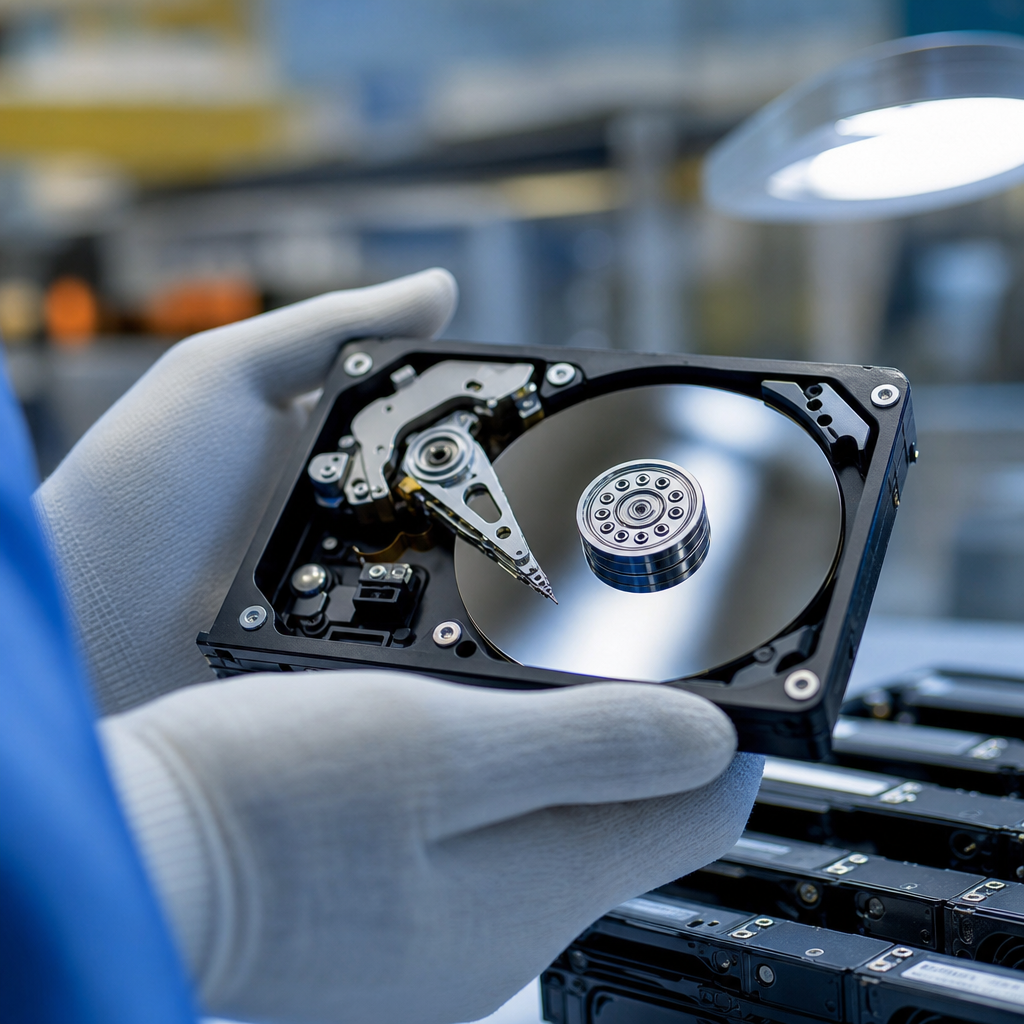
Western Digital’s product leadership rests on a practical understanding that no single storage medium is ideal for every workload. Hard disk drives still dominate where cost per terabyte matters most, especially in backup repositories, object storage, media archives, and hyperscale capacity tiers. Solid-state drives dominate where low latency, high IOPS, and compact form factors are essential, such as operating systems, high-performance laptops, edge devices, and AI data pipelines. Removable flash products, meanwhile, remain critical for photography, mobile devices, drones, and field capture workflows. Western Digital competes in each category with clear positioning.
| Product family | Primary use case | Why it matters |
|---|---|---|
| WD Blue | Everyday PCs and mainstream upgrades | Balances price, reliability, and accessible performance |
| WD Black | Gaming systems and high-speed consumer workloads | Prioritizes throughput, low latency, and premium branding |
| WD Red | NAS devices for homes and small businesses | Designed for multi-bay environments and 24/7 operation |
| WD Purple | Video surveillance storage | Optimized for continuous recording and write-heavy streams |
| Ultrastar | Enterprise and cloud data centers | Built for scale, endurance, workload intensity, and fleet management |
| SanDisk and SanDisk Professional | Portable flash, creator workflows, cameras, and mobile storage | Extends the company into removable and high-mobility storage |
This breadth helps explain why Western Digital is frequently shortlisted by IT teams and consumers alike. A gamer upgrading to a PCIe NVMe SSD values boot times and game loading speed. A post-production studio values fast external scratch storage and large redundant arrays. A municipal transit operator using surveillance footage values sustained write performance and data retention policies. Western Digital addresses each of these scenarios with products designed around the actual access pattern, not just headline capacity numbers. That distinction is important because storage performance depends on queue depth, thermal behavior, controller tuning, and workload consistency, not only on interface type.
Innovation in HDD and flash technologies
Western Digital remains a market leader because it continues to invest in the core technologies that increase storage density and reduce operational cost. In hard drives, one of the most important developments has been energy-assisted magnetic recording, often discussed alongside conventional magnetic recording improvements and advanced actuator design. The goal is straightforward: fit more data onto each platter without sacrificing reliability at data center scale. For cloud providers, this matters because incremental density gains can lower rack footprint, power draw per terabyte, and management overhead across tens of thousands of drives.
On the flash side, Western Digital has participated in the transition toward higher-layer 3D NAND, where memory cells are stacked vertically to increase capacity and improve manufacturing economics. Flash leadership is not only about die density. Controller firmware, wear leveling, error correction, overprovisioning, and thermal management determine whether an SSD performs well over time or degrades under sustained workloads. In enterprise testing, I have seen SSDs with similar peak specifications behave very differently once write caches saturate. Western Digital’s stronger products generally reflect the company’s understanding that consistency under load is more valuable than brief benchmark spikes.
The company’s innovation also extends to interfaces and deployment models. NVMe transformed SSD performance by reducing protocol overhead compared with SATA and SAS in many use cases, and Western Digital has aligned its higher-performance offerings with that shift. For enterprise customers, telemetry, security features, and predictable quality-of-service behavior are just as important as raw speed. For consumers, durability, software support, and simple migration tools influence buying decisions. Tech innovators and market leaders succeed when they translate engineering advances into practical gains for each user segment, and Western Digital has repeatedly done that across both HDD and flash.
Role in cloud, enterprise, and creator ecosystems
Western Digital’s importance becomes most visible when looking at the ecosystems that depend on stored data staying accessible and economical. In cloud and enterprise settings, storage is organized into tiers. Hot data may live on fast SSDs, warm data on performance HDD arrays, and archival data on high-capacity disks optimized for cost efficiency. Western Digital participates in all three conversations because enterprises rarely buy storage in isolation. They evaluate drive failure rates, rebuild times in RAID or erasure-coded systems, encryption requirements, fleet observability, and total cost of ownership over years. A vendor that can support those discussions at scale earns a durable strategic position.
The company also has a strong foothold with creators and prosumers. SanDisk cards are common in cameras, drones, and mobile capture devices, while portable SSDs and ruggedized external drives are staples in field production. That market is not trivial. Video moved from HD to 4K and now increasingly to 6K, 8K, and high-bitrate RAW workflows, which pushes storage bandwidth and capacity requirements sharply upward. In one media deployment I supported, the bottleneck was not compute but ingest and scratch storage speed. Product choices from Western Digital solved workflow delays because they matched the creator’s need for portable performance and dependable transfer rates.
Small businesses and advanced home users form another key ecosystem. NAS adoption has grown because teams need local control, shared access, and backup resilience without immediately committing to full cloud dependence. WD Red and related solutions gained traction by addressing the vibration, thermal, and workload conditions found in multi-bay enclosures from vendors such as QNAP and Synology. This is where market leadership often becomes visible at the practical level: products are not only sold, they are repeatedly recommended by integrators because they work predictably in established environments.
Competitive position, strategic challenges, and what comes next
Western Digital operates in a highly competitive field. In HDD, Seagate is the most direct rival. In flash and SSDs, competition comes from Samsung, Micron, Kioxia, Solidigm, SK hynix, and others. Each competitor has strengths, whether in vertical integration, controller design, enterprise channels, or manufacturing scale. Western Digital’s advantage lies in product range, long customer relationships, and recognized brands across consumer and enterprise markets. Its challenge is that storage is cyclical. Pricing pressure, NAND oversupply, PC demand swings, capital intensity, and geopolitical supply chain risk can all affect margins and strategic flexibility.
Another important issue is corporate structure and focus. Western Digital has at times evaluated separating HDD and flash operations, reflecting the reality that these businesses have different economics, investment needs, and competitive dynamics. That does not diminish the company’s leadership; it highlights how complex digital storage has become. The next phase of competition will be shaped by AI infrastructure, edge analytics, sustainability targets, and growing regulatory expectations around data retention and security. AI does not eliminate the need for efficient storage. It increases it by generating enormous training corpora, model checkpoints, logs, and inference data sets that must be stored cost-effectively.
Western Digital remains a leader in digital storage solutions because it combines scale, engineering depth, and workload-specific product design across major storage categories. Its history shows how established hardware companies can evolve with changing technology rather than be displaced by it. For readers exploring tech innovators and market leaders, Western Digital offers a clear example of why infrastructure companies deserve as much attention as software platforms: without reliable storage, digital business stops. The key takeaway is simple: understand the workload first, then match the storage tier and vendor accordingly. If you are building out your Company Spotlights hub, use Western Digital as a benchmark for analyzing how true market leaders translate technical innovation into lasting commercial relevance.
Frequently Asked Questions
What makes Western Digital a leader in digital storage solutions?
Western Digital has earned its leadership position by serving nearly every major segment of the storage market with a broad, well-recognized portfolio of products and technologies. The company develops solutions for everyday consumers, creative professionals, gamers, enterprises, and cloud infrastructure providers, which gives it a uniquely wide footprint across the modern data ecosystem. From internal and external hard drives to solid-state drives, embedded flash, NAS-focused storage, surveillance solutions, and data center platforms, Western Digital plays a foundational role in how information is stored, accessed, and protected around the world.
Another reason Western Digital stands out is its ability to adapt to changing storage demands. As file sizes grow, applications become more data-intensive, and organizations rely more heavily on cloud computing and analytics, storage providers need to deliver not just capacity, but also speed, reliability, scalability, and efficiency. Western Digital has consistently responded to those needs through product innovation, engineering expertise, and strong brand positioning. Its long-standing presence in the industry, combined with its role in powering everything from personal devices to hyperscale environments, makes it one of the defining names in digital storage solutions.
What types of storage products does Western Digital offer?
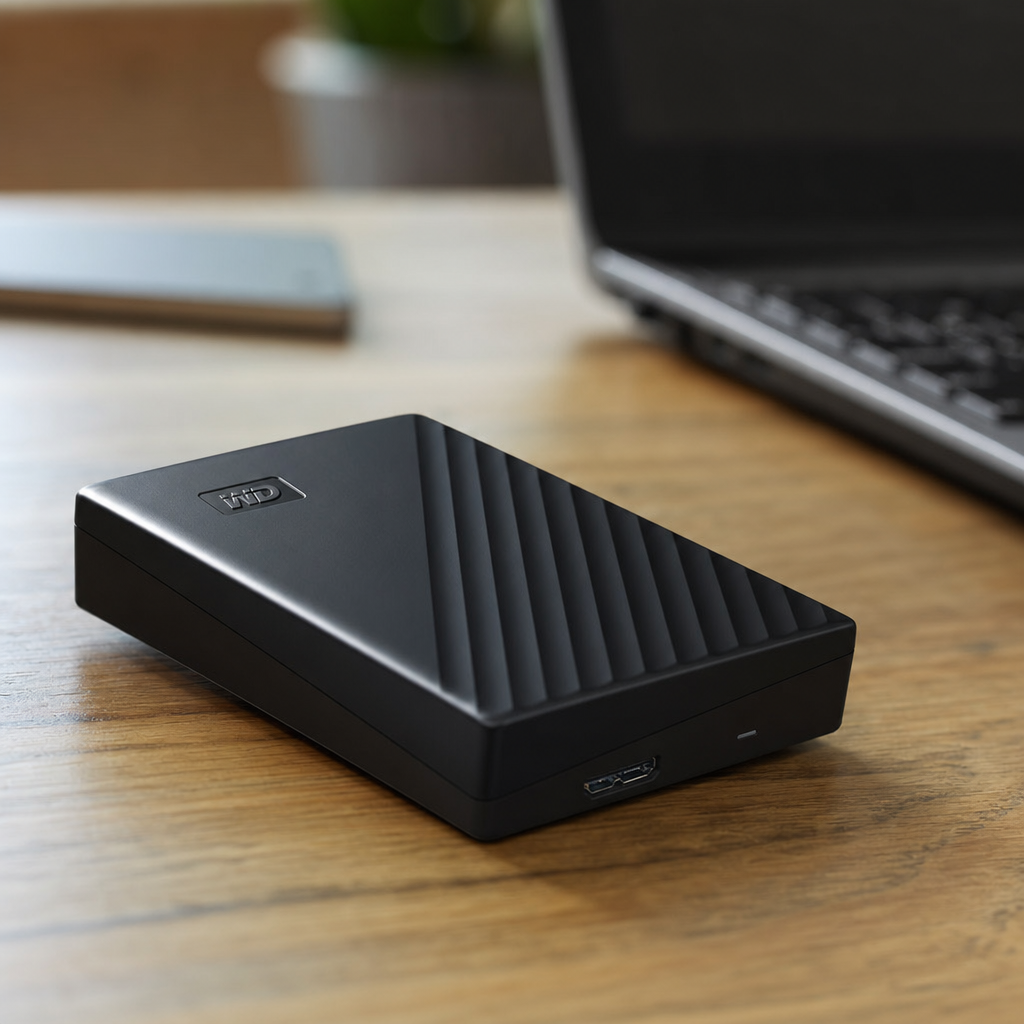
Western Digital offers a diverse range of storage products designed for very different performance needs, workloads, and user environments. For consumers, the company is widely known for external hard drives and portable SSDs used for backup, media storage, gaming libraries, and everyday file transfers. It also provides internal drives for desktops and laptops, allowing users to expand storage capacity or improve system responsiveness. These products appeal to home users, students, creators, and professionals who want trusted storage for personal and work-related data.
Beyond the consumer space, Western Digital also serves specialized and high-demand markets. Its product lineup includes drives optimized for network-attached storage systems, surveillance recording, enterprise servers, and large-scale cloud and data center operations. In addition, Western Digital has a strong presence in flash-based technologies, including SSDs and embedded storage used in mobile and connected devices. This range is important because no single storage format fits every use case. Some environments prioritize massive capacity at lower cost, while others require ultra-fast access, endurance, and low latency. Western Digital’s ability to support both traditional hard disk technology and modern flash storage has helped it remain relevant across a rapidly evolving digital landscape.
How does Western Digital support both consumers and enterprise customers?
Western Digital supports consumers and enterprise customers by tailoring storage solutions to the specific challenges each group faces. Consumer users generally look for simplicity, affordability, portability, and dependable backup options. Western Digital addresses these needs with products that are easy to install, easy to use, and designed for common tasks such as storing photos, videos, documents, games, and creative projects. Many of its consumer solutions are built around convenience and accessibility, which helps make advanced storage technology approachable for non-technical users.
Enterprise and cloud customers, however, operate on a completely different scale. They need storage that can handle enormous data volumes, demanding workloads, continuous uptime, and strict requirements for performance, security, and operational efficiency. Western Digital serves this market with enterprise-grade HDDs, SSDs, platform technologies, and infrastructure-focused solutions designed for data centers, business continuity, and scalable deployment. The company’s value in this space comes from more than just raw capacity; it also lies in reliability under pressure, workload optimization, and the ability to fit into broader IT and cloud architectures. By effectively serving both ends of the market, Western Digital demonstrates the flexibility and technical depth that define true industry leaders.
Why are digital storage solutions so important in modern computing?
Digital storage solutions are essential because nearly every digital activity depends on the ability to retain and retrieve data quickly, accurately, and securely. Whether someone is saving family photos on a laptop, running a business application, streaming media, training AI systems, or managing a global cloud platform, storage is what makes persistent data possible. Without reliable storage, computing would be limited to temporary processing with no long-term memory, no archives, no backups, and no continuity between sessions or systems.
In practical terms, storage influences performance, user experience, business resilience, and data protection. Faster storage can reduce load times and improve workflow efficiency, while higher-capacity storage allows organizations and individuals to manage growing volumes of content. Just as importantly, dependable storage helps safeguard critical information from loss, corruption, or downtime. As the world generates more data through connected devices, digital services, remote work, media creation, and enterprise applications, the importance of advanced storage continues to grow. Companies like Western Digital are central to this reality because they provide the infrastructure that supports everything from everyday computing to the backbone of the digital economy.
How has Western Digital remained relevant as storage technology continues to evolve?
Western Digital has remained relevant by evolving alongside the industry rather than relying on legacy success alone. The storage market has changed dramatically over time, with the rise of solid-state storage, cloud computing, edge devices, large-scale analytics, and increasingly complex enterprise workloads. To stay competitive, Western Digital has continued to expand its technological capabilities, refine its product portfolio, and serve emerging use cases where data volume, speed, and reliability matter more than ever. Its continued presence across both hard disk and flash storage categories gives it an important strategic advantage in a market where customers often need a mix of technologies.
The company’s relevance also comes from its role in larger technology trends. Modern businesses and consumers are not simply storing more data; they are moving it across devices, analyzing it in real time, protecting it against threats, and integrating it into cloud-based systems. Western Digital remains important because it supports these broader data workflows, not just the physical act of saving files. By continuing to innovate, scale, and address the needs of diverse markets, Western Digital has preserved its position as a major force in digital storage solutions and a company that helps define how the world manages information.