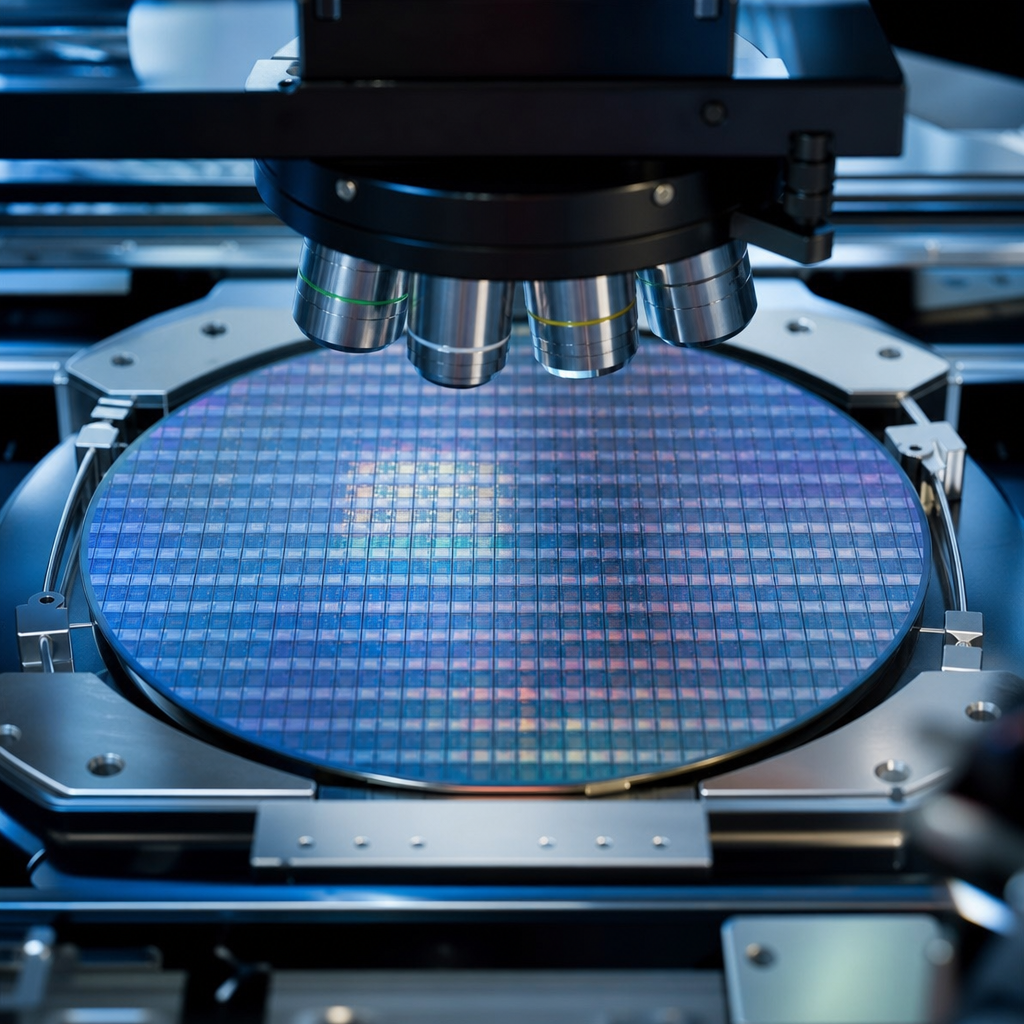
Nvidia’s groundbreaking advances in graphics and AI have reshaped modern computing, turning a company once known mainly for gaming chips into a central force behind data centers, autonomous machines, scientific research, and creative software. Nvidia is a semiconductor and platform company best known for graphics processing units, or GPUs, specialized processors originally designed to render images quickly by handling many calculations in parallel. AI, in this context, refers primarily to machine learning and deep learning workloads that benefit from the same parallel architecture. This matters because the company’s hardware, software, and developer ecosystem now influence how industries train large language models, simulate physical systems, build digital twins, accelerate drug discovery, and deliver real-time graphics. Having worked with Nvidia-powered systems across visualization and compute-heavy environments, I have seen the pattern repeatedly: the technical breakthrough is rarely one chip alone. It is usually the stack, from silicon to libraries to deployment tooling, that creates durable advantage. That makes Nvidia a useful hub example within tech innovators and market leaders, because its rise shows how product design, software lock-in, research investment, and ecosystem strategy can reinforce each other over decades.
The company’s significance starts with graphics but now extends far beyond it. Traditional graphics workloads involve shading, texture mapping, ray tracing, and frame generation, all of which demand high throughput and low latency. AI workloads demand matrix multiplication, tensor operations, model parallelism, and efficient memory bandwidth. Nvidia built architectures that increasingly served both worlds, then added purpose-built components such as Tensor Cores for AI and RT Cores for real-time ray tracing. Standards and tools strengthened the advantage: CUDA gave developers a practical parallel programming model, cuDNN accelerated neural network operations, TensorRT optimized inference, and networking acquisitions expanded Nvidia’s data center position. For readers exploring company spotlights, Nvidia is a key case study because it combines technical innovation with market execution. It competes in consumer graphics, enterprise AI infrastructure, automotive platforms, edge computing, and software frameworks, while influencing adjacent vendors and cloud providers. Understanding Nvidia explains broader trends in semiconductors, AI commercialization, and the economics of platform leadership.
From graphics pioneer to full-stack computing platform
Nvidia was founded in 1993, and its early identity was defined by graphics acceleration for PCs and workstations. The pivotal insight was that visual computing required massively parallel processing, making GPUs better than CPUs for specific workloads involving thousands or millions of similar operations. That architecture drove advances in gaming realism, professional visualization, and simulation. Over time, Nvidia shifted from selling discrete chips to building complete computing platforms, pairing hardware with drivers, software development kits, and domain libraries. This full-stack approach is one reason the company became more than a component supplier.
A decisive milestone came with CUDA in 2006. CUDA let developers use Nvidia GPUs for general-purpose computing without writing everything in low-level graphics APIs. In practical terms, that opened the door for researchers in physics, finance, genomics, and machine learning to accelerate applications using familiar programming patterns. I have seen teams choose Nvidia not because the hardware benchmark alone looked strongest, but because CUDA, profiling tools, documentation, and third-party library support reduced engineering risk. That distinction matters. Enterprises buy performance, but they commit to ecosystems when time-to-value and maintainability are better.
How Nvidia transformed modern graphics
Nvidia’s leadership in graphics is not just about producing faster GPUs. It is about advancing rendering techniques that change what users can actually see and do. Real-time ray tracing is the clearest example. Traditional rasterization approximates lighting efficiently, but ray tracing simulates the behavior of light more realistically, improving reflections, shadows, and global illumination. Nvidia’s RTX platform introduced RT Cores to accelerate ray tracing and Tensor Cores to support AI-based features such as Deep Learning Super Sampling, or DLSS. DLSS reconstructs higher-resolution images from lower-resolution inputs, increasing frame rates while preserving image quality.
The practical effect has been substantial across gaming, film previsualization, architecture, and industrial design. In gaming, developers can enable richer lighting without destroying performance budgets. In professional workflows, artists and engineers can iterate on scenes faster because physically based rendering becomes more interactive. Omniverse extended this concept into collaborative 3D simulation, connecting tools such as Autodesk Maya, Blender, and Unreal Engine through Pixar’s Universal Scene Description, or OpenUSD. That matters because modern graphics innovation increasingly depends on interoperability. Nvidia recognized that rendering, simulation, and collaboration were converging, and built products around that convergence.
Why Nvidia became central to the AI boom
Nvidia became central to AI because deep learning maps well to GPU architecture, but hardware compatibility alone does not explain the scale of adoption. The company systematically optimized the entire training and inference pipeline. Tensor Cores accelerated matrix math used in neural networks. HBM, high-bandwidth memory, improved data movement for large models. NVLink and NVSwitch helped multiple GPUs act as a larger compute fabric. Software libraries such as cuDNN, NCCL, Triton Inference Server, and TensorRT reduced the complexity of deploying AI systems at scale. Cloud providers then standardized around Nvidia instances, reinforcing demand.
The rise of transformer models made these advantages even more visible. Training large language models requires huge parallel compute clusters, fast interconnects, efficient memory usage, and software that can coordinate distributed workloads. Nvidia’s A100 and H100 GPUs became default infrastructure choices for many AI labs and enterprises because they delivered a mature path from experimentation to production. The newer Blackwell generation continues that direction with emphasis on larger AI systems, improved energy efficiency, and stronger support for inference economics. This is where Nvidia’s market leadership becomes strategic rather than cyclical. The company is not merely selling accelerators; it is shaping the practical operating model of AI.
| Area | Key Nvidia Advance | Why It Matters | Real-World Example |
|---|---|---|---|
| Graphics | RTX, RT Cores, DLSS | Better realism and frame rates | Game studios deliver ray-traced lighting without unplayable performance |
| AI Training | Tensor Cores, CUDA, NVLink | Faster large-model training across many GPUs | Enterprises train foundation models in data center clusters |
| AI Inference | TensorRT, Triton, optimized accelerators | Lower latency and better cost efficiency in production | Customer support bots and recommendation engines respond in real time |
| Simulation | Omniverse and OpenUSD workflows | Shared 3D environments and digital twins | Manufacturers simulate factory layouts before physical changes |
| Automotive | Drive platform | Centralized compute for assisted and autonomous driving | Automakers develop in-vehicle perception and planning systems |
Products, platforms, and ecosystem advantages
Nvidia’s product range now spans GeForce for consumers, RTX and professional GPUs for creators and enterprises, DGX systems for AI infrastructure, HGX platforms for hyperscale deployments, networking through Mellanox-derived technologies, and software offerings that increase stickiness. This breadth is important because customers often expand within a familiar platform. A studio using RTX workstations may adopt Omniverse for collaboration. A research group training models on cloud GPUs may standardize on TensorRT and Triton for inference. An automaker using Nvidia Drive may later extend into simulation workflows.
One consistent pattern across market leaders is reducing adoption friction. Nvidia does this with reference architectures, pre-trained model support, optimized libraries, and partnerships with every major cloud provider. The company also benefits from developer mindshare. CUDA remains a significant moat because codebases, training materials, and enterprise tooling are built around it. There are competitive pressures, including AMD’s ROCm ecosystem, custom AI accelerators from Google and Amazon, and rising interest in open standards. Still, switching costs are real. In production environments, teams value stable drivers, proven deployment paths, and known performance characteristics more than theoretical hardware parity.
Where Nvidia leads, and where the tradeoffs matter
Nvidia’s leadership is genuine, but a balanced view requires discussing constraints. The first is cost. High-end AI GPUs and associated networking are expensive, and total cost includes power, cooling, orchestration, and engineering labor. The second is supply concentration. When demand surges, availability becomes a strategic issue for startups and enterprises alike. The third is ecosystem dependence. CUDA’s strengths also create lock-in, which can limit flexibility if alternative accelerators improve or procurement priorities change. These are not minor concerns; they shape infrastructure decisions at board level.
There are also technical tradeoffs. Not every workload needs a premium GPU, and not every AI system benefits from the largest cluster architecture. Some inference tasks run more economically on smaller accelerators, CPUs with specialized instructions, or custom silicon. In graphics, premium features such as ray tracing can still involve performance compromises depending on the engine, resolution target, and optimization quality. The clearest lesson from working with Nvidia platforms is that the best outcomes come from matching the stack to the workload. Nvidia excels when organizations need mature tooling, broad ecosystem support, and high-performance parallel compute. That is a powerful position, but it is not universal.
Nvidia’s role in the future of tech innovators and market leaders
Nvidia stands out in company spotlights because it represents a modern pattern of innovation leadership: invent at the hardware level, reinforce it with software, expand into platforms, and then shape adjacent markets through standards and partnerships. Its influence now reaches robotics, healthcare imaging, climate modeling, telecommunications, cybersecurity, and industrial automation. When companies build digital twins, train multimodal models, or deploy advanced visualization, Nvidia is frequently somewhere in the stack. That reach makes it a central reference point for understanding tech innovators and market leaders as a category.
The key takeaway is straightforward. Nvidia’s advances in graphics and AI were not isolated product wins; they were coordinated platform moves that changed how visual computing and machine intelligence are built and deployed. Its strengths come from parallel architecture, developer tooling, data center integration, and a disciplined ecosystem strategy. Its limitations come from cost, supply pressure, and platform dependence. For readers using this hub to explore leading technology companies, Nvidia provides a clear benchmark for what durable innovation looks like. Use this article as a starting point, then continue through related company spotlights to compare how other market leaders build moats, scale adoption, and turn technical breakthroughs into lasting commercial power.
Frequently Asked Questions
1. What makes Nvidia so important in both graphics and artificial intelligence?
Nvidia became highly influential because it built hardware that could do far more than traditional graphics. The company’s GPUs were originally designed to accelerate image rendering by processing many calculations at the same time, which made them ideal for gaming, visual effects, and professional graphics workloads. Over time, researchers realized that this same parallel-processing architecture was also extremely effective for artificial intelligence, especially for training and running machine learning models that require massive amounts of matrix math and repeated computation.
What sets Nvidia apart is that it did not stop at chip design. It built a full ecosystem around its hardware, including software platforms, programming tools, AI frameworks, networking technologies, and data center systems. CUDA, for example, gave developers a practical way to use GPUs for general-purpose computing, which helped Nvidia move beyond gaming into scientific simulation, robotics, healthcare, finance, and AI research. That combination of specialized hardware and a mature software stack allowed Nvidia to become a foundational company in modern computing rather than just a graphics vendor.
Today, Nvidia matters because it sits at the intersection of several major technology shifts at once: real-time graphics, accelerated computing, generative AI, autonomous machines, and large-scale cloud infrastructure. Its advances have helped power everything from realistic game visuals and 3D design tools to deep learning systems used in data centers, language models, drug discovery, and self-driving development. In practical terms, Nvidia became important by identifying that the future of computing would depend on parallel processing and then building the tools to make that future usable.
2. How did Nvidia’s GPU technology evolve from gaming hardware into a core engine for AI development?
The transition happened because the underlying strengths of GPUs align closely with the needs of AI. In gaming, a GPU must handle thousands or millions of visual operations quickly, often in parallel, to render complex scenes smoothly. AI workloads, particularly deep learning, also involve enormous numbers of parallel mathematical operations. Training a neural network means repeatedly adjusting model parameters across huge datasets, which is far more efficient on a processor built for high-throughput parallel work than on a traditional CPU optimized for sequential tasks.
Nvidia recognized this opportunity early and invested heavily in making GPUs useful for more than graphics. A major turning point was the introduction of CUDA, which allowed programmers to use Nvidia GPUs for general-purpose computation. That opened the door for scientists, engineers, and AI researchers to accelerate workloads such as simulations, data analysis, and neural network training. As AI matured, Nvidia introduced GPU architectures and specialized features designed specifically for machine learning, including Tensor Cores, which dramatically improved performance for deep learning operations.
The company also strengthened the transition by supporting the broader AI ecosystem. Nvidia optimized its hardware for popular frameworks, developed software libraries for training and inference, and created integrated platforms for data centers and edge devices. As a result, GPUs became central to AI not just because they were powerful, but because Nvidia made them practical, scalable, and accessible. That shift transformed the GPU from a gaming component into one of the most important building blocks in modern artificial intelligence.
3. What are some of Nvidia’s most groundbreaking advances in graphics technology?
Nvidia has introduced several major graphics breakthroughs that changed how digital images are created and displayed. One of the most significant is real-time ray tracing, which simulates how light behaves in the physical world. Instead of relying only on older approximation methods, ray tracing enables more realistic reflections, shadows, and global illumination. By bringing this capability into consumer and professional GPUs, Nvidia pushed the graphics industry toward much more lifelike rendering in games, design visualization, and cinematic workflows.
Another important advance is AI-enhanced graphics, especially technologies such as DLSS, or Deep Learning Super Sampling. DLSS uses AI models to improve image quality and boost performance by rendering at lower resolutions and then intelligently reconstructing sharper frames. This approach helped solve a longstanding challenge in graphics: how to achieve high visual fidelity without sacrificing smooth performance. It also showed how Nvidia could combine graphics engineering and AI in ways that benefit real-world applications.
Nvidia has also made major contributions to professional visualization and content creation. Its hardware supports advanced 3D rendering, simulation, video processing, and digital design workflows used by artists, architects, engineers, and filmmakers. In addition, the company has invested in platforms for virtual worlds, simulation, and digital twins, helping bridge real-time graphics with industrial and enterprise use cases. Taken together, these advances are groundbreaking because they expand graphics from entertainment into a broader technology layer for design, training, simulation, and interactive computing.
4. Why is Nvidia considered a leader in AI infrastructure and data center computing?
Nvidia is viewed as a leader in AI infrastructure because modern AI depends on far more than a fast chip. Training large AI models requires massive compute power, high-speed memory, efficient networking, scalable software, and systems that can operate across entire data centers. Nvidia has built a strong position by providing many of those pieces together. Its data center GPUs are widely used for AI training and inference, while its networking and interconnect technologies help move data efficiently between processors, which is critical for large-scale machine learning workloads.
The company’s leadership also comes from integration. Instead of focusing only on silicon, Nvidia offers complete platforms that include hardware, software libraries, development frameworks, optimized AI tools, and reference architectures. This makes it easier for cloud providers, enterprises, and research institutions to deploy AI at scale. Whether the goal is training large language models, accelerating recommendation systems, running scientific simulations, or powering AI services in the cloud, Nvidia’s ecosystem reduces complexity and improves performance.
Another reason Nvidia stands out is that its infrastructure is used across a wide range of industries. Healthcare organizations use it for imaging and research, automakers use it for simulation and autonomy development, universities use it for scientific computing, and technology companies use it to build generative AI products. That breadth matters because it shows Nvidia is not leading in one narrow niche; it is shaping the backbone of accelerated computing across sectors. In effect, Nvidia became a data center leader by turning AI infrastructure into a full-stack platform rather than a collection of isolated components.
5. How are Nvidia’s advances affecting industries beyond gaming and traditional computing?
Nvidia’s impact now extends into industries that rely on speed, simulation, automation, and large-scale data analysis. In healthcare and life sciences, its accelerated computing platforms are used for medical imaging, genomics, drug discovery, and research modeling. In automotive and robotics, Nvidia technologies help power sensor processing, autonomous system development, simulation environments, and edge AI applications. In manufacturing and industrial operations, the company’s tools support robotics, predictive maintenance, digital twins, and factory optimization.
Creative industries have also been reshaped by Nvidia’s innovations. Designers, video editors, 3D artists, and filmmakers use Nvidia hardware for rendering, AI-assisted editing, animation, and visual effects. Meanwhile, scientific institutions depend on GPU acceleration for climate modeling, physics research, and complex simulations that would take far longer on conventional systems. Financial firms use it for risk analysis, fraud detection, and algorithmic modeling. In each case, Nvidia’s core advantage is enabling difficult computational tasks to run faster and at larger scale.
Perhaps the most important broader effect is that Nvidia helped redefine what computing infrastructure can do. Its advances support not only visual realism and faster processing, but also intelligent systems that can learn, predict, generate, and interact in real time. That means the company’s influence is showing up in cloud services, autonomous machines, enterprise AI, scientific discovery, and the software tools people use every day. Nvidia’s role beyond gaming is significant because it is helping shape the next generation of digital capability across the economy.