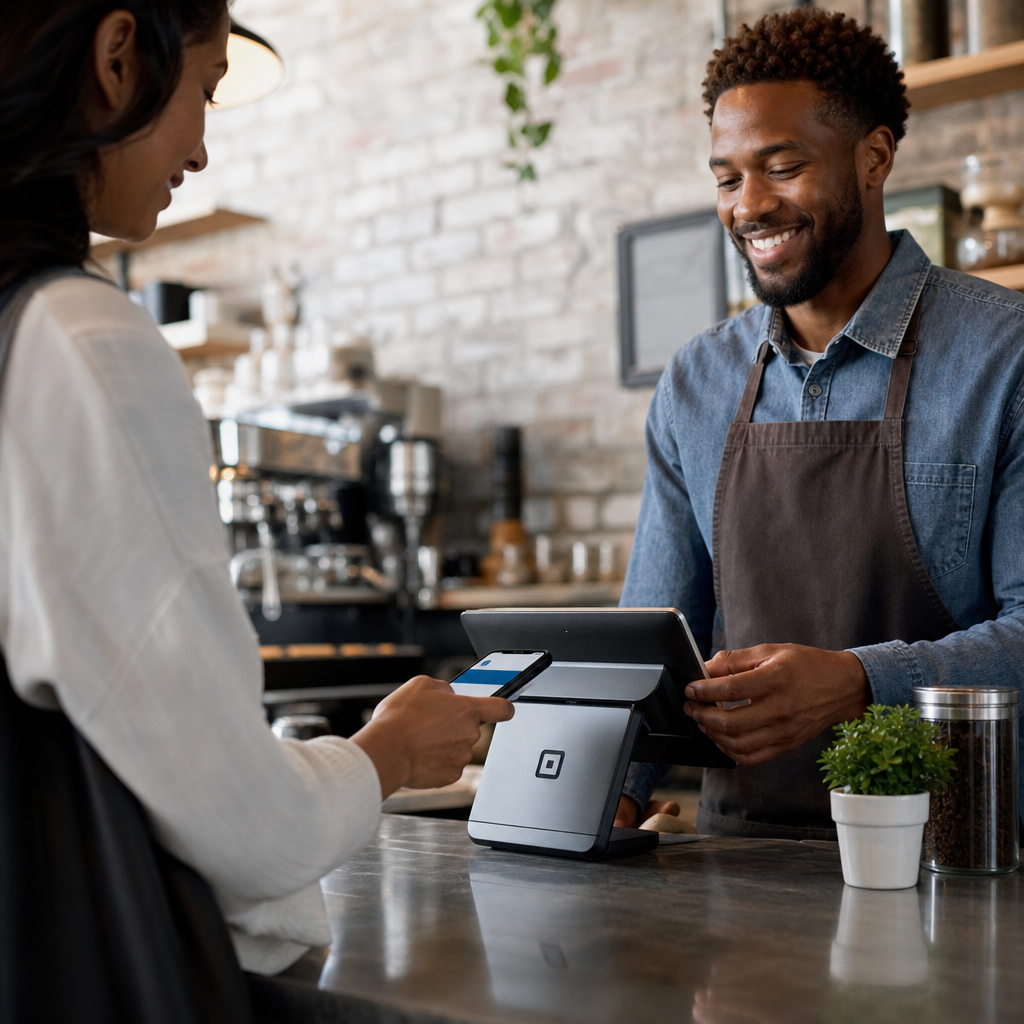
Square has become one of the most influential payments companies of the past decade by turning complex commerce infrastructure into tools that small and midsize businesses can use without an IT department, a merchant acquiring specialist, or a long implementation cycle. In practical terms, Square is a commerce platform that combines payment acceptance, point-of-sale software, hardware, invoicing, online checkout, payroll, banking services, customer engagement tools, and reporting into one ecosystem. That combination matters because business transactions are no longer confined to a card terminal on a countertop. A sale might begin on Instagram, finish on a website, be fulfilled through local pickup, and flow into accounting, inventory, and payroll systems within minutes.
Within the broader landscape of tech innovators and market leaders, Square stands out because it solved a painfully specific problem first: getting merchants paid easily. From that foothold, it expanded into adjacent operational layers that determine whether a business can scale efficiently. I have worked with Square in retail, food service, and appointment-based businesses, and the pattern is consistent. Owners rarely choose it only for card processing. They adopt it because it reduces operational friction across the full transaction lifecycle, from taking a payment to reconciling the day, managing cash flow, and understanding customer behavior.
For readers exploring company spotlights, this hub matters because Square illustrates how modern market leaders win. They do not just sell a product; they build an integrated system around a recurring business need. Square also provides a useful lens for understanding broader themes in financial technology, embedded banking, omnichannel commerce, and merchant software. If you are evaluating the company as a business owner, investor, operator, or analyst, the right question is not simply whether Square processes payments well. It is whether Square’s model creates durable value for businesses operating across channels, countries, and customer expectations.
How Square Built a Global Commerce Platform
Square launched in 2009 with a compact card reader that let sellers accept payments through a smartphone. That product addressed a clear market gap. Traditional merchant services often required underwriting paperwork, monthly minimums, leased terminals, and opaque pricing. Square simplified onboarding and popularized transparent flat-rate card processing for many sellers. That model mattered most for microbusinesses, pop-up retailers, independent service providers, and food vendors that had historically been underserved by incumbent payment providers.
Over time, Square expanded from acceptance to orchestration. The company added Square Point of Sale, Square Register, Square Terminal, invoicing, recurring billing, e-commerce tools, restaurant workflows, appointment scheduling, staff management, and customer directories. This is the crucial strategic move: payments became the data source that powered higher-value software features. When every sale, refund, tip, modifier, tax rate, and customer profile lives in one platform, the merchant gets operational visibility without stitching together five disconnected products.
Square’s international significance comes from this design principle. While regulations, payment methods, and tax rules vary by market, merchants everywhere need faster setup, cleaner reconciliation, and fewer disconnected systems. Square has expanded beyond the United States into markets including Canada, Japan, Australia, the United Kingdom, Ireland, France, and Spain. In each region, success depends on localization, including support for domestic card networks, contactless payments, receipts, VAT handling, labor workflows, and banking expectations. Global growth in commerce technology is never just translation; it is process adaptation at the transaction level.
What Square Offers Businesses Today
Square now competes as a full commerce operating system rather than a simple payment processor. For a retailer, that means inventory tracking, barcode support, employee permissions, omnichannel stock visibility, and customer purchase histories. For a restaurant, it means menu modifiers, kitchen ticket routing, coursing, tipping, and handheld ordering. For service businesses, it means appointments, deposits, cancellation controls, and automated reminders. These are not edge features. They directly affect revenue capture, labor efficiency, and customer retention.
The company’s ecosystem also extends into financial operations. Square Invoices supports remote billing. Square Online enables storefront creation and order management. Square Payroll addresses wage processing and tax filings in supported markets. Square Loans, where available, uses merchant sales history to offer financing. Square Checking and related banking tools bring cash-flow management closer to the point of sale. In operational terms, this reduces the lag between earning money and using it to restock inventory, cover payroll, or invest in growth.
| Business Need | Square Product Area | Practical Outcome |
|---|---|---|
| Accept in-person payments | Reader, Terminal, Register, Tap to Pay | Faster checkout with EMV, contactless, and digital wallet support |
| Sell across channels | Point of Sale plus Square Online | Unified orders, inventory, and customer records |
| Bill clients remotely | Square Invoices and payment links | Quicker collections and fewer manual follow-ups |
| Run industry-specific workflows | Retail, Restaurants, Appointments | Better fit for day-to-day operations and staff productivity |
| Manage cash flow | Banking, payroll, financing tools | Shorter time between transaction and operational use of funds |
One reason Square remains relevant in a crowded field is that the products are designed to be adopted incrementally. A merchant can start with payment acceptance, then add online sales, loyalty, payroll, or financing as needs evolve. That land-and-expand motion is common among market leaders because it lowers adoption friction while increasing long-term account value.
Why Square Resonates with Small and Growing Businesses
Square’s strongest appeal is operational simplicity. In real deployments, simplicity is not cosmetic. It determines whether a busy owner can train staff quickly, troubleshoot checkout issues during peak hours, and trust end-of-day reports. Square’s interface design, hardware setup, and guided onboarding reduce dependence on outside consultants. That is a strategic advantage in sectors where margins are thin and staff turnover is high.
Transparency has also been central to the brand. Flat-rate pricing is not always the cheapest option for every merchant, especially high-volume businesses that may get lower effective rates through interchange-plus pricing with enterprise processors. But predictability has value. For many businesses, especially early-stage operators, knowing what a transaction will cost is preferable to navigating statement fees, PCI charges, gateway add-ons, and long contracts. Square built trust by reducing billing ambiguity in an industry known for it.
The platform also aligns with how businesses now sell. Omnichannel commerce is standard, not advanced. Customers expect curbside pickup, emailed invoices, gift cards, mobile wallets, saved cards on file, and loyalty rewards across touchpoints. Square’s ecosystem supports these expectations without forcing merchants to architect separate systems. When a coffee shop sells beans online, a salon charges no-show fees, or a boutique syncs inventory between a weekend market and a storefront, transaction infrastructure becomes a growth enabler rather than a back-office burden.
Square’s Competitive Position Among Tech Innovators and Market Leaders
Square operates in a highly competitive environment that includes Stripe, Shopify, Toast, Clover, PayPal Zettle, Adyen, Lightspeed, and traditional merchant acquirers. Its position is strongest where software and payments need to work as one. Stripe is powerful for developer-led online businesses. Shopify is formidable in commerce storefronts. Toast is deeply specialized for restaurants. Adyen excels with larger global enterprises. Square’s differentiator is packaged accessibility: robust enough for many serious operators, but simple enough for nontechnical teams.
That balance has made Square especially influential in the small-business segment, though it increasingly serves larger sellers through advanced hardware, industry editions, and ecosystem breadth. Its parent company, Block, adds further strategic context through Cash App, Afterpay, and broader financial infrastructure ambitions. This matters because the future of transactions is converging around ecosystems that connect merchants, consumers, lending, and stored balances. Market leaders are no longer just processors; they are coordinators of money movement and commercial data.
There are tradeoffs. Businesses with highly customized workflows, complex ERP integrations, multinational treasury requirements, or very large payment volumes may outgrow standard Square configurations. International reach is meaningful but not universal, and feature parity varies by country. Processing costs can be higher than bespoke enterprise arrangements. Those limitations do not weaken Square’s significance; they define its ideal customer profile. The company is most compelling when ease of deployment, unified operations, and speed to value matter more than extreme customization.
What Square Signals About the Future of Business Transactions
Square’s evolution shows where commerce technology is headed. First, payments are becoming embedded features inside broader operating systems. Second, transaction data is increasingly used to automate decisions around staffing, inventory, customer retention, and financing. Third, hardware, software, and financial services are converging into a single merchant experience. This is not theory. It is already visible in how sellers adopt tap-to-pay on phones, issue digital receipts, launch subscription billing, and access working capital based on real sales performance.
For anyone following tech innovators and market leaders, Square deserves attention because it demonstrates how a company can reshape an established industry by reducing complexity rather than adding more features for their own sake. Its long-term importance lies in making commerce infrastructure more accessible to ordinary businesses while steadily expanding what those businesses can do from one platform. Explore related company spotlight articles in this hub to compare Square with other leaders shaping payments, software, logistics, cloud platforms, and digital customer experience. Together, they reveal how modern market leaders build ecosystems that simplify operations and create durable competitive advantage.
Frequently Asked Questions
What is Square, and how does it simplify business transactions globally?
Square is a commerce platform designed to make accepting payments and running day-to-day business operations much simpler for small and midsize businesses. Instead of requiring merchants to piece together separate providers for card processing, point-of-sale software, hardware, invoicing, online checkout, payroll, banking, and reporting, Square brings those functions into one connected ecosystem. That integration is a major reason it has become so influential: business owners can get started quickly without needing a dedicated IT team, a complex merchant acquiring setup, or a lengthy implementation process.
What makes Square especially effective is that it reduces operational friction across both in-person and digital commerce. A seller can accept chip cards, contactless payments, mobile wallets, invoices, and online transactions while keeping sales data, inventory activity, customer history, and reporting in one place. This creates a much cleaner workflow than managing disconnected systems. For businesses operating across different channels or serving customers in multiple markets, that consistency helps standardize how transactions are processed, tracked, and reconciled. In short, Square simplifies business transactions globally by turning complicated commerce infrastructure into tools that are accessible, scalable, and practical for everyday operators.
How does Square support small and midsize businesses beyond payment processing?
Square is much more than a card reader or payment gateway. Its broader value comes from helping businesses manage the operational side of commerce through a unified set of tools. In addition to payment acceptance, Square offers point-of-sale systems, invoicing, online checkout, e-commerce integrations, employee and payroll tools, banking-related services, customer engagement features, and analytics. That means a business can use Square not only to collect revenue, but also to manage staff, monitor performance, organize customer information, and maintain smoother cash flow.
For many small and midsize businesses, this matters because administrative complexity often becomes a bigger obstacle than making the sale itself. A restaurant may need menu management, tipping, and staff permissions. A retailer may need inventory visibility and sales reporting. A service business may need appointment scheduling, invoices, and payment links. Square addresses these practical needs through products built to work together from the start. The result is that owners spend less time coordinating vendors and troubleshooting system mismatches, and more time focusing on customer experience, growth, and profitability.
Why has Square become such an important player in modern commerce?
Square became a major force in modern commerce because it recognized a long-standing market gap: many smaller businesses were underserved by traditional payment and financial infrastructure. Historically, setting up card acceptance and business management systems could be expensive, slow, and unnecessarily technical. Square changed that dynamic by offering accessible hardware, straightforward onboarding, transparent software experiences, and integrated business tools that lowered the barrier to entry for merchants who wanted professional-grade capabilities without enterprise-level complexity.
Its importance also comes from timing and adaptability. As commerce expanded beyond the physical checkout counter into mobile, online, and omnichannel environments, businesses needed flexible systems that could keep up with changing customer expectations. Square evolved from a simple payments solution into a full commerce ecosystem that supports transactions wherever customers want to buy. That adaptability has helped businesses respond to shifts such as digital ordering, contactless payments, remote invoicing, and hybrid selling models. In effect, Square has helped modernize commerce for a broad segment of businesses that previously lacked easy access to sophisticated tools.
What types of businesses benefit most from using Square?
Square is especially valuable for small and midsize businesses that want an all-in-one system that is easy to deploy and manage. Retail stores, restaurants, cafes, salons, appointment-based service providers, mobile vendors, professional service firms, and growing e-commerce brands can all benefit from its integrated approach. These businesses often need speed, simplicity, and flexibility more than heavily customized enterprise infrastructure. Square meets that need by offering tools that can support both basic payment acceptance and more advanced workflows as the business grows.
It is particularly useful for organizations that operate across multiple sales channels or that want to avoid managing separate solutions for in-store transactions, online checkout, invoicing, and customer engagement. A business owner can track sales, monitor trends, manage inventory or services, and access customer insights from a centralized platform. That efficiency can be critical for lean teams with limited administrative resources. While very large enterprises with highly specialized requirements may prefer deeply customized systems, Square is often an excellent fit for businesses that prioritize fast setup, usability, and a unified operational backbone.
How does Square help businesses scale while keeping operations manageable?
Square helps businesses scale by providing a platform that can grow with operational complexity without forcing a complete systems overhaul at each stage. A business might begin by using Square for simple payment acceptance and a basic point-of-sale setup, then gradually add invoicing, online checkout, team management, payroll, customer engagement tools, and reporting as needs evolve. Because these services are part of the same ecosystem, expansion tends to be more manageable than stitching together unrelated products over time.
This matters because growth often creates hidden administrative strain. More locations, more employees, more products, and more sales channels can quickly lead to fragmented workflows and inconsistent data. Square reduces that risk by centralizing transaction records, customer information, sales analytics, and operational tools. Business owners can make decisions based on a clearer view of performance rather than assembling reports from multiple disconnected systems. In practical terms, Square supports scaling by making complexity easier to control, helping businesses maintain efficiency, visibility, and customer experience even as transaction volume and operational demands increase.