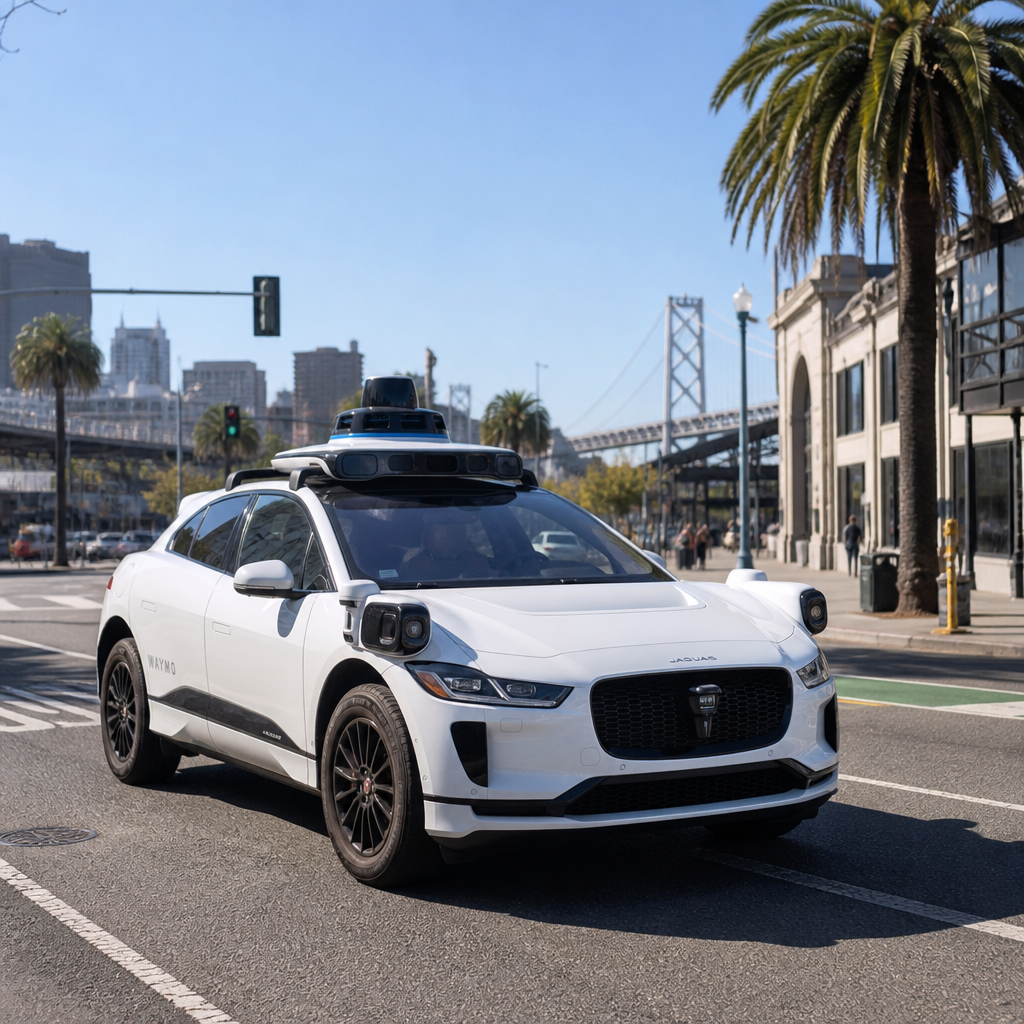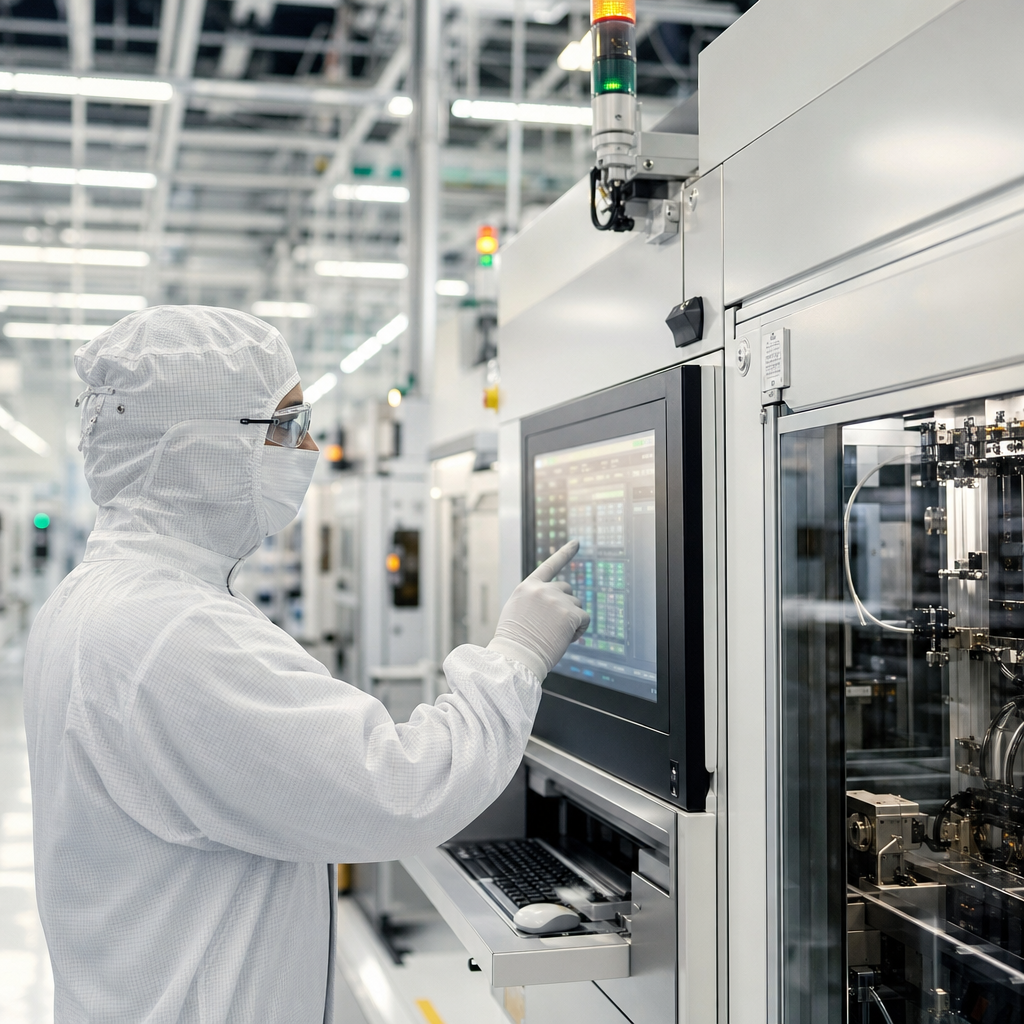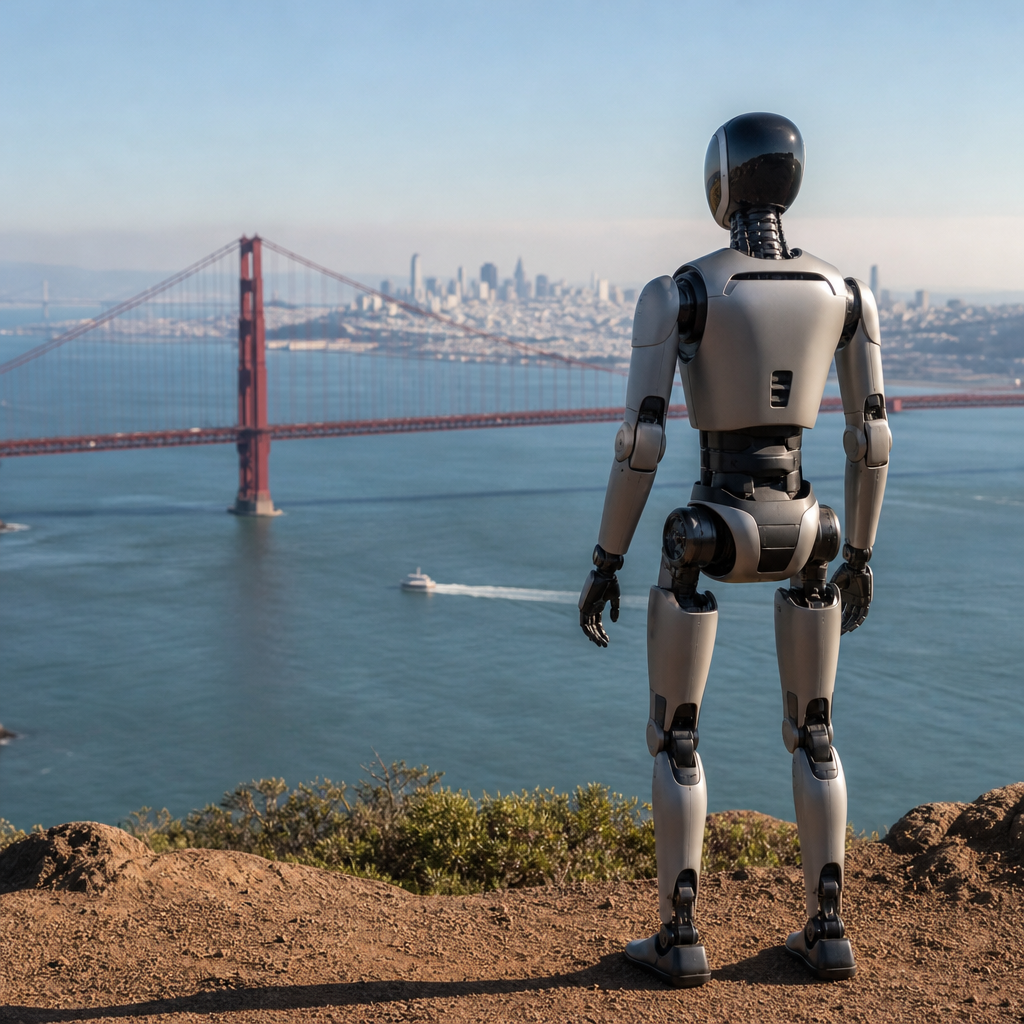
Figure AI sits at the center of the Bay Area’s latest robotics push, betting that general-purpose humanoid robots can move from lab demos into warehouses, factories, and eventually daily life. In practical terms, a general-purpose humanoid robot is a machine built with a humanlike form factor, usually two arms, two legs, hands, cameras, microphones, onboard compute, and software intended to handle many tasks rather than a single fixed motion. That distinction matters. Traditional industrial robots excel when a workflow is rigid and fenced off, but they struggle in spaces designed for people, where shelves, tools, stairs, doors, and unexpected obstacles are standard. Figure AI’s proposition is that a humanoid platform can fit into existing human environments with less infrastructure change, making deployment faster and more economical if the technology matures.
I have worked around robotics evaluations long enough to know that hardware ambition alone is never enough. The companies that matter combine electromechanical reliability, machine perception, motion planning, battery management, and fleet operations into one coherent system. Figure AI has attracted unusual attention because it is pursuing that full stack in the Bay Area at a moment when advances in large multimodal models, simulation, edge inference, and dexterous manipulation are converging. For readers following Robotics & Autonomy, this company spotlight matters because Figure AI offers a useful lens on the entire category: the technical promise, the commercial logic, the safety burden, and the reasons investors, manufacturers, and software companies are all paying close attention.
This hub article covers the core questions searchers usually ask. What is Figure AI? Why are humanoid robots suddenly back in focus after years of false starts? How does Figure compare with other robotics companies working on autonomy? Where can these machines create value first, and what limitations still block wide deployment? By answering those questions directly, this page also serves as the gateway for deeper coverage across the Robotics & Autonomy subtopic, including warehouse automation, embodied AI, robot perception, industrial safety, and the economics of machine labor. Figure AI is not the whole market, but it is one of the clearest case studies in how the current humanoid race is being built.
What Figure AI Is Building and Why the Bay Area Matters
Figure AI is building a humanoid robot platform intended for repetitive, physically demanding, and labor-constrained work. The strategic thesis is simple: instead of redesigning every facility around specialized robots, build a robot shaped enough like a person to use human-built spaces, tools, and workflows. In warehouses, that could mean bin picking, tote movement, pallet-side sorting, and line-side material handling. In manufacturing, it could mean kitting, part transfer, quality support, and machine tending. In the long run, the company has framed household assistance as a possibility, but near-term value is much more likely in commercial settings where tasks are measurable and return on investment can be modeled.
The Bay Area gives Figure AI several advantages. The region concentrates roboticists, controls engineers, computer vision specialists, embedded systems talent, and machine learning researchers in a way few places can match. It also offers proximity to suppliers, venture capital, cloud infrastructure firms, and applied AI partners. That matters because modern humanoid robotics is no longer just a hardware problem. A viable product depends on data pipelines, simulation environments, model training, teleoperation fallback systems, and field service operations. In my experience, teams move faster when those capabilities are geographically close and culturally aligned. The Bay Area still provides that density, even as manufacturing eventually scales elsewhere.
There is another reason the location matters: the regional ecosystem is comfortable funding long-horizon bets. Humanoid robotics requires expensive prototyping, repeated hardware revisions, and long customer validation cycles. Investors backing these companies understand that progress will be uneven. That tolerance for capital intensity helped earlier autonomy sectors, including self-driving vehicles and drone systems, and it is now supporting embodied AI. Figure AI benefits from that environment, but it also inherits the scrutiny that comes with it. In the Bay Area, ambitious claims are common; repeatable deployment is what separates a real platform from a well-produced demo.
The Technology Stack Behind General-Purpose Humanoid Robots
Humanoid robots succeed or fail on systems integration. A general-purpose machine needs perception, cognition, motion, manipulation, and power management working together under real-world latency constraints. Figure AI’s stack, like that of its leading peers, likely depends on multiple camera feeds, force-aware actuation, whole-body control, obstacle detection, grasp planning, and task-level policy models. None of those components is new alone. What is new is the attempt to make them reliable enough, cheap enough, and adaptable enough for production environments where downtime has immediate cost.
Perception is the first hard problem. A robot has to identify objects despite lighting changes, partial occlusion, reflective surfaces, and clutter. In warehouses, I have seen simple barcoded workflows fail because packaging changes slightly or a tote is loaded unevenly. A humanoid robot must handle far more complexity. That usually means fusing RGB vision, depth estimation, joint state data, and sometimes tactile signals. The software then maps sensor input to semantic understanding: where the handle is, which object is fragile, whether a walkway is blocked, and how far an arm can move without collision.
Manipulation is equally demanding. Picking up a rigid box is not the same as lifting a soft bag, turning a valve, or inserting a part with tight tolerances. Dexterous hands, compliant control, and rapid error recovery matter more than headline walking clips. In most industrial pilots, the commercially useful benchmark is not whether a robot can stroll across a room. It is whether it can complete thousands of grasp-and-place cycles safely, maintain accuracy through a shift, and recover from exceptions without constant human intervention. That is why evaluation often focuses on mean time between failures, cycle time, and successful task completion under variation.
| Capability | Why It Matters | Practical Example |
|---|---|---|
| Perception | Interprets cluttered environments | Finding a specific tote in mixed inventory |
| Manipulation | Handles varied objects and tools | Picking cartons, bins, or irregular parts |
| Locomotion | Moves through human spaces | Navigating aisles, ramps, and work cells |
| Autonomy software | Chooses actions and recovers from errors | Retrying a failed grasp without operator input |
| Power systems | Determines uptime and payload tradeoffs | Completing a shift segment before charging |
Commercial Use Cases, Competition, and Industry Reality
The first serious commercial use cases for Figure AI are likely in labor-short, repetitive environments where variability is moderate and safety can be tightly managed. Warehousing is the obvious target because operators already measure picks per hour, travel time, exception rates, and overtime costs. Manufacturing is close behind, especially where parts presentation is semi-structured and labor turnover is high. Logistics, third-party fulfillment, automotive assembly support, and electronics handling all fit this profile better than domestic care in the near term. The economics improve when a customer can deploy robots into existing shifts and compare performance against current labor baselines.
Figure AI does not operate in a vacuum. The humanoid field includes companies such as Agility Robotics, Apptronik, Sanctuary AI, and Tesla’s Optimus program, while adjacent automation pressure comes from established warehouse robotics providers like Locus Robotics, Symbotic, GreyOrange, and Covariant-inspired perception systems. The key difference is scope. Specialized robots often win faster because they solve one constrained problem with lower cost and higher reliability. Humanoids win only if their flexibility offsets their complexity. That is the strategic debate shaping the market today.
Buyers should evaluate claims carefully. A polished demonstration can hide teleoperation support, hand-tuned conditions, or reduced task diversity. The right questions are concrete: What percentage of actions are autonomous? What safety standard governs deployment, such as ISO 10218, ISO/TS 15066, or ANSI/RIA R15.06? How often does the robot need human reset? What integration work is required with warehouse management systems, manufacturing execution systems, or programmable logic controllers? In my experience, these operational details determine whether a pilot expands or quietly ends. Figure AI’s long-term prospects will depend less on viral videos than on repeatable customer metrics, serviceability, and deployment discipline.
What Figure AI Means for the Future of Robotics & Autonomy
Figure AI matters beyond its own roadmap because it concentrates the biggest questions in Robotics & Autonomy into one company story. Can embodied AI generalize across tasks instead of memorizing narrow routines? Can hardware be standardized enough to scale while software keeps improving through data? Can autonomous systems work beside people safely, productively, and with clear accountability? Those are not abstract research questions anymore. They are procurement questions for warehouse operators, risk questions for compliance teams, and workforce questions for employers deciding where automation fits.
For the wider Company Spotlights hub, Figure AI is the connective tissue linking several subtopics readers should explore next: robot learning, machine vision, edge AI compute, industrial integration, functional safety, and the business models behind robotics-as-a-service. The company embodies the current shift from single-purpose automation toward adaptable machine labor, but it also reminds the market that physical intelligence is harder than digital intelligence. Real progress will come from disciplined engineering, rigorous testing, and narrow early deployments that expand only after measurable success.
The takeaway is clear. Figure AI represents a credible Bay Area bet on general-purpose humanoid robots, not because the problem is easy, but because the timing is better than in previous cycles. Sensors are cheaper, models are stronger, simulation is richer, and labor pressures are real. Still, adoption will be earned task by task. If you are building an informed view of Robotics & Autonomy, use Figure AI as a starting point, then follow the adjacent articles in this hub to compare platforms, deployment models, and the standards shaping this fast-moving industry.
Frequently Asked Questions
What is Figure AI, and why is it getting so much attention in the Bay Area robotics scene?
Figure AI is a robotics company focused on building general-purpose humanoid robots, meaning robots designed to perform a wide range of physical tasks instead of repeating one narrowly defined action over and over. That is a major shift from traditional industrial automation, where most robots are fixed in place, carefully programmed, and optimized for one predictable workflow such as welding, sorting, or moving parts along a line. Figure AI’s approach is drawing attention because it aims to create machines with a humanlike body plan, typically two arms, two legs, dexterous hands, visual sensors, audio input, onboard computing, and adaptable software, so those machines can operate in spaces already built for people.
The Bay Area has become a natural home for this kind of bet because it combines artificial intelligence talent, venture capital, robotics research, semiconductor expertise, and large technology partners in one ecosystem. Figure AI sits at the intersection of all of those forces. Investors and industry leaders are interested because a successful humanoid robot could potentially address labor shortages, increase productivity in warehouses and factories, and eventually take on repetitive, physically demanding, or hazardous work. In other words, the excitement is not just about a futuristic machine. It is about the possibility of a new computing platform that links advanced AI with real-world physical labor.
What does “general-purpose humanoid robot” actually mean, and how is it different from a regular industrial robot?
A general-purpose humanoid robot is built to handle many different tasks in many different environments, rather than being engineered for one specialized motion in one tightly controlled setting. The “humanoid” part usually refers to its form factor: two arms for reaching and manipulation, two legs for mobility, hands for grasping, and a body shape that can navigate spaces originally designed around human movement. The “general-purpose” part is even more important. It means the robot is intended to adapt, learn, and switch between jobs such as carrying bins, opening doors, using tools, moving materials, or assisting with repetitive warehouse and factory work without requiring a complete redesign each time.
Traditional industrial robots are extremely effective, but they are usually purpose-built. A robotic arm on an assembly line may be faster, stronger, and more precise than a person at one specific task, but it often depends on fixed positioning, safety cages, repeatable inputs, and carefully structured environments. If the workflow changes, the robot may need reprogramming, retraining, or even replacement. A humanoid robot, by contrast, is meant to work in the “messy middle” of real human environments where objects are not always in the same place, conditions change, and tasks vary from hour to hour. That flexibility is why companies like Figure AI are considered ambitious: they are trying to combine the reliability of industrial machines with the adaptability of human workers.
Why are warehouses and factories seen as the first major use cases for Figure AI’s humanoid robots?
Warehouses and factories are often viewed as the logical starting point because they offer a practical middle ground between laboratory testing and full everyday consumer use. These environments are structured enough to make deployment possible, but dynamic enough to benefit from adaptable machines. A warehouse, for example, may require moving containers, sorting inventory, transporting goods, scanning items, and handling repetitive logistics tasks that are physically tiring for human workers. A factory may need material handling, machine tending, parts movement, and simple assembly support. These tasks are not always identical from minute to minute, which makes them difficult to automate fully with traditional fixed-purpose machines.
Another reason these settings matter is economic urgency. Employers in logistics and manufacturing often face labor shortages, turnover, safety concerns, and pressure to improve efficiency. If a humanoid robot can work in spaces already built for people, using the same aisles, workstations, carts, and tools, it could reduce the need for expensive infrastructure redesign. That is one of the biggest strategic arguments behind humanoid robotics. Instead of rebuilding the world for machines, companies try to build machines that can function in the existing world. For Figure AI, proving value in warehouses and factories is likely less about science fiction and more about demonstrating measurable return on investment, reliability, uptime, and safe human-robot collaboration.
What are the biggest technical challenges Figure AI and similar humanoid robotics companies still need to solve?
The challenges are substantial, and they span hardware, software, safety, and economics. On the hardware side, building a robot that can walk, balance, lift objects, use hands effectively, and operate for meaningful periods of time on battery power is extremely difficult. Human movement looks effortless, but reproducing it in a machine requires high-performance actuators, durable joints, precise sensing, thermal management, and efficient energy use. Hands are especially hard. Picking up a box is one thing; handling varied objects with speed, care, and reliability is another.
On the software side, the robot must perceive its surroundings, understand tasks, plan actions, and recover from unexpected situations. Real-world environments are full of edge cases: a dropped object, a shifted pallet, a blocked walkway, poor lighting, or a tool placed slightly out of position. A useful general-purpose robot has to do more than follow a script. It needs robust vision, control systems, learning models, task planning, and decision-making that work in real time under uncertainty. Then there is the safety challenge. A human-scale robot operating near people must be predictable, compliant, and well-governed to reduce risk. Finally, even if the technology works, cost matters. Figure AI and its peers must show that humanoid robots can be produced, deployed, maintained, and upgraded at a price businesses can justify. That combination of technical capability and commercial viability is what will determine whether the category becomes mainstream.
Could Figure AI’s humanoid robots eventually move beyond industry and into everyday life?
Yes, that is part of the long-term vision, but it is likely to happen gradually rather than all at once. The idea behind general-purpose humanoid robots is that if a machine can safely and reliably function in factories, warehouses, and other commercial settings, over time the same core platform could be adapted for broader service roles. That might include work in retail backrooms, hospitality support, eldercare assistance, facility operations, or eventually certain tasks in homes. The reason this is even plausible is the humanlike form factor. A robot with arms, hands, mobility, and perception similar to a person can, in theory, use infrastructure already designed for people, from door handles and shelves to tools and household objects.
That said, moving into daily life raises the bar significantly. Home and public environments are less structured than industrial sites and involve much higher expectations around safety, trust, privacy, and social acceptability. Consumers will not accept a robot that works only some of the time or requires expert oversight to complete simple chores. So while the long-term opportunity is enormous, the path will likely start with narrow but valuable use cases in commercial settings where the return is easier to measure and the environment is easier to control. If Figure AI can prove durable performance there, it strengthens the case that general-purpose humanoid robots could eventually become a practical part of everyday life rather than just a compelling lab demo.