Waymo: How Google’s Self-Driving Project Became a Commercial Robotaxi Company is the clearest case study in how robotics and autonomy moved from moonshot research into a revenue-generating transport service. In practical terms, robotics combines sensing, computation, and actuation to perform tasks in the physical world, while autonomy means those systems can perceive conditions, make decisions, and execute actions with limited human intervention. I have followed this sector since the first modern autonomous vehicle trials, and Waymo stands out because it translated laboratory breakthroughs in mapping, simulation, machine learning, and safety engineering into daily passenger operations. That matters far beyond one company. Waymo’s progress influences public trust, urban transportation policy, supply chains, insurance models, and the competitive strategy of nearly every company working in robotics and autonomy. For readers exploring this field, Waymo is a useful hub because it touches the major themes that define the sector: sensor fusion, high-definition maps, remote assistance, operational design domains, safety validation, and commercialization. Understanding how Waymo evolved from a secret Google project into a robotaxi operator helps explain where autonomous systems succeed, where they still struggle, and what separates a technical demo from a durable business.
From Google X Experiment to Independent Company
Waymo began in 2009 as the Google Self-Driving Car Project inside Google X, the company’s experimental research lab. The early goal was ambitious but precise: build a vehicle that could drive itself more safely than a human. Google recruited leaders from the DARPA Grand Challenge era, including Sebastian Thrun and Chris Urmson, and started with modified Toyota Prius vehicles equipped with lidar, radar, cameras, GPS, and onboard computing. In those years, the project proved that autonomy was not science fiction. It completed landmark road miles on California streets and publicized rides for visually impaired passengers, showing the social value of driverless mobility.
In 2016, Google separated the effort into Waymo, giving it a brand, management structure, and commercial mandate under Alphabet. That reorganization signaled a major shift. Research projects optimize for technical possibility; operating companies must optimize for safety cases, unit economics, regulatory engagement, fleet management, and customer experience. I have seen many robotics programs stall at this transition point. Waymo did not. It moved from one-off prototypes to purpose-built software stacks, scalable simulation workflows, and partnerships with automakers such as Chrysler, Jaguar Land Rover, and later Geely-linked Zeekr platforms. The company name itself condensed its mission: “a new way forward in mobility.”
The Technology Stack Behind Waymo Driver
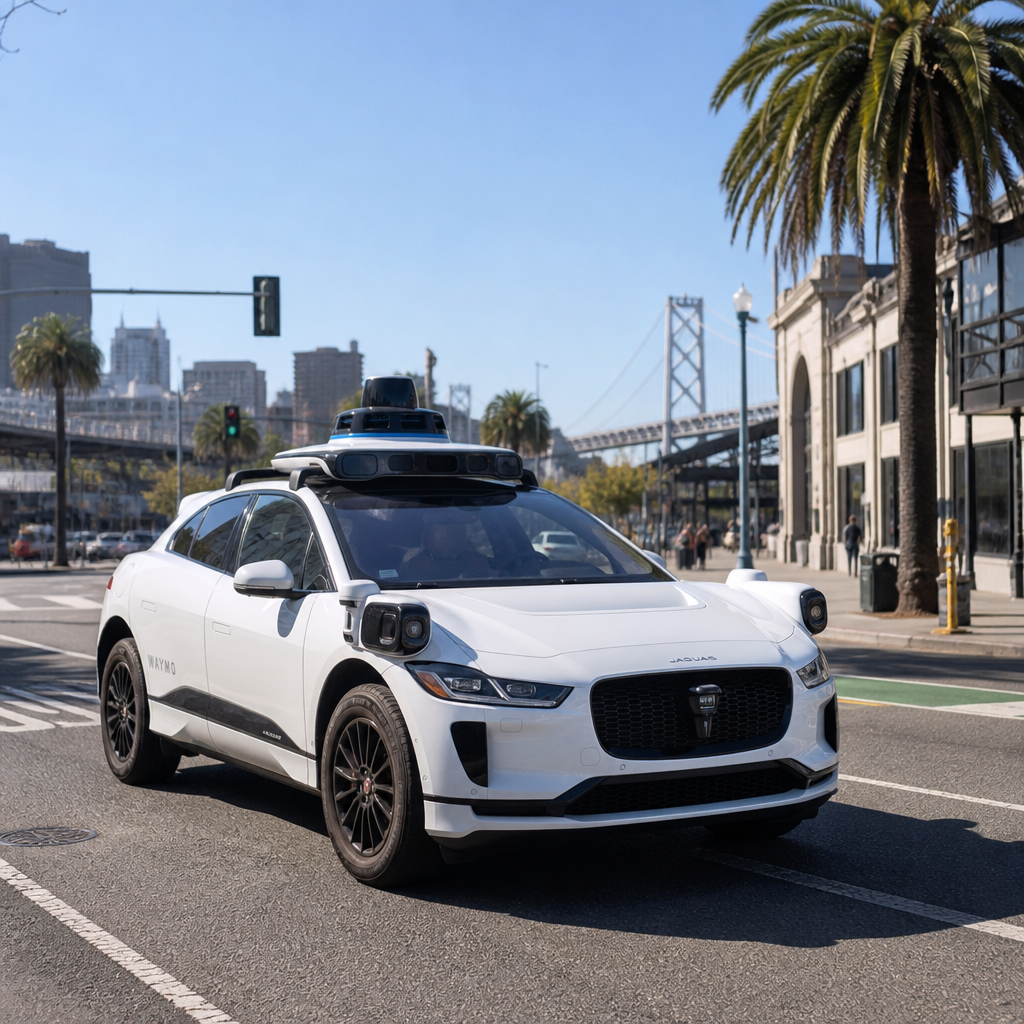
The core of Waymo’s business is the Waymo Driver, its integrated autonomous driving system. This stack combines perception, prediction, planning, and control. Perception identifies lanes, signals, pedestrians, cyclists, vehicles, and unusual hazards by fusing lidar point clouds, radar returns, and camera imagery. Prediction models estimate what surrounding road users are likely to do next. Planning then selects a safe, legal path, and control software converts that plan into steering, braking, and acceleration commands. This architecture is standard in the industry, but Waymo’s implementation is notable for redundancy and depth.
Waymo uses a multilayered sensor suite because no single sensor works best in every condition. Lidar offers precise 3D geometry, radar performs well through certain visibility challenges and directly measures relative velocity, and cameras capture color, texture, traffic lights, and signage. The company has also invested heavily in custom sensors and compute to lower cost and improve range. Mapping is another critical pillar. Waymo vehicles operate with detailed prior maps that encode lane boundaries, curbs, crosswalks, and traffic-control features. Critics sometimes frame this as a weakness, but in practice high-definition maps are a powerful safety tool within a constrained operating area.
Simulation is equally important. Waymo has said it drives billions of miles in simulation, allowing engineers to replay rare scenarios, test software changes, and evaluate edge cases that would take years to encounter on public roads. This is how modern robotics scales learning without exposing the public to unnecessary risk. Real roads produce the data; simulation multiplies its value.
How Waymo Turned Autonomy Into a Robotaxi Service
Waymo’s commercial breakthrough came by narrowing the problem. Instead of trying to drive everywhere immediately, it focused on defined service territories with favorable weather, mapped streets, and operational support. This is known as an operational design domain, the set of conditions in which an automated system is intended to function. Phoenix, Arizona became Waymo’s proving ground because its road network, climate, and regulatory environment were conducive to testing and launch. Waymo One, the company’s ride-hailing service, began there and evolved from supervised rides to fully driverless public trips.
That step from autonomous test vehicle to robotaxi company required far more than technical driving ability. Waymo had to build rider apps, vehicle cleaning and charging workflows, depot operations, remote assistance systems, incident response procedures, and customer support. The company also had to decide where economics could work. Robotaxis need high vehicle utilization to offset expensive hardware, maintenance, and fleet overhead. Dense trip demand helps, but so does operational discipline. In my experience, commercialization in robotics usually fails when companies underestimate boring infrastructure. Waymo did the opposite: it treated operations as part of the product.
| Phase | Primary Goal | Representative Waymo Example |
|---|---|---|
| Research | Prove autonomous driving is technically feasible | Early Prius prototypes logging public-road miles |
| Validation | Demonstrate safety across real and simulated scenarios | Closed-course testing plus billions of simulated miles |
| Pilot Service | Operate limited rides with safety processes and rider feedback | Early Waymo One service in suburban Phoenix |
| Commercial Scale | Run recurring driverless trips with fleet operations | Public robotaxi expansion in Phoenix, San Francisco, and Los Angeles |
Safety, Regulation, and the Real Limits of Self-Driving Cars
The most important question about Waymo is simple: is it safe? The company answers that through layered evidence rather than a single metric. It publishes safety research, submits filings to regulators, trains first responders, and analyzes crash data against human-driver baselines. In the United States, autonomous vehicle deployment intersects with state motor vehicle rules, local permitting, and federal vehicle safety oversight. In California, agencies such as the DMV and the Public Utilities Commission have shaped testing and commercial deployment rules. Waymo has generally taken a methodical approach, expanding only after extensive validation.
There are still hard limits. Autonomous driving systems can be confused by unusual construction zones, erratic human behavior, emergency scenes, and complex weather. Urban driving includes “long-tail” events, rare but consequential situations that are difficult to predict exhaustively. Waymo addresses these through conservative driving policies, remote human support for certain situations, and restricted service areas. That is a strength, not a weakness. In robotics, honesty about constraints is usually what enables sustained deployment. Fully general self-driving in all places and all conditions remains unsolved, but commercially useful autonomy in specific domains is already real.
Why Waymo Matters Across the Robotics and Autonomy Landscape
Waymo is more than a transportation company spotlight; it is a reference point for the broader robotics and autonomy industry. Many of the same principles apply to warehouse robots, sidewalk delivery machines, industrial inspection drones, and autonomous trucking. First, constrain the environment before expanding it. Second, combine multiple sensors instead of relying on one source of truth. Third, build safety cases with data, simulation, and operational controls. Fourth, design the human fallback layer carefully, whether that means remote assistance, site supervisors, or maintenance technicians.
Waymo also illustrates a strategic divide in autonomy. Some companies pursue mass-market driver assistance in consumer vehicles, while others pursue fully driverless service in bounded geographies. Those are different businesses with different risk profiles. Waymo chose the harder technical problem but a cleaner product promise: no human driver. The advantage is clear accountability over the entire stack, from dispatch to roadside support. The tradeoff is slower geographic scaling. For anyone studying robotics and autonomy, that tradeoff is central. Progress rarely comes from solving everything at once. It comes from selecting a domain where performance, economics, and safety can reinforce one another.
The Competitive Outlook and What Comes Next
Waymo now competes in a field that includes Cruise’s earlier robotaxi efforts, Tesla’s camera-centric autonomy strategy, Motional, Zoox, and several Chinese leaders such as Baidu Apollo and Pony.ai. Each company makes different choices about sensors, mapping, business models, and deployment pace. Waymo’s distinguishing feature is operational maturity backed by years of public-road experience. It has expanded beyond Phoenix into San Francisco and Los Angeles, and it continues exploring freight applications through Waymo Via learnings, even after refocusing strategy.
The next chapter will depend on cost reduction, geographic expansion, and public acceptance. Robotaxi economics improve when sensor costs fall, vehicle platforms are optimized for autonomous maintenance cycles, and dispatch systems increase utilization. Expansion will require adaptation to denser cities, airport operations, and more variable weather. Public acceptance will depend less on marketing than on consistent, uneventful rides. In autonomy, boring is the product. If Waymo can keep making driverless travel feel routine, it will strengthen the case for robotics in everyday life. For readers following Company Spotlights and the wider Robotics & Autonomy landscape, Waymo is the company to watch because it shows how deep technical research, disciplined operations, and constrained deployment can become a real commercial service. Explore related autonomy companies, compare operating models, and use Waymo as the benchmark for what practical robotics commercialization looks like today.
Frequently Asked Questions
1. What exactly is Waymo, and how did it evolve from a Google research project into a commercial robotaxi company?
Waymo began as the Google Self-Driving Car Project in 2009, when it was still part of Google’s experimental “moonshot” culture. The original goal was not simply to build a better car feature, but to solve a much harder robotics problem: how to create a vehicle that could sense the world around it, interpret what it was seeing, predict what other road users might do, and then drive safely with minimal or no human input. That challenge sits at the intersection of robotics, artificial intelligence, mapping, software engineering, and hardware integration.
Over time, the project matured from a research effort into a full autonomy platform. In 2016, it became Waymo, a standalone company under Alphabet. That change mattered because it signaled a shift from pure experimentation toward commercialization. Instead of just proving that autonomous driving was possible, Waymo had to answer business questions as well: where could the technology be deployed first, what use cases made economic sense, how could it operate safely at scale, and what type of customer service and fleet management system would be required?
Waymo’s robotaxi business emerged from years of testing, simulation, public-road driving, and gradual deployment. The company first focused on geofenced service areas, where it could map roads in detail and operate under controlled conditions. That allowed Waymo to launch ride-hailing services in selected cities before expanding the scope of its operations. In other words, the journey from Google project to commercial company was not a sudden leap. It was a long progression from research prototype, to advanced driverless system, to carefully managed transportation service with paying customers.
2. Why is Waymo often considered one of the most important examples of robotics becoming a real business?
Waymo is widely seen as a landmark example because it demonstrates how a complex robotics system can move beyond the lab and become a repeatable commercial service. Many robotics projects are impressive technically but struggle to generate revenue because the real world is messy, unpredictable, and expensive to operate in. Waymo’s significance lies in the fact that it has converted a highly advanced autonomy stack into something customers can actually use: a ride from one place to another.
That matters because autonomous driving is one of the most difficult applied robotics problems ever attempted. A robotaxi must continuously fuse data from cameras, lidar, radar, and other sensors; localize itself precisely; understand traffic signals, lane geometry, pedestrians, cyclists, and construction zones; and make safe decisions in real time. It also has to do this not once in a demo, but thousands of times a day under commercial operating conditions. Building that into a service requires not only software and hardware, but also operations, maintenance, regulatory coordination, rider support, remote assistance systems, insurance frameworks, and city-specific deployment planning.
In business terms, Waymo shows that autonomy can become a service model rather than just a technology showcase. Its robotaxi platform creates a direct link between robotics capability and consumer demand. That is why analysts, investors, and technologists watch it so closely. It is one of the clearest examples of “autonomy as infrastructure,” where robotic intelligence is embedded into a transport network and monetized through rides. For the broader robotics industry, that makes Waymo a case study in how moonshot innovation can eventually become an operating company with real-world customers and revenue potential.
3. How does Waymo’s self-driving technology actually work in practical terms?
At a practical level, Waymo’s system works by combining sensing, perception, prediction, planning, and control. First, the vehicle uses an array of sensors such as cameras, lidar, and radar to gather information about its surroundings. Each sensor has strengths and weaknesses. Cameras are useful for reading traffic lights, signs, and visual cues. Lidar helps create a detailed 3D model of nearby objects and road geometry. Radar is valuable for detecting motion and estimating distances, especially in conditions where visibility may be limited. By blending these sensor streams, the system builds a rich and redundant picture of the environment.
Next comes perception and interpretation. The vehicle’s software identifies objects such as cars, pedestrians, cyclists, cones, and road barriers. It also classifies road features like lanes, intersections, crosswalks, and curb edges. But recognizing the world is only part of the challenge. The system must also predict what other road users are likely to do. For example, it may need to estimate whether a pedestrian is about to step into the street, whether a cyclist will swerve around a parked car, or whether another driver may turn unexpectedly.
Once the system has perceived and predicted the scene, it plans a safe path. That means choosing the appropriate speed, lane position, following distance, and maneuver sequence. Finally, the control layer translates those decisions into steering, braking, and acceleration. In short, Waymo vehicles are robotic systems operating in a dynamic public environment, constantly moving through a loop of sensing, understanding, deciding, and acting. The reason this is so hard is that city driving is filled with rare events, ambiguity, and human behavior that does not always follow clean rules. Waymo’s progress comes from years of data collection, simulation, mapping, and iterative engineering aimed at handling that complexity reliably enough for commercial service.
4. What has made Waymo’s commercial rollout so difficult, even after years of technological progress?
The biggest reason Waymo’s rollout has been difficult is that building a self-driving car is only one part of building a robotaxi business. Autonomous driving must work safely and consistently in the real world, not just in limited demonstrations. That means handling unpredictable human behavior, unusual road layouts, temporary construction, bad weather, emergency vehicles, edge cases, and the countless exceptions that appear in urban traffic. Even a highly capable system can struggle if it is asked to operate everywhere under every condition too quickly.
There are also major operational and economic challenges. Robotaxis require specialized vehicles, expensive sensor suites, high-performance onboard computing, depot operations, cleaning and charging workflows, maintenance staff, remote support capabilities, and robust safety oversight. On top of that, Waymo must work with regulators, city officials, first responders, and the general public. Commercial deployment is therefore as much about trust, compliance, and operations as it is about machine intelligence.
Another key factor is geography. Waymo has generally pursued a geofenced strategy, meaning it launches in specific areas where roads are well mapped and operating conditions are understood. That may seem slower than a universal rollout, but it is a rational approach for safety-critical robotics. Expanding city by city allows the company to validate performance, refine rider experience, and improve unit economics over time. So while the long development cycle can look frustrating from the outside, it reflects the reality that transportation is a regulated, safety-sensitive business. Waymo’s path shows that in robotics, technical breakthroughs are necessary, but they are not sufficient. Commercial success also depends on disciplined deployment, operational excellence, and the ability to earn public confidence gradually.
5. What does Waymo’s success mean for the future of autonomous vehicles and the broader robotics industry?
Waymo’s success matters far beyond ride-hailing because it provides a real-world template for how advanced autonomy can be commercialized. If a company can reliably operate driverless vehicles in public streets, that has implications for logistics, delivery, trucking, industrial automation, and even service robots in other unstructured environments. The core lesson is that robotics becomes economically powerful when it can move from isolated prototypes to dependable systems that perform useful work repeatedly at scale.
For autonomous vehicles specifically, Waymo suggests that progress will likely come through targeted deployments rather than overnight universal adoption. Instead of every private car becoming fully autonomous all at once, the market may develop first in defined areas and service categories where the technology can outperform human-driven alternatives on safety, convenience, or cost. Robotaxis are one of the clearest early examples because they concentrate utilization: a single autonomous vehicle can serve many riders throughout the day, making the economics of expensive hardware more plausible over time.
For the broader robotics sector, Waymo reinforces an important strategic idea: autonomy is not just a feature, it can be an operating system for an entire business. Companies that master sensing, decision-making, and real-world reliability may be able to create durable service platforms, not just sell hardware. That is why Waymo is such an influential case study. It shows both the promise and the discipline required to turn frontier robotics research into a commercial product. The broader message is not that autonomy is easy or inevitable, but that under the right technical, regulatory, and operational conditions, robotics can evolve from experimental technology into revenue-generating infrastructure.