Archer Aviation sits at the center of a new aviation category: electric vertical takeoff and landing aircraft, often shortened to eVTOLs, built to move passengers on short urban and regional routes with lower noise, lower local emissions, and far more automation than traditional helicopters. As a company spotlight within robotics and autonomy, Archer matters because it shows how Silicon Valley product thinking is colliding with one of the world’s most regulated industries. I have worked on autonomy-adjacent transportation programs, and Archer’s story follows a familiar pattern: ambitious hardware, software-defined control systems, aggressive certification timelines, and a business model that depends on turning technical reliability into public trust.
Understanding Archer Aviation requires defining three linked ideas. First, electric air taxis are piloted aircraft designed for frequent short trips, usually carrying four passengers plus a pilot, and eventually aiming for higher levels of automation. Second, autonomy in aviation does not mean removing the pilot overnight. It usually starts with flight control computers, sensor fusion, health monitoring, route optimization, and automated contingency management, then advances only as regulators accept the safety case. Third, commercialization means more than building a prototype. It includes manufacturing, maintenance, charging infrastructure, vertiports, airline-style operations, software dispatch systems, and approval from the Federal Aviation Administration.
This topic matters well beyond one startup. Urban air mobility has become a test case for whether robotics can leave the lab and become a regulated public service. Archer, Joby Aviation, Wisk, Beta Technologies, and Eve Air Mobility are all trying to prove that electric aircraft can be operated at scale, but Archer has drawn unusual attention because of its partnerships, capital raises, and public market visibility. For readers exploring robotics and autonomy, Archer provides a practical lens on safety-critical systems, human-machine interaction, and the challenge of introducing automation where a single failure can destroy a company. That makes Archer a useful hub for understanding the entire subtopic.
What Archer Aviation is building and why its aircraft design matters
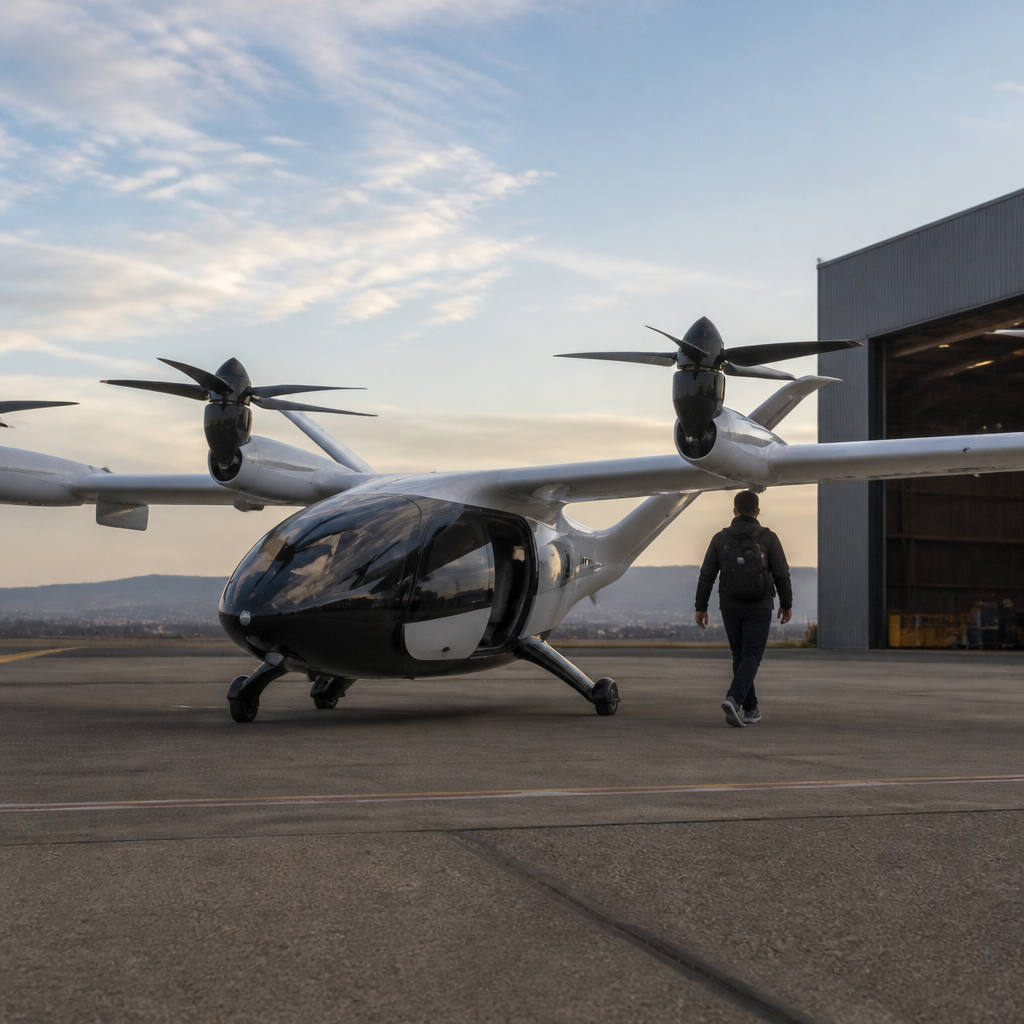
Archer’s flagship aircraft, Midnight, is designed as a piloted electric air taxi optimized for short, repeated trips with fast turnaround times. Publicly described configurations have emphasized four passenger seats, twelve propellers, and a fixed-wing layout that transitions from vertical lift to forward cruise. That architecture is not cosmetic. It reflects a tradeoff every eVTOL developer faces: pure multicopters are simpler in hover but inefficient in cruise, while winged aircraft gain range and speed once in forward flight. Archer’s design targets dense routes where turnaround time matters more than maximum distance, such as airport transfers and cross-city segments that can replace long car journeys.
The aircraft’s technical proposition is inseparable from robotics. Electric propulsion enables precise, software-mediated control of multiple motors, which improves handling and fault tolerance compared with legacy mechanically linked systems. In practice, that means flight control computers can continuously adjust thrust distribution, compensate for disturbances, and isolate faults faster than a human pilot acting alone. This is where Archer fits naturally into a robotics and autonomy hub: the vehicle is an aircraft, but the enabling logic is distributed sensing, embedded software, redundancy management, and machine-assisted decision support. Those are core autonomy disciplines, even before anyone talks about pilotless operations.
Archer has also framed Midnight around operational cadence. The company has stated goals around rapid charging and frequent back-to-back flights, a model closer to high-utilization fleet operations than private aviation. That matters because the economics of air taxis depend on asset utilization. A premium aircraft that flies only a few times per day will struggle to cover financing, battery replacement, maintenance, pilots, and ground staff. By contrast, a vehicle designed for dozens of short sectors can spread fixed costs more effectively. In mobility terms, the aircraft is only one node in a larger robotic system that includes dispatch software, maintenance analytics, charger availability, and vertiport scheduling.
How autonomy actually shows up in electric air taxi operations
Many readers ask a direct question: are Archer aircraft autonomous? The accurate answer is no, not in the fully pilotless sense, and that distinction is important. Today’s commercialization path is built around piloted operations supported by increasingly capable automation. In aviation, that is the realistic route. Flight management systems, fly-by-wire controls, automated stabilization, battery monitoring, predictive diagnostics, and contingency alerts reduce pilot workload and improve consistency. These tools are not marketing extras. They are the operating foundation that makes high-frequency urban flight plausible.
From my experience with safety-critical autonomy programs, the biggest misconception is that autonomy is a switch. In reality, it is layered. At the lowest layer, sensors measure airspeed, altitude, attitude, motor performance, thermal conditions, and power state. Above that, control software fuses the data and commands actuators many times per second. Higher layers manage navigation, route conformance, and fault detection. Human pilots remain in the loop, but the machine handles an increasing share of repetitive and time-sensitive tasks. In Archer’s category, this layered approach is essential because certification authorities evaluate not just intended performance, but graceful degradation when components fail, data disagree, or weather changes suddenly.
| Autonomy layer | What it does | Why it matters for Archer |
|---|---|---|
| Flight control | Stabilizes aircraft, balances thrust, manages transitions | Enables smooth vertical takeoff, cruise, and landing |
| Health monitoring | Tracks batteries, motors, temperatures, and anomalies | Reduces unscheduled maintenance and safety risk |
| Navigation support | Guides route adherence and situational awareness | Supports dense urban operations with repeatable procedures |
| Operational software | Coordinates dispatch, charging, crew, and turnaround | Drives fleet utilization and commercial viability |
This layered model also explains why air taxi companies talk constantly about software updates, simulation, and digital validation. Physical flight testing is expensive and slow. Simulation lets engineers explore edge cases such as motor-out events, sensor faults, gust response, and off-nominal approaches. Mature autonomy programs combine hardware-in-the-loop testing, formal verification where possible, and operational data review after every flight. If Archer succeeds, it will not be because one aircraft flew impressively at a demo. It will be because the company repeatedly proves that its software-controlled system behaves predictably across thousands of scenarios regulators care about.
Certification, manufacturing, and the hard road to commercialization
The defining challenge for Archer Aviation is not whether electric flight is possible. It is whether the company can certify, manufacture, and operate at a cost and reliability level that supports a real business. FAA certification is the central gate. For any new aircraft category, regulators scrutinize structures, propulsion, batteries, avionics, control systems, software assurance, pilot procedures, maintenance plans, and operational limitations. Standards such as DO-178C for airborne software and DO-254 for airborne electronic hardware shape how systems are developed and documented. This process is painstaking by design, and Silicon Valley speed does not shorten it.
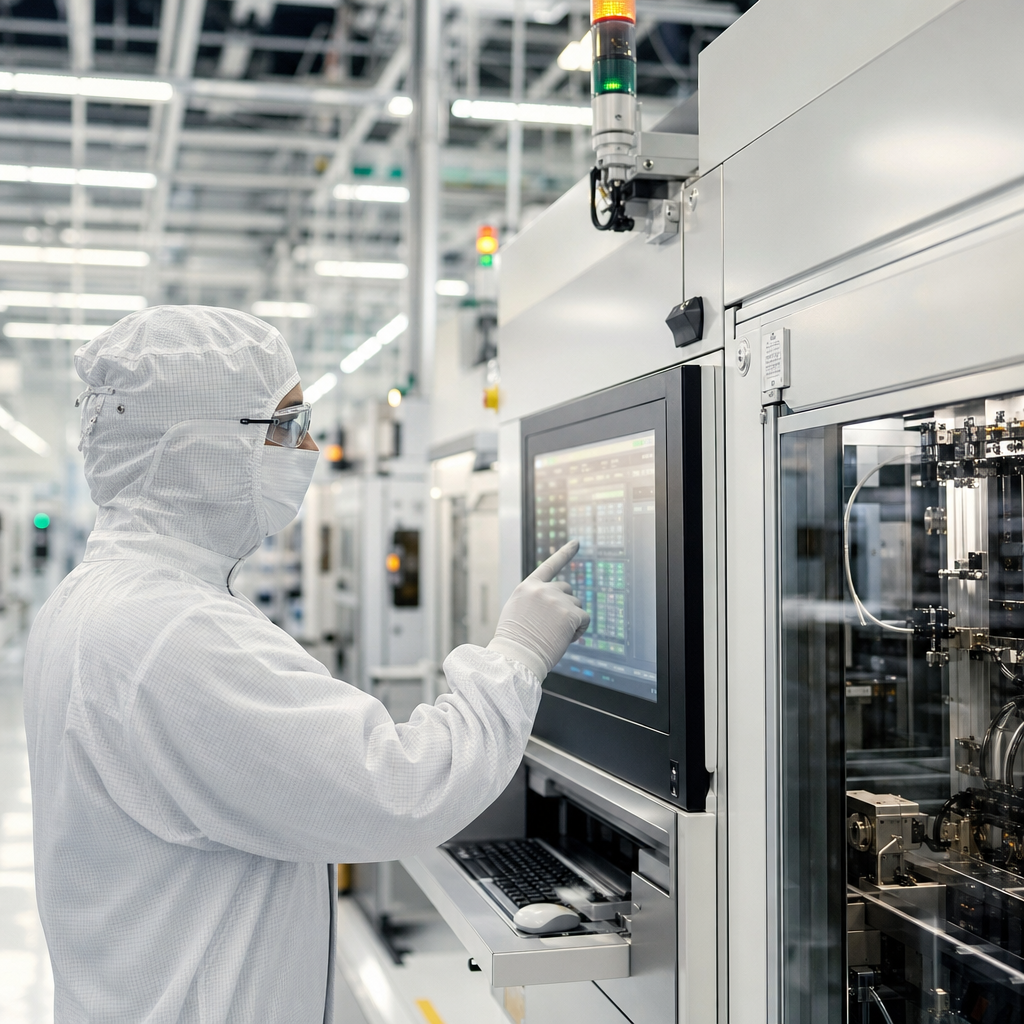
Manufacturing is the second gate, and it often receives less attention than flight videos. Building a few prototypes is fundamentally different from producing conforming aircraft at volume. Battery packs must meet strict quality tolerances. Electric motors and power electronics need repeatable performance. Wiring complexity, thermal management, and structural assembly all become more difficult when production scales. Archer’s announced manufacturing ambitions in Georgia, along with partnerships intended to industrialize production, reflect a hard truth I have seen across robotics programs: the factory is part of the product. If the production system is unstable, field reliability will suffer, and certification confidence can erode.
Commercialization also depends on network design. Air taxis need vertiports with charging capability, passenger handling, maintenance access, and integration into existing transportation corridors. Routes must be attractive enough to justify premium fares at launch while eventually trending toward broader affordability. Archer’s high-profile collaboration with United Airlines signaled one plausible entry point: airport shuttle services where customers already pay for time savings. That use case is more practical than vague promises of airborne rides everywhere. Short airport-city routes concentrate demand, simplify scheduling, and create a clearer comparison with ground travel times.
Competition, partnerships, and what Archer reveals about the sector
Archer does not operate in a vacuum, and competition helps clarify its strategic position. Joby Aviation is often treated as the category leader because of its test program maturity and operational ambitions. Wisk, backed by Boeing, has emphasized autonomous flight more explicitly. Beta Technologies has focused heavily on conventional takeoff and landing electric aircraft plus charging infrastructure, giving it a different path to scale. Eve, linked to Embraer, benefits from aerospace lineage. Archer’s differentiation has leaned on product-market framing, manufacturing partnerships, and a concentrated vision for urban routes.
That competitive context reveals a broader lesson for robotics and autonomy. Companies rarely win purely on technical elegance. They win by aligning technology with certification strategy, capital availability, supplier resilience, and launch customers. Archer’s public profile, SPAC-era financing, and legal conflict history with competitors illustrated how contested this market became. Yet those episodes also showed investor appetite for transportation automation that promises visible consumer impact. Unlike warehouse robots or industrial vision systems, electric air taxis capture public imagination immediately, which can help fundraising but also magnify scrutiny when timelines slip.
For anyone mapping the wider autonomy landscape, Archer connects to several adjacent themes. It links to advanced batteries, machine perception, safety assurance, simulation, fleet management software, and human factors engineering. It also raises questions that apply across robotics: when is a human supervisor necessary, how much redundancy is enough, and what operating domain should be limited during early deployment? As a hub topic, Archer is valuable because it makes those abstract questions concrete. Readers who want to understand commercialization in robotics should follow the company’s certification milestones, pilot training model, maintenance strategy, and service launch geography, then compare those choices with peers. That is where the future of autonomous mobility will be decided.
Archer Aviation represents Silicon Valley’s most visible attempt to turn electric air taxis from concept art into a regulated transportation service. The company’s significance lies not only in Midnight’s design, but in the disciplined integration of electric propulsion, software-controlled flight, operational automation, manufacturing planning, and infrastructure partnerships. For robotics and autonomy readers, Archer offers a clear case study in how advanced control systems reach the real world: gradually, under supervision, and only after proving safety across design, production, and operations.
The main takeaway is simple. Air taxi success will not be determined by a single prototype or marketing launch. It will be determined by certification progress, fleet economics, software reliability, and route selection that solves a real customer problem. Archer has promising ingredients, especially in partnerships and vehicle architecture, but the sector remains difficult and capital intensive. Follow the milestones, not the hype. If you are building your understanding of robotics and autonomy, use Archer as the starting point, then explore the broader network of aircraft developers, regulators, suppliers, and infrastructure operators shaping commercial electric flight.
Frequently Asked Questions
What is Archer Aviation, and why is it important in the race to commercialize electric air taxis?
Archer Aviation is one of the highest-profile companies building electric vertical takeoff and landing aircraft, or eVTOLs, for short-distance passenger transportation. Its broader goal is not simply to manufacture a new aircraft, but to help create an entirely new mobility category that sits somewhere between traditional aviation and ground-based ridesharing. That matters because electric air taxis promise to reduce travel times on congested urban and regional routes while offering lower local emissions and less noise than conventional helicopters.
What makes Archer especially important is where it comes from and how it operates. The company reflects a distinctly Silicon Valley approach: rapid iteration, heavy use of software, system integration, automation, and platform thinking. Instead of treating aircraft purely as mechanical products, Archer is part of a wave of companies treating flight as an end-to-end technology service that includes aircraft design, battery systems, autonomy-enabling software, manufacturing, certification, and future fleet operations. That combination puts Archer at the center of a much larger story about how startup culture is colliding with one of the most safety-critical and tightly regulated industries in the world.
Archer also matters because it serves as a real-world test of whether advanced aviation can move beyond prototypes and demonstrations into certified, repeatable commercial service. Success in this market requires far more than a sleek aircraft design. It depends on proving safety, scaling manufacturing, earning regulatory approval, integrating with air traffic systems, and building public trust. In that sense, Archer is not just developing an aircraft. It is helping define whether urban air mobility can become a viable business and transportation mode rather than a futuristic concept.
How do Archer’s electric air taxis differ from helicopters and conventional aircraft?
Archer’s electric air taxis are designed for a different operating model than traditional helicopters or fixed-wing aircraft. Like a helicopter, an eVTOL can take off and land vertically, which makes it useful in dense urban environments where runways are impractical. But unlike a helicopter, an eVTOL typically uses multiple electric motors and distributed propulsion systems, which can reduce mechanical complexity in some areas, improve redundancy, and significantly lower noise profiles. That lower noise is especially important for urban acceptance, since community resistance has long been one of the biggest barriers to expanding helicopter-like services in cities.
Compared with conventional aircraft, Archer’s vehicles are being optimized for relatively short trips rather than long-haul flying. They are intended for routes such as airport transfers, cross-city travel, and regional hops where time savings are meaningful and battery limitations are manageable. Electric propulsion changes the design tradeoffs. Batteries currently store less energy per unit of weight than liquid aviation fuels, so eVTOL aircraft must be engineered around careful range, payload, charging, and mission planning constraints. In return, electric systems can offer smoother control, fewer direct emissions at the point of use, and the possibility of simpler maintenance in certain subsystems over time.
Another major difference is the role of software and automation. While these aircraft are not simply autonomous robots in the consumer-tech sense, they are being developed with much more digital integration than legacy aircraft categories. Flight controls, health monitoring, energy management, and operational planning all depend heavily on software. That means Archer is operating at the intersection of aerospace engineering, robotics, and autonomy. The aircraft itself is only one piece of the equation; the full system includes sensors, onboard computing, diagnostic tools, networked fleet operations, and highly structured safety processes that are essential for certification and public deployment.
What are the biggest technical and regulatory challenges Archer Aviation faces?
The biggest challenge is turning a promising prototype category into a certifiable, commercially reliable transportation system. From a technical perspective, battery performance remains a central constraint. eVTOL aircraft need enough stored energy to complete flights safely while carrying passengers, maintaining reserve margins, and handling real-world conditions such as weather, traffic delays, and repeated daily operations. Managing battery weight, lifecycle, charging speed, thermal stability, and reliability is critical. Even if an aircraft can fly successfully in testing, operating it at commercial frequency is a much tougher engineering and logistics problem.
Aircraft architecture and safety are equally important. An electric air taxi must demonstrate that its propulsion, control systems, avionics, and structural components can tolerate failures without creating unacceptable risk. Redundancy helps, but redundancy must be validated, not assumed. Software assurance is another major issue, especially when increasingly automated systems influence flight behavior, pilot workload, diagnostics, and mission planning. In aviation, it is not enough for a system to work most of the time; it has to be shown, documented, and reviewed to an extraordinarily high standard.
Regulation may be the most decisive hurdle of all. Archer must work through a certification process that involves proving airworthiness, operational safety, manufacturing consistency, and maintenance procedures under the oversight of aviation authorities. This is where Silicon Valley speed runs into aerospace discipline. Regulators are not impressed by hype, product demos, or growth projections. They care about traceability, test evidence, failure analysis, training standards, and repeatable compliance. On top of aircraft certification, Archer also has to navigate questions around pilot operations, route approvals, infrastructure such as vertiports, charging systems, and integration into existing airspace. Commercialization depends on all of those pieces moving together, not just the aircraft reaching technical maturity.
Why is Archer Aviation often discussed as part of robotics and autonomy rather than just aviation?
Archer is often grouped with robotics and autonomy because modern eVTOL development is deeply dependent on machine-enabled control, sensing, software orchestration, and automated decision support. Even when a human pilot remains in the loop, the aircraft and its operating environment rely on many of the same principles that define advanced robotic systems: real-time perception, actuation, system redundancy, fault detection, control optimization, and high-integrity software. The result is an aircraft that is not just electrically powered, but digitally managed in a far more comprehensive way than many legacy platforms.
This matters because the future economics of electric air taxis likely depend on a rising degree of automation. To make short-hop aerial transport scalable, operators need highly efficient dispatch, predictive maintenance, battery-aware route management, traffic coordination, and eventually more automated flight functions. That does not mean fully autonomous passenger operations arrive immediately. In fact, aviation regulators are generally cautious, and for good reason. But the path to commercialization still involves layering in automation across the aircraft, the ground systems, and the fleet management stack. In that sense, Archer resembles a robotics company wrapped in an aerospace certification program.
The autonomy angle also helps explain investor and public attention. Silicon Valley has long been drawn to industries where software can reshape hardware-intensive systems, and aviation is one of the most ambitious examples. Archer represents a bet that aircraft can be designed, monitored, manufactured, and operated with a level of digital integration that improves safety, utilization, and operating economics over time. Whether that bet succeeds will depend on engineering reality and regulation, but the reason Archer attracts attention beyond traditional aerospace circles is clear: it sits at the frontier where robotics, autonomy, electrification, and transportation infrastructure all meet.
What would need to happen for Archer Aviation to make electric air taxis a mainstream transportation option?
For Archer to make electric air taxis mainstream, several things must happen at once. First, the company needs to secure and maintain regulatory approvals that allow it to move from testing into real passenger operations. Certification is the gatekeeper, because no amount of demand matters if the aircraft, production systems, and operating procedures are not approved. But certification alone is not enough. Archer also needs to prove that it can manufacture aircraft consistently, maintain them efficiently, and run operations with the kind of reliability that passengers expect from a transportation service rather than a novelty experience.
Second, the economics have to work. Mainstream adoption requires more than premium early-adopter demand. The service must eventually demonstrate useful routes, repeatable utilization, manageable charging or turnaround times, and operating costs that can support broader market access. Infrastructure is part of that equation. Vertiports, passenger handling, maintenance bases, charging systems, and local approvals all need to be in place. Integration with airports and city transportation networks could be especially important, since some of the strongest early use cases involve saving time on highly congested connections rather than replacing every kind of urban trip.
Third, public trust has to be earned. Passengers must believe the aircraft are safe, communities must accept the noise and operational footprint, and policymakers must view the category as beneficial rather than disruptive in a negative sense. That means Archer’s challenge is as much social and operational as it is technical. If the company can combine certification, dependable operations, smart infrastructure rollout, and clear passenger value, it has a real chance to help define a new transportation layer. If any one of those pieces falls behind, commercialization becomes much harder. That is why Archer Aviation is such a compelling company to watch: it is attempting to turn a futuristic vision into a regulated, scalable, everyday service.