Silicon Valley earned its name from the material that powered the modern electronics industry and from the cluster of companies that transformed a stretch of Northern California into the world’s best-known technology region. The term refers broadly to the southern San Francisco Bay Area, especially Santa Clara Valley, where semiconductor firms multiplied during the mid-twentieth century. “Silicon” points to the element used in computer chips, while “Valley” reflects the region’s actual landscape: a fertile agricultural valley bordered by hills and baylands. Understanding why it is called Silicon Valley matters because the name captures a larger story about geography, science, industry, migration, and mythmaking. I have spent years working with technology history sources, company archives, and regional planning documents, and one lesson comes up repeatedly: the name was not inevitable. It emerged after decades of local change, from orchards and canneries to defense contracts and integrated circuits. For readers exploring Historical Perspectives, this hub on Geography & Origins provides the foundation for related topics such as semiconductor pioneers, Cold War research, suburban growth, venture capital, and the global spread of innovation clusters. To understand the name fully, you have to begin with the land itself, then follow the chain from university labs to startups, from specialized materials to media shorthand, and from local identity to worldwide brand.
The valley before the chips: geography, agriculture, and regional identity
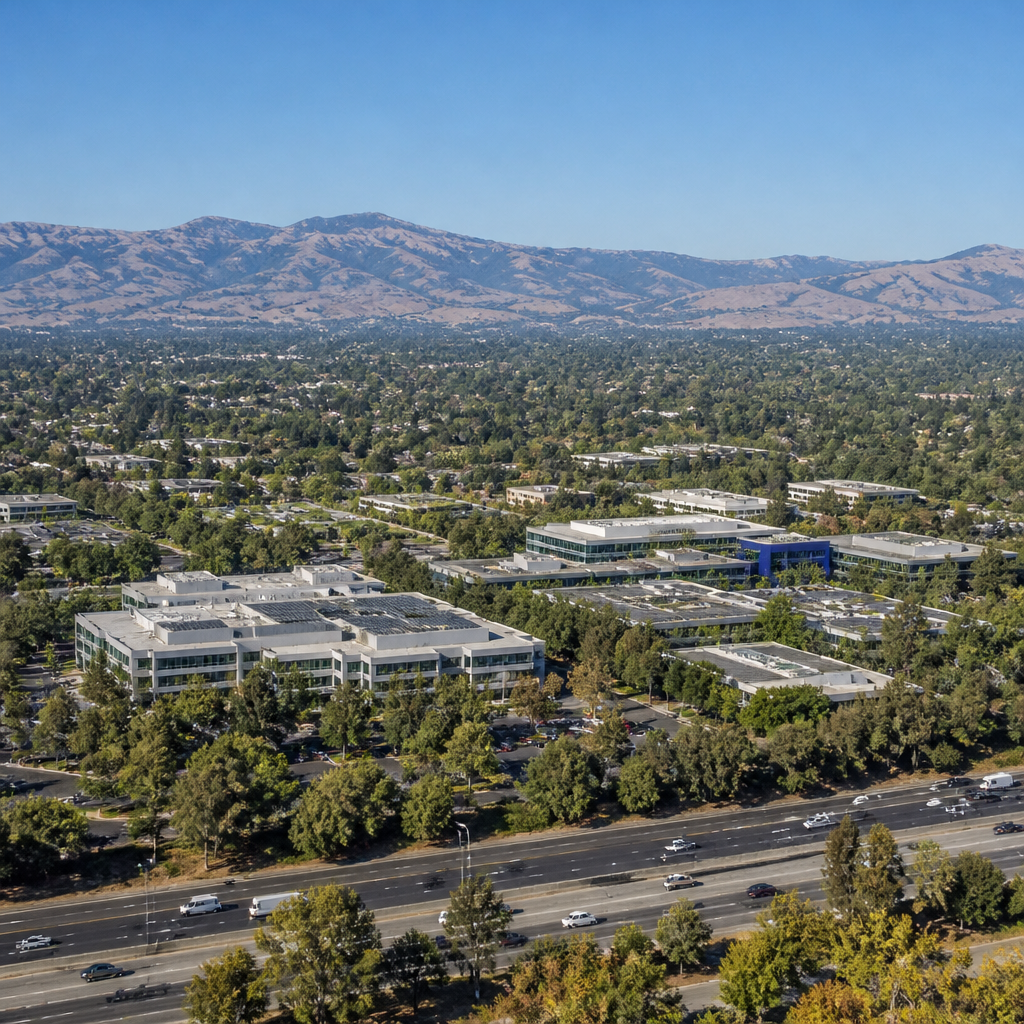
Before it became synonymous with startups, the area was known for fruit, not microprocessors. Santa Clara Valley stretched south from the bay through communities including Palo Alto, Mountain View, Sunnyvale, Santa Clara, San Jose, and Cupertino. Its Mediterranean climate, rich alluvial soils, and accessible rail connections supported orchards of apricots, cherries, prunes, and pears. By the late nineteenth and early twentieth centuries, the region marketed itself as the “Valley of Heart’s Delight,” a phrase still remembered by local historians. That earlier identity matters because “Valley” in Silicon Valley was never just a metaphor. It described a real geographic basin shaped by creeks, floodplains, and surrounding uplands, with urban growth concentrated on land that had recently been intensely cultivated.
Geography also influenced the industrial transition. The area sat near San Francisco’s port economy, Stanford University’s research community, military installations, and a growing transportation network. During World War II and the Cold War, California’s defense and aerospace sectors expanded dramatically. Electronics firms benefited from proximity to customers, suppliers, and engineers. Stanford, especially under dean and provost Frederick Terman, encouraged faculty and graduates to commercialize research locally rather than leave for the East Coast. In practice, this meant that the valley’s open land, suburban zoning, and campus-industry ties created room for laboratories, industrial parks, and housing for a rapidly growing technical workforce. The region’s geography did not cause the semiconductor boom by itself, but it made concentrated growth possible in a way dense older manufacturing centers often could not.
Why silicon mattered: the science behind the name
The “silicon” in Silicon Valley refers to the chemical element silicon, atomic number 14, a semiconductor material essential to modern electronics. A semiconductor conducts electricity under some conditions but not others, making it ideal for controlling current in transistors, diodes, and integrated circuits. Early semiconductor devices could be made from germanium, and many were. But silicon proved more durable, more heat-resistant, and better suited to the oxide layer needed for reliable manufacturing. Those properties made silicon the dominant material for chips by the late 1950s and 1960s.
This distinction is important because people sometimes assume the region was named after “computer technology” in a vague sense. It was named much more specifically after the material at the heart of semiconductor fabrication. When companies in the valley began producing silicon transistors and silicon integrated circuits at scale, they created the industrial base that justified the label. Firms such as Shockley Semiconductor Laboratory, Fairchild Semiconductor, and later Intel did not merely design abstract electronic concepts. They worked on crystal growth, wafer processing, diffusion, photolithography, planar manufacturing, yields, and packaging. In other words, Silicon Valley was named after a production technology and an engineering discipline, not just a cultural trend. The word captured a physical supply chain as well as a scientific breakthrough.
From Shockley to Fairchild: the birthplace of the semiconductor cluster
The origin story of Silicon Valley usually starts with William Shockley, co-inventor of the transistor and Nobel Prize winner. In 1956, he returned to the Palo Alto area and founded Shockley Semiconductor Laboratory in Mountain View. Shockley was brilliant but notoriously difficult to work with. Eight key employees left in 1957, later becoming famous as the “Traitorous Eight,” and formed Fairchild Semiconductor with backing from Sherman Fairchild. That split is one of the decisive events in the valley’s history because it established the local pattern of talent mobility, startup formation, and knowledge spillover that would define the region.
Fairchild Semiconductor became the true seedbed of the cluster. It advanced the planar process developed by Jean Hoerni, helped commercialize Robert Noyce’s integrated circuit work, and trained a generation of engineers and founders. Many later companies came directly from Fairchild alumni, including Intel, founded in 1968 by Robert Noyce and Gordon Moore. This pattern is why historians often use the phrase “Fairchildren” to describe the many spinouts that populated the valley. When I review company lineages with founders and local archivists, this is the family tree that matters most. The concentration of expertise around semiconductor manufacturing gave the region both its technical identity and its eventual name.
| Period | Key development | Why it mattered to the name |
|---|---|---|
| Pre-1940s | Santa Clara Valley dominated by orchards and food processing | Established the “valley” identity before technology arrived |
| 1956 | Shockley Semiconductor Laboratory opens in Mountain View | Brought advanced semiconductor research into the region |
| 1957 | Fairchild Semiconductor founded by the Traitorous Eight | Created the core company from which many chip firms emerged |
| 1960s | Silicon replaces germanium in many commercial applications | Made “silicon” the defining industrial material |
| 1971 | Journalist Don Hoefler popularizes “Silicon Valley USA” | Turned a technical cluster into a public regional name |
Who coined “Silicon Valley” and when it became the standard term
The phrase “Silicon Valley” is widely credited to journalist Don C. Hoefler, who used it in a series of weekly articles titled “Silicon Valley USA” for the trade newspaper Electronic News in 1971. That attribution is supported by repeated references in regional histories and journalism scholarship. Hoefler needed a concise label for the growing semiconductor corridor in Santa Clara County, and his phrasing stuck. The timing was ideal. By the early 1970s, the local electronics industry had enough scale, visibility, and internal coherence for a memorable name to spread through media, business circles, and public conversation.
It is worth noting that names for regions often emerge through repetition rather than official designation. No government agency formally baptized Silicon Valley in the way a city is chartered. The term gained legitimacy because it described something people recognized: a geographically concentrated semiconductor industry with global significance. Over time, the meaning widened. It first referred mainly to chip companies, then to the broader electronics sector, then to software, internet firms, venture capital, and startup culture. Today, people sometimes use “Silicon Valley” loosely to mean the entire technology economy or even as shorthand for innovation itself. Historically, that broad usage came later. The original name was rooted in semiconductor manufacturing and in a specific place.
How Stanford, defense spending, and suburban growth shaped the region
No explanation of Silicon Valley’s name is complete without the institutions that enabled the cluster. Stanford University was central. Frederick Terman encouraged close ties between academic research and industry, helped recruit firms, and supported the Stanford Industrial Park, established in the 1950s. Companies such as Hewlett-Packard benefited from this ecosystem. Stanford did not create every breakthrough, but it provided land, talent, legitimacy, and a local culture that treated commercialization as a natural extension of engineering research.
Federal defense spending was equally important. Cold War procurement supported electronics, microwave systems, instrumentation, and semiconductor development. Firms serving military and aerospace customers gained reliable early demand, which helped finance technical advances that later reached commercial markets. This pattern was common across American high technology, but Santa Clara Valley combined federal demand with entrepreneurial churn more effectively than most regions. Suburban development completed the picture. Ranch houses, office parks, expressways, and industrial campuses spread over former orchards. The result was not an old-style factory city but a dispersed innovation landscape. That built environment became part of the Silicon Valley model: specialized firms located near one another, sharing labor pools, suppliers, investors, and informal networks.
What the name means today, and what it leaves out
Today, Silicon Valley usually includes Santa Clara County and adjacent parts of San Mateo and Alameda counties, though boundaries vary by context. The name has become a global brand, but it can obscure as much as it reveals. First, the region was never only about silicon. Software, networking, biotechnology, venture capital, and platform companies now define much of its economic power. Second, the name can flatten the area’s social history. Long before app companies, this was Indigenous land, then agricultural land, then a landscape transformed by military spending, immigration, and real estate development. Third, the phrase can hide the costs of success, including housing shortages, traffic, inequality, and environmental burdens from electronics manufacturing.
Still, the name endures because it captures the decisive turning point in the region’s history: the rise of semiconductors turned a productive valley into the global center of technological innovation. If you want the shortest accurate answer to “Why is it called Silicon Valley?” it is this: because silicon chip companies clustered in a real California valley and changed the world from there. That origin remains the key to understanding the region’s identity, its mythology, and its influence. Use this hub as your starting point for deeper reading on the valley’s founders, firms, infrastructure, and historical debates, then follow the related articles in Historical Perspectives to see how one name came to define an era.
Frequently Asked Questions
Why is it called Silicon Valley?
Silicon Valley gets its name from two very literal ideas tied to the region’s history and geography. The word “silicon” refers to the chemical element used to manufacture semiconductors, microchips, and many of the core components that made modern electronics possible. During the mid-twentieth century, companies in and around Santa Clara Valley became leaders in designing and producing these silicon-based devices. The word “valley” comes from the area’s physical landscape, since this technology hub developed in an actual valley in the southern part of the San Francisco Bay Area. Put together, the name describes both what the region became famous for and where it is located. Over time, “Silicon Valley” evolved from a practical label into a global shorthand for technological innovation, entrepreneurship, and startup culture.
What does “silicon” mean in the name Silicon Valley?
In the name Silicon Valley, “silicon” refers to the element silicon, which became the foundation of the semiconductor industry. Silicon is especially useful in electronics because it can be engineered to control electrical current, making it ideal for transistors, integrated circuits, and computer chips. As electronics advanced after World War II, the ability to manufacture reliable semiconductor components became central to the growth of computing, communications, and consumer technology. The concentration of firms working with silicon-based semiconductors in Santa Clara Valley made the term especially fitting. It was not chosen as a metaphor or marketing slogan at first; it reflected the real industrial specialization that defined the area. In short, “silicon” highlights the material that powered the rise of the companies that turned the region into a technology powerhouse.
Why is the region called a “valley”?
The “valley” in Silicon Valley refers to the actual geography of the area, especially Santa Clara Valley in Northern California. Before it became famous for semiconductors and startups, the region was known for agriculture, orchards, and open land. It sits in the southern portion of the San Francisco Bay Area and is bordered by hills and mountain ranges that give it the shape and identity of a valley. As technology companies grew there, the older geographic description remained relevant, and it was paired with the newer industrial identity tied to silicon. That combination helped create a name that felt both grounded and distinctive. So while Silicon Valley may sound like a modern brand, the “valley” portion is rooted in the area’s real landscape and long-standing regional identity.
When did Silicon Valley become associated with the tech industry?
Silicon Valley became strongly associated with the tech industry during the mid-twentieth century, when semiconductor companies began clustering in Santa Clara Valley. This transformation accelerated in the 1950s and 1960s as electronics firms, researchers, and engineers established operations in the region. The area benefited from a mix of factors, including technical talent, research institutions, defense-related funding, and a growing culture of innovation. As semiconductor manufacturing expanded, the region developed a reputation for producing cutting-edge components that would become essential to computers and other electronic devices. Over the following decades, that industrial base helped attract software companies, computer firms, venture capital, and startups, broadening the meaning of Silicon Valley far beyond chipmaking alone. Even though the name began with semiconductors, it eventually came to represent the larger ecosystem of technology businesses concentrated there.
Does Silicon Valley refer to one city or a broader region?
Silicon Valley refers to a broader region rather than a single city. The term is most closely associated with the southern San Francisco Bay Area, particularly Santa Clara Valley, and it commonly includes multiple cities and communities that became centers of semiconductor and technology development. While exact boundaries can vary depending on context, the name generally points to the network of places where technology companies, research institutions, investors, and skilled workers clustered together. That regional identity is important because Silicon Valley’s success did not come from one isolated location; it grew from the close connections among businesses, universities, engineers, and entrepreneurs across the area. Today, people often use “Silicon Valley” both as a geographic term and as a cultural one, referring not only to a part of Northern California but also to the innovation-driven business environment that emerged there.