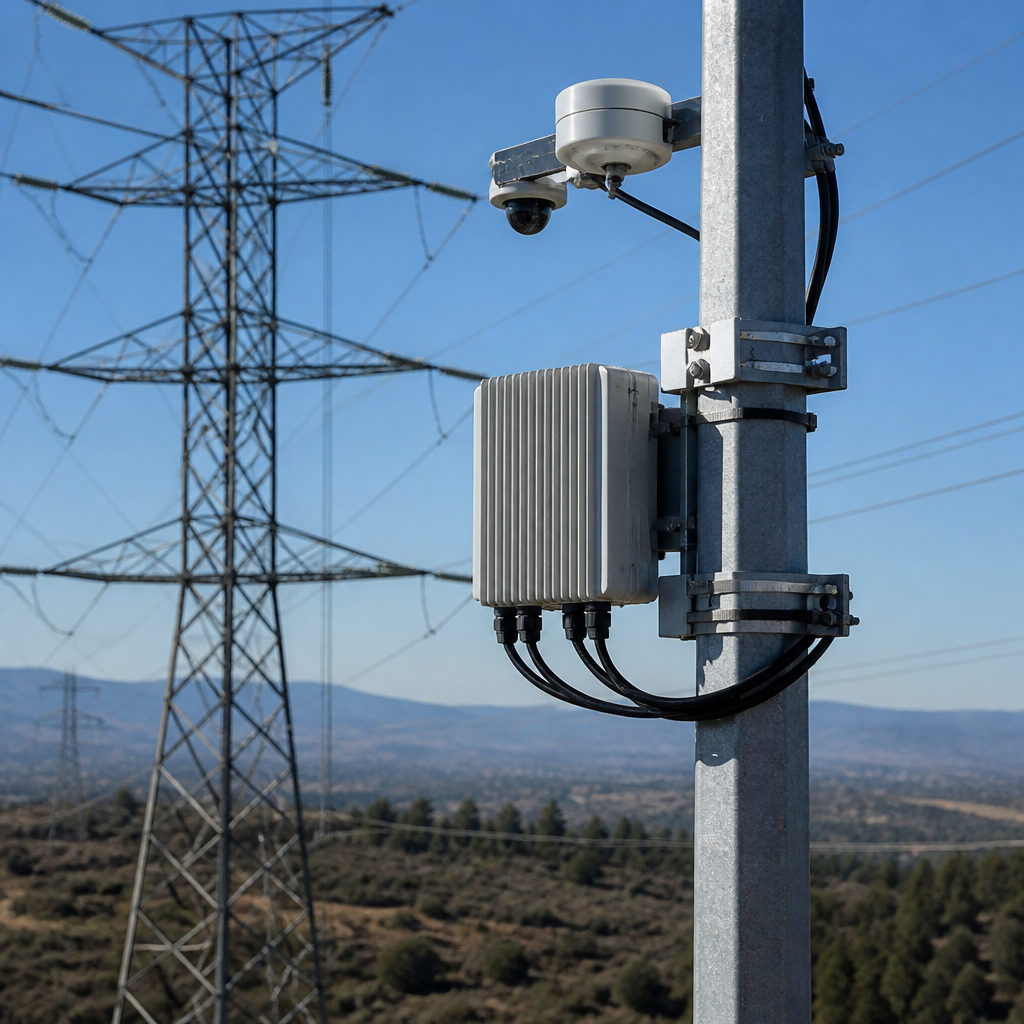
Gridware is part of a new class of climate, energy, and industrial technology companies using field sensors and artificial intelligence to find power grid failures before they turn into outages or wildfires. In practical terms, Gridware installs pole-mounted devices that monitor distribution infrastructure, detect anomalous sounds, motion, tilt, temperature, and electrical conditions, then send alerts to utilities so crews can inspect trouble spots quickly. This matters because electric distribution networks are vast, aging, and exposed to wind, heat, vegetation, vehicle strikes, and hardware fatigue. After working on utility technology evaluations, I have seen the same pattern repeatedly: operators know their highest-risk circuits, but they often lack granular visibility between substations and customer meters. That blind spot is expensive. The U.S. Department of Energy has estimated that power interruptions cost the U.S. economy tens of billions of dollars annually, while wildfire liabilities in high-risk regions can be existential for utilities. A company like Gridware sits at the intersection of resilience, safety, and asset intelligence, making it a useful lens for understanding the broader Climate, Energy & Industrial Tech landscape.
For readers using this page as a hub, the key terms are straightforward. Sensors are physical devices that measure conditions such as vibration, temperature, current, acoustic signatures, or mechanical movement. AI refers to software models that classify patterns, filter noise, rank risk, and improve detection accuracy over time. Grid failure can mean a broken conductor, a failing insulator, a leaning pole, a tree strike, a damaged transformer, or an intermittent fault that precedes a larger event. The central idea is simple: if utilities can detect small failures earlier, they can prevent larger incidents, reduce restoration time, and prioritize limited field crews more effectively.
What Gridware Does and Why Utilities Need It
Gridware focuses on the distribution grid, the last-mile network of poles, wires, transformers, switches, and protective equipment that delivers electricity to homes and businesses. This is where many outages start and where utilities historically have had the least real-time monitoring. High-voltage transmission systems usually have sophisticated telemetry through SCADA, protective relays, and line sensors. Distribution systems often do not. In many territories, operators rely on customer calls, smart meter last-gasp signals, patrols, weather feeds, and post-event inspection. That works, but it is reactive.
Gridware’s value proposition is early detection in the field. A pole-mounted sensor can identify a sudden change in tilt after a vehicle collision, hear the acoustic signature of arcing, or recognize abnormal vibration caused by a failing component. Instead of waiting for a fuse to blow or customers to lose service, the utility receives a targeted alert tied to a location. In wildfire-prone service territories, that time difference matters. A downed conductor in dry vegetation can escalate within minutes. Better location precision also reduces truck rolls and speeds crew dispatch, which directly affects SAIDI and SAIFI, the standard utility reliability metrics for outage duration and frequency.
This need is growing for structural reasons. Utilities face harder weather, stricter reliability expectations, deferred maintenance backlogs, and rising electrification demand from data centers, heat pumps, and electric vehicles. They also operate under regulatory pressure to justify capital spending and demonstrate measurable safety improvements. Technologies that provide auditable, circuit-level evidence of risk are attractive because they can support both operations and regulatory reporting.
How Sensors Detect Emerging Power Grid Failures
Modern grid monitoring does not depend on one sensor doing everything. The strongest systems combine multiple sensing modalities because failures show up in different ways. Acoustic sensing can capture the high-frequency signatures associated with arcing, partial discharge, or mechanical distress. Accelerometers measure vibration and impact. Gyroscopes and tilt sensors detect changes in pole orientation. Temperature sensors identify abnormal heating in hardware enclosures or nearby components. Some systems also infer electrical anomalies indirectly, even when they are not measuring full waveform data like substation equipment.
In the field, context is everything. A loud transient noise might be a branch strike, a gunshot, or a line slap event during wind. A slight tilt change might be routine sway, or it might indicate a compromised pole after soil movement. The reason utilities increasingly want embedded edge intelligence is that raw signals are noisy. The device has to sample locally, compress relevant features, and transmit useful events over constrained communications links such as LTE-M, NB-IoT, or other low-power networks. Battery life, enclosure durability, mounting method, and cybersecure firmware updates are not side issues; they determine whether a pilot survives long enough to become a fleet deployment.
When I assess industrial sensor systems, I look first at three field realities: false positives, power autonomy, and installation time. If a device overwhelms dispatchers with non-actionable alerts, it will not last. If it requires frequent battery replacement across rural circuits, operating economics fail. If line crews need complicated installation procedures, deployment slows. The best designs minimize those frictions while giving utilities confidence that an alert is specific enough to justify action.
Where AI Improves Detection Accuracy and Response
AI is not replacing utility protection systems; it is adding a layer of pattern recognition and triage. In this context, machine learning models are useful because they can distinguish routine environmental noise from signatures linked to asset failure. A model can be trained on examples of pole strikes, conductor slap, broken hardware, arcing events, and benign disturbances such as heavy wind or passing traffic. Over time, the system learns which combinations of sound, motion, and duration correlate with incidents utilities actually care about.
The practical output is not a vague risk score. It is a ranked alert with location, probable cause, confidence level, and recommended action. For example, if a sensor detects sudden pole tilt plus impact vibration on a roadside circuit segment at 2:13 a.m., the software can classify it as a likely vehicle strike and route a high-priority alarm to the outage management workflow. If the same device detects repetitive acoustic bursts consistent with arcing under dry, high-wind conditions, that may trigger immediate inspection because ignition risk is elevated.
| Capability | Traditional approach | Sensor and AI approach | Operational benefit |
|---|---|---|---|
| Fault awareness | Customer calls or patrols | Automated field detection | Earlier response |
| Location accuracy | Broad circuit or feeder estimate | Pole-level or segment-level alert | Faster dispatch |
| Wildfire prevention | Post-event discovery | Rapid anomaly notification | Reduced ignition risk |
| Asset prioritization | Time-based inspections | Condition-informed inspection | Better crew utilization |
Utilities do have to manage model risk. Any AI system needs validation against local operating conditions, terrain, vegetation, and asset types. A classifier trained mainly on one service territory may perform differently in another. That is why the strongest vendors support iterative tuning, event labeling, and integration with utility incident records. The point is not flawless prediction. The point is materially better situational awareness than utilities had before.
Why Gridware Fits the Climate, Energy & Industrial Tech Landscape
As a company spotlight, Gridware is important because it represents a broader pattern in industrial technology: intelligence is moving outward, from central control rooms into physical assets at the edge. This trend appears across transformer monitoring, methane detection, industrial safety, rail infrastructure, and water leak detection. In each case, cheaper sensors, better wireless connectivity, and stronger machine learning make previously invisible failure modes observable.
Within climate and energy, the relevance is especially strong. Grid resilience is now a decarbonization issue, not just a reliability issue. Electrification only works if the underlying network is safe and dependable. Utilities connecting more distributed energy resources, storage, and electric vehicle load need distribution systems that can tolerate greater complexity. A utility spending billions on clean generation still faces public backlash if customers experience repeated outages or if equipment causes fires. That is why resilience startups increasingly win attention from investors, regulators, and utility innovation teams.
Gridware also fits the industrial-tech model of selling into conservative, asset-heavy customers through pilots, validation studies, and operational proof. Utilities rarely buy on vision alone. They want evidence from field trials, interoperability with outage management systems and work management tools, secure data handling, and a clear business case. Vendors that understand utility procurement cycles, safety rules, and crew workflows generally outperform those that treat the sector like a generic software market.
Adoption Challenges, Standards, and What Buyers Should Evaluate
No grid-monitoring platform is a silver bullet. Utilities evaluating companies in this category should test several questions. First, what failure modes can the sensors detect reliably, and which remain out of scope? Second, what is the false positive rate during storms, when signal noise is highest and operations centers are already overloaded? Third, how does the system integrate with SCADA, OMS, ADMS, GIS, and existing mobile workforce platforms? Fourth, what cybersecurity controls govern device identity, encryption, authentication, and firmware updates? Standards and guidance from organizations such as NIST and utility cyber programs matter here because edge devices expand the attack surface.
Buyers should also examine deployment economics carefully. The core metric is not just device cost; it is avoided outage duration, reduced patrol time, lower wildfire exposure, and better targeting of inspections. In some territories, the strongest return may come from rural high-fire-threat circuits. In others, it may come from urban feeders prone to vehicle strikes and storm damage. The technology must be mapped to the utility’s actual risk drivers.
For readers exploring the wider Climate, Energy & Industrial Tech hub, Gridware is a useful anchor case. It shows how hardware, AI, and operational software can combine to solve an old infrastructure problem in a new way. The takeaway is clear: better grid visibility creates safer operations, faster restoration, and more resilient electrification. If you are building this topic cluster, use Gridware as a starting point, then expand into adjacent areas like wildfire tech, utility analytics, grid hardening, DER orchestration, and industrial sensing platforms.
Frequently Asked Questions
What does Gridware do, and how do its sensors help detect power grid failures?
Gridware builds pole-mounted monitoring devices designed to watch over electric distribution infrastructure in real time. Instead of waiting for a line to fail, a transformer to overheat, or a damaged component to cause an outage, these sensors continuously collect signals from the field and look for early warning signs that something is wrong. That includes changes in sound, motion, tilt, temperature, and electrical conditions that may indicate equipment stress, physical damage, or unsafe operating behavior.
The practical value is that utilities gain visibility into parts of the grid that have historically been difficult to monitor closely. Distribution systems span huge geographic areas, often across remote, wooded, or hard-to-access terrain. A pole-mounted sensor can act like an always-on observer, detecting subtle anomalies that human inspections or periodic patrols might miss. When the device identifies unusual behavior, it can send an alert so utility crews know where to investigate, which assets may be involved, and how quickly they may need to respond.
This approach matters because many power grid failures do not happen without warning. A leaning pole, a loose connection, unusual vibration, conductor movement, overheating hardware, or an abnormal acoustic signature can all be early indicators of a larger problem. By catching those signals sooner, Gridware helps utilities shift from reactive response to proactive maintenance, reducing the chance that a small issue escalates into a service disruption, equipment failure, or fire risk.
How are artificial intelligence and field sensors used together on the power grid?
Field sensors and artificial intelligence work as a combined detection system. The sensors are the data collection layer: they observe physical and electrical conditions directly on or near distribution assets in the real world. AI is the interpretation layer: it analyzes those incoming streams of data, compares them against expected patterns, and flags behavior that looks abnormal, risky, or urgent.
On a modern distribution grid, the challenge is not just gathering more data. It is making sense of large volumes of noisy, changing, real-world information. Weather, traffic vibration, animal activity, load changes, and normal equipment behavior can all create signals that need to be distinguished from genuine faults. AI models can be trained to recognize patterns associated with developing equipment problems and to separate likely trouble from ordinary background conditions. That helps reduce false alarms while improving the chances of identifying real hazards early.
In practice, this means utilities are not simply receiving raw sensor readings. They are receiving prioritized intelligence. For example, if a device detects an unusual acoustic event combined with unexpected pole movement and a temperature anomaly, the system may determine that the location deserves urgent inspection. By turning field data into actionable alerts, AI helps utility operators and crews focus their time where it matters most. The result is faster decision-making, more efficient maintenance planning, and a stronger ability to prevent outages before customers are affected.
Why is early detection of distribution grid problems so important for outages and wildfire prevention?
Early detection is critical because distribution infrastructure is often the point where small physical problems can turn into major public safety events. A damaged insulator, deteriorating connector, leaning pole, or failing piece of hardware may start as a localized issue, but under the right conditions it can escalate quickly. If a conductor falls, equipment overheats, or arcing occurs during dry and windy weather, the consequences may include broad outages, expensive asset damage, and in some regions, wildfire ignition risk.
Utilities have long relied on inspections, scheduled maintenance, customer outage calls, and post-event response to manage these challenges. While those methods remain important, they do not always provide continuous situational awareness. Problems can develop between inspection cycles, and in some cases the first visible sign of failure is the outage itself. Technologies like Gridware’s sensors are designed to close that gap by identifying abnormal conditions while there is still time to intervene.
That proactive window can make a meaningful difference. Crews may be able to inspect and repair a problem before it causes service interruptions, before severe weather makes access harder, or before a hazardous condition creates ignition potential. In this sense, early detection is not just a maintenance improvement. It is a resilience and safety strategy. It can help utilities reduce restoration costs, protect critical infrastructure, improve reliability metrics, and lower the chance that a preventable equipment issue becomes a larger emergency.
What kinds of power grid issues can this type of monitoring technology identify?
Sensor-based monitoring systems like Gridware’s are meant to identify a broad range of abnormal conditions affecting distribution equipment and structures. These may include excessive pole tilt, unusual mechanical movement, impacts, conductor motion, temperature spikes, strange acoustic signatures, and electrical behaviors that suggest deterioration or malfunction. The goal is not merely to detect catastrophic failures after they happen, but to catch the leading indicators that something is changing in a way that deserves attention.
For example, if a pole begins to lean beyond its normal range, that may point to structural instability, soil movement, storm damage, or impact from external forces. If a sensor detects unusual sounds, that could be associated with arcing, hardware distress, or other equipment anomalies. If temperature readings increase unexpectedly, utilities may be dealing with overheating connections, overloaded components, or a developing fault. If multiple signals occur together, the confidence that there is a real issue typically increases.
What makes this especially useful is the ability to monitor assets continuously rather than episodically. Distribution networks contain vast numbers of poles and components, and utilities cannot physically inspect every location every day. Continuous sensing helps utilities identify which locations need immediate follow-up and which can be addressed through planned maintenance. In effect, the technology acts as an intelligent screening tool, highlighting hidden risks across the grid so that maintenance resources can be deployed more strategically.
How could Gridware and similar technologies change the way utilities maintain the electric grid?
Technologies like Gridware’s have the potential to move utilities toward a more predictive and condition-aware model of grid maintenance. Traditionally, utilities have balanced a mix of time-based inspections, preventative maintenance schedules, emergency repairs, and post-outage restoration. That framework can work, but it often leaves operators with incomplete visibility into exactly which assets are deteriorating and how quickly risk is increasing in the field.
By adding intelligent sensors to distribution infrastructure, utilities can make maintenance decisions based more on live conditions and less on fixed inspection intervals alone. Instead of treating all assets as if they have the same level of risk, utilities can prioritize sites showing evidence of stress or abnormal behavior. This can improve crew efficiency, reduce unnecessary truck rolls, support better asset management planning, and help organizations direct limited budgets toward the highest-value interventions.
Over time, the broader impact could be significant. More granular field intelligence can support higher reliability, faster incident response, and stronger resilience during extreme weather. It can also improve documentation and operational awareness for utilities facing growing pressure to reduce wildfire risk and modernize aging infrastructure. While sensors and AI do not replace lineworkers, engineers, or inspection programs, they can make those teams far more effective by giving them earlier, more precise insight into where problems are developing and what may need attention first.