Twelve is one of the clearest examples of how climate technology can move beyond carbon avoidance and into carbon utilization, turning captured carbon dioxide into chemicals and fuels that fit existing industrial systems. In the climate, energy, and industrial tech landscape, that matters because heavy transport, aviation, and manufacturing need more than clean electricity; they need drop-in molecules, reliable feedstocks, and scalable processes that cut lifecycle emissions without forcing every customer to rebuild infrastructure. I have followed this category closely across electrolyzers, carbon capture, synthetic fuels, and industrial decarbonization projects, and Twelve stands out because its model connects all four. The company’s core idea is straightforward: use captured CO2, water, and renewable electricity to produce syngas, then convert that intermediate into products such as sustainable aviation fuel, e-fuels, and commodity chemicals. Syngas, short for synthesis gas, is a mixture primarily of carbon monoxide and hydrogen and is already a standard building block in petrochemicals and fuels. By replacing fossil-derived syngas with CO2-derived syngas, Twelve aims to decarbonize products that are otherwise hard to clean up. As a company spotlight and sub-pillar hub, this article explains how the technology works, where it fits in the broader market, what challenges remain, and which adjacent themes readers should explore next across climate, energy, and industrial tech.
What Twelve Actually Does
Twelve develops electrochemical systems that convert carbon dioxide into carbon monoxide, then combines that output with hydrogen to create syngas for downstream fuel and chemical synthesis. The company often describes its platform as industrial photosynthesis, but the practical engineering explanation is more useful: it uses electricity-driven reactors, specialized catalysts, and process integration to transform waste or captured carbon into a usable molecular input. That input can then feed established pathways such as Fischer-Tropsch synthesis for fuels or other catalytic routes for chemicals. The business relevance is important. Many climate startups promise entirely new supply chains, but Twelve is working with familiar intermediates used by refineries and chemical plants. That lowers adoption friction because customers understand syngas specifications, purification requirements, and downstream conversion economics.
In industrial terms, Twelve sits at the intersection of carbon capture and utilization, power-to-liquids, and low-carbon chemicals. Carbon capture and utilization means taking CO2 from industrial exhaust streams or direct air capture and using it as a feedstock rather than treating it only as waste. Power-to-liquids means converting renewable electricity into liquid fuels through molecules like hydrogen and carbon monoxide. Low-carbon chemicals refers to making products such as methanol, polymers, or solvents with lower lifecycle emissions than conventional fossil routes. These categories matter because they anchor how buyers, regulators, and investors assess the company. Airlines care about fuel certification and carbon intensity. Chemical buyers care about purity, consistency, and compatibility with current plants. Policymakers care about verifiable emissions reductions and domestic manufacturing resilience.
How the Technology Works in Plain Terms
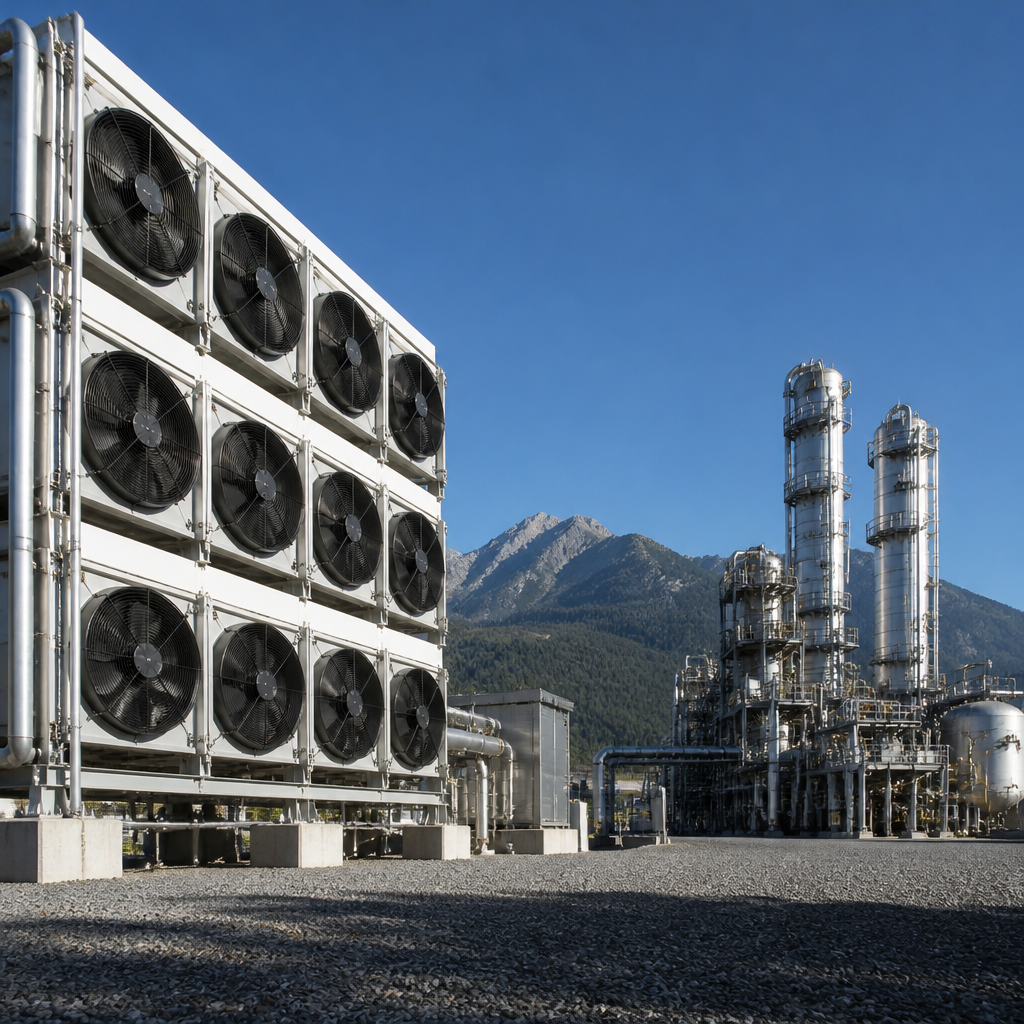
The core process begins with carbon dioxide and water. In an electrochemical cell, electricity drives reactions at electrodes separated by membranes and supported by catalysts. One major output is carbon monoxide, a critical ingredient in syngas. Hydrogen can be generated separately, often by water electrolysis, then blended with carbon monoxide at the ratio needed for downstream synthesis. That syngas can be upgraded into jet fuel, diesel-range hydrocarbons, or chemical intermediates. The exact product slate depends on catalyst selection, reactor conditions, cleanup steps, and the conversion train that follows the electrolyzer.
The advantage of this pathway is modularity. If a facility has concentrated CO2 emissions, access to low-carbon electricity, and demand for fuels or chemicals, an electrochemical carbon conversion system can potentially fit into that site more easily than building a wholly new petrochemical complex. I have seen repeatedly that modularity matters in project finance. Industrial customers prefer phased deployment, where a company can start with pilot and demonstration units, prove reliability and offtake quality, then scale into commercial volumes. Twelve’s value proposition depends on delivering not only carbon conversion efficiency, but also uptime, current density, stack durability, gas purity, and overall system economics.
Two technical points are especially important. First, product purity determines whether downstream synthesis runs smoothly. Trace impurities from captured CO2 streams, including sulfur compounds, nitrogen oxides, or particulates, can poison catalysts. Second, electricity cost often dominates variable operating cost. For e-fuels to compete, a project needs abundant low-carbon power and high utilization rates. That is why geography, grid conditions, and industrial partnerships are not side issues; they are central to whether the model works at scale.
Why Captured-Carbon Fuels Matter for Hard-to-Abate Sectors
Captured-carbon fuels are most compelling where batteries are limited by weight, range, refueling time, or infrastructure. Aviation is the prime example. Long-haul aircraft need energy-dense liquid fuel, and sustainable aviation fuel is one of the few near- to medium-term decarbonization options that can use existing planes, pipelines, and airport fueling systems. Shipping, mining equipment, defense logistics, and some industrial heat applications also value liquid fuels for operational reasons. In these sectors, electrification will grow, but molecules still matter.
The climate case depends on lifecycle analysis, not marketing language. A fuel made from captured CO2 is not automatically low carbon. The electricity source, hydrogen pathway, carbon source, process efficiency, transport emissions, and combustion end use all shape total impact. According to standards widely used in fuel policy and procurement, the strongest projects use renewable or very low-carbon electricity, rigorous measurement boundaries, and traceable feedstock accounting. When these conditions are met, synthetic fuels can materially reduce emissions compared with fossil incumbents, especially where no practical direct electrification pathway exists today.
For readers exploring this subtopic broadly, Twelve is a useful gateway because it connects to several major industry threads at once: carbon capture, hydrogen, electrolysis, industrial decarbonization, advanced manufacturing, and clean fuels policy. It also illustrates a central truth in climate and industrial tech: the winning solution is rarely a single invention. It is usually a chain of technologies, contracts, certifications, and infrastructure working together.
Commercial Strategy, Partnerships, and Market Signals
No climate hardware company scales on technical elegance alone. Commercial traction comes from partnerships, project development discipline, and credible offtake demand. Twelve’s strategy has centered on proving that customers will pay for low-carbon molecules that meet existing specifications. In fuels, that means working within recognized certification pathways and building relationships with aviation and logistics stakeholders. In chemicals and materials, it means showing that carbon-derived inputs can meet performance requirements without forcing reformulation or plant redesign.
One reason this matters for a company spotlight hub is that market signals in climate tech can be misleading. A press release about a pilot is not the same as bankable demand. Investors and readers should separate memorandums of understanding from binding offtake agreements, and laboratory success from commercial plant performance. The strongest indicator is when a company secures multiyear purchase commitments tied to verified product specifications and delivery schedules. A second strong indicator is when deployment partners bring more than publicity, such as engineering support, site access, utility integration, or tax-credit expertise.
| Factor | Why It Matters | What Strong Execution Looks Like |
|---|---|---|
| Low-carbon power | Electricity drives conversion cost and emissions profile | Long-term renewable contracts, high capacity factor, favorable grid connection |
| CO2 supply | Feedstock quality affects catalyst life and purification cost | Reliable concentrated source or qualified direct air capture partner |
| Hydrogen integration | Syngas composition must match downstream synthesis needs | On-site electrolysis or contracted clean hydrogen with process controls |
| Offtake agreements | Revenue certainty supports project finance | Binding contracts with pricing terms, certification standards, and volume ramps |
| Policy alignment | Credits and standards can determine competitiveness | Eligibility under fuel standards, tax incentives, and procurement rules |
Challenges, Tradeoffs, and What to Watch Next
The biggest challenge for Twelve and peers is economics at scale. Electrochemical CO2 conversion must compete against entrenched fossil supply chains built over decades and optimized around cheap hydrocarbons. Capital intensity, stack replacement schedules, compression and purification costs, and downstream synthesis equipment all affect delivered price. Efficiency gains help, but they are only part of the story. Developers also need disciplined plant design, standardized modules, supply-chain resilience, and experienced operations teams. In my experience following industrial projects, the companies that survive are the ones that treat manufacturing quality and field service as core capabilities, not afterthoughts.
There are also legitimate technology tradeoffs. Direct electrification is usually more energy efficient than making synthetic fuels, so e-fuels should be prioritized where electrons cannot easily do the job alone. Carbon utilization does not eliminate the need for emissions reduction at the source, and using concentrated industrial CO2 raises questions about long-term feedstock strategy as heavy industry itself decarbonizes. Over time, direct air capture may become a more durable carbon source for synthetic fuels, but today it adds cost and energy demand. These are not flaws unique to Twelve; they define the whole category.
What should readers watch next? First, commercial plant performance: nameplate capacity means little without sustained throughput and product quality. Second, policy durability: clean fuel standards, production tax credits, and procurement mandates can accelerate demand, but developers need confidence those rules will persist. Third, certification and accounting: robust chain-of-custody and lifecycle emissions methods will separate serious producers from superficial claims. Fourth, customer concentration: a diversified buyer base is healthier than dependence on a single marquee partner. If Twelve executes on these fronts, it could help prove that captured carbon can become a practical industrial feedstock rather than a niche demonstration.
Twelve matters because it represents a realistic pathway for decarbonizing sectors that still need liquid fuels and carbon-based chemicals. Instead of asking industry to abandon every existing asset, the company is working to replace fossil-derived molecular inputs with ones made from captured CO2, water, and clean electricity. That approach links several of the most important themes in climate, energy, and industrial tech: carbon management, electrochemistry, hydrogen, clean manufacturing, and hard-to-abate transport. The promise is significant, but the bar is high. Success depends on low-cost clean power, reliable feedstocks, durable reactors, bankable offtake, and rigorous lifecycle accounting. For readers using this page as a hub, Twelve is not just a single company story; it is a lens on how the next generation of industrial decarbonization may actually scale. Explore the related articles in this subtopic to go deeper on carbon capture, sustainable aviation fuel, hydrogen systems, industrial electrification, and climate infrastructure finance.
Frequently Asked Questions
What does Twelve actually do with captured carbon dioxide?
Twelve converts captured carbon dioxide into useful products such as chemicals, fuels, and material inputs that can be used in existing industrial systems. Instead of treating CO2 only as a waste stream to be stored or avoided, the company uses it as a carbon feedstock. Its process is designed to transform carbon dioxide, along with water and renewable electricity, into molecules that industries already know how to handle. That matters because many sectors, especially aviation, shipping, chemicals, and manufacturing, still depend on carbon-based inputs and cannot be fully electrified in the near term.
In practical terms, the idea is to take a climate problem and turn it into an industrial resource. Captured carbon can come from industrial emissions or other concentrated sources, and then be converted into products that fit into today’s supply chains. This “drop-in” potential is one of the reasons Twelve gets so much attention. Rather than asking every refinery, aircraft engine, chemical plant, or logistics network to reinvent itself from scratch, the approach aims to supply lower-emissions molecules that work within much of the infrastructure already in place.
Why is carbon utilization important if the world is also investing in renewable energy and electrification?
Renewable power and electrification are essential, but they do not solve every emissions challenge on their own. Large parts of the global economy require molecules, not just electrons. Heavy transport, long-haul aviation, marine shipping, and many industrial processes need high energy density fuels, chemical building blocks, or feedstocks that electricity alone cannot easily replace at scale. This is where carbon utilization becomes especially important. It can help supply the fuels and chemicals these sectors still require while lowering dependence on fossil carbon extracted from the ground.
Twelve’s model is significant because it addresses that gap directly. If renewable electricity is used to power the conversion process, and if the carbon source is captured rather than newly extracted, the resulting products can offer lower lifecycle emissions than conventional fossil-based alternatives. That creates a pathway for decarbonization in sectors where batteries are too heavy, charging infrastructure is impractical, or process chemistry still depends on carbon-containing molecules. In short, electrification is a cornerstone of climate strategy, but carbon utilization helps extend decarbonization into the harder parts of the industrial economy.
How can fuels and chemicals made from captured carbon work with existing infrastructure?
One of the strongest advantages of Twelve’s approach is compatibility. Many industries have spent decades building equipment, standards, distribution systems, and operational practices around specific fuels and chemical inputs. Replacing all of that overnight would be enormously expensive and slow. By producing molecules that resemble or match the functional performance of conventional products, carbon utilization can reduce the need for a full infrastructure reset. That makes adoption more realistic for businesses that need climate solutions without major disruption to core operations.
This is especially relevant in aviation and industrial manufacturing. Aircraft fleets, fueling systems, and safety protocols are built around liquid hydrocarbon fuels with strict performance requirements. Chemical producers also rely on consistent feedstocks that behave predictably in established production processes. If captured-carbon-derived products can meet those standards, they become far easier to integrate into the market. That “drop-in” capability is not just a technical convenience; it is a major commercialization advantage because it can accelerate scaling, lower switching barriers, and help companies cut emissions without waiting for entirely new infrastructure ecosystems to mature.
Does turning CO2 into products really reduce emissions, or does it just delay them?
The climate benefit depends on the full lifecycle of the product, including where the carbon dioxide comes from, how much clean energy is used in the conversion process, and what the final product is used for. If captured CO2 is turned into a fuel, that carbon may eventually be released when the fuel is burned. However, the key distinction is that the carbon can be part of a more circular system rather than being introduced as newly extracted fossil carbon. When paired with low-carbon electricity and responsible sourcing, this can reduce lifecycle emissions compared with conventional fossil-derived fuels.
For chemicals and materials, the carbon may also stay embedded for longer periods, depending on the product and application. Even when the end use does lead to eventual release, utilization can still be meaningful because it may displace fossil feedstocks and support the buildout of cleaner industrial pathways. It is not a universal substitute for deep emissions cuts, efficiency, or clean power, but it can be a valuable tool in the broader climate portfolio. The most credible way to assess impact is through rigorous lifecycle analysis, which looks beyond marketing claims to measure actual emissions outcomes across sourcing, production, transport, and end use.
What makes Twelve notable in the broader climate tech and industrial decarbonization landscape?
Twelve stands out because it represents a practical bridge between climate ambition and industrial reality. A great deal of climate innovation focuses on avoidance, efficiency, or electrification, all of which are critical. Twelve adds another important category: carbon utilization at industrial relevance. That means taking captured carbon and converting it into commercially useful outputs for sectors that cannot simply swap to clean electricity and be done. In a world where steel, cement, chemicals, aviation, freight, and manufacturing still need dense energy carriers and carbon-based feedstocks, that is a meaningful strategic position.
The company also illustrates a larger shift in climate technology thinking. The conversation is moving from “How do we emit less?” to “How do we redesign industrial systems so carbon can be reused more intelligently?” That does not eliminate the need for emissions reduction, carbon removal, or clean power deployment. Instead, it complements them by offering a route for decarbonizing the parts of the economy that are structurally harder to change. For investors, policymakers, and industrial buyers, Twelve is compelling because it connects climate goals with supply chain compatibility, commercial usefulness, and the possibility of scaling lower-emissions fuels and chemicals without requiring every downstream customer to rebuild from the ground up.