Advanced Micro Devices, better known as AMD, has spent decades proving that Silicon Valley’s technology industry is not shaped by size alone but by timing, engineering discipline, and strategic reinvention. In the context of company spotlights in Silicon Valley, AMD stands out because it combines a classic semiconductor origin story with a modern comeback that altered competition in PCs, data centers, gaming, and artificial intelligence. Founded in 1969, AMD designs central processing units, graphics processing units, adaptive computing products, and embedded chips that power everything from laptops and cloud servers to game consoles and industrial systems. Understanding AMD matters because the company’s trajectory explains how challengers survive against entrenched leaders, how chip design shapes the broader software economy, and why supply chains, manufacturing partnerships, and product roadmaps can redefine market share faster than many observers expect.
AMD’s Origins and Why Its Story Represents Silicon Valley
AMD was founded by Jerry Sanders and seven colleagues who left Fairchild Semiconductor, one of the foundational companies in Silicon Valley’s semiconductor lineage. That heritage matters. Fairchild alumni seeded dozens of influential firms, and AMD emerged directly from that culture of technical ambition and entrepreneurial spinouts. In its early years, AMD produced logic chips and memory products, then became a second-source manufacturer for other semiconductor companies, including Intel. Second-sourcing meant customers could rely on more than one supplier for critical components, a major concern for defense, computing, and industrial buyers. From the beginning, AMD learned how to compete in markets where reliability, yield, and compatibility were not optional.
That early operating model shaped the company’s identity. AMD was rarely the biggest vendor, but it became skilled at finding leverage points where customers wanted alternatives. I have seen this pattern repeatedly in semiconductor markets: buyers tolerate concentration until pricing power, supply risk, or product stagnation forces them to look for a credible challenger. AMD’s value proposition has often appeared precisely at those moments. The company’s history includes legal disputes, technology licensing battles, and periods of severe financial strain, but those pressures also trained AMD to focus on architectures and segments where differentiated execution could matter more than sheer scale.
Silicon Valley company spotlights often concentrate on software brands, yet AMD shows why hardware still anchors the region’s influence. Semiconductor innovation determines what cloud platforms can deliver, how quickly AI models train, how energy-efficient devices become, and how much performance consumers receive per dollar. AMD’s evolution from a second-source chip maker into a platform-level competitor captures a broader Silicon Valley reality: the companies that last are the ones that adapt their technical core to new computing eras.
The Product Strategy That Turned AMD Into a Serious Rival
AMD’s modern resurgence is inseparable from its product strategy. The company competes primarily through CPU and GPU design, then relies on manufacturing partners such as TSMC to fabricate advanced chips. This fabless or fab-lite approach lets AMD focus resources on architecture, packaging, software enablement, and go-to-market execution. The breakthrough moment came with the Zen CPU architecture, introduced in 2017 under CEO Lisa Su’s leadership and with key design contributions from CTO Mark Papermaster and CPU architect Jim Keller during earlier phases. Zen restored AMD’s competitiveness in desktop and server processors by delivering major gains in instructions per clock, power efficiency, and scalable core counts.
Ryzen processors changed the consumer PC market because they offered strong multicore performance at aggressive prices. EPYC server processors did something even more consequential: they gave cloud providers and enterprises a credible alternative to Intel Xeon. That mattered for total cost of ownership. In data centers, higher core density, memory bandwidth, and performance per watt can influence fleet economics across thousands of servers. AMD’s chiplet strategy became a defining advantage. Instead of building one monolithic die with every core on a single large piece of silicon, AMD used smaller chiplets connected through high-speed interconnects. This improved manufacturing yield and enabled efficient scaling across product tiers.
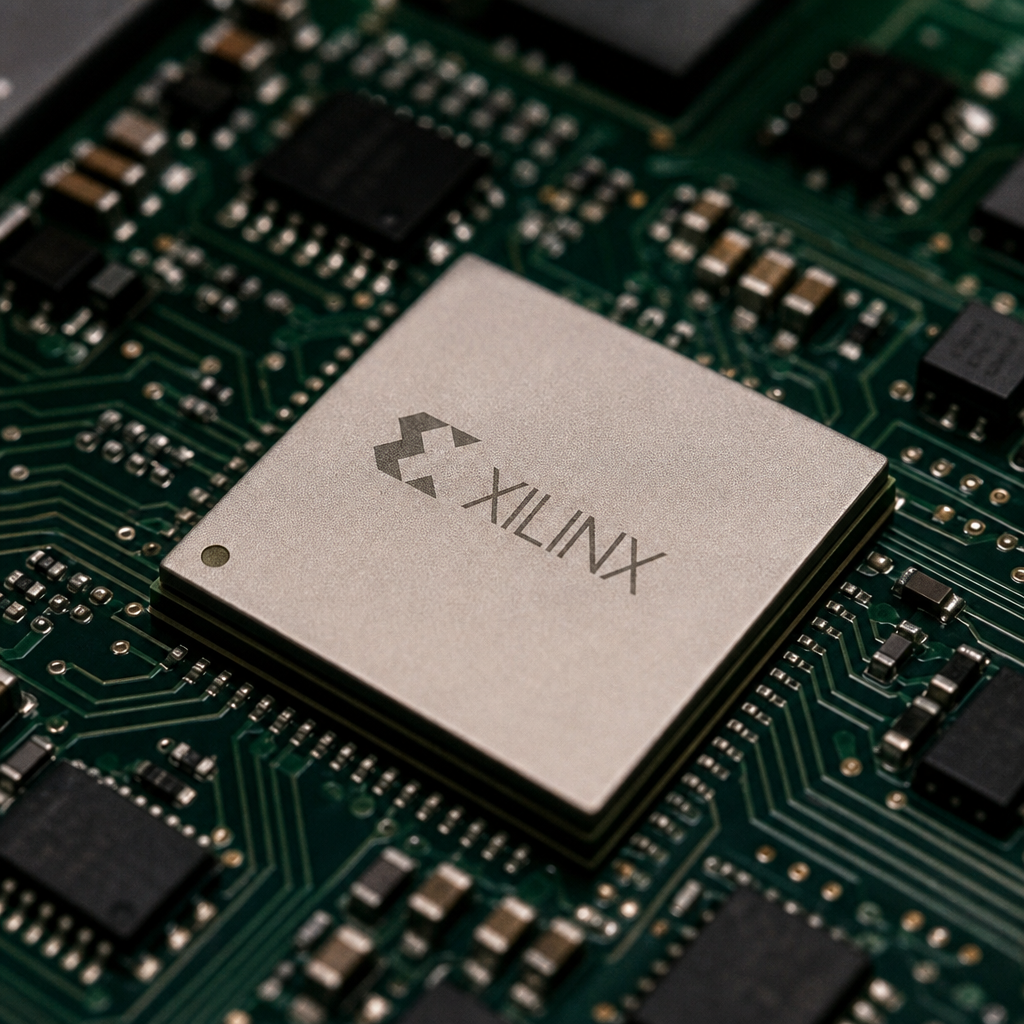
On the graphics side, AMD’s Radeon business has remained highly relevant in gaming and professional workloads, even while NVIDIA has led much of the premium GPU conversation. AMD also strengthened its position through custom silicon for Sony PlayStation and Microsoft Xbox consoles. Those semi-custom wins matter because they create long product cycles, deep developer relationships, and recurring revenue tied to the gaming ecosystem. More recently, the acquisition of Xilinx expanded AMD into adaptive computing, field-programmable gate arrays, telecommunications, aerospace, automotive, and edge applications. The Pensando acquisition added data processing unit capabilities, helping AMD address networking and cloud infrastructure requirements more comprehensively.
| Business Area | Key AMD Products | Why It Matters |
|---|---|---|
| Consumer PCs | Ryzen CPUs, Radeon graphics | Competes on performance, efficiency, and price for desktops and laptops |
| Data Centers | EPYC CPUs, Instinct accelerators | Targets cloud providers and enterprises seeking lower total cost of ownership |
| Gaming | Radeon GPUs, semi-custom console chips | Powers major consoles and supports game development ecosystems |
| Embedded and Edge | Xilinx adaptive SoCs, FPGAs | Expands AMD into industrial, telecom, automotive, and aerospace markets |
How AMD Competes Against Intel, NVIDIA, and Other Industry Leaders
AMD operates in one of the most difficult competitive environments in technology. Intel has longstanding advantages in enterprise relationships, software optimization history, and sheer installed base in CPUs. NVIDIA dominates much of the AI accelerator market and has built a powerful software moat around CUDA. Arm-based vendors continue to pressure x86 in mobile, edge, and increasingly server workloads. Yet AMD has stayed relevant by choosing winnable battles and executing with unusual consistency over several product cycles.
Against Intel, AMD’s strongest argument has been performance per dollar and performance per watt. That combination resonates with both enthusiasts and enterprise procurement teams. In servers, buyers measure not just benchmark peaks but rack density, cooling requirements, memory support, and licensing implications. AMD’s EPYC line has repeatedly gained traction because it often delivers more cores and attractive throughput without forcing buyers into dramatically different software environments. Since x86 compatibility remains essential for many legacy and commercial applications, AMD can offer an alternative without asking customers to rewrite their software stacks.
Against NVIDIA, AMD faces a different challenge. GPU hardware matters, but developer tooling, libraries, and framework compatibility often decide enterprise adoption. That is why AMD has invested in ROCm, its open software stack for GPU computing and AI workloads. ROCm has improved significantly and is increasingly relevant for organizations seeking another path beyond CUDA, especially in large-scale AI and high-performance computing deployments. However, this remains an area where AMD must continue reducing friction for developers. In practical terms, many enterprises will consider AMD seriously only when procurement teams, infrastructure architects, and machine learning engineers all believe migration costs are manageable.
One reason AMD’s competitive story resonates in Silicon Valley is that it reflects a broader rule of platform markets: incumbents are strongest when customers accept defaults, but challengers gain ground when they solve a cost, performance, or supply problem that incumbents have left open. AMD did not win by claiming to be everything for everyone. It won by identifying where buyers were most motivated to switch.
Leadership, Execution, and the Cultural Reset Behind the Comeback
No discussion of AMD is complete without Lisa Su. Since becoming CEO in 2014, she has been widely credited with imposing disciplined execution, narrowing the company’s focus, and aligning engineering with profitable market opportunities. In semiconductor businesses, strategic clarity is not a slogan; it determines whether design teams spend years building products customers will actually adopt. AMD’s turnaround required hard choices about architecture, process technology partnerships, roadmap timing, and capital allocation. The company also had to rebuild credibility with investors, OEM partners, hyperscalers, and developers who had seen prior false starts.
From an operating standpoint, AMD improved by doing a few fundamentals exceptionally well. First, it synchronized product roadmaps more tightly with manufacturing readiness. Second, it invested in modular design approaches, such as chiplets and advanced packaging, that improved scalability. Third, it focused on segments where margin expansion was realistic, especially data center and embedded markets. Fourth, it used acquisitions selectively to broaden capabilities rather than distract from its core mission. These are not cosmetic changes. They are the mechanics of how semiconductor companies recover from strategic drift.
I have worked around product organizations enough to recognize the difference between a company with isolated good ideas and a company with a system for shipping competitive products repeatedly. AMD’s recent history looks like the latter. That does not mean flawless execution. Semiconductor roadmaps always face risks, including foundry constraints, packaging bottlenecks, inventory corrections, and software maturity gaps. But AMD’s culture now appears built around measurable delivery rather than hopeful positioning, and that has been central to its credibility.
What AMD Means for Silicon Valley, Investors, and the Future of Computing
AMD’s significance reaches beyond quarterly earnings. For Silicon Valley, the company demonstrates that competition in foundational technologies remains possible even in sectors with enormous capital requirements and entrenched incumbents. For investors, AMD is a case study in how product architecture, leadership quality, and manufacturing partnerships can change valuation narratives. For customers, AMD’s rise has tangible benefits: better pricing pressure across the market, faster innovation cycles, and more supplier diversity in critical infrastructure.
Looking ahead, AMD’s biggest opportunities sit in AI accelerators, data center CPUs, edge computing, and heterogeneous computing systems that combine CPUs, GPUs, DPUs, and adaptive silicon. Its Instinct accelerator line is central to that effort, especially as enterprises seek alternatives for training and inference workloads. Success will depend not just on hardware performance but on software readiness, developer adoption, memory architecture, networking integration, and availability at scale. In other words, AMD’s next chapter will be decided by platform completeness, not chip specifications alone.
AMD has challenged the giants of Silicon Valley by proving that disciplined engineering and strategic focus can shift power in even the hardest technology markets. Its journey from semiconductor upstart to credible force in PCs, consoles, servers, and AI makes it essential reading within any company spotlights in Silicon Valley hub. The main lesson is clear: challengers win when they pair technical innovation with operational precision and meet customers where switching costs are lowest. If you are exploring the companies shaping Silicon Valley’s future, use AMD as a benchmark for how reinvention looks when it is executed well, then continue through the rest of this Company Spotlights hub to compare the strategies driving today’s most influential tech businesses.
Frequently Asked Questions
What makes AMD an important company in Silicon Valley’s technology industry?
AMD matters because it represents one of the clearest examples of how a semiconductor company can remain relevant across multiple technological eras by adapting its strategy without losing its engineering identity. Founded in 1969, AMD emerged during the formative years of Silicon Valley and built its reputation in a highly competitive environment dominated by larger rivals. Over time, the company proved that influence in the technology industry is not determined solely by market size or brand power, but also by the ability to identify industry shifts early and execute effectively.
Its importance comes from the breadth of markets it serves. AMD designs processors and graphics technologies that power consumer PCs, gaming consoles, enterprise servers, high-performance computing systems, and increasingly AI-focused infrastructure. That reach gives the company a direct role in shaping how people work, play, and build digital services. In practical terms, AMD is not just a chipmaker competing for sales; it is a force affecting pricing, performance expectations, and innovation cycles across the broader computing ecosystem.
AMD is also significant because its modern resurgence changed the competitive balance in semiconductor markets that had become too predictable. Its rise pressured incumbents to improve products faster, invest more aggressively, and compete more directly on efficiency and value. For Silicon Valley, that kind of competition is healthy. It drives technical progress, prevents stagnation, and reminds the industry that disciplined execution can disrupt long-established hierarchies.
How did AMD manage its comeback and become more competitive against much larger rivals?
AMD’s comeback is widely viewed as one of the strongest turnarounds in modern technology because it was not based on a single lucky product launch. It was the result of deep strategic reinvention, leadership discipline, and a long-term commitment to engineering. The company spent years restructuring its priorities, refining its roadmap, and focusing on product categories where it could deliver meaningful performance advantages rather than spreading itself too thin.
A major turning point came with the introduction of its Zen CPU architecture, which gave AMD a credible path back into high-performance computing markets. Instead of making incremental moves that would leave it permanently behind, AMD pursued a more ambitious reset. Zen improved performance, efficiency, and scalability, allowing the company to compete far more effectively in desktops, laptops, and servers. That architectural progress was then reinforced by a product strategy that emphasized rapid iteration and clear segmentation across consumer and enterprise lines.
Another key factor was AMD’s fabless business model, which allowed it to focus on chip design while leveraging advanced manufacturing from external foundry partners. This gave AMD flexibility and helped it take advantage of leading-edge process technologies without carrying the full burden of running its own fabrication plants. Combined with smart execution, this model allowed AMD to move quickly and compete above its weight.
Leadership also played a critical role. Under CEO Lisa Su, AMD became known for consistency, technical credibility, and disciplined capital allocation. Investors, customers, and industry analysts began to see the company as strategically coherent rather than reactive. That change in perception mattered, especially in enterprise markets where long-term product confidence is essential. In short, AMD’s comeback happened because the company aligned architecture, manufacturing partnerships, leadership, and market timing into one focused strategy.
Why is AMD so influential in PCs, data centers, gaming, and artificial intelligence?
AMD’s influence comes from the fact that it operates across several of the most important computing segments at the same time. In PCs, AMD’s Ryzen processors helped redefine expectations around core counts, multitasking performance, and overall value. For consumers, creators, and professionals, that meant more competitive choices and better performance at multiple price points. AMD’s presence in personal computing forced the market to become more consumer-friendly and more innovation-driven.
In data centers, AMD expanded its impact through EPYC server processors, which gained attention for strong performance, energy efficiency, and scalability. These chips appealed to cloud providers, enterprises, and high-performance computing customers looking for better total cost of ownership and stronger workload density. Once AMD established credibility in the server market, its role extended beyond simply taking share. It became part of how organizations planned infrastructure modernization, virtualization, and large-scale compute deployments.
Gaming is another major source of AMD’s influence. The company supplies technologies used in both PC gaming and major console ecosystems, which gives it a rare strategic position across hardware platforms. That visibility matters because gaming often acts as a proving ground for graphics innovation, power efficiency, and developer optimization. When AMD performs well in gaming, it strengthens its relationships with both consumers and software developers, creating momentum that can extend into adjacent markets.
In artificial intelligence, AMD’s influence is growing as demand rises for accelerators, high-bandwidth memory, and data center compute platforms capable of training and running advanced models. While AI infrastructure has featured intense competition, AMD has become increasingly relevant by combining CPUs, GPUs, and adaptive computing technologies into broader platform offerings. This matters because the future of AI is not only about raw chip speed; it is also about system integration, software support, and the ability to deliver alternatives in a market hungry for supply diversity and performance competition.
What role has leadership played in AMD’s transformation and long-term strategy?
Leadership has been central to AMD’s transformation because semiconductor success depends on decisions that often take years to show results. Product roadmaps, architecture investments, manufacturing partnerships, and customer relationships all require patience and credibility. AMD’s leadership, especially in the modern era, helped shift the company from a cyclical underdog narrative to a more stable and respected industry position.
Lisa Su is frequently associated with this transformation because she brought a combination of technical depth and strategic clarity that resonated across the industry. Her leadership style emphasized execution over hype, and that distinction was important. AMD did not rebuild its position through marketing alone; it rebuilt it by meeting product milestones, improving competitiveness, and restoring confidence among customers who needed predictable long-term suppliers. That reliability strengthened AMD’s image in enterprise and data center markets, where trust can matter as much as peak benchmark performance.
Strong leadership also helped AMD decide where to concentrate resources. Rather than attempting to dominate every possible semiconductor niche, the company focused on high-impact areas where its technology could be differentiated and commercially meaningful. It pursued disciplined acquisitions, expanded its data center and embedded capabilities, and developed a broader platform story rather than relying only on isolated chip wins. That kind of prioritization is essential in semiconductors, where research costs are high and strategic mistakes can be expensive.
More broadly, AMD’s leadership demonstrated that successful reinvention in Silicon Valley often comes from setting realistic goals, building technical credibility, and then executing quarter after quarter. That may sound simple, but in a fast-moving industry, consistency itself can be a competitive advantage. AMD’s management understood that and turned it into a defining strength.
What does AMD’s story reveal about competition and innovation in the semiconductor industry?
AMD’s story reveals that the semiconductor industry remains highly dynamic, even when it appears dominated by giants. Scale matters, but it is not the only driver of success. Architectural innovation, manufacturing strategy, ecosystem partnerships, and timing can all reshape competitive standings faster than many observers expect. AMD showed that a company can recover from difficult periods and become influential again if it aligns technical vision with market opportunity.
Its journey also highlights the importance of competition in advancing the industry. When AMD became more competitive in CPUs and servers, customers benefited from better performance, more pricing pressure, and faster innovation from the entire market. That is one of the most important lessons in Silicon Valley technology history: strong challengers improve outcomes even for people who never directly think about chip design. Their presence affects product quality, infrastructure costs, and the pace at which new capabilities become mainstream.
Another lesson is that reinvention in semiconductors is possible, but only when it is grounded in engineering excellence. Unlike some areas of tech where short-term momentum can be driven by branding or platform effects, chip companies ultimately have to deliver on performance, efficiency, reliability, and software compatibility. AMD’s resurgence was persuasive because it was measurable in real-world results. Customers could see the difference in benchmarks, deployment economics, and platform flexibility.
Finally, AMD’s story underscores why Silicon Valley continues to value technical resilience. The company’s decades-long evolution—from classic semiconductor player to struggling competitor to major force in CPUs, GPUs, servers, gaming, and AI—illustrates how innovation ecosystems reward firms that keep learning, rebuilding, and executing. In that sense, AMD is more than a successful chip company. It is a case study in how determination and technical strategy can challenge even the biggest names in the industry.