Autonomous labs in biotech are reshaping research and development by combining robotics, software orchestration, machine learning, and high-throughput instrumentation into systems that can plan, run, measure, and refine experiments with minimal human intervention. In practical terms, an autonomous lab is not just a robot arm pipetting liquids. It is a connected environment where laboratory information management systems, scheduling software, liquid handlers, incubators, imaging tools, sequencers, and analytics engines work as one decision loop. I have seen the difference firsthand: processes that once depended on a scientist manually transferring plates, logging data in spreadsheets, and adjusting protocols after weekly meetings can now run continuously, with results reviewed in hours instead of weeks.
This matters because biotech R&D is expensive, slow, and failure-prone. Drug discovery campaigns often screen millions of compounds before a viable lead emerges. Cell therapy development requires repeated optimization of culture conditions, media composition, and quality controls. Diagnostic assay teams must validate sensitivity, specificity, and reproducibility across large data sets. Autonomous labs address these bottlenecks by increasing experimental throughput, reducing human error, improving traceability, and enabling closed-loop optimization. They also generate structured data that is easier to analyze, reuse, and audit. For startups, that can mean reaching technical milestones faster. For established biopharma companies, it can mean lower cycle times, better reproducibility, and a clearer path from discovery to development.
Within biotech and health tech, the impact reaches multiple categories: small-molecule screening, biologics discovery, synthetic biology, CRISPR editing, cell and gene therapy process development, clinical diagnostics, and even manufacturing support. The core idea is simple but powerful. If a system can design the next best experiment from prior results, execute it on automated instruments, and evaluate outcomes against a target metric, it can steadily improve performance without waiting for every manual handoff. That is why autonomous labs have become a central topic across the broader Tech Innovations & Startups landscape. They sit at the intersection of scientific instrumentation, cloud software, data engineering, and applied AI, making this page a hub for understanding where biotech R&D is headed.
What an autonomous biotech lab actually includes
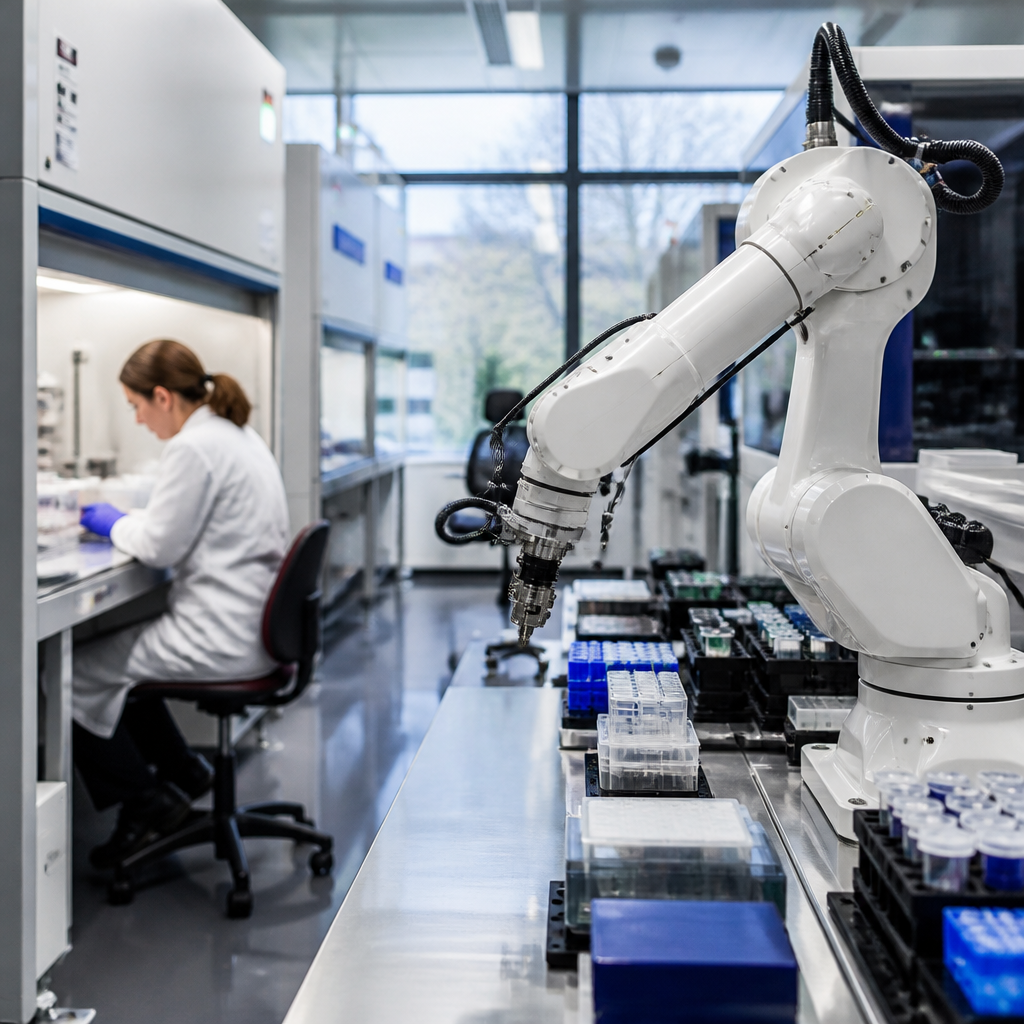
An autonomous lab typically has four layers. First is physical automation: robotic arms, automated plate handlers, liquid handling workstations from companies such as Hamilton, Tecan, Beckman Coulter, and Opentrons, plus integrated readers, microscopes, PCR instruments, mass spectrometers, or bioreactors. Second is workflow orchestration, often managed through scheduling and instrument control software that tracks samples, queues tasks, and prevents collisions or contamination. Third is data infrastructure, including electronic lab notebooks, laboratory information management systems, and analysis pipelines that capture metadata like lot numbers, temperatures, timings, and calibration status. Fourth is the decision layer, where statistical models or machine learning recommend what experiment to run next.
The distinction between simple automation and true autonomy matters. A fixed automation line can execute a predefined protocol repeatedly, which is valuable for consistency but limited in adaptability. A more autonomous system can change variables dynamically based on incoming data. For example, in antibody discovery, a lab may test different expression conditions, analyze yield and binding quality, then have an optimization algorithm choose the next batch of media formulations and temperatures. In cell culture, computer vision can monitor confluence and morphology, triggering automated passaging or media exchange when thresholds are met. The result is not science without scientists. It is science where scientists set goals, constraints, and acceptance criteria while machines handle repetitive execution and rapid iteration.
How robots and AI change the R&D cycle
The biggest shift is cycle-time compression. In a conventional biotech workflow, experiment design, setup, execution, analysis, and review are often separated by days. Samples wait for instrument availability. Data gets copied from one system to another. Teams discover a protocol issue only after a full run is finished. In an autonomous environment, scheduling software coordinates instruments continuously, data lands in structured formats immediately, and algorithms can flag anomalies as they occur. I have watched assay development teams cut optimization loops dramatically because failed conditions were identified on the same day, not at the next project meeting.
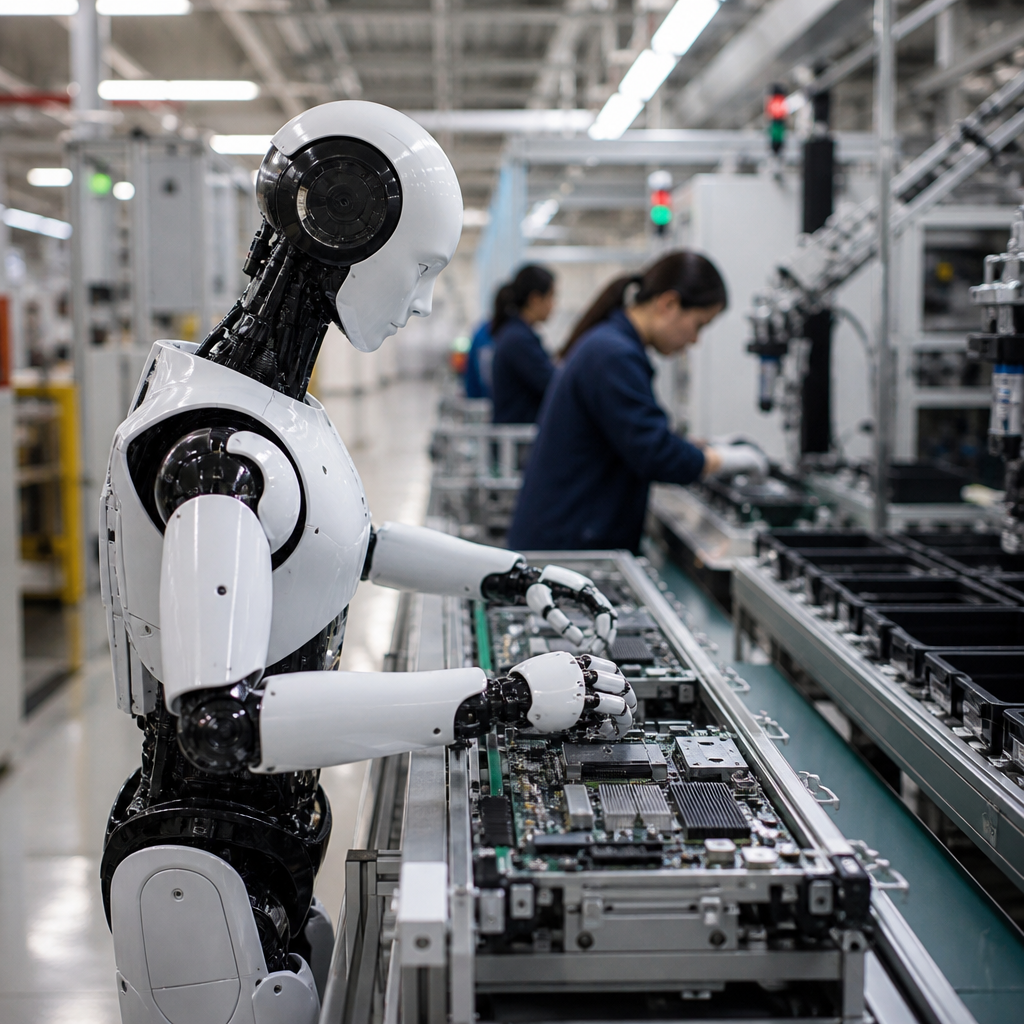
Robots improve precision in repetitive tasks such as microliter dispensing, plate replication, colony picking, and timed reagent addition. That precision reduces variability, which is critical in biological systems where noise already runs high. AI contributes in different ways. Supervised models can predict assay outcomes from historical conditions. Bayesian optimization can search large formulation spaces efficiently, especially when each experiment is costly. Active learning methods choose the most informative next experiment instead of brute-forcing every possibility. Computer vision models classify cell states, count colonies, detect contamination, or measure organoid growth. Natural language systems also help by extracting protocol details from prior reports, although they still require careful validation before being trusted in regulated work.
| R&D area | Autonomous lab use case | Practical benefit |
|---|---|---|
| Drug discovery | High-throughput screening with model-guided hit selection | Faster lead identification with fewer wasted assay runs |
| Synthetic biology | Design-build-test-learn cycles for strain engineering | Higher yields and shorter optimization timelines |
| Cell therapy | Automated media, feeding, and imaging decisions | Improved consistency and better process understanding |
| Diagnostics | Automated assay validation and image analysis | Greater reproducibility and faster verification |
Where autonomous labs deliver the most value in biotech and health tech
Drug discovery is the most visible application because it naturally fits high-throughput experimentation. Teams can automate target-based screening, dose-response studies, and secondary assays, then use predictive models to prioritize compounds for follow-up. Recursion, for example, built its platform around large-scale biological data and machine learning to guide therapeutic discovery. Insilico Medicine has publicized AI-driven target and molecule discovery workflows, though wet-lab validation remains the gating factor. Autonomous execution helps close that gap by feeding faster, cleaner experimental data back into the models.
Synthetic biology is another strong fit because the design-build-test-learn framework maps directly onto automation. Ginkgo Bioworks popularized this model by treating organism engineering as an iterative platform problem. Robots assemble DNA, transform strains, run fermentation tests, and measure outputs, while software tracks lineage and performance. The same approach is now used by startups optimizing enzymes, cultured meat inputs, agricultural microbes, and bio-based materials. Health tech teams use similar methods in diagnostics, where assay conditions, primer sets, controls, and sample prep workflows can be optimized systematically rather than by manual trial and error.
Cell and gene therapy programs benefit from autonomy in a different way: process robustness. These products are sensitive to donor variability, media conditions, transfection efficiency, and handling steps. Automated systems standardize many of those variables, while imaging and inline sensors create richer process data. That supports quality by design, a framework encouraged by regulators because it builds understanding into development instead of relying only on end-product testing. Autonomous labs are also useful in translational medicine and biomarker discovery, where multi-omics workflows generate data volumes too large for ad hoc manual handling.
The technical stack, standards, and startup landscape
Building an autonomous lab requires more than buying instruments. Integration is the hard part. Devices often speak different software languages, expose uneven APIs, or depend on vendor-specific middleware. Mature teams solve this with modular architecture, standardized data schemas, and strong sample identity controls. Standards such as AnIML for analytical data exchange and SiLA 2 for instrument communication are relevant because interoperability determines whether a lab can scale beyond a single custom setup. In practice, many organizations also rely on Python-based pipelines, cloud data warehouses, and workflow tools that connect electronic notebooks, LIMS, and analysis environments.
The startup ecosystem spans several layers. Some companies sell flexible lab automation platforms. Others focus on orchestration software, lab data infrastructure, lab-in-the-loop machine learning, or robotic biology-as-a-service. Strateos, formerly Transcriptic, helped demonstrate remote and automated experimental execution. Emerald Cloud Lab pushed the idea that scientists could design experiments digitally and run them in centralized automated facilities. Benchling became important on the data side by providing a widely adopted R&D cloud environment. Newer companies are now targeting narrower pain points, such as AI-guided formulation, microscopy analysis, sample logistics, or digital twins for bioprocess development. For investors and founders, that means the opportunity is not one market but a stack.
Limits, risks, and what adoption really takes
Autonomous labs are powerful, but they are not plug-and-play. Biology remains messy. Cell lines drift, reagents vary by lot, sensors foul, and edge cases break clean automation assumptions. A model trained on one assay format may fail when the protocol changes slightly. Robotic precision does not guarantee biological truth if sample prep is flawed or controls are weak. That is why validation, calibration, and method transfer discipline matter as much as AI sophistication. In regulated settings, teams also need audit trails, access controls, data integrity practices aligned with ALCOA+ principles, and clear change management.
Cost is another real constraint. A highly integrated automated lab can require substantial capital expenditure, specialized engineers, and ongoing maintenance contracts. Startups do not always need full autonomy from day one. In my experience, the best path is phased adoption: automate the highest-friction, highest-volume workflows first, standardize data capture early, and add decision-making models only after the process is stable. Organizations also need people who can bridge biology, automation engineering, data science, and quality. The winning labs are rarely the ones with the most robots. They are the ones that redesign workflows around measurable decisions, strong metadata, and reproducible operations.
Autonomous labs in biotech are changing R&D by turning experimentation into a faster, more connected, and more data-rich process. Robots handle repetitive execution with higher consistency. AI narrows search spaces, prioritizes the next experiment, and extracts patterns that humans would miss at scale. Together, they improve throughput, reproducibility, and learning speed across drug discovery, synthetic biology, diagnostics, and cell therapy development. For the broader Biotech & Health Tech landscape, this makes autonomous labs a core platform topic rather than a niche tool category.
The central takeaway is practical: autonomy creates value when hardware, software, and scientific method are designed as one system. Companies that treat automation as a procurement exercise usually struggle. Teams that pair standardized workflows, interoperable data, and disciplined model validation are the ones that shorten development cycles and generate defensible results. If you are mapping the future of Tech Innovations & Startups, follow this hub into deeper topics such as lab robotics, AI drug discovery, synthetic biology platforms, digital diagnostics, and bioprocess analytics, because that is where the next generation of biotech advantage is being built.
Frequently Asked Questions
What is an autonomous lab in biotech, and how is it different from traditional lab automation?
An autonomous lab in biotech is a fully connected research environment where robotics, software orchestration, laboratory information systems, analytics, and AI work together to design, execute, monitor, and refine experiments with minimal manual intervention. Unlike basic lab automation, which usually focuses on individual tasks such as liquid handling or plate movement, an autonomous lab coordinates entire experimental workflows from start to finish. That can include planning runs, scheduling instruments, tracking samples, collecting data, analyzing results, and selecting the next set of experiments based on predefined objectives or machine learning models.
The key difference is intelligence and integration. Traditional automation helps researchers do repetitive work faster and more consistently. Autonomous labs go further by linking devices such as liquid handlers, incubators, imagers, sequencers, and environmental controls to software that can make workflow decisions in real time. In practice, this means the lab can respond to data as it is generated, detect failures early, reroute tasks, and continuously improve experimental strategy. For biotech R&D, that shift matters because it reduces bottlenecks, improves reproducibility, and allows teams to test more hypotheses with greater speed and precision.
How do robots and AI actually work together inside an autonomous biotech lab?
Robots and AI play different but complementary roles. Robotics handles the physical execution of experiments, including dispensing liquids, transferring plates, operating instruments, maintaining environmental conditions, and moving samples between workstations. AI and advanced software handle the decision-making layer by analyzing incoming data, optimizing protocols, predicting promising experimental conditions, and determining what should happen next. The result is a closed-loop system in which experiments are not only automated, but also dynamically guided by data.
For example, a machine learning model might analyze assay results and identify which variables are most likely to improve yield, potency, or selectivity. Based on that analysis, orchestration software can generate the next experimental design, reserve instrument time, send commands to robotic systems, and initiate another round of testing. Throughout the process, a laboratory information management system or similar digital backbone tracks metadata, sample identity, protocol versions, and results. This coordination is what turns isolated pieces of equipment into an autonomous R&D platform. Instead of waiting for a scientist to manually review data and plan the next step, the system can iterate much faster while still operating within rules, quality controls, and scientific oversight.
What are the biggest benefits of autonomous labs for biotech research and development?
The biggest advantage is speed without sacrificing rigor. Biotech R&D often involves large experimental spaces, whether researchers are optimizing cell culture conditions, screening compounds, engineering proteins, or refining genomic workflows. Autonomous labs can run many more experiments in parallel than manual teams alone, and they can do so around the clock. That accelerates hypothesis testing, shortens development timelines, and helps researchers identify successful pathways earlier in the discovery process.
Another major benefit is reproducibility. Human variability is one of the persistent challenges in experimental science, especially when protocols are complex or repeated across long timelines. Robotic execution improves consistency in dispensing, timing, handling, and environmental control. At the same time, digital systems capture complete records of every action, parameter, and result. This creates stronger traceability and makes it easier to compare runs, audit methods, and transfer workflows across teams or sites.
Autonomous labs also improve decision quality. Because AI systems can absorb large, multidimensional datasets from imaging, sequencing, assays, and sensor outputs, they can detect patterns that may be difficult to spot manually. That makes them especially useful in optimization tasks and exploratory research where the number of variables is too large for conventional trial-and-error approaches. In practical business terms, this can translate into lower cost per insight, better use of expensive reagents and instruments, and more efficient progress from discovery into development.
What challenges do biotech companies face when implementing autonomous labs?
One of the biggest challenges is integration. Most biotech labs already have a mix of instruments, software platforms, data formats, and legacy workflows that were not originally designed to communicate with one another. Building an autonomous lab requires more than buying robots or adding AI tools. It depends on creating a reliable digital infrastructure that connects scheduling systems, sample tracking, instrument APIs, data pipelines, and analytics environments into a coherent whole. If integration is weak, automation can create new bottlenecks instead of removing them.
Data quality is another critical issue. AI models are only as useful as the data they receive, and biotech experiments generate complex datasets that must be well-annotated, standardized, and linked to experimental context. Poor metadata capture, inconsistent protocols, or fragmented storage can limit the value of machine learning and undermine confidence in automated decisions. Organizations also need strong governance around validation, compliance, cybersecurity, and access control, particularly when workflows support regulated development activities.
There is also a people and process dimension. Scientists, automation engineers, data scientists, and software teams need to collaborate much more closely than in traditional lab environments. Successful adoption usually requires redesigning workflows, retraining staff, and defining where human judgment remains essential. In other words, autonomous labs are not about removing scientists from R&D. They are about shifting scientists toward higher-value work such as experimental strategy, interpretation, and innovation, while machines handle repetitive execution and iterative optimization.
Will autonomous labs replace human scientists in biotech R&D?
No, autonomous labs are far more likely to augment scientists than replace them. Biotech research depends on framing the right questions, interpreting biological relevance, judging trade-offs, challenging assumptions, and making decisions in areas where data may be incomplete or ambiguous. Those are deeply scientific and strategic tasks that still require human expertise. Autonomous systems are excellent at repetitive execution, large-scale iteration, and rapid analysis across many variables, but they operate best when guided by clear objectives, well-designed constraints, and expert oversight.
In practice, autonomous labs change how scientists work rather than whether they are needed. Researchers spend less time on manual pipetting, instrument babysitting, spreadsheet tracking, and repetitive protocol execution. They spend more time on experimental design, model interpretation, troubleshooting unusual results, and connecting findings to broader therapeutic or commercial goals. This can make R&D teams more productive and allow smaller groups to tackle more ambitious programs.
The most effective future model is likely to be human-machine collaboration. Scientists define the problem, establish success criteria, and interpret what the data means biologically. Robots execute workflows consistently at scale. AI helps prioritize the next experiments and uncover relationships hidden in complex datasets. Together, that combination can accelerate discovery while preserving the critical role of human insight, creativity, and accountability in biotech innovation.