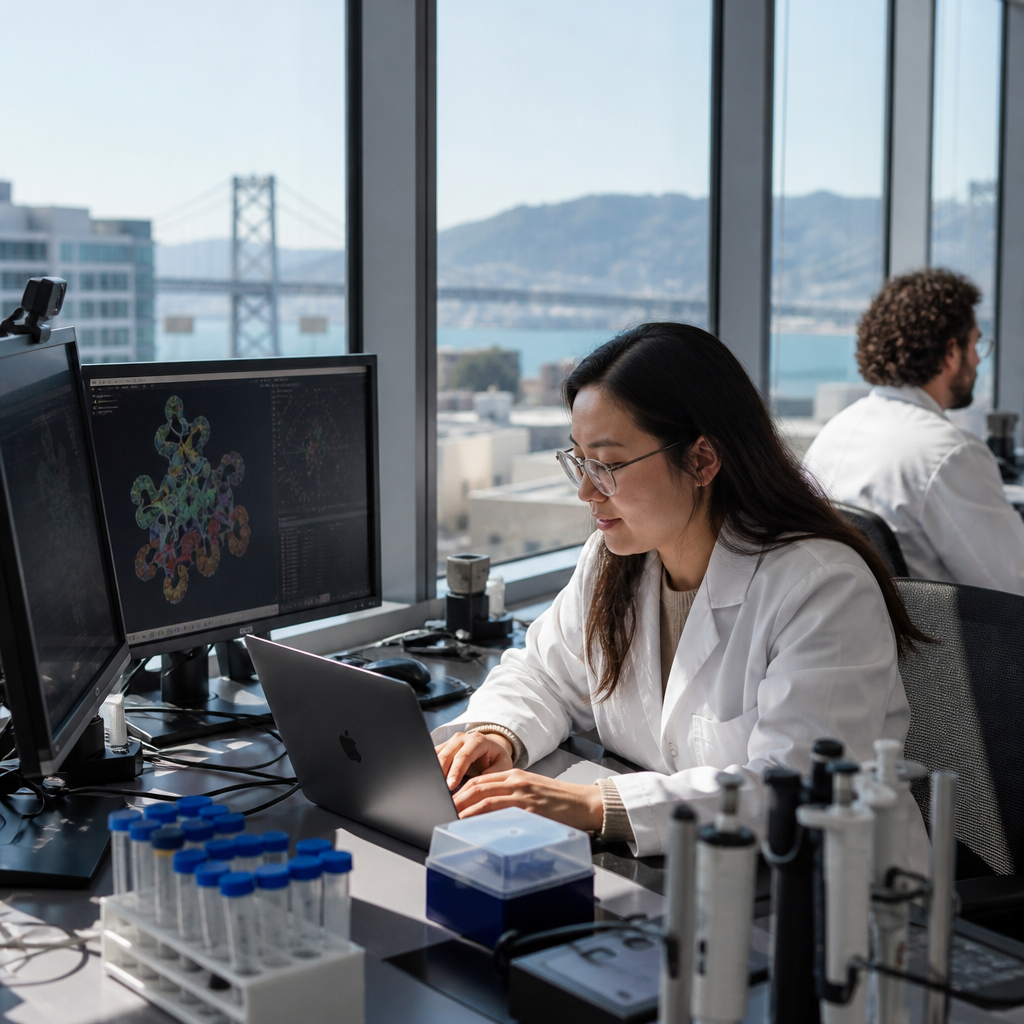
AI drug discovery startups in the Bay Area are building practical systems that compress early-stage research, reduce failure rates, and help scientists decide which molecules, targets, and experiments deserve scarce lab time. In this corner of biotech and health tech, “AI drug discovery” does not mean a machine invents a finished medicine on its own. It usually means software models learn patterns from biological, chemical, imaging, genomic, and clinical data, then guide human teams toward better hypotheses. The Bay Area matters because it combines venture capital, top research universities, cloud infrastructure talent, experienced operators from pharma and software, and a dense network of wet-lab partners. I have worked with startup teams translating machine learning outputs into assay plans, and the same lesson appears repeatedly: the useful product is rarely the model alone; it is the workflow that links computation to validated experimental results.
As a hub topic within biotech and health tech, this subject connects several adjacent themes: computational biology, precision medicine, lab automation, diagnostics, clinical development, and data infrastructure. Searchers usually want direct answers to a few core questions. What are these startups actually building? Which parts of the drug development pipeline can software improve? Why are so many companies based in South San Francisco, Palo Alto, San Francisco, and Berkeley? And how should investors, operators, or job seekers judge substance versus marketing? The answer starts with the structure of pharmaceutical R&D. Drug discovery is expensive because biology is messy, datasets are incomplete, experiments are slow, and most programs fail. Bay Area startups are trying to attack those bottlenecks with target discovery platforms, molecular design engines, multimodal foundation models, automated experiment planning, and software that organizes translational data well enough for scientists to act on it.
That makes this page a practical map of the category. Rather than treating AI as a monolith, it is more accurate to separate the stack into target identification, hit discovery, lead optimization, preclinical prediction, and clinical decision support. The strongest companies also build surrounding capabilities such as data curation pipelines, knowledge graphs, retrieval systems for scientific literature, and laboratory feedback loops. These details matter because the commercial model depends on where value is created. Some startups sell software to pharma. Others advance their own internal pipeline and may partner assets later. Many do both. Understanding those operating choices is essential if you are evaluating the Bay Area biotech startup ecosystem, researching health tech trends, or looking for the most important subtopics to explore next.
What AI drug discovery startups build at the target discovery stage
The first major category is target discovery: finding the genes, proteins, pathways, or cell states most likely to influence a disease. In practice, Bay Area startups build machine learning systems that integrate transcriptomics, proteomics, CRISPR screens, patient records, pathology images, and published literature to rank targets with better odds of translational relevance. This matters because many drug programs fail not because chemistry was poor, but because the biological target was weak. Startups often use graph neural networks, causal inference methods, and multimodal models to connect disease signatures with druggable mechanisms. A team working in fibrosis, for example, might combine single-cell RNA sequencing from patient tissue with perturbation data to identify the cell population driving progression, then prioritize proteins expressed selectively in that population.
Real progress here depends less on flashy architecture names than on data discipline. Public sources like TCGA, GTEx, ChEMBL, PubChem, Open Targets, and the Protein Data Bank are useful, but startups gain an edge when they harmonize external datasets with proprietary wet-lab measurements. In my experience, the hardest part is not training a model; it is resolving inconsistent identifiers, batch effects, assay drift, and missing metadata. Companies that solve that engineering problem can generate target hypotheses that biologists trust. This is why many Bay Area teams hire bioinformaticians, cheminformaticians, software engineers, and disease-area experts early. Their product at this stage is a decision engine for where to spend months of bench effort.
How molecular design platforms turn models into candidate compounds
The second major build area is molecular design. Once a target is selected, startups use AI to search chemical space for compounds with the right potency, selectivity, solubility, permeability, metabolic stability, and safety profile. Bay Area companies frequently combine structure-based design, generative chemistry models, docking, molecular dynamics, and active learning loops. If a protein structure is known through X-ray crystallography, cryo-EM, or AlphaFold-style prediction, the model can propose scaffolds likely to fit a binding pocket. If structure is uncertain, ligand-based methods rely on known actives and physicochemical constraints. Either way, no serious team ships model outputs directly to development. Chemists review synthetic feasibility, make compounds, test them, retrain models, and repeat.
The technical challenge is balancing novelty with realism. A model can generate millions of molecules, but most will be irrelevant if they cannot be synthesized or if they trigger toxicology liabilities. That is why strong startups build multiparameter optimization systems rather than single-score generators. They may predict hERG risk, CYP inhibition, plasma protein binding, microsomal stability, and blood-brain barrier penetration alongside potency. Tools and standards from RDKit to matched molecular pair analysis remain central. The best founders I have seen talk less about “magic molecule generation” and more about cycle-time reduction: moving from design to assay result faster, with fewer dead ends, than a conventional medicinal chemistry workflow.
Where Bay Area startups focus across the discovery stack
Not every company addresses the same bottleneck. Some sell platform access; others build therapies in oncology, immunology, neuroscience, or rare disease. The table below shows the main operating patterns and what they actually produce.
| Focus area | What the startup builds | Typical users or buyers | Concrete output |
|---|---|---|---|
| Target discovery | Multimodal models, knowledge graphs, disease biology ranking systems | Internal biology teams, pharma partners | Prioritized targets with supporting evidence packages |
| Hit and lead discovery | Generative chemistry, docking pipelines, active learning workflows | Medicinal chemists, translational teams | Synthesizable compounds and assay-backed structure-activity maps |
| Preclinical prediction | ADMET models, toxicology screens, PK/PD simulation tools | Drug hunters, preclinical development groups | Go/no-go recommendations before expensive animal studies |
| Lab automation | Robotic experiment orchestration, sample tracking, closed-loop optimization | Platform labs, contract research teams | Higher-throughput experiments with cleaner data capture |
| Clinical and translational analytics | Biomarker models, patient stratification tools, multimodal trial analytics | Biotech sponsors, clinical operations, pharma | Better cohort selection and endpoint interpretation |
Why data infrastructure and lab automation matter as much as the model
One consistent Bay Area pattern is that successful AI drug discovery startups invest heavily in systems most outsiders never notice: assay data models, experiment tracking, ontology mapping, sample provenance, and integration between cloud software and robotic labs. Without those layers, model performance degrades quickly because labels are noisy and experiments cannot be reproduced reliably. This is why modern biotech platforms often resemble full-stack technology companies. They use workflow orchestration, containerized pipelines, vector search across scientific documents, and laboratory information management systems to make each experiment machine-readable. In a well-run environment, every result feeds back into the next decision, creating a compounding advantage over time.
Automation is not only about speed. It is about consistent execution and richer data. A liquid-handling robot running the same protocol across hundreds of wells can reduce variance that would obscure a structure-activity signal. High-content imaging coupled with computer vision can reveal phenotypic changes missed by simpler assays. Closed-loop systems then choose the next experiment based on prior outcomes. In health tech terms, this is where software becomes operational leverage. A startup in South San Francisco might use robotic cell assays plus Bayesian optimization to decide which compounds to synthesize next, while a neighboring company uses single-cell sequencing and cloud pipelines to measure how candidate drugs shift immune cell states.
Business models, partnerships, and the Bay Area advantage
Most Bay Area AI drug discovery startups follow one of three business models. First, the platform partnership model: the company signs deals with pharma or larger biotech firms, receives upfront payments, research funding, milestones, and sometimes royalties. Second, the asset-building model: the startup uses its platform internally to generate drug candidates and raises capital like a therapeutics company. Third, the hybrid model: near-term partnership revenue supports a longer-term internal pipeline. None is automatically superior. Partnership-heavy companies can validate technology quickly but may cap upside. Asset-heavy companies keep more value but face higher burn and greater regulatory risk.
The Bay Area offers unusual advantages for each model. UCSF, Stanford, UC Berkeley, and nearby institutes supply talent and scientific founders. Experienced operators from Genentech, Gilead, AbbVie’s Bay Area teams, and many venture-backed biotechs understand translational development. Investors in San Francisco, Menlo Park, and Palo Alto are comfortable with long timelines if the platform thesis is credible. Cloud and AI talent from enterprise software companies can be recruited into biotech infrastructure roles. At the same time, the region is expensive, competition for talent is intense, and startup narratives often outrun evidence. The right evaluation question is simple: has the company shown repeatable wet-lab validation, not just compelling slides?
How to evaluate substance, and where this biotech and health tech hub leads next
If you are assessing AI drug discovery startups in the Bay Area, use a rigorous checklist. Ask whether the company has proprietary data, not just public datasets. Ask how often model predictions survive experimental validation. Ask whether the team can explain failure cases and retraining logic. Ask what part of the pipeline they truly accelerate and by how much: target nomination, design-make-test cycles, biomarker selection, or preclinical attrition reduction. Look for evidence packages, not slogans. A serious company can show assay design, benchmark methodology, baselines, reproducibility controls, and why a result matters biologically. It should also acknowledge where AI is weak, especially in sparse data regimes, novel mechanisms, and cross-assay generalization.
As the hub for biotech and health tech within a broader technology and startups publication, this topic opens into several related articles worth exploring next: AI diagnostics, digital therapeutics, precision medicine startups, laboratory automation platforms, clinical trial software, bioinformatics infrastructure, and the economics of biotech venture building. The main takeaway is straightforward. Bay Area AI drug discovery startups are not merely building chat interfaces for biology or abstract prediction engines. The strongest ones are building integrated discovery systems that connect data, models, experiments, and business strategy. Follow the companies that can prove that loop works in the real world, then track how their tools translate into validated targets, better compounds, and ultimately better medicines. If you cover or invest in biotech and health tech, use this framework as your starting map.
Frequently Asked Questions
What are AI drug discovery startups in the Bay Area actually building?
Most Bay Area AI drug discovery startups are not building a push-button system that spits out a fully approved medicine. What they are actually building is a set of practical software tools and machine learning models that help research teams make better decisions earlier in the drug development process. These systems often focus on target identification, molecule design, structure prediction, screening prioritization, biomarker discovery, patient stratification, and experiment planning. In other words, they are designed to help scientists decide which biological targets look most promising, which compounds are worth synthesizing or testing, and which lab experiments are most likely to produce useful answers.
These platforms typically combine several kinds of data, including chemical structures, assay results, genomic information, proteomics, imaging, electronic health data, and published scientific literature. The goal is to find patterns that would be difficult for human teams to see quickly on their own. A startup may build a model that predicts whether a molecule will bind to a protein, whether it is likely to be toxic, or whether a target is genetically linked to a disease. Another company may focus on lab automation software that closes the loop between computational predictions and wet-lab validation.
In the Bay Area specifically, many of these companies sit at the intersection of biotech, software, and cloud infrastructure. That means they are often building full-stack research systems rather than a single algorithm. Their real product may be a decision engine for R&D teams: software that helps compress early-stage research, reduce dead ends, and allocate scarce lab time to the experiments with the highest expected value.
Does AI in drug discovery mean a machine can invent a complete medicine on its own?
No, and that is one of the most important misconceptions to clear up. In real-world drug discovery, AI is best understood as a powerful assistive technology, not an autonomous inventor that independently creates a finished therapy from scratch. Even when a model generates a new molecular structure or suggests a novel target, that output is only the beginning of a much longer process. Scientists still need to test whether the idea is biologically meaningful, chemically feasible, safe, selective, manufacturable, and clinically relevant.
Drug discovery involves layers of uncertainty that no current AI system can fully eliminate. A model may predict binding affinity well in one context but still miss downstream issues such as toxicity, poor absorption, low metabolic stability, off-target effects, or failure in animal and human studies. Biology is noisy, incomplete, and highly contextual. Diseases are heterogeneous, data is uneven, and many important mechanisms are still not fully understood. That is why experienced teams use AI to narrow options and prioritize work, not to replace medicinal chemists, biologists, pharmacologists, clinicians, or regulatory experts.
The strongest startups usually talk less about “fully automated drug invention” and more about decision support, model-guided iteration, and integrated experimentation. Their value comes from helping human teams move faster with better evidence. AI can suggest, rank, simulate, and optimize. People still frame the scientific question, judge the tradeoffs, run the experiments, interpret conflicting results, and decide whether a program is worth advancing.
How do these startups help reduce failure rates in early-stage drug research?
They reduce failure rates mainly by filtering out weak ideas earlier and identifying promising paths sooner. In traditional early-stage drug research, companies can spend substantial time and money pursuing targets or compounds that later turn out to be non-viable. AI systems aim to catch some of those risks before teams invest heavily in synthesis, screening, animal studies, or expensive platform work. That can mean predicting which targets are more likely to be causally linked to disease, which compounds may have poor safety profiles, or which experimental directions are unlikely to yield useful results.
For example, a startup may train models on historical chemistry and assay data to estimate potency, selectivity, solubility, permeability, toxicity, or other developability properties before a molecule is ever made. Another may combine genetics, pathway biology, patient data, and scientific literature to rank disease targets according to evidence strength and tractability. Others use active learning systems that recommend the next best experiment based on prior outcomes, so the research team gains information more efficiently. Instead of testing everything, the team tests what is most informative.
This does not mean failure disappears. Drug development will always involve attrition because living systems are complex. But if AI helps teams avoid bad targets, deprioritize misleading hits, improve lead optimization cycles, or detect safety concerns earlier, it can materially improve the economics and speed of discovery. The advantage is often not perfect prediction. It is better triage, faster iteration, and more disciplined use of scarce lab resources.
What kinds of data do Bay Area AI drug discovery companies use, and why does that matter?
These companies typically work with a wide mix of biological, chemical, and clinical data because drug discovery problems are too complex to solve from a single source alone. Common inputs include molecular structures, protein sequences, 3D structural biology data, high-throughput screening outputs, microscopy images, transcriptomics, genomics, proteomics, metabolomics, patient records, clinical trial data, and scientific publications. Some startups also generate proprietary data through in-house experiments or partnerships, which can become a major competitive advantage.
The quality and relevance of this data matter as much as the sophistication of the model. In drug discovery, noisy labels, inconsistent assay conditions, biased datasets, missing negative results, and limited reproducibility can all weaken model performance. A flashy algorithm trained on poor data may not generalize in the lab. That is why serious companies invest heavily in data curation, ontology mapping, experimental standardization, and infrastructure that connects computational work to validated biological readouts. In many cases, the hard part is not just training a model. It is building a trustworthy data foundation that makes predictions useful enough for scientists to act on.
This is also why Bay Area startups often emphasize closed-loop systems. They do not just ingest external datasets; they create workflows where predictions lead to experiments, experiments produce fresh proprietary data, and the new data improves the next round of predictions. Over time, that feedback loop can make the platform more accurate and more defensible. In practice, the companies with the strongest long-term position are often the ones that combine machine learning talent with deep experimental capability and differentiated data assets.
Why is the Bay Area such a strong hub for AI drug discovery startups?
The Bay Area brings together several ingredients that are unusually valuable for this field: world-class AI talent, a dense biotech ecosystem, strong venture funding, cloud and software infrastructure expertise, and close proximity to major academic research institutions. AI drug discovery sits between disciplines, and the Bay Area is one of the few places where machine learning researchers, computational biologists, medicinal chemists, platform engineers, founders, and investors regularly operate in the same network. That density helps startups recruit specialized teams and form partnerships quickly.
Another reason is cultural. Bay Area startups often approach biology as both a scientific and an information problem. That mindset supports the creation of software-first research platforms, automated data pipelines, and scalable computational workflows that would feel natural in tech and increasingly essential in biotech. Startups in this environment are often comfortable building tools that look part lab platform, part data company, and part enterprise software product for pharmaceutical research.
At the same time, being in the Bay Area does not guarantee success. The companies that stand out are usually the ones that can translate technical ambition into measurable scientific outcomes. Investors and pharma partners increasingly want proof that a platform improves hit discovery, target validation, lead optimization, or translational decision-making in a way that survives real experimental scrutiny. That is the real story behind many Bay Area AI drug discovery startups: not science fiction, but serious attempts to build systems that help researchers make better calls, faster, in one of the hardest industries there is.