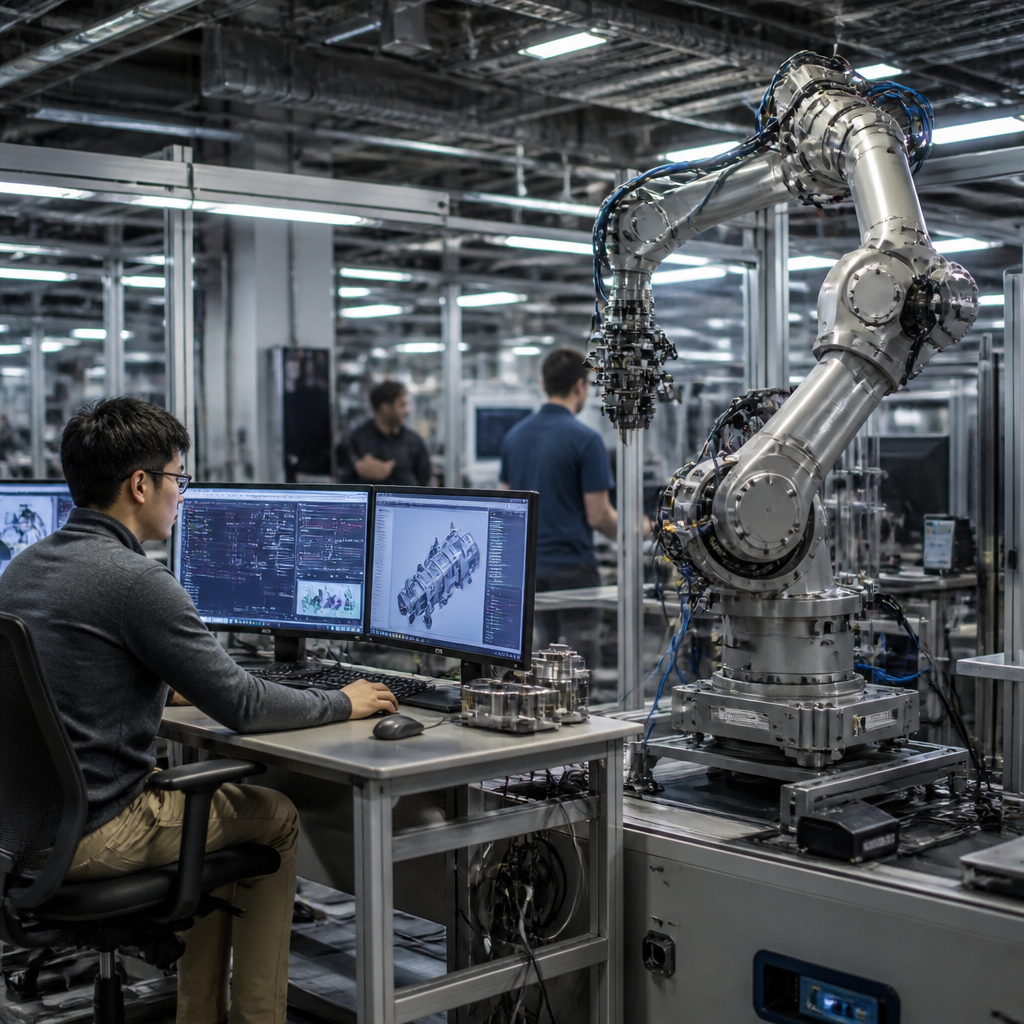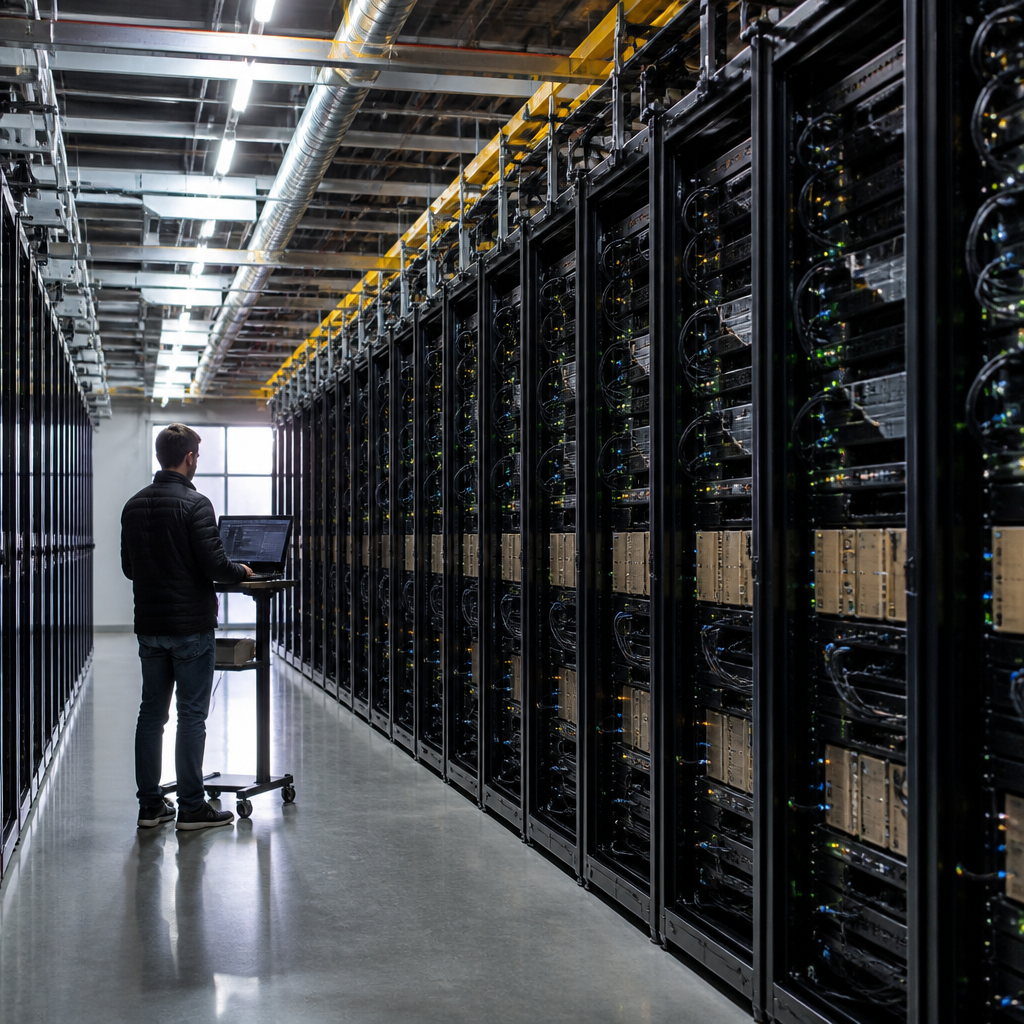
GPU cloud startups are reshaping AI infrastructure and data centers by turning scarce, expensive compute into a more flexible service layer for model training, fine-tuning, and inference. In practical terms, a GPU cloud startup rents access to graphics processing units through software, networking, and orchestration tools that make those chips usable at scale. AI compute market refers to the ecosystem of hardware vendors, cloud providers, colocation operators, software platforms, and customers competing to supply and consume accelerated computing. This matters because modern AI systems depend on enormous parallel processing capacity, and demand has outpaced the traditional supply model built by hyperscale clouds alone.
Over the past two years, I have watched teams that once defaulted to a major public cloud actively seek alternatives because instance availability, pricing volatility, and long procurement cycles became strategic risks. Training a frontier model can require thousands of GPUs linked by high-bandwidth interconnects such as NVLink and InfiniBand, while even serving a popular generative AI application can consume racks of accelerators. Startups have stepped into that gap with specialized GPU clusters, reserved capacity marketplaces, private cloud offerings, and software that abstracts fragmented hardware. As the hub for AI infrastructure and data centers, this topic connects hardware supply, power, cooling, networking, financing, procurement, and workload optimization into one market story.
To understand why the market is being rebuilt, it helps to define the stack. At the bottom are data center essentials: land, utility power, transformers, backup generation, liquid or air cooling, and physical security. Above that sit servers populated with GPUs from Nvidia, AMD, and newer accelerator vendors, tied together by CPUs, high-speed memory, local NVMe storage, top-of-rack switches, and fabric networking. Then comes software: Kubernetes, Slurm, Ray, container registries, MLOps pipelines, observability, and tenancy controls. Finally, customers care about outcomes, not components. They want available capacity, predictable performance, compliance, and economics that make AI product margins viable.
Why demand exploded faster than traditional cloud supply
The immediate driver is simple: large language models, diffusion models, recommendation systems, and multimodal applications are computationally hungry. GPT-style training scales with parameter count, token volume, and experimentation cycles. Enterprises fine-tuning open models also need short bursts of significant capacity. Traditional cloud providers still dominate, but they allocate GPUs across many business lines and regions, so scarce inventory can be rationed, expensive, or unavailable when startups need it most. Lead times for new data center capacity often run from 12 to 36 months because utilities, substations, transformers, and specialized cooling systems cannot be installed overnight.
That mismatch created room for focused entrants. CoreWeave is a prominent example: it evolved into a GPU-first cloud by concentrating on accelerated workloads rather than general-purpose compute. Lambda built around developers and researchers needing on-demand or reserved GPU instances without the enterprise complexity of larger clouds. Crusoe tied AI infrastructure growth to stranded or flare gas power strategies before expanding its broader cloud footprint. Together, these companies proved that specialization can win customers when it delivers faster provisioning, transparent pricing, and support teams that understand distributed training instead of treating GPUs as just another instance family.
The supply chain also favors specialists. A startup willing to standardize around a narrow set of server designs, networking fabrics, and deployment regions can move faster than a diversified incumbent. It can negotiate colocation, prebuy racks, and optimize around Nvidia H100 or H200 clusters, then expose those clusters through simple APIs and scheduling software. Customers accept less geographic breadth if they get dependable capacity. In many cases, AI companies prefer guaranteed training windows over broad cloud catalogs. That shift is changing how infrastructure buyers evaluate vendors, from total cloud platform depth to job throughput, interconnect quality, and queue times.
How GPU cloud startups structure the modern AI stack
Most GPU cloud startups combine three businesses into one. First, they secure physical capacity through owned facilities, wholesale colocation, or partnerships with data center operators such as Equinix, Digital Realty, Switch, or regional providers. Second, they assemble and operate accelerated clusters using validated server architectures, often based on Nvidia HGX platforms, high-core-count CPUs, and InfiniBand from Nvidia Networking. Third, they build a software control plane for provisioning, billing, image management, identity, observability, and orchestration. Without that software layer, raw GPU inventory is not a cloud business; it is leased hardware with support tickets.
At cluster level, topology matters. A startup serving distributed training must design for east-west bandwidth and low latency, because all-reduce operations can stall when networking is weak. That is why serious providers emphasize RDMA over InfiniBand, NVLink within nodes, and careful placement policies. For inference-heavy customers, the priorities shift toward throughput per watt, autoscaling, model caching, and support for quantization frameworks such as TensorRT-LLM or vLLM. In both cases, storage architecture matters more than many buyers expect. Training pipelines depend on high-throughput object storage and parallel file systems to keep expensive accelerators fed with data.
| Layer | What startups provide | Why it matters for AI workloads |
|---|---|---|
| Facility | Power-dense racks, cooling, physical security, colocation contracts | Determines how many GPUs can run reliably in one site |
| Hardware | GPU servers, CPUs, NVMe, switches, InfiniBand, spare parts | Sets training speed, inference efficiency, and failure recovery |
| Platform | Provisioning, Kubernetes, Slurm, IAM, billing, monitoring | Makes clusters usable by multiple teams without manual operations |
| Workload software | PyTorch support, model serving, checkpointing, images, notebooks | Reduces developer friction and shortens time to first experiment |
Data centers are being redesigned for AI, not generic enterprise IT
AI infrastructure and data centers now look different from facilities built for web hosting or enterprise virtualization. Traditional enterprise racks might draw 5 to 15 kilowatts. AI racks can exceed 50 kilowatts, and leading high-density designs push far beyond that. This changes everything from busways and power distribution units to chilled water loops and rear-door heat exchangers. Liquid cooling is moving from niche to mainstream because top-end accelerators generate heat densities that air systems struggle to dissipate efficiently. Operators that planned for ordinary cloud loads are now retrofitting white space at significant cost.
Power availability is often the true bottleneck. In many North American and European markets, the limiting factor is not capital for servers but access to utility capacity and substation upgrades. I have seen GPU deployments delayed less by chip shipments than by transformer procurement and interconnection studies. That is why some startups site clusters in secondary markets with faster power timelines or strike long-term agreements with specialized colocation providers. It also explains investor interest in campuses near abundant generation, including hydro-rich regions and areas where gas-fired backup can support resilient buildouts under tight timelines.
Operational discipline matters just as much as engineering ambition. High GPU utilization can magnify failures: a flaky top-of-rack switch, bad firmware, or inconsistent BIOS configuration can derail expensive training runs. Mature providers rely on hardware burn-in, spare node pools, environmental telemetry, and runbooks for node eviction and reprovisioning. They also need procurement rigor because replacement parts for premium accelerators are neither cheap nor quickly sourced. For customers, the hidden differentiator is not marketing around peak FLOPS; it is whether the provider can keep large clusters stable for weeks during synchronized distributed jobs.
The economics: why pricing, utilization, and financing decide winners
GPU cloud is capital intensive, so startup success depends on balance-sheet strategy as much as technology. A single high-end accelerator can cost tens of thousands of dollars before networking, chassis, storage, and support are added. Complete clusters quickly reach nine-figure budgets. Providers therefore mix equity, debt, equipment financing, customer prepayments, and reserved-capacity contracts. The strongest economics come from keeping utilization high across different demand patterns: long training jobs, overnight batch inference, and enterprise pilots that later convert to committed spend. Idle GPUs destroy margins because depreciation continues whether customers are running jobs or not.
Pricing models vary. On-demand instances attract experimentation but expose providers to volatility. Reserved instances and private clusters provide steadier cash flow and help fund expansion. Some startups also offer bare-metal access because sophisticated AI teams want direct control over drivers, NCCL tuning, and scheduler policies. Others wrap infrastructure with managed services, which can raise gross margin if support processes are efficient. Customers should compare not only hourly rates but effective cost per completed training run or per million tokens served. A cheaper instance becomes expensive if networking bottlenecks extend job time by 20 percent.
This economic logic is also pushing software innovation. Better scheduling increases cluster utilization. Smarter checkpointing reduces losses from node failures. Model optimization techniques such as quantization, pruning, mixture-of-experts routing, and speculative decoding lower compute demand at inference time. That means the AI compute market is not just about building more data centers; it is also about extracting more useful work from each watt and each GPU hour. Startups that pair infrastructure with performance engineering can defend pricing better than those competing as commodity resellers of scarce chips.
What customers should evaluate and where the market goes next
For buyers, vendor selection should start with workload fit. Training large models requires cluster scale, high-bandwidth fabric, resilient storage, and staff who understand distributed systems failure modes. Inference-focused applications may care more about regional latency, autoscaling behavior, observability, and support for serving frameworks. Compliance matters too. Healthcare, finance, and public sector teams may need SOC 2 controls, data residency, encryption standards, and private networking. Procurement teams should ask direct questions about queue times, oversubscription, maintenance windows, replacement SLAs, and whether quoted performance assumes dedicated or shared fabric.
Looking ahead, the market will likely stratify into three tiers. Hyperscalers will remain essential for breadth, ecosystem integration, and global reach. GPU-native clouds will capture customers that need faster access, better support for AI-specific workloads, or more transparent economics. A third layer will emerge around enterprise and sovereign AI infrastructure, where private deployments, national data policies, and specialized compliance requirements justify dedicated clusters. Meanwhile, AMD Instinct GPUs, custom accelerators, and more efficient model architectures will diversify supply, even if Nvidia remains the reference platform for much of the software ecosystem in the near term.
The core lesson is clear: GPU cloud startups are rebuilding the AI compute market by specializing where generic cloud models became constrained. They are redesigning AI infrastructure and data centers around power density, networking performance, software orchestration, and financing discipline. For companies building AI products, that creates more choice and often better alignment between workload needs and infrastructure design. For investors and operators, it creates a demanding market where execution matters more than slogans. If this hub topic is central to your research, map providers against workload, power strategy, and software maturity, then use that framework to evaluate every AI infrastructure decision.
Frequently Asked Questions
What is a GPU cloud startup, and how is it different from a traditional cloud provider?
A GPU cloud startup is a company focused on delivering access to high-performance graphics processing units as an on-demand service for artificial intelligence workloads such as model training, fine-tuning, and inference. While traditional cloud providers offer GPUs as one product category inside much larger infrastructure portfolios, GPU cloud startups are typically built around the specific needs of AI compute. That means they often invest more deeply in GPU scheduling, cluster orchestration, interconnect performance, workload placement, utilization monitoring, and developer workflows tailored to machine learning teams.
In practice, the difference is not just about renting hardware. It is about turning scarce, expensive chips into a usable software-defined service layer. A startup in this category may aggregate capacity from multiple data centers, optimize networking for distributed training, offer bare metal or container-based access, and provide tooling that helps customers launch jobs faster and use hardware more efficiently. Many also focus on transparent pricing, faster provisioning, and access to newer or harder-to-find GPU inventory.
Traditional hyperscalers still dominate the broader cloud market, but GPU cloud startups are carving out space by solving AI-specific pain points. For customers, that can mean less waiting for capacity, better economics for specialized workloads, and a more focused platform experience. In other words, these startups are not simply reselling compute. They are rebuilding how AI infrastructure is packaged, scheduled, and delivered.
Why are GPU cloud startups becoming so important in the AI compute market?
GPU cloud startups are becoming important because demand for AI compute has grown much faster than the supply of advanced chips and the infrastructure required to run them well. Training modern models, serving generative AI applications, and fine-tuning open-source systems all require large volumes of accelerated compute. At the same time, acquiring GPUs is expensive, lead times can be long, and running clusters efficiently requires deep expertise in power, cooling, networking, storage, and software orchestration. That combination has created a major market opportunity.
These startups help fill the gap by making compute more accessible and more elastic. Instead of forcing companies to buy and manage their own hardware, GPU cloud providers let customers rent exactly what they need, when they need it. This lowers the barrier to entry for startups, research teams, and enterprises that want AI capability without committing massive capital upfront. It also helps larger organizations scale beyond the limits of their existing cloud allocations or internal data center capacity.
They also matter because they add competition and specialization to an ecosystem that was previously concentrated among a small number of dominant providers. By building around AI-first use cases, GPU cloud startups can innovate faster in areas such as workload routing, cluster sharing, cost optimization, utilization tracking, and support for multi-cloud or hybrid deployment strategies. As a result, they are influencing how the entire AI compute market evolves, from infrastructure procurement and colocation design to software platforms and enterprise buying behavior.
How do GPU cloud startups make scarce and expensive compute more flexible for customers?
They make compute more flexible by abstracting away much of the complexity involved in sourcing, deploying, and operating GPU infrastructure. At the hardware layer, startups may secure inventory directly from vendors, lease capacity from data centers, or aggregate unused resources from multiple providers. At the software layer, they build orchestration systems that let customers request compute in a self-service way, often through APIs, dashboards, or integrations with machine learning workflows. This turns a hard-to-obtain physical asset into a more fluid service.
Flexibility also comes from better utilization. In many environments, GPUs sit idle because they are poorly scheduled, reserved for the wrong workloads, or trapped in siloed teams. GPU cloud startups aim to solve that by improving scheduling policies, enabling job queues, supporting preemptible or spot-style capacity, and matching workloads to the right hardware profile. A customer running large-scale training may need tightly connected multi-GPU nodes, while another may only need short bursts of inference capacity. A well-designed platform can support both efficiently.
Another major source of flexibility is the surrounding infrastructure. High-performance networking, fast storage, observability tools, container support, and framework compatibility all determine whether customers can actually use GPUs effectively at scale. Startups that deliver these pieces well can reduce setup time, improve job completion rates, and give customers more control over cost and performance. The result is not merely rented hardware, but a more adaptable compute layer that better fits the changing demands of AI development and deployment.
What role do GPU cloud startups play in reshaping data centers and AI infrastructure?
GPU cloud startups are influencing both the design and economics of modern data centers. AI workloads place very different demands on infrastructure than traditional web hosting or enterprise IT. Dense GPU clusters require substantial electrical capacity, advanced cooling systems, low-latency networking, and storage architectures that can support large data pipelines. Because these requirements are so specific, GPU cloud startups often push colocation operators and infrastructure partners to build environments optimized for accelerated computing rather than general-purpose workloads.
That shift matters because it changes where value is created in the stack. In the past, cloud infrastructure was often defined by scale alone. In the AI era, performance depends heavily on how well chips, networking, storage, and orchestration software work together. GPU cloud startups compete by tuning that full system, not just by offering virtual machines. This system-level optimization can improve utilization, reduce downtime, and deliver better performance for distributed training and real-time inference.
They also help decentralize AI infrastructure. Instead of all meaningful compute living inside a few giant cloud platforms, capacity can be spread across specialized providers, regional data centers, and modular clusters connected through software. That opens the market to new participants, including colocation companies, infrastructure financiers, networking vendors, and software platforms. In effect, GPU cloud startups are helping transform data centers from static facilities into programmable AI capacity hubs that can be allocated more dynamically across the broader compute market.
What should companies evaluate before choosing a GPU cloud startup for training, fine-tuning, or inference?
Companies should start with workload fit. Training large models, fine-tuning open-source systems, and running production inference each place different demands on compute, networking, latency, and cost structure. A provider that is excellent for batch training may not be ideal for latency-sensitive inference, and a platform optimized for experimentation may not offer the governance or reliability needed for enterprise deployment. Buyers should evaluate whether the startup’s hardware mix, cluster architecture, and software environment align with their actual use cases.
Performance and availability are also critical. Customers should look at which GPU types are offered, how quickly capacity can be provisioned, whether multi-node jobs are supported, and how networking is configured for distributed workloads. It is equally important to assess uptime guarantees, support responsiveness, security controls, compliance posture, observability features, and data handling practices. If the company plans to run sensitive models or proprietary datasets, operational maturity matters as much as raw compute access.
Finally, pricing and long-term flexibility deserve close attention. Some GPU cloud startups compete on lower hourly rates, while others differentiate through scheduling efficiency, reserved capacity, or hybrid deployment options. The cheapest listed price is not always the lowest total cost if performance is inconsistent or workflows are difficult to manage. Companies should also consider portability: how easy it is to move workloads between providers, connect the platform to existing MLOps tools, and avoid being locked into a narrow environment. The strongest GPU cloud partner is usually the one that combines reliable infrastructure, transparent economics, and a platform experience that supports growth over time.