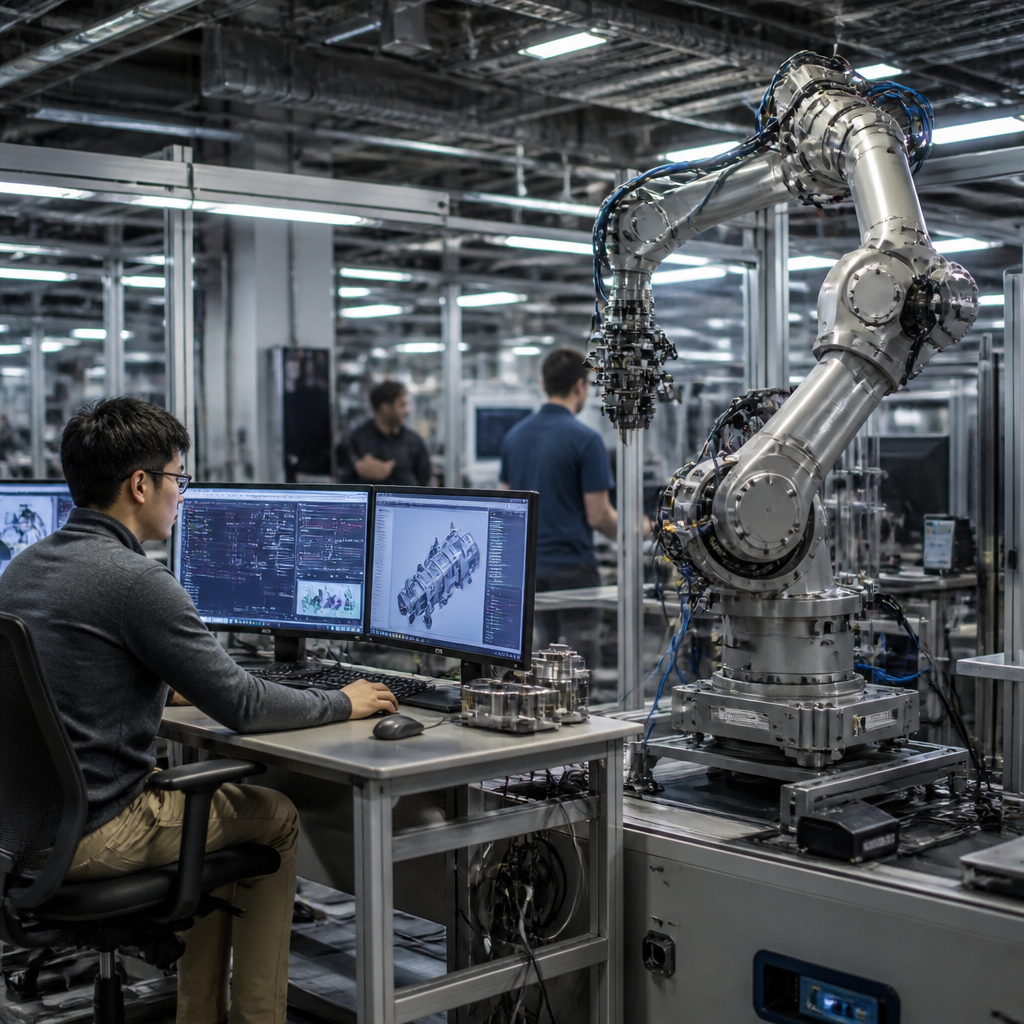
Silicon Valley has become one of the most influential regions in the world for developing advanced manufacturing tech because it combines venture capital, research talent, software expertise, and a startup culture that rewards rapid iteration. In this context, advanced manufacturing tech means the digital, automated, and data-driven systems used to design, build, inspect, and optimize physical products. It includes robotics, additive manufacturing, semiconductor equipment, industrial AI, digital twins, advanced materials, and factory automation platforms. I have worked with startup teams translating lab prototypes into pilot production, and one lesson stands out: manufacturing innovation rarely comes from machinery alone. It emerges when software, hardware, supply chains, and financing move together. That is exactly where Silicon Valley has built a durable advantage.
This matters far beyond Northern California. Advanced manufacturing determines how quickly companies can commercialize batteries, medical devices, aerospace components, climate technologies, and electronics. It also shapes cost, resilience, product quality, and national competitiveness. For founders, this subtopic sits at the center of startup success because a breakthrough prototype has limited value if it cannot be manufactured reliably at scale. For investors and operators, the key question is no longer whether manufacturing is becoming more digital; it is how fast companies can convert data and automation into throughput, yield, and margin. Silicon Valley’s role is important because it has repeatedly built the tools, talent networks, and financing models that help this conversion happen.
As a hub for advancements and startup success, this article explains the ecosystem, the core technologies, the startup pathways, and the real tradeoffs. It also serves as a practical map for readers exploring deeper topics such as robotics startups, semiconductor manufacturing, factory software, supply chain digitization, and industrial fundraising. If you want to understand why so many breakthrough manufacturing companies still emerge from Silicon Valley, start with the region’s ability to unite invention with commercialization.
The ecosystem advantage behind Silicon Valley manufacturing innovation
Silicon Valley’s manufacturing strength is often misunderstood because many people picture the region as purely software-driven. In practice, its advantage comes from cross-functional density. Stanford, UC Berkeley, SLAC, and national lab connections feed technical research into startups. Specialized law firms, recruiters, prototype shops, contract manufacturers, and venture investors reduce the friction of company formation. Major firms including Applied Materials, Lam Research, Tesla, Intel, Nvidia, and Autodesk have also created alumni networks that circulate practical operating knowledge into new ventures.
That density matters in advanced manufacturing because commercialization requires many disciplines at once. A robotics startup may need embedded systems engineers, machine vision specialists, controls experts, CAD designers, reliability engineers, and manufacturing process leads within the same quarter. In Silicon Valley, founders can often assemble that stack faster than in less concentrated markets. The region also benefits from proximity to semiconductor design, cloud infrastructure, and enterprise software companies, which has made industrial systems more intelligent. The result is a feedback loop: better software tools create better manufacturing systems, which in turn create more investable startups.
Core technologies driving advancements in advanced manufacturing
The region has played a defining role in several categories of advanced manufacturing tech. Robotics is one of the clearest. Startups building autonomous mobile robots, machine tending systems, and warehouse automation platforms have used advances in perception, edge computing, and simulation to reduce deployment time and improve uptime. Industrial AI is another major category. Companies now use computer vision for defect detection, predictive maintenance models to flag equipment failures, and generative design software to optimize parts before they are machined or printed.
Additive manufacturing has also benefited from Silicon Valley’s software-first approach. The most successful companies in this category do not just sell printers. They build integrated workflows covering topology optimization, build preparation, in-process monitoring, and post-processing analytics. Semiconductor manufacturing equipment is equally important. Even when fabrication happens elsewhere, much of the enabling software, process control, and capital equipment innovation ties back to Bay Area companies and talent. Digital twins, meanwhile, have moved from buzzword to practical tool. By creating virtual representations of machines, lines, or full facilities, startups can test throughput scenarios, detect bottlenecks, and improve changeovers before disrupting production.
| Technology area | What it does | Startup success impact |
|---|---|---|
| Industrial robotics | Automates repetitive, hazardous, or precision tasks | Raises throughput and reduces labor variability |
| Computer vision inspection | Detects defects faster than manual quality checks | Improves yield and traceability |
| Additive manufacturing | Produces complex geometries with less tooling | Shortens prototyping and low-volume production cycles |
| Digital twins | Models equipment and process behavior virtually | Reduces commissioning risk and downtime |
| Factory software | Connects planning, execution, and analytics | Scales operations with better visibility |
How startups turn manufacturing breakthroughs into viable businesses
Startup success in advanced manufacturing depends on sequencing. In my experience, the strongest teams do not jump from prototype to full factory. They move through clear stages: proof of concept, pilot line, design for manufacturability, supplier qualification, process validation, and scaled production. Silicon Valley investors increasingly understand this path. Funds that once focused mainly on software now back hard tech companies with longer timelines, provided milestones are concrete. Those milestones usually include cycle time, scrap rate, cost per unit, machine uptime, and customer qualification results.
Founders also benefit from the region’s familiarity with platform thinking. A startup may begin with one machine or process, but long-term value often comes from the surrounding software, data network, and service layer. Consider a battery manufacturing startup. Its defensibility might come not only from electrode coating hardware but from process recipes, inline sensing, quality prediction models, and a growing dataset that improves yields over time. The same pattern appears in semiconductor tooling, CNC automation, and biomanufacturing systems. Investors fund these companies because recurring software and service revenues can complement capital equipment sales, making the business more durable.
The role of venture capital, corporate partnerships, and policy support
Capital is a major reason Silicon Valley remains central to advanced manufacturing tech. Hardware and industrial startups typically need more upfront funding than SaaS companies because they face equipment costs, validation expenses, and longer customer sales cycles. The Valley has developed investor groups that understand these economics. Firms such as Andreessen Horowitz, Eclipse, DCVC, and Khosla Ventures have backed robotics, climate manufacturing, industrial software, and deep tech businesses with patient capital structures and milestone-based planning.
Corporate partnerships are just as important. Many startups cannot reach scale without pilot customers willing to test new systems inside real facilities. In the Bay Area, those partners may include automotive firms, chip companies, logistics operators, medical device manufacturers, and cloud providers. These relationships matter because factory conditions expose flaws quickly. A vision model that performs well in a demo can fail under variable lighting, vibration, dust, and line-speed pressure. Successful startups use pilots to collect edge-case data, refine interfaces for operators, and prove return on investment with measured numbers such as reduced downtime or faster inspection rates.
Policy support has become more relevant as governments prioritize supply chain resilience and domestic production. Programs tied to semiconductors, clean energy, and industrial research have created opportunities for startups developing equipment, materials, and factory intelligence. Silicon Valley benefits because it already has dense networks capable of turning grants, tax incentives, and procurement opportunities into actual companies.
Challenges, limitations, and what the next wave looks like
Silicon Valley is not perfect for every manufacturing startup. Operating costs are high, industrial real estate is limited, and large-scale production often happens in lower-cost regions such as Texas, Arizona, the Midwest, or overseas. Founders must decide which functions belong in the Valley and which should move closer to suppliers or end markets. In practice, many keep R&D, software, systems engineering, and early pilot work in Northern California while placing high-volume manufacturing elsewhere. That hybrid model is common because it preserves access to talent while controlling production costs.
There are technical limitations too. Not every process benefits equally from automation, and not every AI model survives noisy plant environments. Integrating with legacy manufacturing execution systems, PLCs, and ERP platforms can take longer than founders expect. Regulatory requirements in aerospace, medtech, and energy add another layer of validation. The best operators treat these constraints as design inputs rather than surprises. They build around standards such as ISA-95 for enterprise-control integration, use rigorous failure mode analysis, and plan customer onboarding with manufacturing engineers, not just software teams.
Looking ahead, the next wave of advancements and startup success will likely center on AI-native factories, more flexible robotics, advanced materials, and energy-aware manufacturing systems. Semiconductor demand from AI infrastructure is pushing innovation in packaging, metrology, and process control. Climate technologies are driving new manufacturing methods for batteries, heat pumps, power electronics, and grid equipment. Biomanufacturing is expanding from pharmaceuticals into materials and specialty chemicals. Across these categories, Silicon Valley’s role will remain strongest where complexity is highest and where software can unlock measurable gains in productivity, quality, and speed.
Silicon Valley’s role in developing advanced manufacturing tech is ultimately about orchestration. The region brings together inventors, operators, investors, software builders, and industrial partners in a way that helps hard technologies survive the difficult transition from idea to scaled production. That combination has made it a hub for advancements and startup success across robotics, additive manufacturing, semiconductor equipment, digital twins, factory software, and industrial AI.
The most important takeaway is simple: advanced manufacturing is no longer a back-end function. It is a strategic capability that determines whether breakthrough products can reach markets efficiently, profitably, and reliably. Silicon Valley continues to matter because it excels at turning technical complexity into repeatable systems, investable business models, and commercial momentum. Even when final production moves to other regions, the architectures, tools, and startup playbooks often begin here.
Use this hub as your starting point for deeper research into manufacturing startups, industrial automation, supply chain digitization, and the financing of hard tech companies. If you are building, investing in, or evaluating the next generation of industrial businesses, study how Silicon Valley connects innovation to execution, then apply those lessons to your own manufacturing strategy.
Frequently Asked Questions
Why is Silicon Valley such a powerful hub for advanced manufacturing technology?
Silicon Valley stands out because it brings together several ingredients that are difficult to find in one place: deep pools of engineering talent, world-class research institutions, experienced founders, major venture capital networks, and a business culture that encourages experimentation. In advanced manufacturing, that combination matters because progress rarely comes from hardware alone. Companies need software developers, AI specialists, materials scientists, robotics engineers, product designers, and manufacturing experts working closely together. Silicon Valley is unusually strong at building those cross-functional teams.
Another reason the region has become so influential is its ability to move quickly from concept to commercialization. Startups developing robotics, semiconductor tools, factory automation platforms, additive manufacturing systems, or industrial inspection software can often find early customers, strategic partners, and investors within the same ecosystem. That proximity speeds up product iteration. Instead of spending years refining a system in isolation, companies can test ideas, gather industrial data, improve performance, and relaunch with stronger solutions.
Just as important, Silicon Valley has a long history of connecting digital innovation with physical production. Many of the technologies now shaping modern factories, such as machine vision, edge computing, predictive analytics, digital twins, and AI-driven process control, were advanced by companies rooted in software-first thinking. That mindset has helped redefine manufacturing as a data-rich environment rather than just a mechanical one. As a result, Silicon Valley has played a central role in pushing manufacturing toward more automated, connected, and intelligent systems.
What types of advanced manufacturing technologies are most strongly associated with Silicon Valley?
Silicon Valley is closely associated with technologies that make manufacturing more digital, automated, precise, and adaptable. Robotics is one major category. Companies in the region have contributed to industrial robots, collaborative robots, autonomous mobile systems, and machine vision platforms that allow factories to automate tasks with greater flexibility. Unlike older manufacturing automation, these newer systems are often designed to learn from data, integrate with cloud software, and adapt to changing production needs.
Additive manufacturing is another important area. While 3D printing is used in many industries worldwide, Silicon Valley has helped push it beyond prototyping into higher-performance applications for aerospace, medical devices, electronics, and industrial tooling. The region’s strength lies not only in printer development but also in the software layers around additive manufacturing, including design optimization, simulation, workflow automation, and quality monitoring.
Semiconductor manufacturing equipment is also deeply connected to the Valley’s influence. Even though chip fabrication is globally distributed, the innovation ecosystem around semiconductor tools, metrology, process control, and electronic design has strong roots in the region. These technologies are essential because semiconductors power nearly every modern manufacturing system, from robots and sensors to industrial AI platforms and connected devices.
Silicon Valley is also a leader in industrial AI, digital twins, smart sensors, and factory analytics. These technologies help manufacturers collect data from machines, analyze operations in real time, predict failures, reduce waste, and improve throughput. In practical terms, the region is strongly associated with the software-defined side of manufacturing: the operating systems, analytics platforms, automation intelligence, and digital infrastructure that make physical production more efficient and responsive.
How does venture capital influence the development of advanced manufacturing technology in Silicon Valley?
Venture capital has had a major impact on Silicon Valley’s advanced manufacturing ecosystem because many of these technologies require significant upfront investment before they become commercially viable. Building robotics platforms, semiconductor equipment, industrial AI systems, or factory automation tools often involves long development cycles, specialized talent, prototyping costs, and complex customer validation. Venture capital helps companies survive that early period and accelerate growth once they identify product-market fit.
Beyond funding, venture investors often shape the strategic direction of advanced manufacturing startups. Experienced investors can connect founders to pilot customers, supply chain partners, manufacturing advisors, and executive talent. That support is especially valuable in industrial markets, where winning adoption often depends on credibility, integration expertise, and an understanding of enterprise buying cycles. In Silicon Valley, those investor networks are unusually mature and can help young companies bridge the gap between technical innovation and large-scale deployment.
Venture capital also encourages a particular style of innovation: rapid iteration. Startups are expected to test assumptions quickly, gather customer feedback, refine products, and scale what works. In advanced manufacturing, that can translate into faster improvements in machine learning models, sensor systems, control software, robotics interfaces, and digital manufacturing platforms. While industrial markets usually move more cautiously than consumer tech, the Valley’s funding environment still pushes companies to innovate aggressively.
At the same time, venture capital can create pressure to pursue very large markets and fast growth. That dynamic can be beneficial when it drives ambitious breakthroughs, but it can also be challenging in sectors where reliability, safety, regulatory compliance, and long deployment timelines are critical. Even so, Silicon Valley’s venture model has undeniably helped bring more capital, urgency, and visibility to advanced manufacturing technologies that might otherwise have developed far more slowly.
What makes software expertise so important in modern advanced manufacturing?
Software expertise is now central to advanced manufacturing because today’s factories are increasingly driven by data, automation logic, connectivity, and real-time decision-making. Modern manufacturing systems are no longer just collections of machines performing fixed tasks. They are integrated digital environments where sensors feed information into analytics platforms, control systems adjust operations dynamically, and AI models help optimize quality, maintenance, scheduling, and energy use. In that context, software is not an accessory to manufacturing; it is one of its core engines.
This is where Silicon Valley has had an outsized influence. The region’s deep bench of software talent has helped transform manufacturing tools into intelligent systems. For example, machine vision platforms rely on advanced image processing and AI algorithms. Robotics platforms depend on perception software, motion planning, simulation, and controls integration. Digital twins require software models that mirror real-world assets and processes. Even additive manufacturing increasingly depends on software for design optimization, toolpath generation, materials analysis, and defect detection.
Software also matters because manufacturers need interoperability and scalability. A factory may use equipment from many vendors across design, production, inspection, and logistics. Software helps connect those systems so data can move between machines, enterprise platforms, and operators. That integration makes it possible to track performance, identify bottlenecks, improve traceability, and respond faster to disruptions. Silicon Valley companies have been especially effective at building the platforms, interfaces, and cloud-based tools that enable this kind of connected manufacturing.
In broader terms, software expertise allows manufacturers to shift from reactive operations to predictive and adaptive ones. Instead of waiting for breakdowns, they can forecast maintenance needs. Instead of inspecting products only at the end of a line, they can monitor quality continuously. Instead of designing processes once and leaving them unchanged, they can optimize them based on live data. That shift is one of the defining features of advanced manufacturing, and it is a major reason Silicon Valley’s software strengths have become so valuable to the sector.
What challenges and limitations does Silicon Valley face in shaping the future of advanced manufacturing?
Although Silicon Valley is highly influential, it does not control the future of advanced manufacturing on its own. One major limitation is that successful manufacturing innovation depends on more than software and venture-backed startups. It also requires factory experience, supply chain resilience, process engineering, workforce training, standards compliance, and close collaboration with industrial operators. Many of those capabilities are distributed across other manufacturing regions in the United States and around the world, where production knowledge is often deeper and more directly tied to large-scale operations.
Another challenge is the physical complexity of industrial deployment. Advanced manufacturing technologies must perform reliably in demanding real-world environments, not just in demonstrations or pilot programs. Factories care about uptime, repeatability, safety, integration, and return on investment. A promising robotics system or AI platform may generate excitement in Silicon Valley, but widespread adoption depends on proving it can deliver measurable value under production conditions. That process can be slower and more difficult than the Valley’s traditional startup model sometimes assumes.
Cost is also a significant issue. Some advanced manufacturing tools require expensive hardware, specialized installation, or major workflow changes. Smaller manufacturers may struggle to adopt them quickly, even when the long-term benefits are clear. In addition, global competition is intense. Regions in Asia, Europe, and other parts of North America are investing heavily in industrial automation, semiconductor infrastructure, additive manufacturing, and smart factory technologies. Silicon Valley remains influential, but it is operating in a much more competitive international landscape.
Finally, there is the broader challenge of connecting digital innovation with domestic production capacity. Silicon Valley excels at inventing platforms and scaling technology companies, but advanced manufacturing leadership also depends on where products are built, how supply chains are structured, and whether industrial capabilities remain strong over time. The region’s greatest opportunity may be as a catalyst: creating the software, tools, and systems that enable smarter manufacturing everywhere, while partnering with other industrial hubs that specialize in production at scale.