Silicon Valley’s latest developments in smart appliances are reshaping how households cook, clean, store food, manage energy, and monitor daily routines. In this context, smart appliances are connected devices that combine sensors, software, wireless networking, and automation to perform household tasks more efficiently than traditional machines. The category includes refrigerators that track inventory, ovens that recognize meals, washing machines that optimize cycles, robotic vacuums that build maps, and home energy systems that coordinate usage across devices. I have worked with product teams evaluating connected home rollouts, and the pattern is clear: the market is moving beyond novelty toward measurable utility. This matters because homes are becoming a major frontier for artificial intelligence, edge computing, and sustainability. For consumers, the benefits can include lower utility bills, reduced food waste, and greater convenience. For startups, smart appliances create opportunities in hardware, subscription software, predictive maintenance, and data services. For larger manufacturers, the challenge is integrating new capabilities without creating security, privacy, or interoperability problems. Silicon Valley sits at the center of this shift because it supplies the venture capital, semiconductor design, cloud infrastructure, and software talent behind many of the sector’s most important advances. Understanding the newest developments helps buyers, founders, and industry observers separate durable innovation from short-lived hype.
Why Silicon Valley leads smart appliance innovation
Silicon Valley leads smart appliance innovation because it combines startup culture with the deeper supply chain needed to turn prototypes into shipped products. Appliance brands increasingly rely on chips from companies such as NVIDIA, Qualcomm, and AMD for on-device processing, while cloud platforms from Google, Amazon, and Microsoft handle data synchronization, voice control, and remote management. Venture-backed startups often begin with a narrow pain point, such as reducing grocery spoilage or making laundry less wasteful, then expand into broader home platforms. This approach mirrors what happened in mobile computing: a single useful feature becomes a gateway to a software ecosystem.
Another factor is the region’s emphasis on interoperability standards. Matter, supported by the Connectivity Standards Alliance, has become central to reducing the setup friction that once plagued connected devices. In practice, this means consumers can add compatible appliances to mixed-brand smart homes with fewer proprietary hubs. I have seen this change shorten pilot deployments dramatically. Five years ago, onboarding failures and unreliable device discovery were common. Today, products built around Wi-Fi, Thread, Bluetooth Low Energy, and Matter generally reach functional setup much faster, which directly improves retention and customer satisfaction.
Core advancements transforming modern smart appliances
The most important advancements in modern smart appliances fall into five technical areas: sensor fusion, edge AI, computer vision, energy orchestration, and predictive maintenance. Sensor fusion combines inputs from temperature probes, accelerometers, cameras, door switches, current sensors, and humidity detectors to create more accurate models of household activity. A smart oven, for example, can use thermal readings and camera analysis to determine whether a dish is undercooked or browning too quickly. That creates a better outcome than relying on a timer alone.
Edge AI is equally significant because it moves processing onto the appliance itself. Instead of sending every image or command to the cloud, the device can classify food, detect abnormal vibrations, or learn usage patterns locally. This reduces latency and can improve privacy. Robotic vacuum makers have used this model effectively, allowing devices to identify cords, shoes, and pet waste without constant round trips to remote servers. Computer vision extends similar capabilities to refrigerators that monitor shelf contents, dishwashers that identify load type, and washing machines that estimate fabric composition.
Energy orchestration is becoming a defining feature as utilities introduce time-of-use rates and demand response programs. A connected dryer or dishwasher can schedule high-energy cycles for off-peak periods, while a smart water heater can preheat when electricity is cheaper. Predictive maintenance then closes the loop by using anomaly detection to flag failing pumps, blocked filters, or degrading motors before breakdowns occur. This is one of the clearest business cases in the category because it lowers service costs and reduces warranty claims.
Startup success stories and the business models gaining traction
Startup success in smart appliances increasingly comes from solving a costly, repeated household problem rather than trying to reinvent every device in the home at once. June, before being acquired by Weber, demonstrated how a countertop oven could combine cameras, presets, and software updates to improve cooking results over time. Moley pushed a more ambitious vision around robotic cooking systems, proving there is investor appetite for highly automated kitchens even when mass-market adoption remains limited. More recently, startups focused on narrower categories, including leak detection, indoor air quality, water purification, and energy load balancing, have gained traction because the value proposition is easier to explain and measure.
Several business models are now standing out. The first is hardware plus subscription, where the appliance is sold near cost and premium features unlock through software. Examples include advanced recipe guidance, extended data history, consumable replenishment, and predictive care plans. The second is appliance-as-a-service for multifamily buildings and high-end residential developments, where landlords or property managers bundle connected laundry, climate control, and monitoring into monthly fees. The third is data-enabled partnerships with utilities, insurers, and food retailers. A leak sensor company may reduce water damage claims; a refrigerator platform may support grocery reordering; an energy coordinator may participate in virtual power plant programs.
| Startup focus | Primary customer benefit | Common revenue model |
|---|---|---|
| Smart cooking | Better meal outcomes, less guesswork | Device sales plus premium recipes |
| Cleaning robotics | Time savings, automated maintenance | Device sales plus consumables and support |
| Energy management | Lower bills, demand response incentives | Software subscriptions and utility partnerships |
| Water and air monitoring | Health protection, early issue detection | Hardware sales plus replacement filters or alerts |
What is changing in kitchens, laundry rooms, and home cleaning
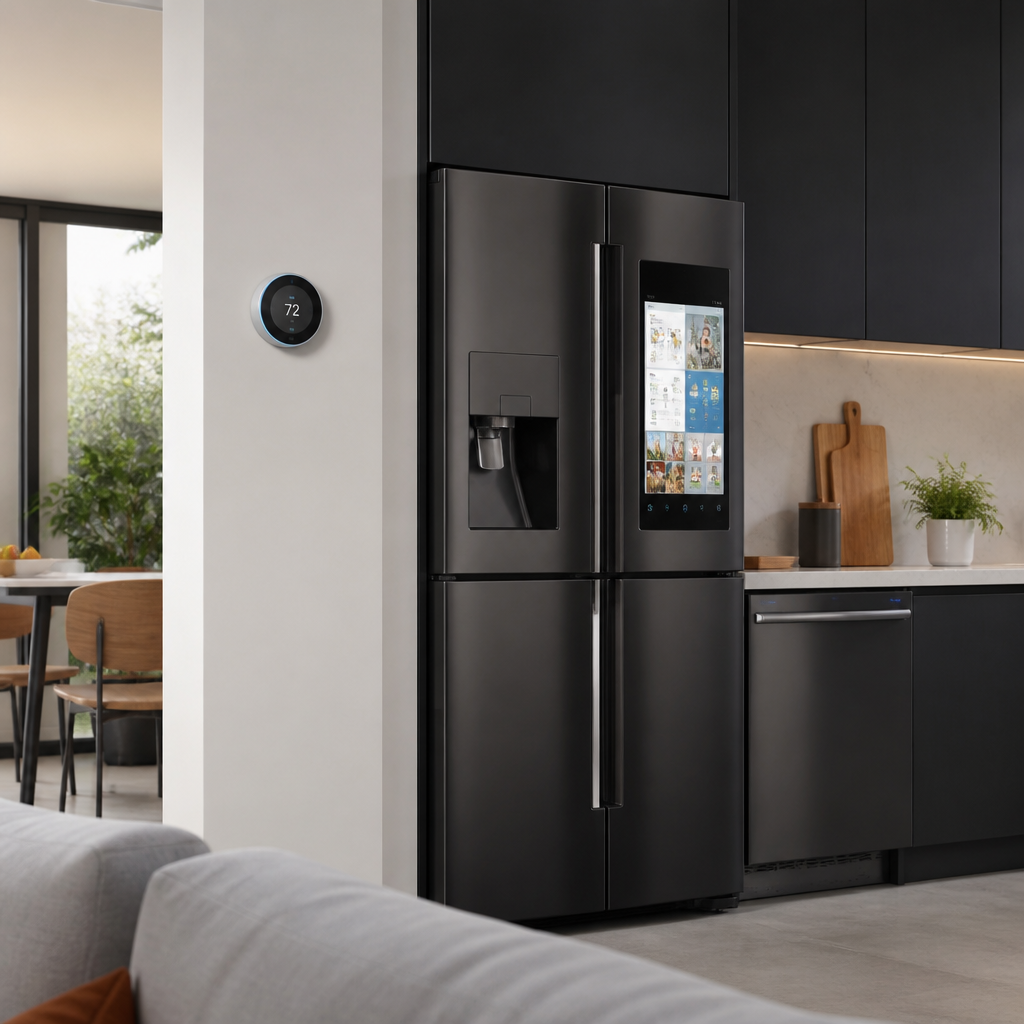
Kitchens remain the most active segment because food preparation offers frequent, high-stakes use cases. Smart refrigerators now do more than display calendars on touchscreens. The better systems track temperature zones more precisely, detect prolonged door openings, and use internal cameras to support inventory checks from a phone. That does not create perfect food recognition, but it does help reduce duplicate purchases and spoilage. Smart ovens have advanced further than refrigerators because closed cooking environments are easier to control. Brands such as Brava and GE Profile have shown that precision heating, guided recipes, and remote monitoring can materially improve consistency for everyday users.
Laundry is seeing quieter but important progress. Connected washers can sense load weight, fabric type, and detergent concentration, then modify water levels and spin profiles. In field testing, these optimizations can reduce water use and help prevent overdosing detergent, which is a common source of residue and maintenance issues. Commercial operators already value these features because they reduce utility costs across many units. In residential settings, consumers benefit most when notifications are practical, such as alerts for an unbalanced load or reminders to transfer clothes before mildew develops.
Home cleaning has matured fastest, largely because robotic vacuums and mops deliver a clear labor-saving return. The newest systems create more reliable room maps, adapt suction by floor type, avoid common obstacles, and integrate with voice assistants and home routines. I have seen the difference between first-generation random-navigation models and current lidar-based units: the newer machines require far less babysitting, which is the threshold that determines whether automation becomes habit-forming or abandoned in a closet.
Challenges: privacy, security, interoperability, and adoption barriers
Smart appliance growth is real, but the constraints are serious and should shape any evaluation. Privacy is the first concern because many appliances gather behavioral data, including cooking schedules, room layouts, occupancy signals, and energy usage patterns. Responsible vendors minimize collection, process data locally when possible, and provide clear retention settings. Security is equally critical. The baseline expectation is encrypted traffic, signed firmware updates, secure boot, multi-factor account protection, and a defined patch policy. Without those controls, a connected appliance can become an attack surface rather than a convenience.
Interoperability remains uneven despite progress. Matter has improved basic connectivity, but advanced features often still depend on proprietary apps and cloud APIs. A dishwasher may connect successfully to a home platform yet expose only status notifications, not full cycle control. Adoption barriers also include price premiums, uncertain product support timelines, and the reality that many consumers do not want another app to manage. The most successful products remove friction by offering tangible benefits on day one, then layering advanced automation later. That is the standard new entrants must meet.
Where the market is heading next
The next phase of smart appliances will be defined by coordination rather than isolated intelligence. Instead of each device acting alone, homes will increasingly run as orchestrated systems. A utility signal may tell a home energy manager to delay the dishwasher, pre-cool a refrigerator, and charge a battery while solar output is high. A cooking platform may synchronize with grocery delivery data, family calendars, and nutrition targets. Maintenance software will schedule service before failures interrupt routine use. These are practical, near-term developments, not science fiction.
For readers tracking tech innovations and startups, the central takeaway is that Silicon Valley’s latest developments in smart appliances are creating a durable category built on software, semiconductors, and operational data. The winners will not be the companies with the flashiest demos. They will be the ones that deliver reliability, interoperability, security, and measurable household value. If you are researching purchases, evaluating startups, or following this subtopic as part of a wider innovation strategy, use this hub as your starting point and compare every new product against those fundamentals.
Frequently Asked Questions
What are the most important smart appliance innovations coming out of Silicon Valley right now?
Silicon Valley’s newest smart appliance developments are centered on making everyday household devices more adaptive, predictive, and connected. Instead of simply adding Wi-Fi to traditional machines, companies are building appliances that use sensors, machine learning, computer vision, and cloud-based software to understand what is happening in the home and respond intelligently. In practical terms, that means refrigerators can track food inventory, monitor temperature zones more precisely, and send alerts before ingredients spoil. Ovens can identify certain foods, recommend cooking modes, and automatically adjust time and temperature settings for more consistent results. Laundry systems are becoming better at detecting fabric types, load sizes, and soil levels so they can optimize water, detergent, and energy use without constant user input.
Another major area of innovation is whole-home coordination. Smart appliances are increasingly designed to communicate with other devices, including thermostats, utility platforms, voice assistants, and home energy systems. For example, a dishwasher may delay its cycle until off-peak electricity hours, while a washing machine might sync with a home battery or solar setup to reduce operating costs. Robotic vacuums are also advancing well beyond scheduled cleaning, with improved mapping, obstacle recognition, and the ability to learn room patterns over time. Overall, the biggest development is not any single feature, but the shift toward appliances that act as part of an integrated household system rather than isolated machines.
How do smart appliances make daily household tasks more efficient than traditional appliances?
Smart appliances improve efficiency by combining real-time data, automation, and remote control in ways traditional appliances cannot. A conventional appliance usually performs a fixed function based on manual settings, but a smart appliance can sense conditions, interpret information, and adjust its performance automatically. In the kitchen, this might look like a refrigerator that helps households reduce food waste by tracking expiration windows or alerting users when staple items are running low. It can also mean an oven that guides cooking with preset programs tailored to specific meals, helping reduce guesswork and avoid undercooked or overcooked food.
In cleaning and laundry, efficiency gains are often even more visible. Smart washing machines can weigh loads, detect moisture levels, and select efficient wash patterns that conserve water and electricity while still delivering effective cleaning. Dryers can stop automatically when clothes are ready, helping prevent fabric damage and unnecessary energy use. Robotic vacuums can map a home, avoid repeated passes in the same areas, and focus extra effort where dirt is most likely to accumulate. The result is less manual oversight, fewer wasted resources, and better overall consistency. For many households, the real advantage is time savings: routine chores become less demanding because the appliance handles more of the decision-making on its own.
Are smart appliances really helpful for saving energy and lowering utility costs?
Yes, one of the strongest practical benefits of modern smart appliances is their potential to improve energy efficiency and reduce household operating costs. Many of the latest models are designed to monitor their own performance and run only as intensely or as long as necessary. A smart dishwasher, for instance, can adjust water usage and cycle duration based on load size, while a smart HVAC-linked appliance ecosystem can avoid drawing extra power during peak periods. These small adjustments add up over time, especially in homes with multiple connected devices.
Silicon Valley companies are also pushing smart appliances to become more active participants in energy management rather than passive consumers of electricity. Some devices can schedule operation around utility rate changes, allowing users to run high-consumption tasks when electricity is cheaper. Others integrate with solar panels, home batteries, or utility demand-response programs. This creates a more responsive home environment where appliances support broader efficiency goals. That said, savings depend on the specific appliance, how often it is used, local energy pricing, and whether the homeowner takes advantage of available automation features. While not every smart appliance delivers dramatic cost reductions on its own, a well-connected home can generate meaningful long-term savings through better timing, lower waste, and more precise operation.
What privacy and security concerns should homeowners consider before buying smart appliances?
Privacy and security are important considerations because smart appliances collect and transmit data in ways traditional appliances do not. Depending on the product, that data may include usage habits, voice commands, maintenance information, network details, location-based settings, and in some cases video or image data if cameras are involved. A refrigerator that tracks inventory, a vacuum that maps the layout of a home, or an oven controlled through a mobile app all create digital records that may be stored locally, in the cloud, or both. Homeowners should understand what data is being collected, why it is collected, how long it is retained, and whether it is shared with third parties.
Security is equally important because any connected device can become a point of vulnerability if not properly designed or maintained. Buyers should look for brands that offer regular firmware updates, strong encryption, multi-factor authentication for companion apps, and clear privacy policies. It is also wise to place smart appliances on a secure home network, use strong unique passwords, and keep device software updated. In many cases, the convenience of connected features is worth it, but consumers should approach smart appliance adoption with the same caution they would apply to smartphones or laptops. The best products are not just innovative; they also demonstrate a serious commitment to cybersecurity, user control, and transparent data practices.
What should consumers look for when choosing a smart appliance for their home?
Consumers should start by focusing on usefulness rather than novelty. The best smart appliance is one that solves a real household problem, whether that means improving meal preparation, cutting cleaning time, reducing food waste, or lowering energy consumption. Before buying, it helps to ask practical questions: Will the connected features save time? Is remote control genuinely useful for this device? Can the appliance automate tasks that are currently inconvenient or repetitive? A refrigerator with inventory assistance may be valuable for a busy family, while a smart washer with advanced cycle optimization may matter more in a home with frequent laundry needs.
Compatibility and long-term support are also essential. Buyers should confirm that the appliance works with their preferred ecosystem, such as a voice assistant, mobile platform, or broader smart home setup. They should also examine the manufacturer’s record for software updates, customer support, warranty coverage, and app reliability. Ease of use matters just as much as advanced features; an appliance that is difficult to configure or manage can quickly become frustrating. Finally, consumers should compare the smart premium against expected benefits. In many cases, the most valuable appliances are not the ones with the longest feature lists, but the ones that combine dependable core performance, intuitive controls, secure connectivity, and meaningful automation that fits naturally into everyday life.