Silicon Valley and smart agriculture are now tightly linked, as the region’s software culture, venture capital network, and hardware engineering talent are accelerating how food is grown, monitored, and distributed. Smart agriculture refers to the use of connected sensors, artificial intelligence, robotics, satellite imagery, automation, and data platforms to improve farm decisions and field operations. In practice, it means a grower can measure soil moisture by the hour, apply fertilizer only where crops need it, predict disease pressure before symptoms spread, and use autonomous machines to reduce repetitive labor. I have worked with startup teams translating these tools from prototype to field deployment, and the main lesson is simple: agricultural technology succeeds only when it solves a farm problem clearly, reliably, and at a justifiable cost.
This matters because farming faces converging pressures. Water is scarcer in major producing regions such as California’s Central Valley. Labor costs remain high, while seasonal labor availability is uncertain. Input prices for fertilizer, fuel, and crop protection products fluctuate sharply. At the same time, retailers, regulators, and consumers increasingly expect traceability, sustainability reporting, and stable yields despite climate volatility. Silicon Valley’s contribution is not that it “disrupts” farming overnight; it is that it packages computing power, machine vision, cloud infrastructure, and scalable financing into usable systems for agriculture. For readers exploring cutting-edge tech under the broader Tech Innovations and Startups landscape, smart agriculture is a crucial hub topic because it connects deep tech, climate resilience, supply chain innovation, and practical field economics in one sector.
The most important terms shape the discussion. Precision agriculture means managing fields at a granular level rather than treating every acre the same. Internet of Things devices are networked sensors that collect data on weather, moisture, equipment performance, or livestock conditions. Computer vision uses cameras and machine learning models to recognize weeds, pests, fruit ripeness, or animal behavior. Controlled environment agriculture includes greenhouses and vertical farms where light, temperature, irrigation, and nutrients are digitally managed. Farm management software integrates field maps, machine data, input records, and yield results into one operating view. Together, these technologies create a digital layer over farming. Silicon Valley’s startups, enterprise software companies, and investors are helping make that layer more predictive, more automated, and more integrated with the rest of the food system.
Why Silicon Valley Became a Smart Agriculture Engine
Silicon Valley became influential in agriculture because it combines three ingredients that few regions hold at the same scale: capital, engineering depth, and a habit of building platforms. Venture firms that once focused on consumer apps or enterprise software now fund agricultural robotics, climate analytics, synthetic biology, and supply chain software. Universities such as Stanford and nearby research institutions produce talent in AI, remote sensing, electrical engineering, and bioengineering. Large cloud providers and chip designers supply the infrastructure that agricultural startups need for edge computing, geospatial analysis, and machine learning training.
What I have seen repeatedly is that founders with strong technical backgrounds still need farm-grounded product design to succeed. A moisture sensor is not valuable because it is elegant hardware; it is valuable because irrigation scheduling affects yield, water use, and pumping costs. A drone imaging platform is not useful because it makes vivid maps; it is useful if those maps help identify nutrient deficiency early enough to change an input plan. Silicon Valley adds speed to experimentation, but agriculture imposes biological timelines, seasonal buying cycles, and tough environmental conditions. The best companies respect that reality.
Core Technologies Transforming the Field
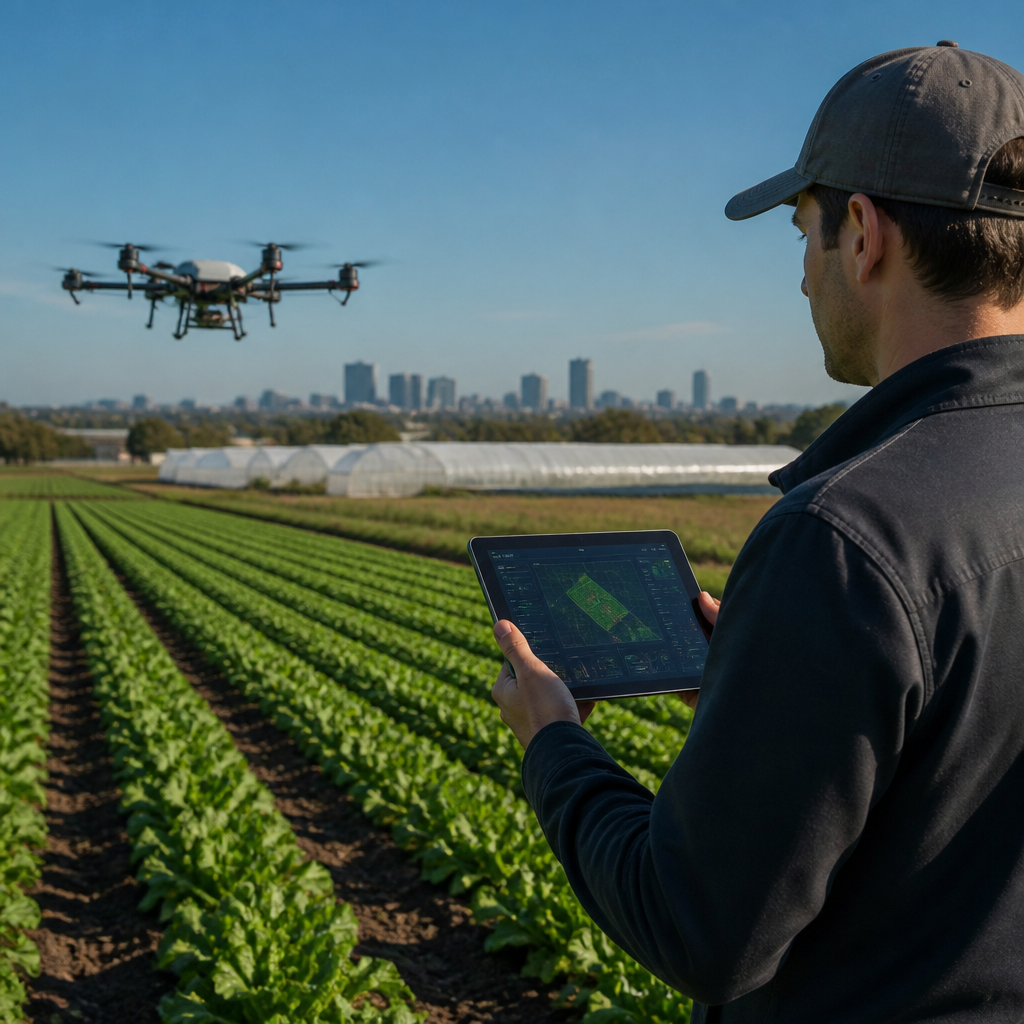
Several technologies define the current wave of smart agriculture. Remote sensing, using satellites, drones, and fixed cameras, gives growers a visual record of crop performance across time. Platforms built on imagery from providers such as Planet Labs and public satellite sources can detect canopy stress, emergence gaps, and irrigation variability. In orchards and vineyards, camera systems mounted on tractors or autonomous rovers can count fruit, estimate bloom intensity, and measure trunk or canopy characteristics.
Sensor networks are equally important. Soil probes, weather stations, leaf wetness sensors, and flow meters feed real-time data into dashboards that support irrigation, disease forecasting, and compliance documentation. AI then turns raw signals into recommendations. For example, a system may combine evapotranspiration rates, root zone moisture, weather forecasts, and crop stage to suggest when and how long to irrigate. In livestock operations, smart collars and vision systems can detect changes in feeding, movement, or heat stress before human observation would typically catch them.
Robotics completes the picture by addressing labor-intensive tasks. Autonomous weeders use cameras and machine vision to distinguish crops from weeds, then mechanically remove weeds or target them with precise microdoses of herbicide. Harvest-assist robots move bins, transport produce, or support pickers. In greenhouses, robotic arms can seed, transplant, and monitor plant health continuously. These tools do not eliminate human expertise; they shift workers toward supervision, exception handling, maintenance, and quality control.
Startup Models and Real-World Use Cases
Silicon Valley agriculture startups usually fall into clear categories: data platforms, robotics, biological inputs, indoor farming systems, supply chain software, and fintech for farm risk. Each category solves a different bottleneck. Data platforms promise decision support. Robotics targets labor and precision. Biological startups develop microbials or gene-informed products to improve resilience and nutrient efficiency. Indoor farming companies pursue year-round production near markets. Supply chain software improves traceability from field to retailer. Agricultural fintech helps with loans, insurance modeling, and carbon-related revenue tracking.
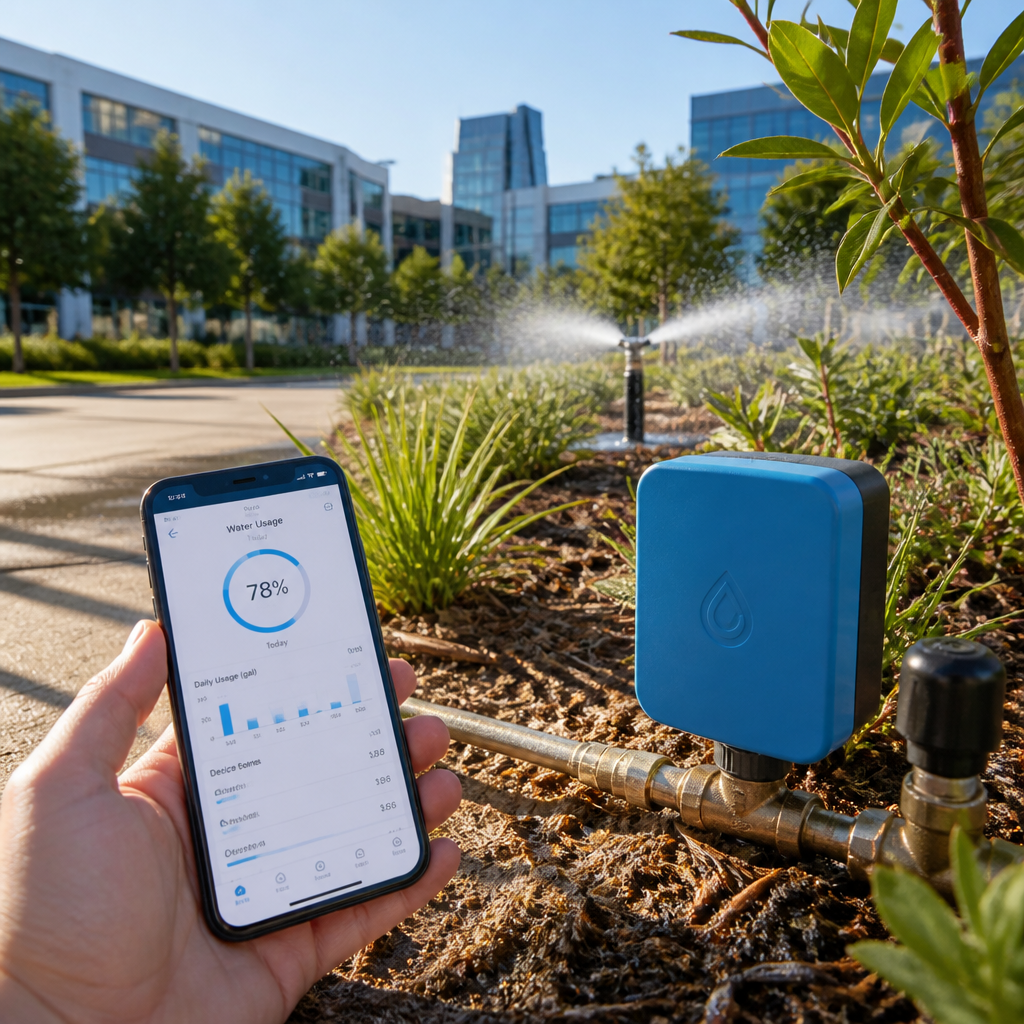
A practical example is precision irrigation in permanent crops. Almond, pistachio, and grape growers often face expensive water constraints. Startups combine pressure sensors, irrigation block maps, satellite imagery, and pump telemetry to show where water is being overapplied or underapplied. When deployed well, this reduces water waste and can improve crop uniformity. Another example is machine vision in lettuce production, where camera-guided thinning or weeding reduces hand labor and lowers unnecessary chemical applications. In dairy operations, monitoring systems track rumination and activity patterns, helping managers detect health issues earlier and improve herd productivity.
| Technology area | Typical tool | Main farm benefit | Common limitation |
|---|---|---|---|
| Precision irrigation | Soil moisture sensors plus analytics | Better water timing and lower pumping costs | Requires calibration and disciplined use |
| Computer vision | Drone or tractor-mounted cameras | Early stress, weed, or yield detection | Image quality varies by light and dust |
| Autonomous robotics | Weeding or harvest-assist machines | Labor savings and task consistency | High upfront capital and maintenance needs |
| Controlled environments | Greenhouse climate automation | Higher control and year-round output | Energy costs can be significant |
| Farm management software | Operations and traceability platforms | Centralized records and better planning | Adoption depends on clean data entry |
How Data, AI, and Connectivity Improve Decisions
Data alone does not improve a farm; decision quality does. The strongest systems combine agronomy, statistical modeling, and operational workflow. A useful AI model answers a specific question such as: Which blocks are likely to face mildew pressure this week? Which irrigation sets are underperforming? Which harvested lots are likely to miss retailer quality thresholds? When startup teams define narrow, high-value decisions, adoption improves because the output is understandable and measurable.
Connectivity is the hidden requirement. Rural broadband, low-power wide-area networks, and edge devices determine whether data arrives consistently from remote fields. In many deployments, the technical challenge is less about model accuracy than about power management, sensor durability, and intermittent coverage. I have seen excellent pilots fail because devices could not withstand dust, heat, rodents, or maintenance gaps. That is why robust enclosure design, battery strategy, and offline synchronization matter as much as model sophistication.
Interoperability also matters. Farms use equipment from John Deere, CNH, Trimble, and many specialized vendors, each with its own data structure. Successful smart agriculture companies build integrations rather than forcing the farm to rekey everything manually. Standards work is still uneven, but better APIs, geospatial file handling, and telemetry connectors are making unified farm dashboards more realistic than they were a decade ago.
Investment Trends, Risks, and What Comes Next
Investment in agricultural technology rises when founders can show measurable unit economics, not just environmental ambition. Investors now scrutinize payback periods, gross margins on hardware, software retention, and whether a tool integrates into existing farm practices. The market learned hard lessons from overfunded vertical farming companies that expanded before proving energy economics and demand stability. By contrast, startups that reduce a known pain point, such as hand weeding, irrigation inefficiency, or fragmented compliance reporting, often gain traction faster because buyers can quantify return on investment.
The biggest risks are practical. Farmers do not buy technology to admire dashboards; they buy it to improve yield, reduce costs, manage risk, or meet customer requirements. If implementation takes too long, recommendations arrive too late, or hardware breaks in the field, trust disappears quickly. There are also data governance concerns. Farms want clarity on who owns operational data, how it is shared, and whether it can influence input pricing or market negotiations. Security, transparency, and service support are not side issues; they are core buying criteria.
Looking ahead, the next phase of smart agriculture will likely center on integrated autonomy, climate adaptation, and better biological intelligence. Expect more systems that connect weather forecasting, soil sensing, machine control, and crop models into near real-time operating loops. Expect wider use of variable-rate applications driven by machine vision instead of broad-acre averages. Expect genomics, microbial products, and phenotyping tools to converge with software platforms so breeding, crop protection, and field management inform one another more directly. Silicon Valley will remain influential because the same capabilities that built modern software ecosystems, rapid iteration, scalable computing, sensor miniaturization, and data science, are now being applied to one of the world’s most essential industries.
For anyone following tech innovations and startups, smart agriculture deserves close attention because it shows how advanced technology becomes valuable only when grounded in operational reality. The strongest companies in this space respect seasonality, biology, regulation, and farm economics while still pushing technical boundaries. They build tools that save water, target inputs more precisely, support labor efficiency, strengthen traceability, and help farms adapt to climate pressure without guessing.
The key takeaway is straightforward: Silicon Valley is advancing smart agriculture not by replacing farmers, but by giving them better instruments, sharper predictions, and more controllable systems. Remote sensing, AI, connected devices, robotics, and farm software already deliver measurable gains when they are implemented carefully and tied to clear decisions. The opportunity ahead is larger than any single device or startup. It is the creation of a more responsive agricultural system, one where data moves quickly, interventions become more precise, and resilience improves across the supply chain.
If you are building, investing in, or researching cutting-edge tech, use smart agriculture as a lens for understanding where deep technology meets real economic need. Explore the related topics within this hub, compare business models, and watch which companies can prove durable value in the field, not just in a pitch deck.
Frequently Asked Questions
How is Silicon Valley influencing the advancement of smart agriculture?
Silicon Valley is influencing smart agriculture by bringing together the exact capabilities needed to modernize farming at scale: software development, sensor design, cloud computing, artificial intelligence, robotics, and investment capital. For decades, agriculture relied heavily on experience-based decision-making, seasonal observation, and broad field treatments. Smart agriculture changes that model by turning fields, orchards, vineyards, and greenhouses into data-rich environments where growers can monitor conditions in near real time and make more precise decisions.
The region’s contribution is especially important because many of the technologies now used in agriculture were refined first in other industries. Wireless networks, machine vision, edge devices, GPS-enabled tracking, predictive analytics, and automation platforms all have roots in the broader innovation ecosystem that Silicon Valley helped build. Startups and established firms are adapting these tools for farm use, creating systems that can measure soil moisture, track crop stress, detect pests earlier, automate irrigation, optimize nutrient application, and improve harvest planning.
Another major advantage is access to venture capital and rapid product iteration. Silicon Valley companies often develop prototypes quickly, test them in real-world agricultural settings, and improve them based on field data and grower feedback. This shortens the gap between concept and practical deployment. As a result, farms can adopt tools that are becoming more accurate, more affordable, and easier to integrate into daily operations. In short, Silicon Valley is not replacing farming expertise; it is enhancing it with digital infrastructure and intelligent systems that help growers make better decisions under increasing pressure from labor shortages, climate variability, water constraints, and supply chain demands.
What technologies are most commonly used in smart agriculture today?
Smart agriculture uses a connected mix of hardware, software, and analytics tools designed to improve visibility and precision across the entire farming process. Some of the most common technologies include in-field sensors, which measure variables such as soil moisture, temperature, salinity, humidity, and nutrient conditions. These sensors give growers far more detailed information than occasional manual checks, allowing them to respond quickly to changing field conditions.
Artificial intelligence and machine learning are also central to modern smart farming. These tools analyze large volumes of agricultural data to identify patterns, forecast outcomes, and recommend actions. For example, AI systems can help predict irrigation needs, identify disease risks based on environmental conditions, or detect irregular growth patterns from drone and satellite images. Computer vision is particularly valuable in specialty crops, where cameras mounted on tractors, drones, or robotic systems can identify weeds, fruit maturity, canopy density, or plant stress with remarkable accuracy.
Automation and robotics are another major category. Autonomous tractors, robotic harvest aids, precision sprayers, and machine-guided weeding systems are helping reduce repetitive labor and improve consistency in field operations. Satellite imagery and drones add another layer by giving growers a broader aerial view of crop performance across large acreage. Combined with farm management software and cloud-based data platforms, these technologies allow information from the field to be organized into dashboards, alerts, and recommendations that support day-to-day decision-making. The most effective smart agriculture systems are not isolated gadgets; they are integrated tools that help growers act on better data at the right time.
What are the main benefits of smart agriculture for growers and food production?
The biggest benefit of smart agriculture is precision. Instead of treating an entire field the same way, growers can manage specific zones based on actual conditions. That means water can be applied where and when it is needed, fertilizer can be targeted more accurately, and crop protection measures can be adjusted according to verified risks rather than assumptions. This level of precision can reduce waste, lower input costs, and improve yields at the same time.
Smart agriculture also improves visibility. With connected monitoring systems, growers do not have to wait for obvious signs of stress before taking action. They can detect irrigation issues, equipment failures, pest pressure, or plant health concerns earlier, often before those problems become expensive. Early detection is one of the most valuable outcomes of digital agriculture because it supports faster intervention and reduces the chances of widespread crop loss. In sectors where timing is critical, such as fruit, vegetables, nuts, and vineyard operations, better timing can directly affect both quality and market value.
From a broader food production standpoint, smart agriculture supports sustainability and resilience. Water is becoming more limited in many growing regions, and precision irrigation tools can help conserve it. Labor shortages continue to challenge farms, and automation can help maintain productivity when staffing is difficult. Climate variability is making conditions less predictable, and data-driven forecasting helps farms adapt more effectively. There are also supply chain benefits, since better field data can improve harvest forecasting, logistics planning, and traceability. Altogether, smart agriculture gives growers more control in a production environment that is increasingly complex, competitive, and resource-constrained.
What challenges are slowing the adoption of smart agriculture technologies?
Even with strong momentum, smart agriculture still faces several practical barriers to widespread adoption. One of the biggest is cost. Sensors, automation systems, software subscriptions, drones, and data integration tools can require significant upfront investment, especially for small and midsize farms. While these technologies may deliver long-term savings or productivity gains, growers still need confidence that the return on investment will justify the expense.
Another challenge is interoperability. Farms often use equipment and software from multiple vendors, and those systems do not always communicate smoothly with one another. A grower may have soil moisture sensors from one company, irrigation controls from another, drone imagery from a third, and accounting or farm management software somewhere else entirely. If the data cannot be easily combined into one usable system, adoption becomes more frustrating and less efficient. Connectivity can also be a limiting factor, since many rural areas still lack reliable broadband or cellular coverage needed for seamless real-time data transmission.
There are also human and operational factors. Farmers need tools that are practical, durable, and easy to use in real field conditions, not just impressive in a product demonstration. Training matters, and so does trust. Growers are more likely to adopt new systems when they understand how recommendations are generated and when those recommendations consistently align with field reality. Data ownership, privacy, and cybersecurity are additional concerns, especially as more farm operations become digitally connected. In many cases, the technology itself is promising, but successful adoption depends on usability, support, affordability, and a clear fit with everyday agricultural workflows.
What does the future of smart agriculture look like as Silicon Valley continues to invest in the sector?
The future of smart agriculture will likely be defined by deeper integration, greater automation, and more predictive decision-making. Rather than relying on separate tools for irrigation, crop scouting, weather tracking, equipment monitoring, and yield planning, farms are moving toward unified platforms that combine these functions into a more complete operational picture. As Silicon Valley companies continue to invest in agricultural software and hardware, the industry can expect systems that are more connected, more intelligent, and easier to use across multiple farm environments.
Artificial intelligence will play an even larger role in turning raw farm data into actionable recommendations. Instead of simply displaying sensor readings or imagery, future platforms will increasingly suggest what action to take, when to take it, and what outcome is most likely. Robotics are also expected to expand, especially in areas affected by labor shortages, including precision spraying, autonomous transport, selective harvesting assistance, and mechanical weed control. Machine vision and edge computing will help these systems respond quickly in the field without relying entirely on distant cloud infrastructure.
At the same time, the future of smart agriculture is not just about replacing human labor with machines. It is about giving growers better tools to manage risk, improve consistency, and produce food more efficiently under changing environmental and economic pressures. Silicon Valley’s role will likely remain central because it can combine advanced engineering with capital, experimentation, and scalable digital platforms. The farms that benefit most will be those able to blend technology with agronomic expertise, using data not as a distraction from farming, but as a more powerful way to support it.