
Silicon Valley, the global hub for technology and innovation, is once again at the forefront of a burgeoning industry: space technology. Known for its vibrant startup culture and as the birthplace of some of the world’s leading tech companies, Silicon Valley is now turning its gaze skyward, aiming to revolutionize space travel and exploration.
The Evolution of Silicon Valley’s Space Ambitions
Silicon Valley’s journey into space tech isn’t just a leap; it’s a continuation of its tech-driven ethos. This region has evolved from the microprocessor and personal computing revolutions of the 1970s and 1980s to the internet boom of the 1990s and the recent advancements in AI and machine learning. Today, the focus is on space, an area ripe with opportunities for innovation.
Startups in Silicon Valley are no longer just looking at how to improve life on Earth. Companies such as SpaceX and Planet Labs are leading the charge in creating technologies that can make space more accessible and provide us with better data about our planet.
Key Players in Silicon Valley’s Space Scene
SpaceX, though headquartered in Southern California, has a significant presence in Silicon Valley and has set a high bar for what private companies can achieve in space. Their achievements in reusable rocket technology have dramatically reduced the cost of space travel, paving the way for a new economy centered around space.
Planet Labs, another notable Silicon Valley entity, specializes in Earth observation. It operates the largest constellation of Earth-imaging satellites, providing unprecedented daily, global mapping of our changing planet. This data is crucial for everything from monitoring climate change to improving agricultural yields.
Other startups like Made In Space specialize in the production of materials in a zero-gravity environment, which could prove essential for long-duration space missions and even colonization of other planets.
Innovation Through Collaboration
Collaboration between different sectors is a key feature of Silicon Valley’s approach to space tech. NASA’s Ames Research Center, located in the heart of Silicon Valley, collaborates extensively with private companies to develop new technologies for space exploration. This synergy between public and private sectors helps spur further innovation and reduces the time it takes for new technologies to move from concept to reality.
The venture capital community also plays a crucial role. Investment in space technology has skyrocketed, with firms looking to back the next big idea that will unlock the mysteries of space while also potentially offering lucrative returns.
The Impact of Space Tech Startups
The implications of Silicon Valley’s space tech advancements extend far beyond just travel and exploration. Satellite technology, for instance, has applications in telecommunications, weather forecasting, and disaster response, among others.
Additionally, the pursuit of space technology challenges and inspires innovations in other fields. The technologies developed for space missions, such as advanced robotics and life-support systems, often find applications back on Earth, leading to advances in medical technology, manufacturing, and even everyday consumer products.
Challenges and the Road Ahead
Despite the excitement, the road to space is fraught with challenges. The technical, financial, and regulatory hurdles are immense. Space startups must navigate complex international treaties and domestic regulations concerning space travel and satellite launches. Moreover, the technical challenge of creating reliable and safe spacecraft and systems cannot be understated.
However, if history has taught us anything about Silicon Valley, it is that it thrives on solving hard problems. The same innovative spirit that powered the tech revolution on Earth is now fueling the race to space.
As we stand on the brink of a new era, Silicon Valley’s role in the future of space exploration looks more promising than ever. With its unique ecosystem of startups, venture capital, and collaboration with governmental agencies, Silicon Valley is well-positioned to lead us into this new frontier.
Through the lens of these developments, we see not just the advancement of technology, but the potential for significant contributions to our understanding of the universe and our place within it. Silicon Valley’s journey into space tech is just beginning, and the possibilities are as limitless as the universe itself.
Emerging Trends and Future Prospects in Silicon Valley Space Tech
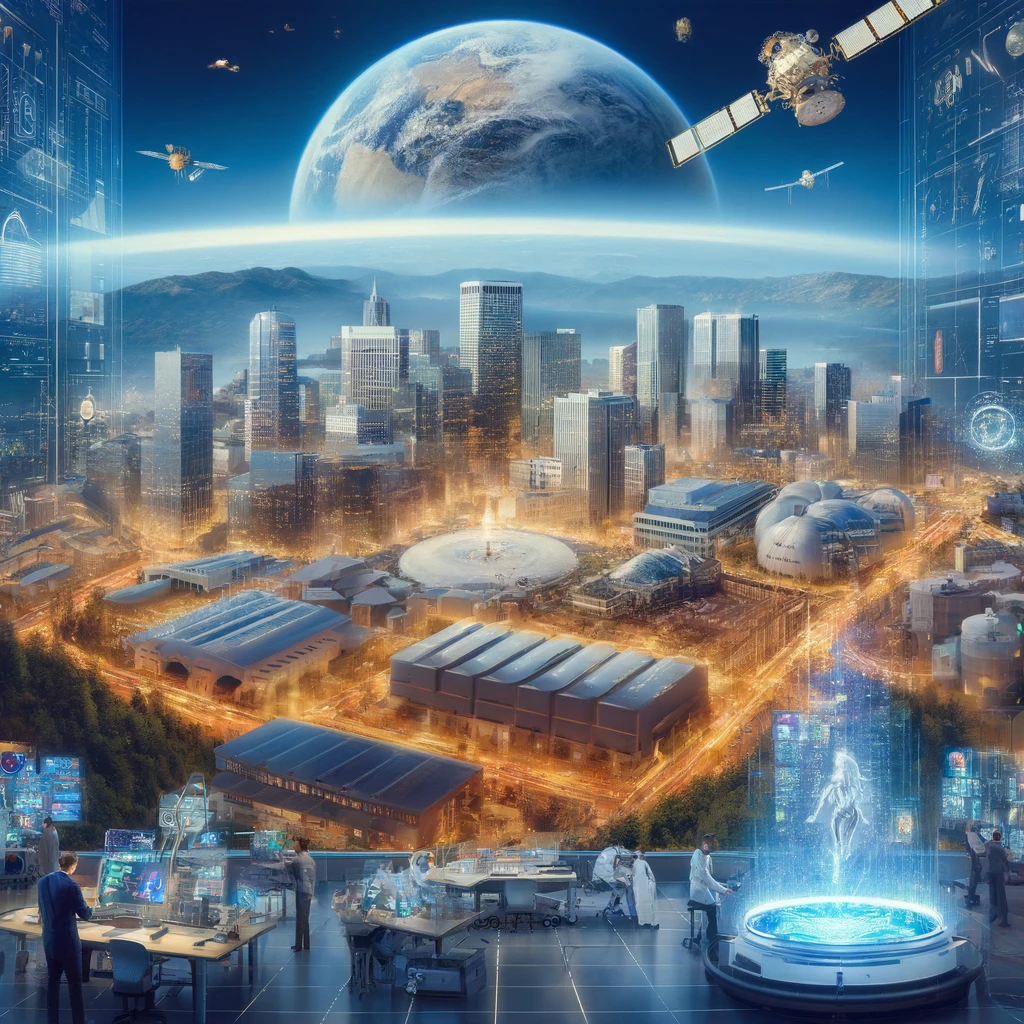
As Silicon Valley continues to lead in space technology, several emerging trends and future prospects are shaping its trajectory. These developments not only highlight the region’s capacity for innovation but also forecast the potential impacts on the broader economy and society.
1. Miniaturization of Satellites
One of the most significant trends in space tech is the miniaturization of satellites. Startups like Swarm Technologies are pioneering the development of small satellites, which are cheaper to build and launch. These small satellites can be used in constellations offering global coverage for internet access, improving connectivity in remote areas and developing countries.
2. Space Tourism
Space tourism represents a fascinating market opportunity, and Silicon Valley is at its forefront. Companies are exploring technologies that could make space travel accessible to civilians. While companies like Virgin Galactic are making headlines, several startups in Silicon Valley are quietly working on spacecraft designs, space suits, and the logistics systems required to make space tourism a reality.
3. Deep Space Exploration
Deep space exploration is another area where Silicon Valley startups are making significant strides. Companies are looking beyond our solar system, focusing on technologies that could enable missions to Mars and beyond. This includes developing sustainable life support systems and propulsion technologies that could reduce travel time to Mars.
4. Space-Based Manufacturing
The concept of manufacturing in space is also gaining traction. The microgravity environment provides unique conditions that can lead to better quality products in fields such as pharmaceuticals and materials science. Startups are exploring ways to exploit these conditions for commercial purposes, which could lead to a new era of manufacturing processes.
5. Asteroid Mining
Although still in its early stages, asteroid mining is a potential industry that could provide Earth with scarce materials. Silicon Valley startups are at the forefront of designing spacecraft capable of extracting resources from asteroids. This could lead to a dramatic shift in resource availability, impacting everything from electronics manufacturing to renewable energy technologies.
The Ecosystem’s Role in Supporting Innovation
Silicon Valley’s ecosystem is uniquely suited to support the growth of space tech startups. The presence of top-tier universities, research institutions, and a diverse talent pool provides a fertile ground for innovation. The collaborative culture of the Valley also means that ideas can be quickly tested, iterated, and scaled.
Ethical and Environmental Considerations
As space technology progresses, ethical and environmental considerations are increasingly coming to the forefront. Issues such as space debris, the potential militarization of space, and the environmental impact of rocket launches are being scrutinized. Silicon Valley companies are working on solutions to these problems, such as developing better debris tracking systems and more sustainable rocket technologies.
Conclusion
Silicon Valley’s venture into space tech is more than just a continuation of its legacy in computing and digital innovation; it represents a pivotal shift towards a future where space is within our reach. The region’s ability to innovate, combined with its entrepreneurial spirit, makes it a central player in the global space industry.
With each small satellite launch and each development in rocket technology, Silicon Valley is not just reaching for the stars but also paving the way for a new chapter in human history. The convergence of technology, ambition, and vision in this Californian tech hub continues to push the boundaries of what is possible, making space not just the final frontier, but the next great platform for human endeavor.
References:
- SpaceX: www.spacex.com
- Planet Labs: www.planet.com
- NASA Ames Research Center: www.nasa.gov/ames