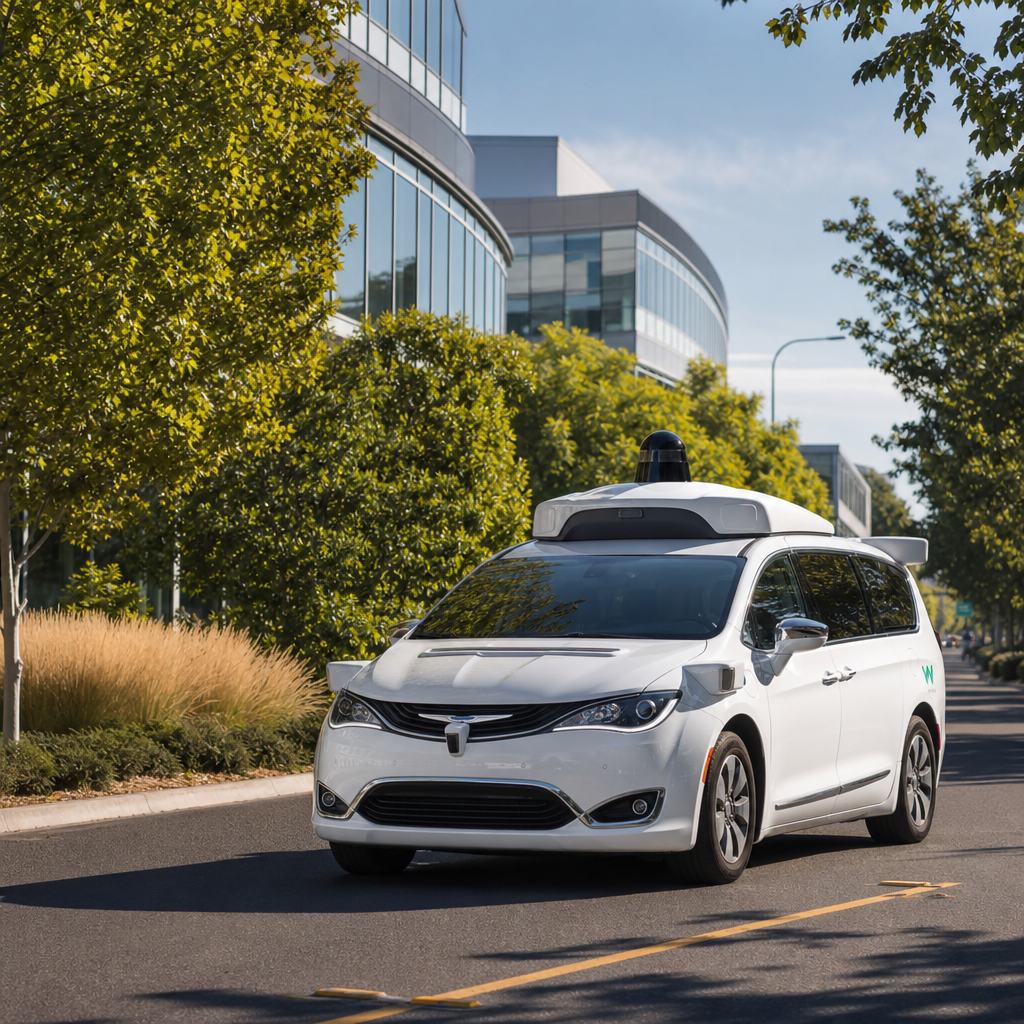
Autonomous vehicles are no longer a distant engineering experiment; in Silicon Valley, they have become a practical educational pathway that connects software, robotics, transportation policy, and workforce development. When I have worked with students, bootcamp graduates, and midcareer engineers exploring this field, the same question appears first: what should someone study to contribute to self-driving systems in a meaningful way? The answer starts with understanding what autonomous vehicles are. An autonomous vehicle, often shortened to AV, is a car, shuttle, truck, or delivery platform that uses sensors, machine learning, mapping, control systems, and safety engineering to perceive its environment and make driving decisions with limited or no human input. Silicon Valley matters because it combines research universities, startup ecosystems, advanced chip design, venture funding, testing programs, and employers such as Waymo, NVIDIA, Aurora, Zoox, and Applied Intuition within one regional network.
Educational tracks in Silicon Valley are not limited to four-year degrees. They include university programs in computer science, electrical engineering, and mechanical engineering; certificate programs in robotics and data science; community college transfer pathways; online specializations in machine learning and computer vision; and employer-aligned training in simulation, embedded systems, and vehicle safety validation. This matters for learners because AV work is interdisciplinary by design. A perception engineer may rely on linear algebra, Python, PyTorch, and sensor fusion. A motion planning specialist needs optimization, probability, and control theory. A safety engineer must understand ISO 26262, functional safety, scenario testing, and regulatory documentation. A product manager in AV education needs enough literacy across each area to align teams and communicate risk clearly.
For an educational resources hub, the central goal is empowerment through education: helping learners identify the right entry point, sequence skills logically, and connect study choices to real jobs. The strongest AV education paths do three things well. First, they build technical depth in mathematics, programming, and systems thinking. Second, they provide project-based proof, such as ROS prototypes, CARLA simulation experiments, or perception pipelines tested on open datasets like KITTI and nuScenes. Third, they expose learners to the realities of deployment, including edge cases, compute constraints, safety review, and public trust. Silicon Valley offers unusual density across all three. That makes it one of the best places to study autonomous vehicles, but it also means students need a clear map. This hub provides that map by organizing the main educational tracks, the skills behind them, and the practical decisions that shape career readiness.
Core academic pathways that lead into autonomous vehicle careers
The most established route into autonomous vehicle work is a university degree, but the right major depends on which part of the stack you want to own. Computer science is the most common starting point for perception, machine learning infrastructure, high-definition mapping software, and simulation platforms. Electrical engineering is especially relevant for sensor integration, signal processing, embedded systems, and compute architecture. Mechanical engineering remains crucial for vehicle dynamics, actuators, braking systems, and hardware validation. In Silicon Valley, Stanford and UC Berkeley are the most visible anchors, but Santa Clara University, San Jose State University, and Foothill-De Anza pathways also matter because they serve a broader learner base and often connect directly to local employers.
Students often ask which coursework matters most. In practice, the foundational sequence is consistent across institutions: calculus, linear algebra, probability, statistics, data structures, algorithms, and systems programming. After that, AV-specific depth usually comes from machine learning, computer vision, robotics, control systems, operating systems, and embedded design. If a student can explain Kalman filtering, trajectory planning, convolutional neural networks, localization, and real-time constraints in plain language, they are usually developing the right conceptual range. I have seen students with glamorous AI coursework struggle because they skipped systems fundamentals. AV hiring teams regularly screen for software quality, debugging ability, and computational tradeoffs, not just model accuracy on a benchmark.
Graduate study can be a major accelerator for specialized roles. A master’s degree in robotics, artificial intelligence, or transportation systems can provide access to faculty labs, autonomous driving datasets, industry-sponsored capstones, and research seminars. Stanford’s Center for Automotive Research and Berkeley’s long history in intelligent transportation systems have influenced generations of AV talent. However, graduate school is not automatically better than industry experience. For many students, the best decision is to pair a strong undergraduate foundation with internships, open-source work, and one serious portfolio project that demonstrates end-to-end thinking.
Alternative learning routes: bootcamps, certificates, community colleges, and online programs
Not every future AV professional needs a traditional degree from an elite institution. Silicon Valley’s education ecosystem supports career changers, working adults, and learners who need lower-cost entry points. Community colleges are especially important in this subtopic because they operationalize empowerment through education. They make introductory programming, calculus, physics, CAD, and electronics available at accessible tuition levels while preserving transfer options into four-year programs. Foothill College, De Anza College, and mission-driven California pathways help many students build enough confidence and competence to move into robotics labs or software internships they initially thought were out of reach.
Certificates and short-form programs work best when they solve a specific gap rather than promising complete job readiness in twelve weeks. For example, a software engineer moving into AV can benefit from a focused certificate in robotics, ROS, sensor fusion, or computer vision. A mechanical engineer can use an embedded systems or controls sequence to bridge into autonomy-adjacent work. Online learning has become credible when paired with artifacts. Courses from Stanford Online, Coursera, edX, Udacity, and NVIDIA’s Deep Learning Institute can be valuable, but completion alone means little. Recruiters respond to evidence: a localization notebook, a lane-detection pipeline, a CARLA scenario library, or a hardware-software integration demo documented clearly on GitHub.
| Educational track | Best for | Key strengths | Main limitation |
|---|---|---|---|
| University degree | Students seeking deep technical foundations | Strong math, theory, labs, internships, research access | Higher cost and longer timeline |
| Community college plus transfer | Cost-conscious learners building fundamentals | Affordable entry, flexible pacing, transfer pathways | Requires careful planning to align prerequisites |
| Bootcamp or certificate | Career changers with prior technical background | Fast skill targeting, portfolio-oriented projects | Often too shallow without existing foundations |
| Online specialization | Self-directed learners upgrading specific skills | Flexible schedule, strong niche content, low cost | Needs self-discipline and project proof |
The plain-language rule is simple: choose the shortest path that still gives you durable fundamentals. In AV, weak fundamentals are expensive because the field sits at the intersection of safety-critical software and unpredictable real-world environments. Education should reduce risk, not just speed up credential collection.
Skills and tools every autonomous vehicle learner should master
No matter which educational track a learner chooses, several skill clusters appear repeatedly across Silicon Valley hiring and project work. Programming remains first. Python is widely used for machine learning, prototyping, and data tooling. C++ is central for performance-critical robotics and production systems. SQL, Linux, Git, and cloud workflows are increasingly expected because AV teams process enormous logs, simulation outputs, and annotation pipelines. Learners should also understand ROS or ROS 2 because it provides a practical framework for integrating sensors, messaging, nodes, and robot behavior, even though many production stacks use custom internal platforms.
Mathematics is not optional. Linear algebra supports transformations, projections, and neural networks. Probability and statistics support uncertainty estimation, Bayesian reasoning, and evaluation. Optimization appears in planning and control. Differential equations and classical mechanics remain useful for vehicle dynamics. The best students do not memorize formulas in isolation; they connect them to system behavior. For example, they understand why localization drifts, why radar and lidar complement cameras, and why a controller that looks stable in simulation can oscillate on a physical platform due to latency or actuator limits.
Tool familiarity also signals readiness. CARLA and LGSVL-style simulators help learners generate scenarios before touching hardware. OpenCV remains relevant for image processing fundamentals even in deep learning-heavy stacks. TensorFlow and PyTorch matter for model development, while CUDA literacy can distinguish candidates working close to high-performance inference. Data labeling platforms, MLOps concepts, and test automation are equally important because autonomous driving success depends on data operations and verification discipline, not just clever models. Learners who can frame metrics such as precision, recall, latency, false positives, disengagement triggers, and scenario coverage stand out because they think like practitioners rather than course takers.
From classroom to career: internships, research labs, and portfolio strategy
Education becomes empowering when it leads to mobility, and in Silicon Valley that usually means converting study into experience. Internships are the most direct bridge. AV companies, mapping firms, simulation vendors, and semiconductor companies all hire students into autonomy-adjacent teams. NVIDIA, for example, offers exposure to accelerated computing, perception models, and automotive platforms. Applied Intuition gives learners insight into simulation and validation tooling. University labs can be equally valuable, especially for students who need a first signal on their résumé. A lab role that involves sensor calibration, annotation review, or path planning experiments can teach more than an unfocused online course.
Portfolio strategy should be intentional. One strong project beats five shallow ones. A useful AV portfolio project defines a problem, names the dataset or simulator, explains the architecture, reports metrics, discusses failure cases, and reflects on tradeoffs. For instance, a student might compare monocular lane detection with a multimodal perception setup, then explain why weather, glare, or occlusion degrades performance. Another might build a path planner in CARLA and document how different cost functions affect comfort and safety. This level of explanation demonstrates judgment, which employers trust more than polished buzzwords.
Networking also matters, but not in the vague transactional sense. Meetups, robotics clubs, hackathons, faculty office hours, open-source communities, and alumni networks give learners access to practical advice about hiring bars, tool choices, and local opportunities. In my experience, the most useful conversations are specific: ask which skills are missing from entry-level candidates, which courses actually helped on the job, and which mistakes delayed progress. Those answers often reshape an education plan faster than another generic certification.
Safety, ethics, and public policy as essential parts of AV education
An autonomous vehicle education is incomplete if it ignores safety, ethics, and regulation. Silicon Valley’s strongest programs increasingly recognize this because AV systems operate in public space, where mistakes can harm people and erode trust. Learners should understand functional safety principles, safety case thinking, cybersecurity basics, and the difference between demonstrating a prototype and proving operational readiness. Standards such as ISO 26262 influence automotive safety engineering, while scenario-based testing, hazard analysis, and driver monitoring discussions shape product decisions. California’s permitting and testing environment also makes policy literacy practical, not abstract.
Ethics enters at multiple levels: dataset bias, pedestrian detection performance, accessibility, labor displacement, and how companies communicate system limitations. Educational tracks that include human factors, urban mobility, and transportation equity produce stronger professionals because they widen the frame beyond code. A technically brilliant model that performs poorly on underrepresented road users is not a success. Neither is an interface that encourages overtrust. Empowering through education means preparing learners to ask harder questions about responsibility, accountability, and real-world impact.
For students and career changers, the clearest takeaway is that autonomous vehicles reward structured learning, not random content consumption. Start with foundations, choose a track that matches your resources, build projects that prove applied competence, and study safety as seriously as software. Silicon Valley offers unmatched access to universities, labs, startups, and employers, but opportunity compounds only when education is deliberate. Use this hub as your starting point, then map the next course, project, internship, or transfer step that moves you closer to meaningful work in autonomous vehicles.
Frequently Asked Questions
What should someone study to build a meaningful career in autonomous vehicles in Silicon Valley?
A strong path into autonomous vehicles usually begins with a mix of core technical foundations and applied systems thinking. In practice, that means studying computer science, robotics, electrical engineering, mechanical engineering, data science, or a closely related field. The most useful academic preparation often includes programming in Python and C++, linear algebra, calculus, probability, statistics, control systems, computer vision, machine learning, sensor fusion, and embedded systems. Autonomous vehicles are not built by one specialty alone, so students who understand how software, hardware, and real-world operating conditions work together tend to stand out.
In Silicon Valley, educational tracks are especially valuable when they connect theory to deployment. A student may begin with coursework in algorithms and robotics, then move into labs or projects involving LiDAR, radar, cameras, localization, mapping, simulation, and planning. It also helps to study how autonomous systems make decisions under uncertainty. That includes topics such as perception pipelines, path planning, motion control, safety validation, and human-machine interaction. Even students who do not plan to become machine learning researchers benefit from understanding how models are trained, tested, and monitored in safety-critical environments.
Just as important, the field increasingly rewards interdisciplinary learning. Transportation policy, ethics, cybersecurity, human factors, and regulatory compliance all matter because self-driving systems operate in public environments. Someone interested in fleet operations or product strategy may combine technical coursework with policy, urban mobility, or operations research. Someone aiming for a software engineering role may focus more heavily on real-time systems, AI, and robotics integration. In short, the best educational route is not one narrow major, but a structured pathway that builds fundamentals, hands-on project experience, and an understanding of how autonomous vehicles function as complete systems.
Do you need an advanced degree to work in autonomous vehicle development, or can certifications and bootcamps be enough?
You do not always need a master’s or PhD to enter the autonomous vehicle field, but the right level of education depends on the role you want. Research-heavy positions in machine learning, perception, robotics, and advanced controls often favor candidates with graduate degrees because these jobs may involve publishing, designing novel models, or solving highly specialized technical problems. If you want to work on neural network architecture, localization research, simulation science, or autonomous decision-making at a deep technical level, advanced study can be a major advantage.
That said, many valuable roles are accessible through applied training, especially when candidates can demonstrate real skills. Bootcamps, professional certificates, online specializations, and intensive robotics or AI programs can help learners transition into software engineering, test engineering, simulation support, data annotation operations, systems integration, quality assurance, DevOps, or technical program roles connected to autonomous vehicles. In Silicon Valley, employers often pay close attention to what you can build, debug, and explain. A portfolio with sensor-processing projects, simulation work, ROS-based robotics experience, or machine learning implementations can sometimes carry more weight than the name of a degree program alone.
The strongest candidates usually combine credentials with evidence of execution. That might include GitHub repositories, capstone projects, internships, competition work, open-source contributions, or practical experience in adjacent industries like aerospace, mobility, manufacturing automation, or advanced driver-assistance systems. For career changers, a smart approach is to identify the function they want to enter first, then choose training that maps directly to it. A future perception engineer and a future fleet operations analyst should not follow the same educational plan. Advanced degrees matter in some tracks, but focused skill development, project depth, and clarity about your target role can absolutely open doors.
Which technical skills are most important for students and professionals entering the self-driving vehicle ecosystem?
The most important technical skills depend on the role, but several capabilities consistently appear across the self-driving ecosystem. Programming is essential, especially in Python and C++, because these languages are common in machine learning workflows, robotics systems, and high-performance software. Strong understanding of data structures, algorithms, software engineering practices, version control, testing, and debugging is equally important. Autonomous vehicles are built by teams that need reliable, maintainable systems, so good engineering discipline matters as much as clever code.
Beyond software basics, autonomous vehicle work often revolves around a few major technical domains. Perception involves computer vision, deep learning, sensor calibration, and interpreting data from cameras, radar, and LiDAR. Localization and mapping require familiarity with probabilistic methods, SLAM concepts, geospatial reasoning, and state estimation. Planning and control rely on optimization, kinematics, dynamics, trajectory generation, and feedback control. Simulation and validation require experience with virtual testing environments, scenario generation, performance metrics, and safety evaluation. Cloud infrastructure and MLOps are also becoming more relevant because autonomous systems generate enormous volumes of data that must be processed, labeled, retrained, and monitored.
There are also practical platform skills that employers value. Experience with ROS or ROS 2, Linux environments, containerization, distributed systems, embedded computing, and real-time constraints can make a candidate much more effective. For students in Silicon Valley, the best preparation is often to pick one specialization while still understanding the full stack. For example, you might focus deeply on perception, but still learn enough about planning, controls, and simulation to collaborate intelligently across teams. Employers appreciate people who can contribute in a defined area while also understanding how their work affects overall safety and vehicle behavior.
How can students and career changers in Silicon Valley gain hands-on experience in autonomous vehicles before getting hired?
Hands-on experience is one of the most important differentiators in this field, especially because autonomous vehicles combine complex theory with difficult real-world implementation. Students can start by building projects that demonstrate robotics and AI concepts in action. That could include lane detection systems, object detection models, miniature autonomous car platforms, sensor fusion demos, path-planning simulations, or ROS-based robotic navigation projects. These projects do not need to replicate a full self-driving stack to be impressive; what matters is that they show technical judgment, structured experimentation, and the ability to explain tradeoffs clearly.
In Silicon Valley, learners should also take advantage of the surrounding ecosystem. University labs, startup internships, mobility innovation groups, hackathons, research assistantships, and industry meetups can all provide meaningful exposure. Many candidates underestimate the value of adjacent experience. Working in advanced driver-assistance systems, robotics, drones, warehouse automation, digital mapping, automotive cybersecurity, or simulation tooling can create a strong bridge into autonomous vehicles. The industry cares about transferable skills, especially in perception, controls, testing, and systems integration.
Career changers often benefit from a targeted portfolio strategy. Instead of trying to learn everything at once, choose a role category and build evidence around it. If you want to move into simulation, create scenario-based testing workflows and show how you evaluate system behavior. If you want to enter machine learning, document your data pipeline, model training decisions, and performance evaluation. If you want to work in systems or reliability, demonstrate logging, diagnostics, and failure analysis. Hiring managers respond well to candidates who show focused effort, technical maturity, and an understanding of safety-critical development. Internships are helpful, but thoughtful public projects, open-source collaboration, and technically rigorous case studies can also be powerful signals.
What makes Silicon Valley a distinctive place to study autonomous vehicles compared with other regions?
Silicon Valley stands out because it offers more than academic coursework; it provides a dense, interconnected environment where education, experimentation, investment, and industry practice reinforce one another. Students and professionals in the region are exposed not only to university research and technical training, but also to startups, established technology companies, AI labs, chipmakers, robotics firms, mobility platforms, and policy discussions shaping the future of transportation. That concentration creates a learning environment where ideas move quickly from classroom concepts to prototypes, pilot programs, and operational systems.
Another major advantage is the region’s interdisciplinary culture. Autonomous vehicles sit at the intersection of software engineering, robotics, infrastructure, public safety, law, ethics, and labor transformation. Silicon Valley’s educational pathways often reflect that reality. A learner may study machine learning and control systems while also engaging with entrepreneurship, transportation policy, human-centered design, and regulatory strategy. This matters because the most successful professionals in autonomous mobility understand not only how to build systems, but also how those systems are deployed, governed, tested, and adopted.
Silicon Valley also offers strong networking and workforce development opportunities. Students can hear directly from engineers building perception stacks, safety leaders working on validation frameworks, and founders thinking about logistics, robotaxis, delivery systems, or industrial autonomy. That level of proximity helps learners understand how roles differ across companies and where their own skills fit best. It also supports faster career pivots for midcareer engineers and bootcamp graduates, who can connect learning with real market needs. In practical terms, Silicon Valley remains distinctive because it turns autonomous vehicles from an abstract topic into a visible, evolving career pathway with direct access to education, mentorship, experimentation, and employment.