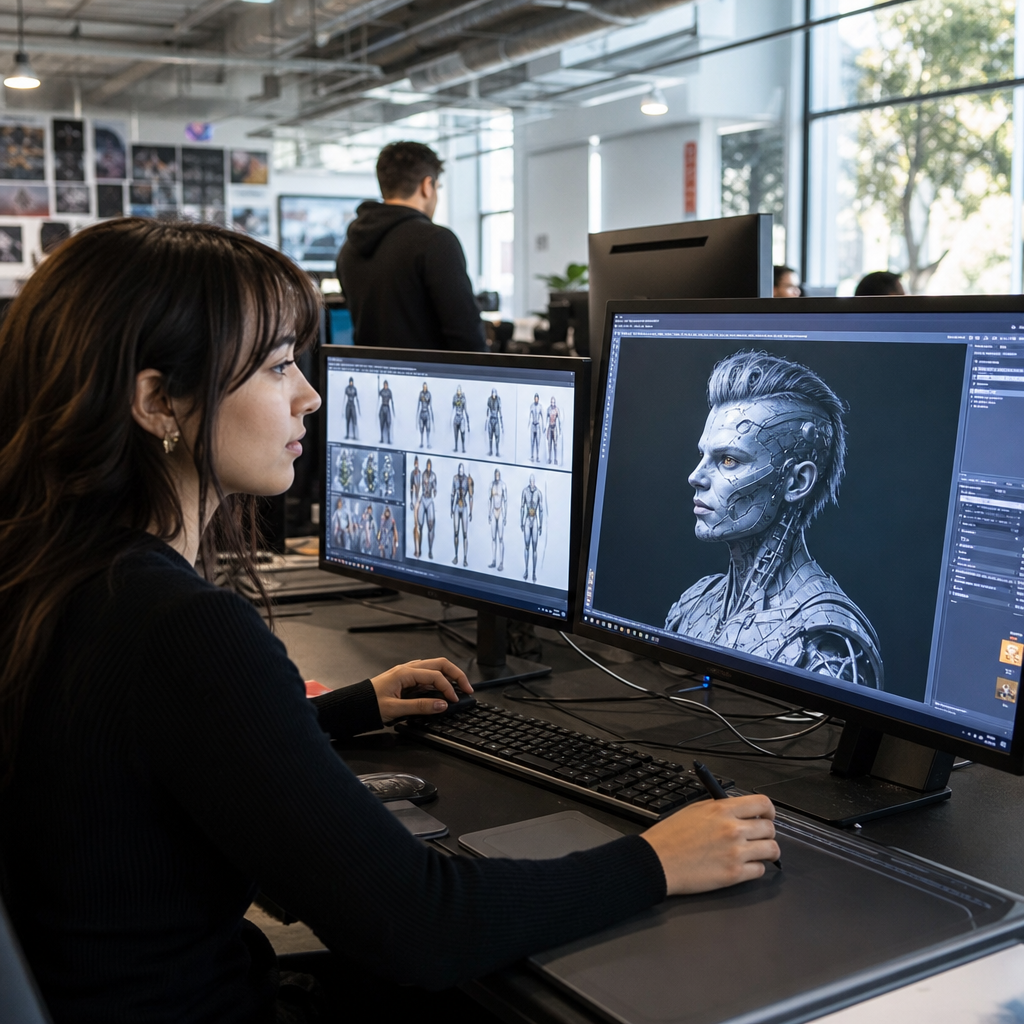
Silicon Valley’s digital arts and media education sits at the intersection of creativity, technology, and workforce development, making it one of the most influential learning ecosystems in the United States. In this context, digital arts and media education means structured learning in fields such as animation, graphic design, game art, video production, UX design, interactive storytelling, audio engineering, and digital marketing content. Silicon Valley adds a distinctive layer: students learn near the companies, startups, studios, and research labs that define the tools and platforms used globally. I have worked with educators, bootcamps, and creative teams across the region, and the strongest programs share one principle: they teach students how to make things that work in the real world, not just how to complete assignments. That practical focus matters because employers increasingly want portfolios, collaborative experience, and fluency with industry-standard software as much as they want credentials.
This hub on empowering through education explains how the region builds creative capability from K–12 exposure to university research, certificate programs, community colleges, and career-switch pathways. It also clarifies why digital arts education is not a niche pursuit. The U.S. Bureau of Labor Statistics projects continued demand across media, web, and design-related occupations, while adjacent fields such as product design and digital communications keep expanding as organizations publish more visual content. In Silicon Valley, that demand is amplified by technology firms that need brand designers, motion graphics artists, video teams, 3D specialists, and user interface designers. Education here therefore serves two purposes at once: personal expression and economic mobility. For families, students, educators, and career changers, understanding the regional landscape helps them choose programs, build relevant skills, and connect learning directly to opportunity.
The Silicon Valley model: where arts education meets the innovation economy
What makes Silicon Valley’s digital arts and media education different is proximity to the innovation economy. In many regions, arts programs are shaped mainly by academic tradition or local cultural institutions. In Silicon Valley, curricula are also influenced by software releases, platform shifts, startup hiring needs, and collaborative product development. A student learning motion design may study typography and cinematic timing while also producing app launch videos for mobile screens. A UX student may combine visual hierarchy, accessibility standards, and user research with Figma prototypes tested on actual devices. This blend of artistic practice and technical application gives students a measurable advantage when they apply for internships and entry-level jobs.
Regional institutions reflect that mix. Stanford’s d.school has helped normalize interdisciplinary project-based learning. San José State University has long connected design, animation, and film pathways to Bay Area employers. De Anza College and Foothill College offer accessible transfer and career education routes for students who need lower-cost entry points. Specialized programs, nonprofit workshops, maker spaces, and youth media labs complement formal education by giving learners access to editing suites, cameras, fabrication tools, and mentorship. The result is not one single system but a layered network. Students can move from school media clubs to community college certificates, then to university programs, contract work, or startup roles without leaving the regional ecosystem.
Core disciplines students can pursue
Digital arts and media is an umbrella term, and that matters because students often benefit from understanding the distinct paths inside it. In Silicon Valley, the major educational tracks usually include graphic design, UX and UI design, animation and motion graphics, video production, game design, digital photography, sound design, web content creation, and immersive media such as AR and VR. Each path combines creative judgment with tool proficiency. For example, graphic design students need command of layout, color theory, branding systems, and Adobe Creative Cloud applications such as Illustrator, Photoshop, and InDesign. UX students need wireframing, information architecture, usability testing, and accessibility knowledge, often using Figma, Miro, or Adobe XD.
Animation and game art programs frequently add 3D pipelines, character design, rigging, rendering, and engine workflows through Maya, Blender, Unity, or Unreal Engine. Video programs teach camera operation, lighting, editing, sound capture, and distribution strategy through tools such as Premiere Pro, DaVinci Resolve, and After Effects. Audio-focused learners work with Pro Tools, Logic Pro, and field recording equipment. Strong programs do not isolate software from fundamentals. They teach students why a design works, how a shot supports a narrative, what compression does to image quality, and how platform context changes audience behavior. That depth is what turns software familiarity into professional capability.
How empowering education is delivered across pathways
Empowering through education means expanding access, agency, and career relevance. In Silicon Valley, that happens through several pathways that serve different learners. K–12 programs introduce media literacy, coding for artists, digital storytelling, and maker-centered projects that reduce the intimidation factor early. Community colleges provide affordable on-ramps, often with strong transfer articulation and practical certificates. Universities add research, theory, and advanced studio work. Bootcamps and continuing education programs help working adults reskill quickly. Nonprofits fill gaps by lending equipment, offering scholarships, and supporting underrepresented students, including first-generation learners and youth from lower-income districts.
| Pathway | Typical Learner | Main Strength | Common Outcome |
|---|---|---|---|
| K–12 media programs | Exploring students | Early exposure and confidence | Portfolio seeds and interest development |
| Community college | Cost-conscious or transfer students | Affordable technical foundations | Certificates, transfer, entry-level roles |
| University | Degree-seeking students | Depth, networks, interdisciplinary study | Internships, research, advanced careers |
| Bootcamp or extension | Career changers | Speed and applied workflows | Rapid reskilling and portfolio refresh |
| Nonprofit workshop | Underserved learners | Access, mentorship, equipment | Skill building and broader participation |
When these pathways are coordinated well, students are not forced into a single expensive route. They can stack skills over time, which is especially important in expensive regions where learners may need to work while studying. In practice, I have seen students begin with free youth video workshops, move into community college editing classes, then land freelance production work before completing a bachelor’s degree. That flexibility is a genuine form of empowerment because it makes creative education more attainable and less fragile.
Skills, portfolios, and industry expectations
Employers in Silicon Valley consistently evaluate digital arts candidates on evidence of execution. A degree can open doors, but a portfolio closes the gap between claim and competence. The strongest educational programs therefore organize learning around portfolio artifacts: branding systems, prototype flows, motion reels, documentaries, 3D renders, campaign assets, and collaborative capstones. Hiring managers want to see problem solving, not just aesthetics. A UX portfolio should explain the user problem, constraints, research method, iteration process, and final outcome. A video reel should show story structure, editing rhythm, sound quality, and visual consistency. A game art portfolio should reveal topology awareness, texturing, lighting, and engine integration.
Industry expectations also include communication, feedback handling, and production discipline. Version control, file naming conventions, handoff documentation, copyright awareness, and deadline management are not glamorous topics, but they are decisive in team environments. Programs that simulate studio conditions prepare students better than those centered only on isolated assignments. Real-world briefs, client presentations, critique sessions, and internship experiences teach learners how to explain choices to non-design stakeholders. In Silicon Valley, where designers often work alongside engineers, product managers, and marketers, this translation skill is essential. It is one reason multidisciplinary programs often outperform narrowly technical ones in graduate outcomes.
Access, equity, and the real barriers students face
For all its opportunity, Silicon Valley also presents barriers that can limit who participates in digital arts and media education. Cost of living is the largest structural challenge. Tuition, software subscriptions, hardware requirements, transportation, and unpaid internship expectations can make creative pathways feel inaccessible. A capable student may need a laptop powerful enough for video editing or 3D rendering, plus storage drives, camera access, or reliable broadband. These are not minor expenses. Schools that provide labs, loaner equipment, Adobe campus licenses, and emergency aid materially improve outcomes because they reduce dropout risk tied to financial strain.
Equity also depends on representation and advising. Students from underrepresented backgrounds often need clear information about careers, wages, transfer routes, and scholarship options before they can justify pursuing creative fields. Families may support education in general but remain skeptical of media careers if pathways are vague. Effective institutions answer that concern directly with employer panels, alumni case studies, paid internships, and transparent placement data. Accessibility standards matter too. Programs should teach inclusive design, captioning, readable contrast, keyboard navigation, and disability-aware user testing while also making classrooms and digital tools accessible. Empowerment is incomplete if only well-resourced students can participate fully or see themselves reflected in the field.
How this hub supports deeper learning and next steps
As a hub under Educational Resources, this page is designed to connect readers to the full picture of empowering through education in Silicon Valley’s creative economy. The central takeaway is simple: effective digital arts and media education combines fundamentals, industry tools, portfolio development, and accessible pathways. Students need more than inspiration. They need structured practice, mentors, equipment access, critique, and a realistic map from classroom work to paid opportunity. Silicon Valley provides a powerful environment for that journey because technology companies, colleges, nonprofits, and independent creators all contribute to a dense learning network.
If you are choosing a program, compare curriculum depth, software access, faculty experience, internship links, and portfolio expectations before you enroll. If you are an educator or parent, look for pathways that begin early, stay affordable, and make career outcomes visible. If you are a career changer, prioritize programs that teach current workflows and produce employer-ready samples. Explore the related articles in this subtopic to go deeper into schools, career pathways, tools, affordability, and student support. The right education does more than teach creative software; it equips people to create, communicate, and thrive in one of the world’s most dynamic digital media regions.
Frequently Asked Questions
What makes Silicon Valley’s digital arts and media education different from programs in other regions?
Silicon Valley’s digital arts and media education stands out because it is shaped by an environment where creative practice and emerging technology constantly influence one another. In many places, students can study animation, design, video production, or game art as standalone disciplines. In Silicon Valley, those same fields are often taught alongside user experience thinking, product development, software tools, entrepreneurship, and real-world collaboration. That means students are not only learning how to create compelling visual and media content, but also how that content functions inside apps, platforms, games, digital campaigns, and interactive products.
Another important difference is proximity to industries that actively use digital media at scale. Students are often exposed to workflows and expectations influenced by technology companies, startups, creative agencies, gaming studios, streaming media, and digital marketing teams. This can lead to curriculum that emphasizes portfolio development, cross-disciplinary teamwork, agile production methods, and familiarity with industry-standard software and platforms. Instead of learning in a purely theoretical setting, students frequently explore how storytelling, branding, interaction design, motion graphics, and media production operate in professional environments where speed, adaptability, and innovation matter.
Silicon Valley also encourages a mindset that blends creativity with problem-solving. A student in a digital arts or media program may be asked not just to make something visually impressive, but to think about audience behavior, accessibility, usability, engagement metrics, and platform-specific performance. This broader perspective prepares graduates for careers that demand both artistic skill and strategic thinking. As a result, the region’s educational ecosystem is especially influential because it mirrors the modern digital economy, where creators are expected to understand tools, narratives, users, and technology all at once.
What subjects are typically included in digital arts and media education in Silicon Valley?
Digital arts and media education in Silicon Valley usually covers a wide spectrum of creative and technical subjects, reflecting how interconnected the field has become. Core areas often include animation, graphic design, illustration, video production, editing, motion graphics, photography, game art, sound design, audio engineering, web design, and user experience design. Many programs also include interactive storytelling, interface design, digital publishing, branding, content creation, and digital marketing media, because modern communication increasingly happens across screens, platforms, and immersive environments.
In addition to creative coursework, students often study the tools and systems that support professional production. This may include Adobe Creative Cloud applications, 3D modeling software, prototyping platforms, audio workstations, game engines, camera and lighting techniques, and collaborative digital workflows. Depending on the program, students may also be introduced to coding basics, front-end design principles, motion systems, data-informed design, or interactive media development. These technical layers are especially relevant in Silicon Valley, where the ability to work across design and technology is highly valued.
Many programs also emphasize concept development, storytelling, critique, and portfolio building. That matters because success in digital arts is not just about mastering software; it also depends on original thinking, communication skills, and the ability to explain creative decisions clearly. Students may complete project-based assignments that simulate client work, startup environments, or product team collaboration. This kind of well-rounded curriculum helps prepare learners for varied roles, from animator and visual designer to content producer, UX designer, multimedia specialist, and creative strategist.
How does Silicon Valley’s digital arts and media education support career preparation and workforce development?
Career preparation is one of the defining strengths of digital arts and media education in Silicon Valley. Because the region is deeply connected to technology, entrepreneurship, and creative production, many educational pathways are designed with employment outcomes in mind. Programs commonly focus on practical skill building, project-based learning, portfolio creation, and familiarity with the tools and workflows used by employers. This helps students graduate with work samples that demonstrate not only artistic ability but also their readiness to contribute in professional settings.
Workforce development is supported in several ways. First, students often learn how to collaborate across disciplines, which is essential in modern media and tech environments. A digital artist may need to work with marketers, developers, product managers, editors, sound specialists, or UX researchers. Learning how to function within these teams gives students a realistic understanding of workplace expectations. Second, many programs highlight industry relevance by teaching current software, design systems, production standards, and content strategies. This reduces the gap between classroom learning and job performance.
Silicon Valley’s ecosystem also reinforces the importance of adaptability. Digital media careers change quickly as platforms, tools, and audience habits evolve. Strong programs prepare students not just for their first job, but for long-term growth through creative problem-solving, continuous learning, and comfort with emerging technologies. Internships, mentorship, freelance opportunities, client-based assignments, and networking events can further strengthen employability. Altogether, this approach supports workforce development by producing graduates who are technically capable, creatively confident, and prepared to work in industries where media, design, and digital innovation are central to business success.
What kinds of careers can students pursue after studying digital arts and media in Silicon Valley?
Students who complete digital arts and media education in Silicon Valley can pursue a broad range of careers because the training often combines visual communication, storytelling, technical production, and platform awareness. Common pathways include graphic designer, motion designer, animator, video editor, cinematographer, multimedia producer, content creator, UX designer, UI designer, game artist, digital illustrator, audio producer, and brand designer. These roles can exist in technology companies, entertainment firms, startups, agencies, nonprofits, educational organizations, and independent creative businesses.
One of the biggest advantages of studying in this environment is that career options are not limited to traditional arts roles. A student with strengths in storytelling and interface design might move into product design. Someone with experience in video production and analytics may thrive in digital marketing or social media strategy. A learner focused on 3D design and immersive media could explore gaming, simulation, AR, or VR-related work. Silicon Valley’s market values people who can translate ideas into engaging digital experiences, so graduates often find opportunities in hybrid roles that blend creativity, communication, and technology.
Freelance and entrepreneurial paths are also realistic outcomes. Many digital artists and media professionals build independent careers creating branded content, editing video, producing podcasts, designing visual identities, or developing digital products for clients. In Silicon Valley especially, there is strong appreciation for creators who can think like both artists and builders. That means students may use their education not only to enter existing companies, but also to launch studios, consult independently, or contribute to startup ventures. The range of outcomes is part of what makes this field so dynamic and attractive.
Who is a good fit for a digital arts and media education program in Silicon Valley?
A good fit for digital arts and media education in Silicon Valley is someone who is both creative and curious about how media works in digital environments. Students who enjoy drawing, storytelling, design, editing, photography, sound, gaming, or visual communication often do well, but pure artistic interest alone is not the only indicator of success. The strongest candidates are usually open to experimentation, feedback, collaboration, and learning new tools. Because the field evolves constantly, a willingness to adapt is just as important as existing talent.
These programs are especially well suited for learners who want their creative skills to connect with real-world applications. For example, a student may love illustration but also be interested in branding, app interfaces, animation pipelines, or social media campaigns. Another may be drawn to video production but also want to understand audience engagement, platform formats, and digital distribution. Silicon Valley’s educational model often rewards students who can think beyond a single medium and see how design, content, and technology work together to shape experiences.
It is also a strong path for career changers and interdisciplinary learners. Someone coming from marketing, communications, computer science, fine arts, or education may find that digital media training opens new professional directions. The field welcomes a variety of backgrounds because employers increasingly need people who can combine creativity with strategy and technical fluency. In short, a good fit is anyone ready to develop both artistic voice and practical digital skills in a setting that values innovation, collaboration, and relevance to today’s media-driven economy.