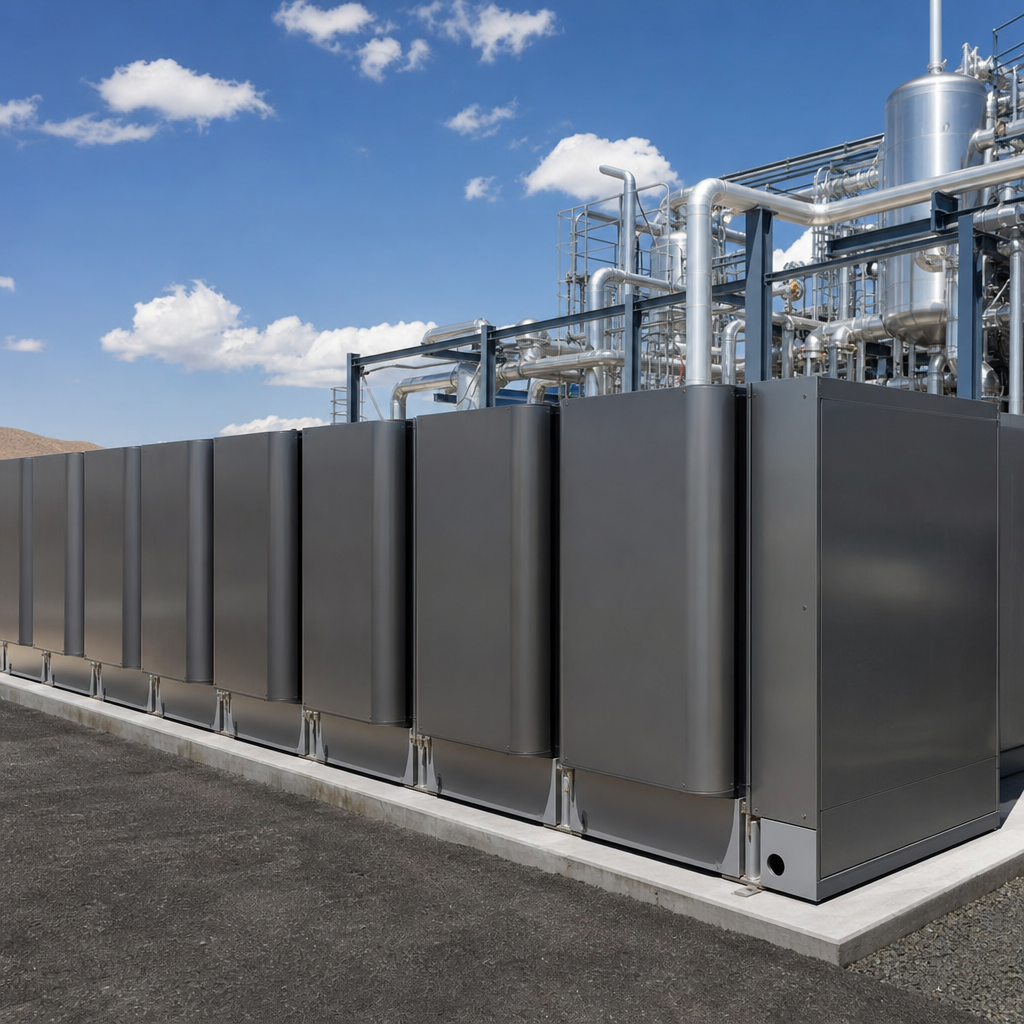
Bloom Energy has become one of the most closely watched companies in clean power because it sits at the intersection of reliability, decarbonization, and distributed energy. Within the broader Company Spotlights category, this Movers and Shakers hub examines why Bloom Energy matters, what its technology actually does, and how its business model reflects larger changes in electricity markets. In practical terms, Bloom Energy designs and deploys solid oxide fuel cell systems that generate electricity on-site, often for data centers, hospitals, manufacturers, utilities, and other organizations that cannot tolerate outages. The company also builds electrolyzer systems for hydrogen production, positioning itself in both cleaner power generation and future low-carbon fuel infrastructure.
Understanding Bloom Energy starts with a few key terms. A fuel cell is an electrochemical device that converts fuel into electricity without combustion. Bloom’s core platform uses solid oxide fuel cells, which operate at high temperatures and can run on natural gas, biogas, hydrogen blends, and, with the right configuration, pure hydrogen. Distributed energy means generation located near where power is consumed rather than at a distant centralized plant. Resilience refers to the ability to maintain operations during grid disruptions. These concepts matter because businesses increasingly need power that is cleaner than diesel backup, steadier than an aging grid, and faster to deploy than large utility infrastructure. I have worked with organizations evaluating on-site generation, and Bloom repeatedly enters the shortlist when uptime, emissions trajectory, and footprint all matter at once.
The reason Bloom Energy draws attention from investors, operators, and policy analysts is simple: electricity demand is rising while grid constraints are becoming more visible. Artificial intelligence data centers, semiconductor plants, electrified industrial processes, and climate-driven weather extremes all put pressure on conventional supply. In that environment, a company that can provide modular, dispatchable, lower-emission on-site power earns a serious hearing. This hub article sets the foundation for deeper coverage across the Movers and Shakers subtopic by explaining Bloom’s technology, market position, competitive advantages, financial story, and the risks that shape its future.
What Bloom Energy Makes and How the Technology Works
Bloom Energy’s flagship product is the Bloom Energy Server, a modular power platform built around solid oxide fuel cells. Unlike combustion turbines or diesel generators, these systems produce electricity through an electrochemical reaction. That matters because electrochemical conversion can achieve high electrical efficiency while reducing certain pollutants associated with combustion, especially nitrogen oxides, sulfur oxides, and particulate matter. The cells use a ceramic electrolyte and operate at high temperatures, which allows internal reforming of fuels such as natural gas. In plain language, the system can convert commonly available fuel into electricity on-site with fewer moving parts than many conventional generators.
From an operator’s perspective, the practical appeal is straightforward. The units are modular, can be sited close to demand, and are designed for continuous operation. Customers often use them to supply baseload power, support microgrids, or strengthen critical facilities against outages. Bloom has also developed Bloom Electrolyzer systems that use solid oxide technology in reverse to produce hydrogen more efficiently under certain operating conditions. This dual capability matters strategically. It means the company is not only selling today’s resilient power systems but also investing in technologies tied to future hydrogen economies.
A useful way to understand Bloom is to compare it with adjacent options businesses consider when evaluating reliable clean energy infrastructure.
| Option | Primary Strength | Main Limitation | Best Fit |
|---|---|---|---|
| Bloom Energy fuel cells | High uptime, on-site generation, lower local pollutants | Fuel supply needed, capital cost can be significant | Critical facilities needing continuous resilient power |
| Diesel backup generators | Familiar technology, strong backup role | High emissions, noise, usually not ideal for continuous use | Emergency standby applications |
| Solar plus battery storage | Low operating emissions, good peak shaving | Intermittent generation, storage duration limits | Sites with daytime load and favorable economics |
| Utility grid only | No on-site generation complexity | Exposure to outages, congestion, tariff volatility | Locations with strong grid reliability |
Why Bloom Energy Stands Out in the Clean Energy Market
Bloom Energy stands out because it addresses a hard problem that many clean technologies only partly solve: how to deliver cleaner electricity that is also firm and available around the clock. Wind and solar are essential parts of decarbonization, but they are variable resources. Batteries help, yet duration and economics remain site-specific. Bloom’s systems fill a different role. They provide dispatchable power on-site and can reduce dependence on a stressed transmission network. For data centers, where downtime can cost millions, that value proposition is concrete rather than theoretical.
The company also benefits from the trend toward energy localization. Large customers increasingly want control over cost, reliability, and emissions rather than leaving those outcomes entirely to utilities. In recent years, Bloom has announced deployments with major technology firms, healthcare systems, and industrial operators. These are not symbolic pilot projects. They are operating assets serving mission-critical loads. Bloom’s relevance rose further as utilities and regulators began confronting interconnection backlogs and multi-year timelines for new grid capacity. A modular system installed at the customer site can sometimes move faster than waiting for transmission upgrades.
Another reason Bloom receives attention is that its technology can align with a transitional decarbonization pathway. Many customers begin with natural gas because it is available and because the fuel cell platform is more efficient than some alternatives. Over time, renewable natural gas, biogas, or hydrogen blends can improve the carbon profile. That flexibility does not make the technology emissions-free today, and it is important to be clear about that. But it does give customers a practical route to lower emissions while preserving operational continuity. In energy planning, feasible transition paths often win over idealized solutions that cannot yet support real-world reliability requirements.
Business Model, Customers, and Revenue Drivers
Bloom Energy generates revenue through product sales, service agreements, installation work, and structured financing arrangements such as energy-as-a-service. The service component is especially important because customers buying resilient power care about long-term performance, stack replacements, maintenance planning, and uptime guarantees. In my experience reviewing distributed energy projects, the service contract often influences the final procurement decision as much as equipment efficiency because operators need predictable lifecycle economics, not just an impressive technical specification sheet.
Its customer mix reflects sectors with high power sensitivity. Data centers are a major focus because they require reliable electricity and increasingly face grid bottlenecks. Hospitals and healthcare campuses value resilience for obvious reasons. Manufacturers use Bloom systems where power quality and continuity affect production output. Utilities have also worked with Bloom in select applications, including grid support and distributed generation programs. This diversified customer base reduces dependence on a single end market, though data center demand has become one of the strongest growth narratives tied to digital infrastructure expansion.
Margins and cash flow depend on manufacturing scale, supply chain discipline, project mix, and service execution. Like many clean technology hardware companies, Bloom has had to prove that innovation can translate into durable economics. Investors look closely at gross margin trends, backlog quality, recurring service revenue, and the pace of commercialization for new products such as electrolyzers. The company’s story is not just about scientific capability. It is about whether a technically differentiated product can be delivered repeatedly at scale with improving unit economics.
Challenges, Criticisms, and What to Watch Next
Any serious Bloom Energy analysis must include its constraints. First, the company still operates in a capital-intensive, competitive industry. Fuel cell systems are not inexpensive, and customers compare them against gas engines, turbines, solar plus storage, and utility tariffs. Second, Bloom’s current emissions profile depends heavily on fuel choice. Running on natural gas can reduce certain pollutants and improve efficiency compared with some legacy options, but it does not eliminate carbon emissions. For organizations seeking immediate zero-emission power, that distinction matters.
There are also execution risks. High-temperature systems require sophisticated materials engineering, thermal management, and field service support. If deployment costs rise, if service assumptions miss, or if manufacturing scale does not improve as planned, profitability can be pressured. Policy is another swing factor. Tax incentives, hydrogen subsidies, interconnection reform, and emissions regulations all affect Bloom’s economics. The Inflation Reduction Act, for example, improved the backdrop for several clean energy pathways, but policy support alone never guarantees market success.
What should readers watch next? Start with three indicators: data center wins, hydrogen commercialization, and margin discipline. New contracts with hyperscale computing customers would reinforce Bloom’s role in solving immediate power shortages. Growth in electrolyzer adoption would show whether the company can extend beyond stationary generation into hydrogen infrastructure. And consistent improvement in margin quality would signal that Bloom is strengthening as a business, not just as a technology story. For anyone following Movers and Shakers in clean energy, Bloom Energy deserves attention because it is tackling one of the sector’s hardest challenges: delivering practical low-carbon power without asking critical customers to sacrifice reliability. Explore the related company profiles in this hub to compare Bloom with other innovators shaping the next era of energy.
Frequently Asked Questions
What is Bloom Energy, and why is it important in the clean energy industry?
Bloom Energy is a clean energy technology company best known for developing solid oxide fuel cell systems that produce electricity on-site for commercial, industrial, healthcare, data center, and utility customers. What makes the company especially important is that it addresses several of the biggest challenges in modern power markets at the same time: reliability, emissions reduction, and energy independence. Instead of relying entirely on centralized power plants and long transmission lines, Bloom Energy’s systems support distributed generation, meaning electricity can be produced closer to where it is actually used. That can reduce exposure to grid outages, congestion, and transmission-related inefficiencies.
Bloom Energy has attracted attention because its technology offers a practical bridge between today’s energy system and a lower-carbon future. Businesses and institutions increasingly need power that is both cleaner and more dependable, especially as electrification, digital infrastructure, and AI-driven computing place more pressure on the grid. Bloom’s fuel cell platforms are designed to deliver continuous power with high availability, which is a major advantage for operations where downtime is costly or unacceptable. In that sense, the company is not just another renewable energy story; it is part of a broader movement toward resilient, decentralized energy infrastructure.
Its significance also comes from the way it fits into larger market trends. Companies are under pressure to meet sustainability goals, utilities are navigating an evolving generation mix, and customers want greater control over their energy supply. Bloom Energy operates at the intersection of those needs, which is why it is often viewed as a company to watch within the clean power sector.
How does Bloom Energy’s solid oxide fuel cell technology work?
Bloom Energy’s core technology is the solid oxide fuel cell, often abbreviated as SOFC. Unlike combustion-based power generation, which burns fuel to create heat and then convert that heat into electricity, a fuel cell generates electricity through an electrochemical process. In Bloom’s systems, fuel such as natural gas, biogas, or hydrogen is combined with oxygen in a way that produces electricity directly, without traditional combustion. This approach can improve efficiency and lower certain emissions compared with conventional fossil fuel generation.
The “solid oxide” part refers to the ceramic electrolyte used inside the fuel cell. These systems operate at high temperatures, which allows them to convert fuel into electricity efficiently and also gives them fuel flexibility. That fuel flexibility is an important part of Bloom Energy’s long-term value proposition. While many customers currently use natural gas because it is widely available, the same platform can support lower-carbon or zero-carbon fuels over time, including hydrogen in certain applications. This gives customers a pathway to decarbonize without necessarily replacing their entire power infrastructure from scratch.
Another advantage of Bloom’s technology is that it is modular. Multiple fuel cell units can be installed together to meet different levels of energy demand, whether a site needs supplemental generation, primary on-site power, or a more resilient microgrid-style setup. Because the systems generate electricity where it is consumed, they can help organizations reduce reliance on the grid and improve energy security. For facilities such as hospitals, semiconductor plants, and data centers, that combination of predictable power, scalability, and lower emissions can be especially compelling.
What makes Bloom Energy different from solar, wind, and battery storage companies?
Bloom Energy is different because its systems are designed to provide always-on, dispatchable power rather than intermittent generation. Solar and wind are essential parts of the clean energy transition, but they depend on weather and time of day. Battery storage helps manage that variability, but batteries generally store energy rather than generate it and are typically limited by duration and charging requirements. Bloom’s fuel cell systems, by contrast, can produce electricity continuously as long as fuel is available, making them useful for customers that need round-the-clock reliability.
This does not mean Bloom Energy competes directly with every renewable technology in every setting. In many cases, its systems can complement solar, wind, and storage as part of a broader energy strategy. For example, a company might use solar panels to reduce daytime grid consumption, batteries to manage short-term fluctuations, and Bloom fuel cells to provide stable baseload or backup power. That kind of hybrid approach is becoming more attractive as organizations try to balance sustainability targets with real-world operational risk.
Bloom also stands apart because it serves customers who prioritize power quality and uptime as much as environmental performance. Facilities with sensitive equipment or mission-critical operations often cannot tolerate interruptions, voltage issues, or uncertain availability. Bloom’s distributed energy model is aimed squarely at those customers. In that sense, the company’s market position is less about replacing renewables and more about solving the reliability gap that can emerge in a rapidly changing electricity system.
How does Bloom Energy support decarbonization if many of its systems use natural gas?
This is one of the most important and most frequently debated questions around Bloom Energy. The short answer is that the company supports decarbonization in stages. Today, many Bloom systems run on natural gas because it is accessible, scalable, and practical for customers that need dependable power immediately. Even when using natural gas, fuel cells can be more efficient than traditional combustion-based generation, which can translate into lower carbon emissions per unit of electricity produced. They may also reduce certain pollutants associated with conventional power generation.
The broader decarbonization argument is that Bloom’s platform is designed to evolve over time. Its systems can be paired with biogas or hydrogen, which creates a pathway toward lower-carbon and potentially zero-carbon operation as cleaner fuels become more available and cost-effective. That flexibility matters in real markets, where infrastructure transitions rarely happen overnight. Many customers need solutions that improve emissions performance now while preserving the option to move toward cleaner fuels later.
It is also important to understand Bloom Energy’s role in the context of grid conditions. In some regions, grid electricity still comes from carbon-intensive sources such as coal or older gas plants. In those cases, high-efficiency on-site generation may offer emissions benefits relative to the local grid mix, while also improving resilience. Still, Bloom’s climate value depends heavily on what fuel is used, how the system is operated, and what it is replacing. That nuance is key. Bloom is often seen not as the final endpoint of decarbonization, but as a technology platform that can help accelerate the shift to cleaner, more resilient energy systems.
What does Bloom Energy’s business model say about the future of electricity markets?
Bloom Energy’s business model reflects a major structural shift in electricity markets: customers increasingly want power solutions, not just power purchases. Traditionally, electricity was something businesses bought from a utility with relatively little control over source, reliability, or price volatility. Bloom’s approach is different. It offers on-site energy systems that can be sold, financed, serviced, and integrated into broader customer energy strategies. That model aligns with a future in which energy users play a more active role in how electricity is generated, managed, and secured.
The company also highlights the growing importance of distributed energy resources. As power demand rises and grid constraints become more visible, on-site generation is no longer just a niche option for remote facilities or emergency backup. It is becoming a serious strategic consideration for large organizations that want resilience, cost predictability, and sustainability. Bloom’s presence in sectors such as data centers and advanced manufacturing underscores this point. These customers are not simply looking for cheaper electricity; they are looking for reliable, high-quality power that supports continuous operations and long-term planning.
From an investor and market perspective, Bloom Energy also illustrates how clean energy companies are increasingly judged on their ability to solve infrastructure problems, not just produce low-carbon technology. Reliability, service revenue, fuel flexibility, and deployment scale all matter. That is why Bloom Energy is often discussed as more than a fuel cell manufacturer. It is part of a larger rethinking of how electricity is delivered in an era defined by decarbonization goals, grid stress, digital growth, and the demand for resilient distributed power.