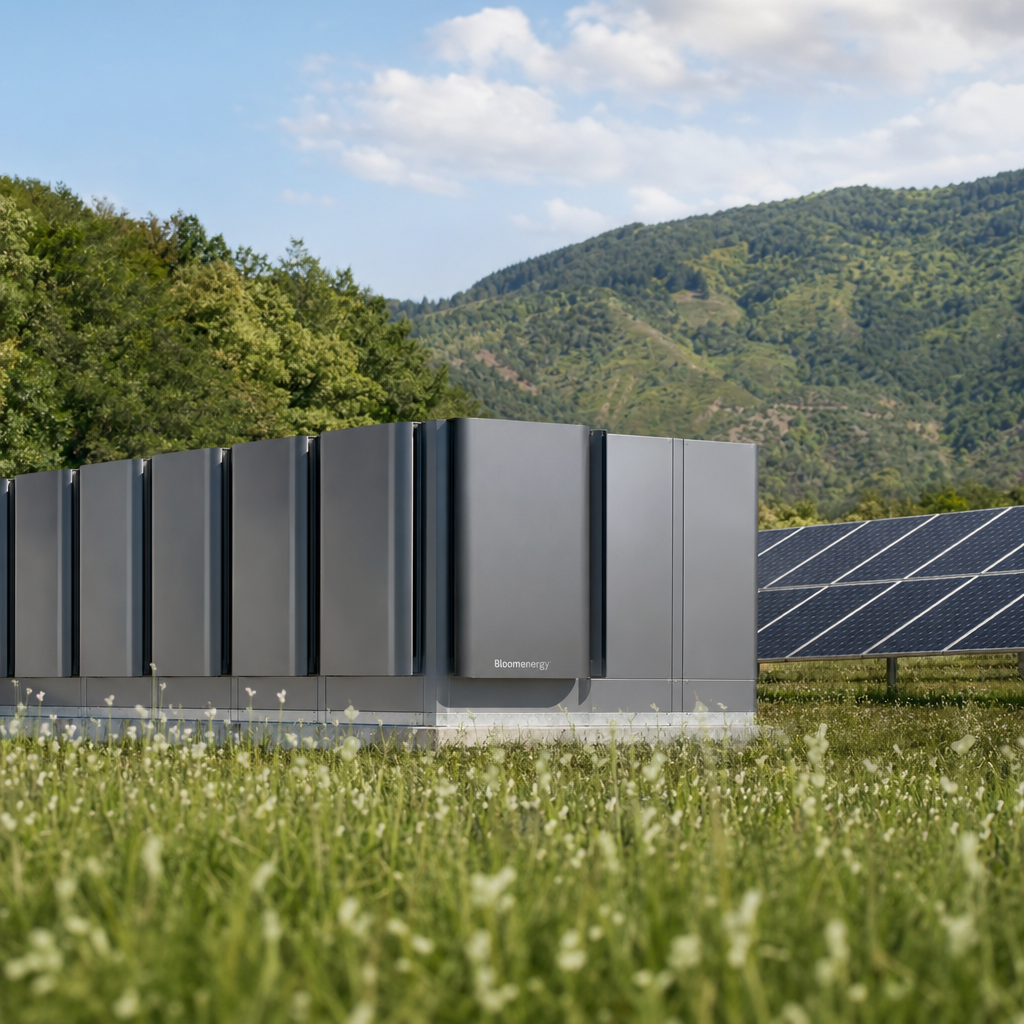
Bloom Energy’s mission is to power a sustainable future by changing how electricity is generated, delivered, and used. In practice, that means replacing dependence on centralized grids and high-emission combustion systems with solid oxide fuel cell technology that can produce reliable on-site power from multiple fuels, including natural gas, biogas, and increasingly hydrogen. As a company spotlight, Bloom Energy offers a useful lens for understanding how major corporations shape the energy transition: not only through ambitious statements, but through engineering choices, capital allocation, customer deployment models, and the standards they must meet in regulated markets. I have followed this sector through project announcements, grid resilience programs, and data center power planning, and Bloom stands out because its mission links three urgent needs that often conflict in real operations: decarbonization, reliability, and affordability. Those tradeoffs matter for hospitals, manufacturers, utilities, and cloud infrastructure providers that cannot tolerate downtime. They also matter for investors and business readers studying corporate giants, because Bloom’s strategy shows how industrial innovation moves from lab science to commercial infrastructure. To understand Bloom Energy, you need to define a few key terms. A fuel cell is an electrochemical device that converts fuel into electricity without combustion. Solid oxide fuel cells operate at high temperatures, allowing internal fuel reforming and high electrical efficiency. Distributed energy means power generated close to where it is consumed, reducing transmission dependence. Energy resilience refers to the ability to maintain power during outages or grid stress. Bloom’s mission matters because the modern economy increasingly depends on continuous electricity, while grids face aging infrastructure, extreme weather, rising demand from AI data centers, and pressure to cut emissions fast.
What Bloom Energy Actually Does
Bloom Energy is best known for the Bloom Energy Server, a modular solid oxide fuel cell platform designed to provide on-site electricity for commercial and industrial customers. The company also develops electrolyzers for hydrogen production and fuel-flexible systems intended to support lower-carbon energy pathways over time. The central idea is straightforward: generate power where it is needed, with higher efficiency than many conventional combustion-based alternatives, and with a smaller local pollution footprint. In customer settings, that can mean primary power, supplemental power, or backup support that bridges gaps when the grid fails.
Real-world deployments explain the value better than marketing language. Data centers use Bloom systems because uptime is nonnegotiable and diesel backup alone is no longer enough for every risk scenario. Hospitals and life sciences facilities use on-site generation because a momentary outage can threaten patient safety or ruin temperature-sensitive processes. Manufacturers use distributed energy to protect production lines from power disturbances that cause expensive downtime. Utilities have also explored Bloom installations for grid support, microgrids, and resilience projects in constrained areas where building new transmission is slow or politically difficult.
From an operating perspective, Bloom’s systems are attractive when organizations need baseload-capable power in a compact footprint. Solar and wind remain essential for decarbonization, but they are variable resources. Batteries help shift energy across short time windows, yet long-duration resilience still requires firm generation. Bloom’s proposition sits in that gap. The systems can run continuously, can be sited close to load, and can reduce exposure to some transmission bottlenecks. That does not make them a universal solution, but it makes them strategically relevant.
How the Technology Supports the Mission
Bloom’s mission depends on the technical advantages and limitations of solid oxide fuel cells. Unlike combustion turbines or engines, fuel cells generate electricity electrochemically, which can improve electrical efficiency and reduce criteria pollutants such as nitrogen oxides, sulfur oxides, and particulate matter at the point of use. High operating temperatures enable fuel flexibility and support combined heat and power opportunities in certain applications. For facilities that need both power and thermal energy, overall system efficiency can become more competitive.
The technology is not magic, and the company’s credibility depends on acknowledging constraints. Many current Bloom installations use natural gas, which still carries carbon emissions. The sustainability argument rests on higher efficiency than some conventional options today and on a pathway toward lower-carbon fuels such as biogas and hydrogen tomorrow. That pathway is promising but not frictionless. Fuel availability, infrastructure buildout, hydrogen economics, and lifecycle emissions accounting all affect the real climate benefit. Serious buyers evaluate not just nameplate performance but degradation rates, maintenance intervals, fuel contracts, and interconnection requirements.
Bloom has also emphasized hydrogen production through solid oxide electrolyzers, which can be more efficient than low-temperature electrolysis under certain conditions, especially when paired with heat sources. If the electricity used is low carbon, that can support cleaner hydrogen for industrial or mobility applications. This matters because the mission is broader than selling boxes. It is about building a platform around cleaner electrons and molecules, with flexibility for sectors that are difficult to electrify directly.
Why Corporate Giants Matter in the Energy Transition
Large corporations influence energy outcomes at a scale startups rarely can. They sign multi-megawatt contracts, shape supplier standards, lobby for market rules, and normalize emerging technologies through procurement. Bloom Energy’s customer base has included Fortune 500 companies, and that pattern reveals how corporate giants accelerate infrastructure adoption. When a hyperscale data center operator, semiconductor manufacturer, or major retailer adopts distributed fuel cell power, the decision creates operational proof points. It also pressures competitors to rethink their own energy strategies.
In the “Diving Deeper into Corporate Giants” context, Bloom serves as a hub case study because it intersects multiple themes readers care about: industrial innovation, climate strategy, grid resilience, and capital-intensive scaling. Corporate giants are not influential merely because they are large. They matter because they can convert technical feasibility into commercial standard practice. A technology becomes meaningful when procurement teams, insurers, regulators, and lenders know how to evaluate it. Bloom’s market journey shows that this normalization process is as important as invention itself.
| Corporate Energy Need | How Bloom Addresses It | Example Use Case |
|---|---|---|
| Reliability during outages | On-site baseload-capable generation reduces dependence on grid interruptions | Hospitals, data centers, emergency operations |
| Emission reduction goals | Higher electrical efficiency and future fuel flexibility support decarbonization pathways | Manufacturing campuses with climate targets |
| Power in constrained locations | Modular systems can be deployed where transmission upgrades lag demand growth | Urban facilities and fast-growing digital infrastructure sites |
| Operational continuity | Stable power quality helps avoid production losses and service disruptions | Semiconductor fabs and cold-chain facilities |
Bloom Energy’s Business Model and Competitive Position
Bloom Energy does not compete on mission alone; it competes on project economics, service performance, and strategic fit. The company’s business model has included direct equipment sales, service agreements, and energy-as-a-service structures that reduce upfront customer capital requirements. That financing flexibility is important because many companies want resilience and lower emissions but prefer not to own complex power assets outright. Structured correctly, long-term service agreements can make adoption easier by shifting technical risk toward the provider.
Competition comes from several directions. Reciprocating engines and gas turbines remain familiar, bankable technologies with established service ecosystems. Solar-plus-storage is increasingly cost effective, especially where incentives are strong and daytime load profiles match production. Traditional backup systems, including diesel generators, still dominate emergency power because of low capital cost and simple permitting in some markets. Bloom’s edge is strongest when a customer needs cleaner, always-on, on-site power with high uptime and limited space. Its position is weaker when lowest upfront cost is the only buying criterion.
Regulatory and standards compliance also shape competitive advantage. Corporate buyers look for systems that align with local air quality rules, utility interconnection requirements, and recognized engineering and safety standards. In practice, project success depends as much on permitting, maintenance logistics, and fuel supply reliability as on cell chemistry. That is why Bloom’s mission is inseparable from execution discipline.
The Challenges Behind the Vision
Every serious assessment of Bloom Energy must address the friction points. First, fuel cells are sophisticated systems that require ongoing maintenance and stack replacement over time. Second, while natural gas-based fuel cells can be cleaner than some combustion alternatives, they are not zero carbon, so environmental claims must be framed carefully. Third, large-scale adoption depends on customer confidence in service reliability, long-term cost predictability, and supplier durability. Public market companies in clean energy are often judged quarter to quarter, while infrastructure customers make decisions over ten- to twenty-year horizons.
There is also a broader systems question: where do fuel cells fit in a future dominated by renewables, storage, transmission expansion, and flexible demand? My view is that Bloom is most compelling in applications requiring firm, resilient, high-utilization power close to load. It is less compelling as a blanket solution for every building or region. That nuance is important because sustainable energy systems are portfolios, not monocultures. Different sectors need different tools.
Policy can either accelerate or constrain Bloom’s growth. Incentives for clean hydrogen, support for distributed energy, stricter local air standards, and resilience spending can improve the business case. On the other hand, cheaper renewable generation, grid modernization, or policy definitions that narrowly classify eligible technologies can limit opportunity. Corporate giants navigate these moving rules constantly, and Bloom’s progress depends on reading that landscape accurately.
What This Company Spotlight Teaches Readers
Bloom Energy is a strong hub subject for company spotlights because it shows how to evaluate a corporate giant beyond slogans. Readers should ask four practical questions. What problem is the company solving? Bloom answers grid vulnerability and emissions pressure with distributed fuel cell power. What technical moat supports that solution? Bloom’s moat is in solid oxide systems, system integration, and field deployment experience. What are the tradeoffs? Fuel choice, maintenance complexity, and project economics remain central. What evidence shows mission execution? Customer deployments, recurring service relationships, product expansion into electrolyzers, and continued relevance in resilience-sensitive sectors provide that evidence.
For anyone exploring corporate giants more broadly, this framework travels well. Whether the next spotlight examines a semiconductor leader, industrial manufacturer, cloud platform, or automaker, the same discipline applies: mission, technology, market demand, competitive context, and execution under real constraints. Bloom’s story is especially timely because electricity has become the operating backbone of nearly every industry. Companies that can deliver cleaner, more resilient power are no longer peripheral players; they are becoming strategic infrastructure partners.
Bloom Energy’s mission matters because it addresses one of the hardest business problems of this decade: how to provide continuous power while reducing environmental impact and managing grid uncertainty. The company’s fuel cell platform, distributed generation model, and hydrogen ambitions make it more than a niche equipment vendor. They position Bloom as a meaningful case study in how corporate giants can push the energy transition forward through applied engineering and disciplined commercialization. The lesson for readers is clear. When evaluating major companies, look past branding and examine the operating model, technology, customer fit, and policy context that determine whether a mission can scale. Use this hub as your starting point for deeper company spotlights, and compare each corporate giant by the same standard: measurable problem solving in the real economy.
Frequently Asked Questions
What is Bloom Energy’s mission, and why does it matter in the clean energy transition?
Bloom Energy’s mission is to power a sustainable future by changing how electricity is generated, delivered, and used. At its core, that means moving away from a system that depends heavily on centralized grids, long transmission lines, and combustion-based power generation, and toward cleaner, more resilient on-site energy solutions. This matters because the traditional electricity model can be vulnerable to outages, grid congestion, fuel price volatility, and high carbon emissions. Bloom Energy’s approach is designed to address those challenges by giving organizations the ability to generate electricity where it is needed, often with greater reliability and potentially lower emissions than conventional alternatives.
In the broader clean energy transition, Bloom Energy stands out because it focuses not only on decarbonization, but also on energy security and operational continuity. Many businesses, hospitals, data centers, manufacturers, and critical infrastructure operators cannot afford interruptions in power. Bloom’s mission recognizes that sustainability and reliability must go hand in hand. By using solid oxide fuel cell technology, the company aims to provide a pathway that helps reduce emissions today while supporting a future in which lower-carbon and zero-carbon fuels, including hydrogen, play a larger role. That combination of practicality and long-term vision is a major reason Bloom Energy is often discussed in conversations about how corporations can influence the future of energy.
How does Bloom Energy’s solid oxide fuel cell technology work?
Bloom Energy’s systems use solid oxide fuel cells, often referred to as SOFCs, to generate electricity through an electrochemical process rather than through combustion. This is an important distinction. In a combustion-based power plant or engine, fuel is burned to create heat, which is then converted into mechanical energy and finally into electricity. In Bloom’s fuel cell systems, electricity is produced more directly by converting the chemical energy of a fuel into electrical energy. Because the process does not rely on burning fuel in the conventional sense, it can be more efficient and can produce fewer pollutants associated with combustion, such as nitrogen oxides and particulate matter.
These fuel cells operate at high temperatures and can use a range of fuels, including natural gas, biogas, and hydrogen. Inside the system, a fuel is introduced on one side of the cell and oxygen on the other. Through the movement of ions across a solid electrolyte, the fuel cell produces electricity, heat, and water, with emissions depending on the fuel source being used. One of the practical benefits of Bloom’s technology is fuel flexibility. That flexibility allows customers to use existing fuel infrastructure today while positioning for cleaner fuels over time. It also helps explain why Bloom Energy is often described as a bridge between current energy realities and a lower-carbon future.
Why is on-site power generation important for sustainability and resilience?
On-site power generation is increasingly important because it addresses two major concerns at once: environmental performance and energy resilience. From a sustainability perspective, generating power where it is consumed can reduce dependence on older, centralized power plants that may be less efficient and more carbon intensive. It can also reduce some of the losses associated with transmitting electricity over long distances. When on-site systems are paired with cleaner fuels, or integrated into broader decarbonization strategies, they can help organizations make measurable progress toward emissions goals while maintaining control over their energy supply.
From a resilience standpoint, on-site power can be a game changer. Extreme weather, aging infrastructure, grid instability, and rising electricity demand have made power reliability a top priority across many sectors. Facilities such as hospitals, data centers, semiconductor plants, and manufacturing sites often require continuous electricity to protect lives, safeguard data, or avoid costly downtime. Bloom Energy’s distributed model gives these users a way to reduce exposure to grid disruptions by producing electricity directly at their location. In that sense, on-site generation is not only a sustainability strategy; it is also a business continuity strategy. That dual value is a big reason Bloom Energy’s mission resonates in today’s energy market.
What fuels can Bloom Energy systems use, and how does that affect emissions?
Bloom Energy’s systems are notable for their ability to operate on multiple fuels, including natural gas, biogas, and increasingly hydrogen. This fuel flexibility is one of the company’s defining strengths because it allows customers to adopt the technology under current market conditions while keeping open the possibility of cleaner operation as fuel availability evolves. Natural gas is commonly used today because it is widely available and supported by existing infrastructure. When compared with some traditional combustion-based power systems, using natural gas in Bloom’s fuel cells can offer improved efficiency and lower emissions of certain pollutants.
Biogas can further improve the sustainability profile because it is derived from organic waste sources such as landfills, wastewater treatment facilities, or agricultural operations. When responsibly sourced, biogas can help reduce lifecycle greenhouse gas emissions and turn waste into a productive energy resource. Hydrogen is especially important for the future because it has the potential to enable very low-carbon or even zero-carbon electricity generation, depending on how the hydrogen is produced. If Bloom Energy’s systems run on hydrogen made from renewable or other low-carbon pathways, the environmental benefits can become even more significant. The key point is that emissions outcomes depend heavily on the fuel source, which is why Bloom’s technology is often viewed as adaptable rather than locked into a single energy pathway.
How does Bloom Energy illustrate the role large corporations play in transforming the energy system?
Bloom Energy offers a strong example of how major corporations can shape the energy transition by developing technologies that respond to real-world market demands. Energy transformation is not driven by policy alone; it is also driven by companies that create practical solutions for reliability, cost control, emissions reduction, and infrastructure modernization. Bloom’s business model reflects that reality. Instead of waiting for the grid to become fully decarbonized on its own, the company promotes a distributed energy approach that can be implemented now, especially in sectors where uninterrupted power is essential.
As a corporate spotlight, Bloom Energy shows how private-sector innovation can influence the pace and direction of energy change. The company’s work touches several major themes in the transition: decentralized generation, lower-emission power, hydrogen readiness, grid support, and the growing expectation that energy systems must be both clean and dependable. It also demonstrates that large corporations can serve as connectors between emerging technologies and commercial adoption. By helping businesses deploy energy solutions at scale, Bloom contributes to a broader shift in how electricity is produced and managed. That makes the company a useful lens for understanding not just one technology, but the larger role corporations play in building a more sustainable and resilient energy future.