The Bay Area has become one of the world’s most concentrated hubs for carbon removal startups, combining climate urgency, venture capital, research talent, and corporate buyers in a single regional ecosystem. Carbon removal refers to technologies and practices that pull carbon dioxide from the atmosphere or oceans and store it durably for decades to millennia. It differs from emissions reduction, which prevents new greenhouse gases from entering the air. Both are necessary. The Intergovernmental Panel on Climate Change has made clear that deep decarbonization alone is unlikely to limit warming without some level of atmospheric carbon dioxide removal, especially for hard-to-abate sectors such as aviation, cement, shipping, and agriculture.
In practice, Bay Area climate and energy tech founders are building businesses across several carbon removal pathways: direct air capture, biomass carbon removal and storage, enhanced rock weathering, ocean-based removal, biochar, and carbon mineralization. Each pathway has distinct chemistry, engineering requirements, measurement methods, and cost profiles. I have worked with startup teams evaluating these approaches, and the first lesson is always the same: carbon removal is not one market. It is a family of markets linked by a common outcome, measured in tonnes of carbon dioxide removed, but separated by very different technical and commercial realities.
This matters because the Bay Area now shapes how the broader carbon removal industry develops. Local startups are raising early-stage capital, signing offtake agreements with companies such as Microsoft, Stripe, Shopify, Google, and Frontier buyers, and partnering with universities including Stanford, UC Berkeley, and Lawrence Berkeley National Laboratory. The region also influences standards around monitoring, reporting, and verification, usually shortened to MRV. For readers following climate and energy tech, this hub explains the main technologies, the leading business models, the financing landscape, and the operational challenges that determine which companies can scale beyond promising pilots into durable infrastructure businesses.
Why the Bay Area leads carbon removal innovation
The Bay Area’s advantage starts with ecosystem density. Climate founders here can move from a lab at Stanford or Berkeley to a seed round on Sand Hill Road, then to pilots with enterprise customers headquartered nearby. That concentration shortens the feedback loop between science, product development, and commercialization. It also attracts specialized talent in electrochemistry, materials science, geochemistry, process engineering, machine learning, carbon accounting, and project finance. Carbon removal companies need all of those disciplines, often from day one.
Another advantage is market creation. Bay Area buyers helped establish the modern advance market commitment model for carbon removal. Stripe’s early purchases and the Frontier coalition gave startups revenue signals before they had full-scale plants. That matters because most carbon removal pathways are capital intensive and initially expensive. Early demand lets founders finance demonstration projects, generate MRV data, and lower costs through learning curves. The region’s policy networks also matter. California’s Low Carbon Fuel Standard, cap-and-trade system, and strict environmental permitting culture create both incentives and scrutiny, forcing startups to design for accountability earlier than many software companies ever do.
Core carbon removal technologies used by Bay Area startups
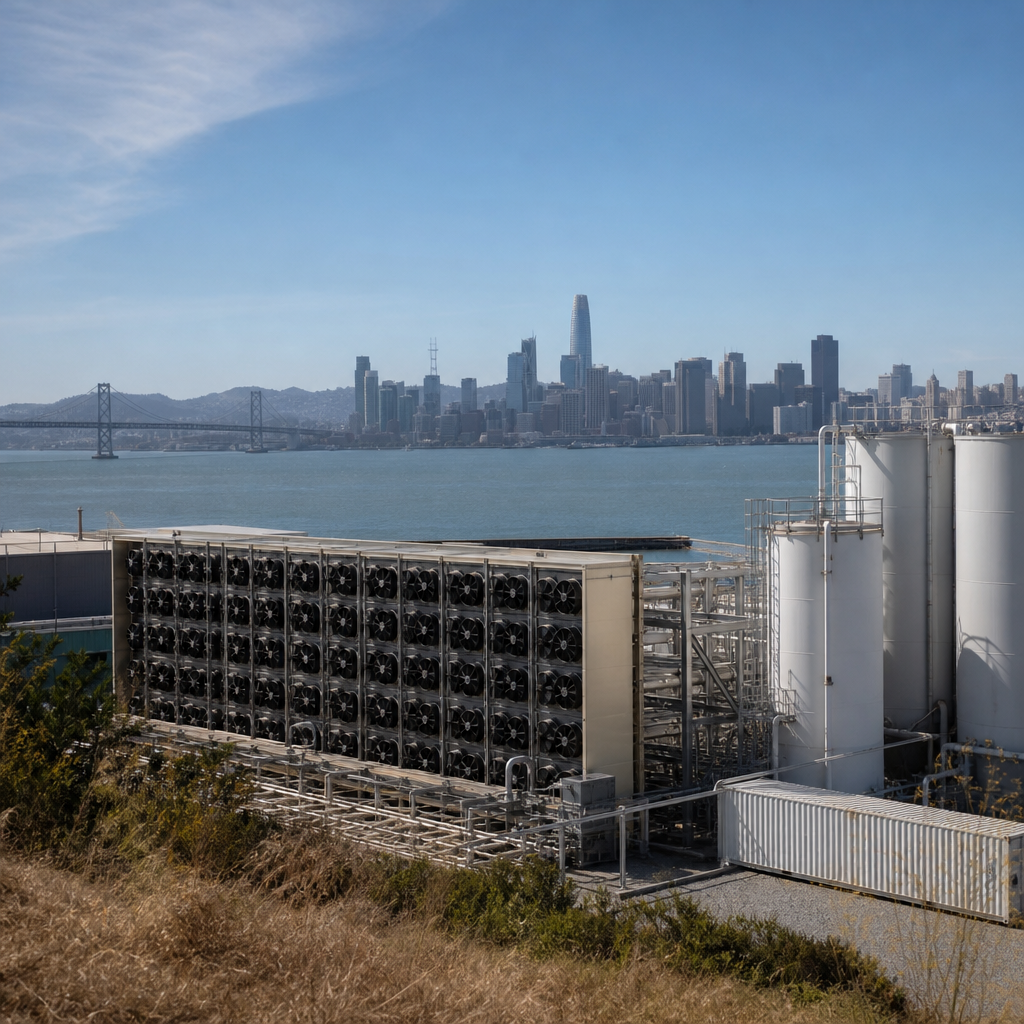
Direct air capture, or DAC, uses chemical sorbents or solvents to extract carbon dioxide directly from ambient air. Because atmospheric CO2 concentration is only about 420 parts per million, the process is energy intensive and equipment heavy. Bay Area startups working in or around DAC often focus on better sorbent materials, modular contactor designs, lower-temperature regeneration, or integration with clean power and waste heat. The appeal of DAC is straightforward: it is measurable, highly durable when paired with geologic storage, and location flexible. The drawback is cost. Current net removal costs remain high compared with most nature-based solutions.
Biomass carbon removal and storage includes pathways such as converting agricultural residues into stable forms and storing the resulting carbon underground or in long-lived products. Biochar companies are especially visible because pyrolysis systems can process forestry waste, crop residues, or urban green waste while producing a carbon-rich solid that can improve some soils. Enhanced rock weathering startups spread finely ground silicate rocks on cropland, where natural chemical reactions draw down atmospheric CO2 over time. Ocean-based companies explore alkalinity enhancement, seaweed cultivation, or electrochemical systems that alter seawater chemistry. Mineralization startups react CO2 with alkaline materials to create stable carbonates, often linking climate value with construction materials or industrial waste treatment.
| Pathway | How it removes CO2 | Main advantage | Main challenge |
|---|---|---|---|
| Direct air capture | Chemically captures CO2 from ambient air | High measurability and durable storage | High energy use and cost |
| Biochar | Converts biomass into stable carbon-rich solids | Co-product value and waste utilization | Feedstock quality and permanence variability |
| Enhanced rock weathering | Speeds natural mineral reactions on land | Uses abundant minerals and farmland | Complex MRV and logistics |
| Ocean-based removal | Changes seawater chemistry or biomass cycles | Massive theoretical scale | Ecological uncertainty and regulation |
| Mineralization | Turns CO2 into stable carbonate minerals | Very durable storage | Site constraints and process economics |
Business models shaping climate and energy tech growth
Most Bay Area carbon removal startups do not begin with commodity-scale sales. They begin by selling premium removals to corporate climate buyers willing to pay hundreds of dollars, and sometimes more than one thousand dollars, per tonne for early supply. This is not a flaw in the market; it is how frontier technologies move from prototype to bankable asset. Buyers use these contracts to meet net-zero goals, diversify climate portfolios, and help create future supply. Startups use the revenue and credibility to unlock equity financing, debt, grants, and project partnerships.
The most common model is long-term offtake. A buyer commits today to purchase future tonnes if the startup delivers according to MRV and durability standards. Some companies also earn revenue from co-products. A biochar producer may sell biochar into agriculture, stormwater filtration, or concrete additives while monetizing carbon credits separately. A mineralization startup may license process technology to industrial partners or share savings from waste handling. Software also plays a role. Several Bay Area firms build MRV platforms, life-cycle assessment tools, and procurement marketplaces that support the removal value chain without owning removal assets themselves. As this climate and energy tech market matures, blended models that combine hardware margins, services, and environmental attributes are becoming more common.
Financing, policy, and the role of standards
Carbon removal startups need more patient capital than many traditional venture-backed software companies. Lab work can take years, pilot plants are expensive, and project development depends on permits, interconnection, feedstock contracts, transport, storage rights, and insurance. Bay Area investors increasingly understand this. Climate-focused funds, infrastructure investors, family offices, and catalytic capital providers are structuring rounds that mix venture equity with non-dilutive grants from the Department of Energy, ARPA-E, the National Science Foundation, and California programs. The best founders treat capital stack design as a core competence, not an afterthought.
Standards are equally important. Buyers and regulators want proof that a tonne removed is real, additional, durable, and not double counted. That is why MRV is central to every serious startup in this space. Leading companies build sampling plans, chain-of-custody systems, life-cycle assessments aligned with ISO principles, and independent verification into the product from the start. Puro.earth and Isometric are frequently cited in durable carbon markets, while registries such as Verra influence broader carbon accounting norms, even when startups disagree with certain methodologies. Good policy can accelerate scale, but weak standards can damage trust across the entire category.
Operational and scientific challenges that determine winners
The hardest part of carbon removal is not explaining the climate problem. It is delivering removals at scale with credible economics and reliable permanence. Every pathway faces a different bottleneck. DAC companies fight for low-cost clean energy, better sorbents, and access to Class VI wells or other geologic storage options. Biochar companies must secure consistent feedstock, manage air emissions from pyrolysis units, and prove how stable their carbon remains across different production conditions. Enhanced rock weathering startups need rigorous field trials to quantify dissolution rates, soil impacts, and net removal after mining, grinding, and transport emissions.
Ocean-based startups face perhaps the toughest public acceptance hurdle. The scientific promise is large, but ecosystem interactions are complex and regulatory frameworks are still evolving. Founders must prove they are not shifting risk from the atmosphere to marine environments. Across all pathways, one recurring challenge is moving from pilot data to repeatable unit economics. Early plants can show technical success while still failing commercially because maintenance is too high, throughput is too low, or measurement costs consume margins. The strongest Bay Area teams I have seen obsess over operational discipline early. They track energy balances, uptime, labor intensity, reagent losses, and transport costs with the same seriousness software startups reserve for retention and gross margin.
What this hub means for founders, investors, and buyers
For anyone following Tech Innovations and Startups, the Bay Area carbon removal scene offers a clear view into how climate and energy tech markets are built. The winning companies will not be the ones with the boldest climate claims; they will be the ones that pair sound science with financeable business models, transparent MRV, and disciplined operations. Some will sell premium removals for years before costs decline. Others will succeed by integrating carbon removal into larger industrial systems, from waste management to building materials to agricultural services. The category will likely remain diverse because no single pathway can meet all demand profiles, durability needs, and geographic constraints.
The practical takeaway is simple. Treat carbon removal as infrastructure, not as a quick software-style scale story. Evaluate each startup by pathway physics, cost curve, durability, policy exposure, and customer fit. If you are a founder, design MRV and project finance into the business from the start. If you are an investor or buyer, back teams that can explain not just how carbon is removed, but how it is measured, stored, insured, and paid for over time. Explore the rest of this climate and energy tech hub with that lens, and you will spot the companies most likely to turn Bay Area innovation into measurable climate impact.
Frequently Asked Questions
1. What makes the Bay Area a major hub for carbon removal startups?
The Bay Area has emerged as a leading center for carbon removal startups because it brings together several ingredients that are unusually difficult to find in one place: deep climate concern, world-class technical talent, access to venture capital, strong university research, experienced software and hardware founders, and a growing base of corporate climate buyers. In practical terms, that means a startup working on direct air capture, ocean-based removal, mineralization, biomass carbon storage, or measurement and verification can often find investors, engineers, scientific collaborators, policy expertise, and early customers within the same regional network.
Another reason the Bay Area stands out is its culture of building new markets before they are mature. Carbon removal is still an early industry compared with solar, wind, or electric vehicles. Many approaches are expensive, infrastructure-heavy, and technically complex. Bay Area investors and founders are often more willing than most to back technologies that may take years to scale but could become foundational to the global climate response. This willingness to finance experimentation has helped create a concentrated ecosystem of startups, incubators, climate-focused venture firms, nonprofit buyers’ coalitions, and carbon accounting specialists.
The region also benefits from proximity to major corporate purchasers of climate solutions. Technology companies headquartered in or connected to the Bay Area have been among the earliest buyers of carbon removal credits, often paying premium prices to help startups reach commercial scale. That early demand matters because carbon removal companies need revenue to build first-of-a-kind projects, improve their systems, and gather the operating data required for future financing. In short, the Bay Area is not just a place where carbon removal technologies are invented; it is a place where financing, commercialization, and market design are advancing at the same time.
2. What kinds of carbon removal technologies are Bay Area startups developing?
Bay Area carbon removal startups are working across a wide range of approaches, reflecting the fact that there is no single technology likely to remove all the carbon dioxide the world may need to address. One of the best-known categories is direct air capture, which uses chemical processes and specialized equipment to pull carbon dioxide directly from ambient air. Once captured, the CO2 can be compressed and stored underground in geological formations or converted into stable materials, depending on the business model and storage pathway.
Another important category is mineralization, in which carbon dioxide reacts with naturally occurring minerals or industrial materials to form stable carbonates. This can happen underground, in mine tailings, in industrial waste streams, or through engineered processes designed to speed up natural weathering. Mineralization is attractive because it offers durable storage that can last for centuries to millennia, but it often depends on site-specific geology, material supply chains, and reliable measurement systems.
Bay Area startups are also exploring ocean-based carbon removal. These methods vary widely and can include ocean alkalinity enhancement, electrochemical processes, and systems intended to increase the ocean’s capacity to absorb and retain carbon dioxide. Ocean approaches are scientifically promising but also face rigorous scrutiny around ecological impacts, monitoring complexity, and permitting. In addition, some startups focus on biomass-based pathways, such as converting agricultural residues into biochar, storing carbon-rich biomass in ways that slow decomposition, or combining bioenergy with carbon capture and storage.
Just as important, not every startup in the sector is building removal hardware. Some companies specialize in measurement, reporting, and verification, carbon accounting infrastructure, project development software, lifecycle analysis, remote sensing, or marketplaces that connect buyers and suppliers. These enabling technologies are essential because buyers and regulators need confidence that a ton of removed carbon is real, additional, and durably stored. The result is a Bay Area ecosystem that spans both physical removal methods and the digital, scientific, and financial tools needed to support them.
3. How do carbon removal startups actually make money, and what business models are most common?
Most carbon removal startups generate revenue by selling carbon removal credits, usually denominated per metric ton of carbon dioxide removed and durably stored. In this model, a company develops a process that captures or stores CO2, verifies the amount removed, and then sells the resulting credits to buyers that want to support climate action beyond their direct emissions cuts. Early buyers are often large corporations, especially those with net-zero commitments, sustainability budgets, or a strategic interest in helping new climate technologies mature.
However, the business models are more varied than they may appear at first glance. Some startups operate as full-stack developers: they build the technology, own or operate the project, manage the storage pathway, and sell verified removals. Others license proprietary technology to industrial partners, utilities, waste operators, or project developers. Still others focus on a narrow but critical part of the value chain, such as verification software, CO2 transport logistics, equipment manufacturing, financing platforms, or offtake aggregation.
Pre-purchase agreements and long-term offtake contracts are especially important in this sector. Because many carbon removal projects require large upfront capital investments, startups often seek multi-year purchase commitments from corporations or advance market buyers. These agreements provide revenue visibility, improve fundraising prospects, and help companies finance pilot plants or commercial facilities. In some cases, startups also combine carbon credit sales with revenue from co-products. For example, a company might sell low-carbon materials, energy services, industrial inputs, or waste management solutions alongside carbon removal itself.
That said, the industry is still working through a major tension: today’s premium-priced early market is not the same as a future mass market. Many startups can currently sell small volumes at high prices because buyers are willing to support innovation. Over time, though, durable carbon removal will likely need to become more standardized, lower cost, and easier to compare across methods. The strongest business models are therefore not only scientifically credible but also designed to survive the transition from boutique climate procurement to large-scale infrastructure markets.
4. What are the biggest challenges facing carbon removal startups in the Bay Area?
The biggest challenge is scale. Many carbon removal startups can prove a concept in the lab or at pilot scale, but scaling that concept into a reliable, financeable, and affordable commercial system is much harder. Direct air capture systems need energy, heat management, supply chains, and access to secure storage. Mineralization projects need suitable feedstocks or geology. Ocean projects require extensive environmental monitoring and regulatory engagement. Biomass-based approaches depend on stable sourcing, transport, and long-term storage controls. In every case, moving from prototype to millions of tons per year is a major engineering and logistical leap.
Cost is another central barrier. High-quality carbon removal is still expensive, especially when durability standards are strict and monitoring requirements are robust. Startups must reduce equipment costs, improve process efficiency, secure lower-cost clean energy, and optimize operations without undermining scientific integrity. Buyers, meanwhile, want confidence that they are paying for genuine climate value rather than marketing claims. That creates pressure for startups to be both technologically ambitious and highly transparent.
Measurement, reporting, and verification can also be difficult. Carbon removal only has climate value if the amount removed is accurately quantified and the storage lasts as long as claimed. Different methods require different verification tools, from sensors and sampling protocols to lifecycle analysis and third-party audits. For newer pathways, accepted standards may still be evolving. This uncertainty can slow deals, complicate investor diligence, and make it harder for buyers to compare one credit with another.
Regulation and infrastructure add additional complexity. Many removal methods depend on permitting, water access, land use approvals, underground injection rules, marine oversight, or interconnection with energy systems. Startups based in the Bay Area may have strong technical teams but still need to build projects elsewhere, where land, geology, or industrial conditions are more favorable. Finally, there is the broader reputational challenge: carbon removal can be misunderstood or criticized if it is presented as a substitute for emissions reduction. Serious companies must consistently explain that removal complements decarbonization rather than replacing it.
5. How should companies and readers evaluate whether a carbon removal startup is credible?
A credible carbon removal startup should be able to clearly explain four things: how the carbon is removed, how long it stays out of the atmosphere, how the removal is measured, and what assumptions underlie the climate claim. Durability is especially important. Some approaches store carbon for decades, while others aim for centuries or millennia. Neither should be dismissed automatically, but the storage duration should match the claim being sold. Buyers and readers should also ask whether the project depends on uncertain future actions, such as ongoing maintenance or recapture, or whether the carbon is locked away in a more permanent form.
It is also important to look closely at additionality and lifecycle emissions. Additionality means the removal would not have happened without the specific project or purchase. Lifecycle analysis asks whether the energy use, materials, transportation, construction, and operations associated with the project significantly reduce its net climate benefit. A startup may remove carbon at one point in the process, but if doing so requires substantial fossil energy or carbon-intensive inputs, the net removal may be lower than headline figures suggest. Strong companies are transparent about these tradeoffs and publish enough information for outside experts to evaluate their claims.
Third-party verification, rigorous scientific methods, and realistic scaling plans are all good signs. Credible startups generally welcome scrutiny, work with independent reviewers, and avoid making sweeping promises that they cannot yet support with data. They also distinguish carefully between pilot results