In the ever-evolving world of technology, the concept of Digital Twins has emerged as a groundbreaking advancement that is reshaping industries across the board. Originating from the aerospace sector, Digital Twins are virtual replicas of physical assets, systems, or processes, which allow for real-time simulation, analysis, and control. This innovative tech leverages data from sensors, advanced analytics, and machine learning to offer valuable insights and predictions that significantly enhance decision-making and operational efficiency.
Silicon Valley, known for its tech innovations and startup culture, has been at the forefront of developing and implementing Digital Twin technology. With its unique ecosystem of academic research, venture capital, and a vibrant community of forward-thinking entrepreneurs, the region has become a hub for Digital Twin innovation. This comprehensive article explores how Silicon Valley is driving the next wave of simulation technology, detailing the key players, applications, and future prospects in this dynamic field.
Understanding Digital Twins
At its core, a Digital Twin is an intricate digital replica of a physical entity. This entity could be anything from a jet engine, a manufacturing line, a building, or even a human organ. By feeding real-time data from sensors and other data collection instruments into the virtual model, it becomes possible to monitor the physical counterpart’s performance, predict outcomes, and even run simulations to test various scenarios.
Silicon Valley startups are taking Digital Twins to the next level by integrating advanced technologies such as artificial intelligence (AI), machine learning (ML), and Internet of Things (IoT). These integrations help in creating more accurate and responsive models. For instance, a Digital Twin of a factory can optimize production by foreseeing machinery breakdowns and recommending preventive maintenance, thus reducing downtime and saving costs.
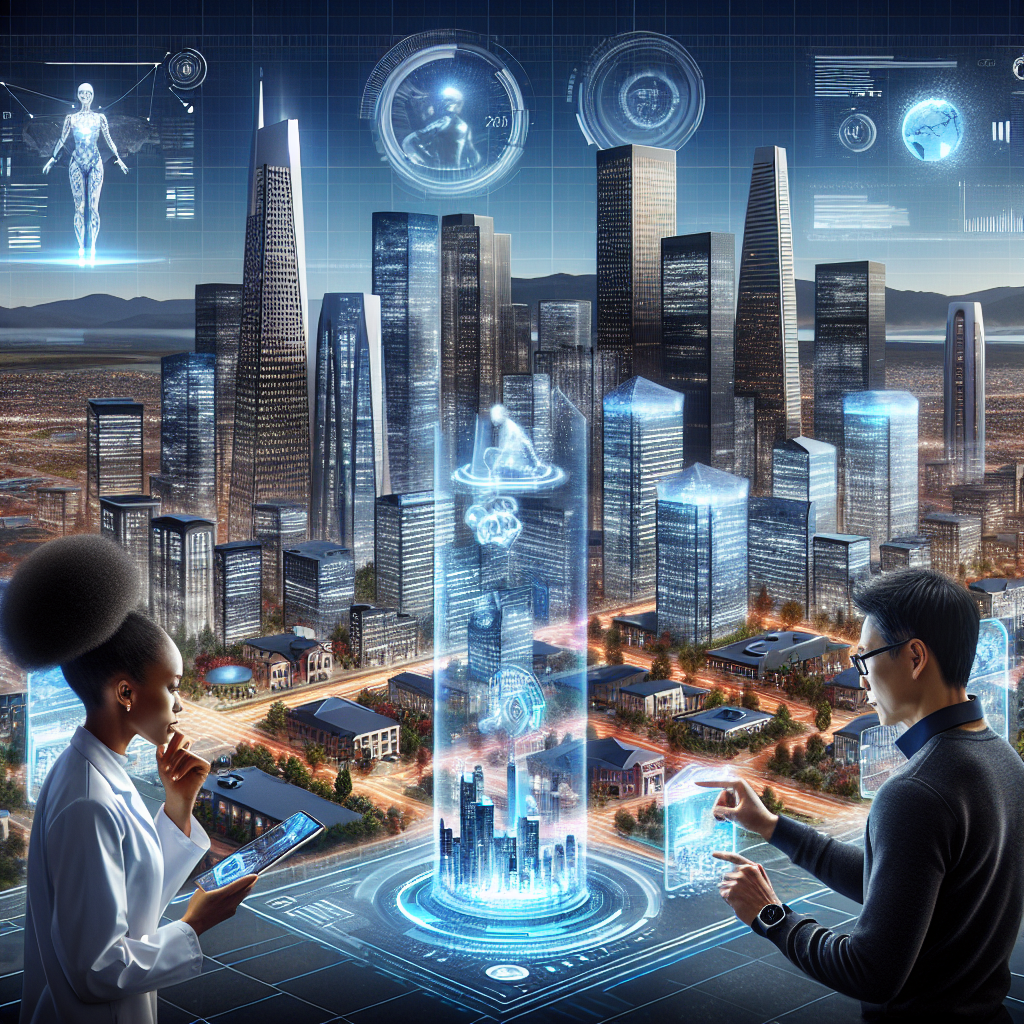
The adoption of Digital Twins extends beyond manufacturing. In healthcare, Digital Twins of organs can aid in personalized medicine by allowing practitioners to simulate different treatment options for a patient. In urban planning, Digital Twins of cities can assist in optimizing traffic flows and managing utilities more efficiently.
The Role of Startups in Silicon Valley
Silicon Valley’s unique ecosystem is a fertile ground for startups. The region’s culture of innovation, supported by abundant venture capital, academic research, and a network of seasoned mentors, fosters the development of cutting-edge technologies like Digital Twins.
Noteworthy startups are pioneering the Digital Twin landscape. One such example is Uptake, which focuses on using Digital Twins for industrial applications. Their platform integrates AI and ML to provide insights that improve asset performance and reliability. Another key player is Clouscape, which specializes in creating Digital Twins for smart buildings and urban planning. Their solutions enable real-time monitoring and energy optimization, contributing to sustainable development.
Moreover, collaborative initiatives and innovation hubs like Silicon Valley Research Group offer startups the resources they need to experiment and scale their Digital Twin solutions. These startups are not just creating products; they’re building ecosystems that leverage Digital Twins for multifaceted applications, thus pushing the boundaries of what’s possible.

Applications of Digital Twins in Various Industries
The versatility of Digital Twins spans multiple sectors, each leveraging the technology to solve unique challenges and enhance their operations.
In the automotive industry, companies like Tesla are employing Digital Twins to enhance the longevity and safety of their electric vehicles. By creating a digital model of each vehicle, data from every trip can be analyzed to predict when components will need maintenance or replacement.
The energy sector is also benefiting significantly. Firms are using Digital Twins for optimizing the performance of wind turbines and power grids. For example, Siemens provides Digital Twin solutions to monitor real-time performance and predict potential issues in turbines, thus maximizing energy output and reducing downtimes.
Even in the retail industry, Digital Twins are making an impact. Retail giants are using this technology for supply chain optimization, ensuring that inventory levels are accurately matched to consumer demands, hence minimizing wastage and improving customer satisfaction.
Challenges and Considerations
While Digital Twins offer immense potential, there are challenges and considerations that must be addressed for successful implementation. One primary concern is data security. As Digital Twins rely heavily on data from physical assets, safeguarding this data against cyber threats is paramount.
Another challenge is interoperability. Digital Twins often need to integrate with various systems and platforms. Ensuring seamless communication between these diverse systems is crucial for the efficacy of the Digital Twin.
Cost and complexity can also be barriers, particularly for smaller enterprises. The initial investment in sensors, data integration, and analytical tools can be substantial. Additionally, the development of accurate and functional Digital Twins requires expertise that may not be readily available within all organizations.
Despite these challenges, continuous advancements in technology and more widespread adoption are likely to mitigate these concerns. Standards and protocols are being established to ensure smoother integration and enhanced security, making Digital Twins more accessible for a broader range of industries.
The Future of Digital Twins
The future of Digital Twins looks promising as technology continues to evolve. One significant trend is the increasing integration of AI and ML, which will make these virtual models even more intelligent, capable of self-learning and improving over time.
Another exciting development is the convergence of Digital Twins with Augmented Reality (AR) and Virtual Reality (VR). This fusion could create immersive environments for simulation and training purposes. For instance, engineers could use AR glasses to see a real-time Digital Twin of a machine superimposed over the physical machine, providing comprehensive diagnostic and repair data.
The proliferation of 5G technology will play a crucial role in the evolution of Digital Twins. With faster and more reliable internet connections, the real-time data transfer capabilities of Digital Twins will be vastly improved, allowing for more dynamic and responsive applications.
Moreover, as more industries recognize the value of Digital Twins, their applications will become more diversified. Fields like environmental science, logistics, and even entertainment are starting to explore how this technology can be harnessed to drive efficiency, creativity, and innovation.
Conclusion
The landscape of technological innovation is continually changing, with Digital Twins representing one of the most compelling advancements in recent years. Silicon Valley’s role in this evolution is significant, providing a nurturing environment for startups and established companies alike to push the boundaries of what’s possible with this technology.
The impact of Digital Twins is already being felt across various industries, from automotive and energy to healthcare and retail. As the technology matures, it promises to offer even more sophisticated simulations and analyses, driving significant efficiencies and smarter decision-making.
However, it’s crucial to address the challenges that come with implementing Digital Twins, especially regarding data security, interoperability, and cost. A collaborative effort within the tech ecosystem, alongside continuous innovation, will be essential in overcoming these hurdles.
Looking forward, the future of Digital Twins is bright. With advancements in AI, ML, AR, VR, and 5G, the capabilities of these virtual models are set to expand dramatically. As more industries adopt and adapt to this technology, Digital Twins will undoubtedly play a pivotal role in shaping the future of various sectors.