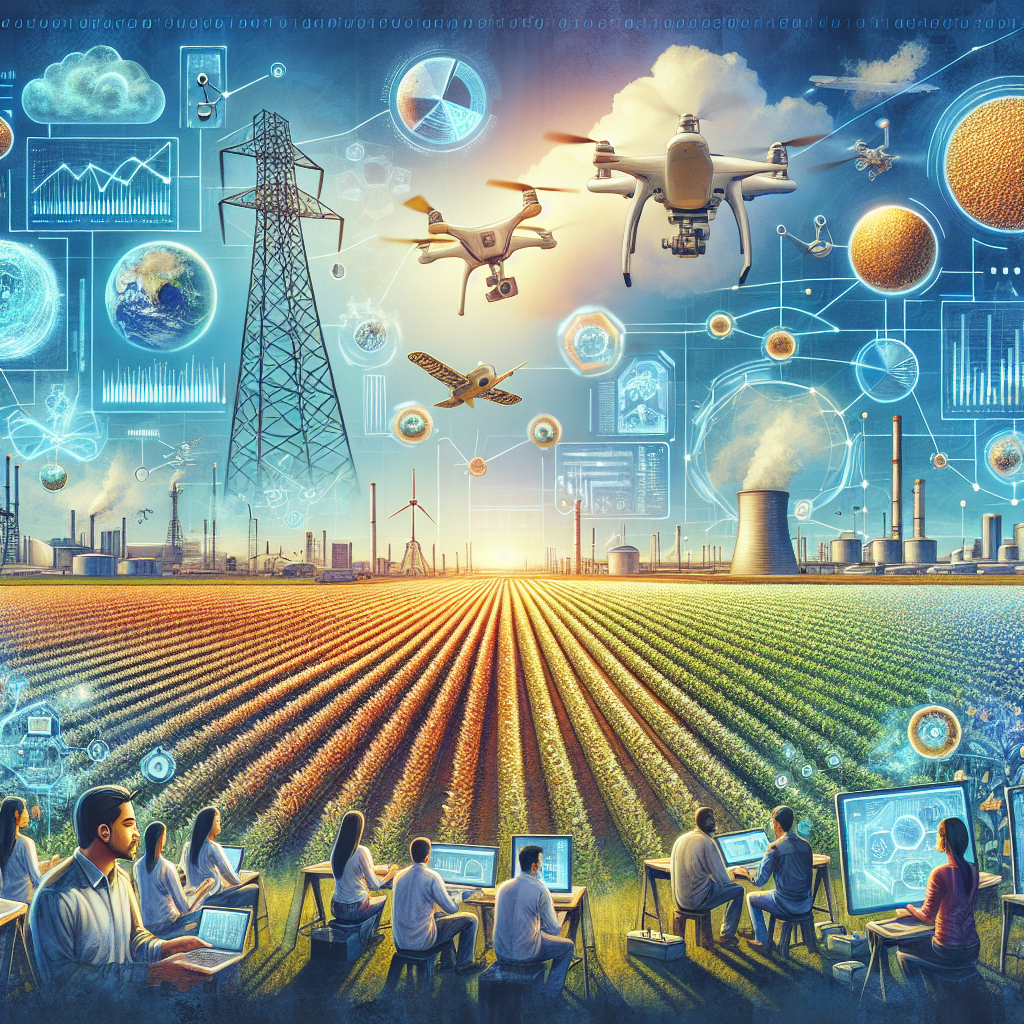
Silicon Valley has long been synonymous with groundbreaking advancements in the fields of technology and innovation. The area, renowned for its pioneering tech startups and venture capital, is now making significant strides in an unexpected domain: agriculture. Specifically, precision agriculture technology is gaining traction as an efficient solution to several age-old farming challenges. As the global population soars and demands for food production intensify, the role of technology in optimizing agricultural practices becomes increasingly crucial.
Precision agriculture refers to the use of advanced technologies to monitor and manage variations in the field, ensuring that crops and soil receive exactly what they need for optimum health and productivity. From drones and sensors to advanced analytics and machine learning, these technological innovations are transforming traditional farming practices into a sophisticated, data-driven industry.
Startups in Silicon Valley are at the forefront of this revolution, creating tools and systems that significantly boost efficiency, reduce waste, and promote sustainability. Companies are developing a range of innovative solutions that address the unique needs of farmers, allowing them to make better-informed decisions and ultimately increase yields. This shift is essential not only for meeting the world’s growing food demands but also for mitigating environmental impacts and conserving resources.
The Role of Drones in Precision Agriculture
One of the most notable advancements in precision agriculture is the use of drones. These aerial devices are equipped with various sensors and cameras that provide detailed insights into crop health, soil conditions, and irrigation requirements. By capturing high-resolution images and real-time data, drones enable farmers to monitor large expanses of land quickly and accurately, identifying issues that may not be visible at ground level.
Startups like DroneAg https://www.droneag.com and suas.com https://www.suas.com are leading the charge in this sector, offering sophisticated drone technology tailored for agricultural applications. These companies provide solutions that range from simple aerial imaging to intricate multispectral analysis, allowing farmers to detect problems like pest infestations, nutrient deficiencies, and water stress with unprecedented precision.
The data collected by drones can be integrated with other digital farming tools, providing a comprehensive overview of the farm’s health. This integration is invaluable for precision farming, as it allows for more accurate and timely interventions, significantly improving crop yields and reducing costs. Furthermore, drones can be used for tasks such as seeding, spraying, and even planting, automating labor-intensive processes and further enhancing efficiency.
IoT and Sensor Technology
Another cornerstone of precision agriculture is the Internet of Things (IoT), which connects various devices and sensors across the farm. These sensors collect real-time data on a myriad of factors, including soil moisture, temperature, humidity, and nutrient levels. This continuous flow of information allows farmers to monitor and manage their fields with a level of detail that was previously unimaginable.
Silicon Valley startups like CropTheory https://www.croptheory.com and FarmSense https://www.farmsense.com are developing sophisticated IoT solutions designed specifically for agriculture. These systems use a network of sensors to provide a holistic view of the farm’s ecosystem, enabling precise irrigation, fertilization, and pest control. By harnessing the power of IoT, farmers can optimize resource use, reduce environmental impact, and improve overall productivity.
In addition to monitoring crop health, IoT technology can also streamline farm management tasks. For instance, automated irrigation systems can adjust water delivery based on real-time soil moisture data, ensuring that crops receive the right amount of water at the right time. Similarly, sensors can alert farmers to equipment malfunctions or environmental changes, allowing for prompt corrective action.
The integration of IoT technology in agriculture not only facilitates more efficient farming practices but also provides critical data for long-term planning and decision-making. This data-driven approach helps farmers address challenges proactively and sustainably, ensuring the long-term viability of their operations.

Machine Learning and Big Data Analytics
Machine learning and big data analytics are revolutionizing precision agriculture by enabling farmers to make sense of the vast amounts of data generated by drones, sensors, and IoT devices. These advanced technologies analyze patterns and correlations within the data, providing actionable insights that drive better decision-making and improve farm management.
Startups such as Planet https://www.planet.com and FarmWise https://www.farmwise.io are at the forefront of this movement, leveraging machine learning algorithms to develop predictive models for crop growth, pest outbreaks, and weather patterns. By forecasting these variables with a high degree of accuracy, farmers can plan and execute agricultural practices more effectively, minimizing risks and maximizing yields.
Big data analytics also play a crucial role in optimizing resource use and reducing waste. For instance, machine learning models can analyze historical and real-time data to determine the optimal amount of water, fertilizer, and pesticides needed for a specific crop. This precision application not only enhances crop health but also minimizes environmental impact, promoting sustainable farming practices.
The combination of machine learning and big data analytics enables a more holistic and precise approach to farming, where decisions are driven by data rather than intuition. This transformation is empowering farmers to operate more efficiently and sustainably, ensuring the long-term success of their operations.
Robotics in Modern Agriculture
The advent of robotics is another major development in the realm of precision agriculture. Robotic systems are being designed to perform a variety of tasks that were once labor-intensive and time-consuming, such as planting, weeding, and harvesting. These automated solutions not only enhance efficiency but also address labor shortages, a common challenge in the agricultural sector.
Companies like Agrobot https://www.agrobot.com and ecoRobotix https://www.ecorobotix.com are pioneering the use of robots in farming. Agrobot, for example, has developed a robotic harvester capable of picking fruits with precision and care, reducing the need for manual labor. Similarly, ecoRobotix’s autonomous weeding robots use advanced AI and computer vision technology to identify and eliminate weeds without damaging crops, reducing the reliance on chemical herbicides.
Beyond fieldwork, robotics are also making headway in areas like greenhouse and indoor farming. Automated systems can manage everything from planting and watering to climate control and pest management, ensuring optimal growing conditions and maximizing yields. These innovations are particularly valuable in urban and vertical farming setups, where space and resources are limited.
The integration of robotics in agriculture represents a significant leap forward, enabling farmers to increase productivity while reducing costs and environmental impact. As these technologies continue to evolve, their adoption is expected to become more widespread, driving further advancements in precision agriculture.
Blockchain in the Agricultural Supply Chain
Blockchain technology, best known for its association with cryptocurrencies, is finding new applications in agriculture, particularly in supply chain management. Blockchain’s ability to create transparent, immutable records makes it an ideal solution for tracking and verifying the provenance of agricultural products, from farm to table.
Startups like Provenance https://www.provenance.org and AgriDigital https://www.agriDigital.io are leveraging blockchain to enhance traceability and transparency in the agricultural supply chain. By recording every transaction and movement of goods on a decentralized ledger, these platforms ensure that data is tamper-proof and verifiable, providing consumers with greater confidence in the quality and origin of their food.
Blockchain technology also facilitates more efficient and secure transactions between farmers, suppliers, and buyers. Smart contracts—self-executing contracts with the terms directly written into code—can automate and enforce agreements, reducing the risk of disputes and improving the overall efficiency of the supply chain.
The adoption of blockchain in agriculture is still in its early stages, but the potential benefits are substantial. Enhanced traceability and transparency can lead to improved food safety, reduced fraud, and better compliance with regulations. As more stakeholders in the agricultural sector recognize the value of blockchain, its integration is likely to become more widespread, further advancing the industry.
Conclusion
Silicon Valley’s foray into precision agriculture technology marks a significant turning point in the evolution of farming practices. Through the innovative use of drones, IoT sensors, machine learning, robotics, and blockchain, tech startups are transforming agriculture into a sophisticated, data-driven industry. These advancements are not only improving efficiency and productivity but also promoting sustainability and environmental stewardship.
As the global population continues to grow and demands for food production increase, the importance of adopting precision agriculture cannot be overstated. By harnessing the power of technology, farmers can optimize resource use, reduce waste, and ensure the long-term viability of their operations. Moreover, the insights gained from data-driven farming enable better decision-making, leading to healthier crops and higher yields.
The integration of these advanced technologies in agriculture represents a promising future for the industry. With continued investment and innovation, Silicon Valley startups have the potential to drive further breakthroughs, addressing some of the most pressing challenges facing modern agriculture. This technological revolution not only benefits farmers but also contributes to food security and sustainability on a global scale.
In conclusion, the advancements in precision agriculture technology spearheaded by Silicon Valley are reshaping the landscape of farming. By embracing these innovations, the agricultural sector can achieve greater efficiency, productivity, and sustainability, ensuring a brighter future for all.