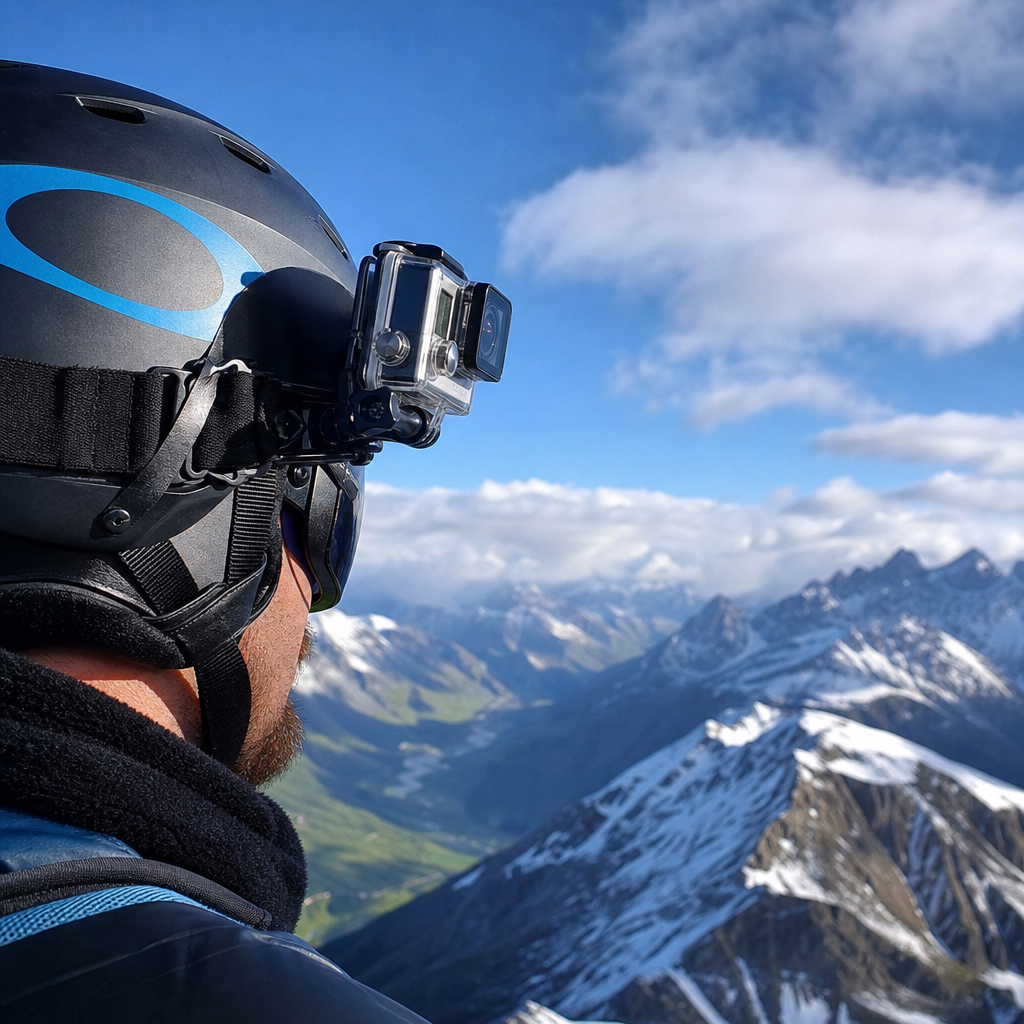
GoPro did not invent the action camera, but it built the category into a global consumer habit by pairing rugged hardware with a powerful media engine and a brand identity rooted in participation. In market terms, an action camera is a compact, durable, wide-angle device designed to capture video and photos during movement, impact, water exposure, and other conditions that defeat standard cameras and most smartphones. The company’s rise matters because it shows how a hardware business can create demand through ecosystem design, user-generated content, and obsessive product focus instead of competing only on component specifications.
I have worked on launches for consumer electronics accessories, and GoPro’s story stands out because the company consistently solved a clear use case before it chased adjacent opportunities. Early customers did not need a general-purpose camera. They needed a camera they could strap to a surfboard, helmet, chest mount, bike frame, or ski pole and trust at speed. By answering that need better than incumbents, GoPro shaped buyer expectations for durability, mounting flexibility, stabilization, and point-of-view storytelling. That influence spread beyond sports into travel, automotive content, family events, education, and professional field documentation.
As a hub within Company Spotlights focused on Tech Innovators and Market Leaders, this article explains how GoPro captured the action camera market by combining product strategy, pricing discipline, channel expansion, software features, and community-driven marketing. It also places GoPro in the broader pattern of category leadership: define a job to be done, make the product easy to adopt, create a content loop that markets the product for you, and keep improving the experience after purchase. Those lessons are useful whether you are studying consumer technology, brand building, retail strategy, or platform economics.
The founding insight: sell a point of view, not just a camera
GoPro began in 2002 when founder Nick Woodman pursued a simple problem observed while surfing in Australia and Indonesia: ordinary consumers could not easily take close-up action photos of themselves in the water. That origin matters because the initial innovation was not a sensor breakthrough. It was a use-case breakthrough. The first product, a 35mm wrist camera, focused on capture angle, durability, and mounting practicality. In other words, GoPro identified the unmet need before it optimized the technology stack.
This point-of-view framing became the company’s strategic center. Instead of marketing image quality in isolation, GoPro sold immersion. The customer was not buying megapixels. The customer was buying proof of experience: the wave ridden, the descent completed, the jump landed, the ride shared. That emotional value created a stronger category than a generic “mini camera” market ever could. Consumers quickly understood what the product was for, which is one reason the brand name became shorthand for the entire class.
Timing also worked in GoPro’s favor. The rise of YouTube, Facebook, and later Instagram gave ordinary users distribution for footage that previously would have stayed private. A mountain biker with a GoPro clip could now reach millions. That changed the economics of word of mouth. Every published video became both personal media and product demonstration. Few hardware companies have benefited as much from the natural fit between product output and social sharing.
Product design and ecosystem advantages
GoPro captured share by making its cameras meaningfully easier to use in harsh conditions than substitutes. Key features included wide-angle lenses, waterproof housings in early generations, compact form factors, physical ruggedness, and a mounting system that turned the camera into a flexible platform. The mounts were not a side accessory business; they were a core adoption lever. A camera that can attach to helmets, handlebars, skis, drones, dashboards, surfboards, pets, and tripods enters more moments in a customer’s life, increasing both utility and attachment.
The company then layered technical improvements that directly addressed category pain points. Higher frame rates enabled slow motion. Better sensors improved low-light handling. HyperSmooth stabilization reduced shaky footage without requiring a gimbal in many scenarios. Voice control helped when hands were occupied. Built-in waterproofing simplified setup compared with housing-dependent competitors. Battery management, cloud upload, and editing workflows further reduced friction. Each improvement reinforced the same promise: capture action reliably and share it quickly.
What made this defensible was integration. Competitors could copy individual specifications, but GoPro bundled hardware, accessories, mobile apps, desktop editing, subscriptions, and cloud storage into a coherent experience. In practice, customers compare complete jobs to be done, not isolated parts. A cheaper camera with weaker mounts, clumsy apps, and poorer stabilization often loses despite similar resolution. That is why category leaders protect the whole system around the device, not just the device itself.
| Strategic lever | How GoPro used it | Market impact |
|---|---|---|
| Clear use case | Focused on POV capture in sports and travel | Defined a new category customers understood instantly |
| Accessory ecosystem | Expanded mounts, cases, grips, and specialized attachments | Increased switching costs and usage frequency |
| Content loop | Promoted customer footage across social and brand channels | Lowered customer acquisition through authentic demonstrations |
| Technical iteration | Improved stabilization, waterproofing, frame rates, and sensors | Maintained premium positioning against imitators |
| Software and subscription | Added Quik editing, auto-upload, and cloud backup | Extended value beyond the initial hardware sale |
Marketing that turned customers into media channels
GoPro’s marketing advantage was not simply that it advertised exciting sports. Many brands do that. The difference was that the product itself generated the marketing asset. When users uploaded cliff dives, ski runs, motocross laps, scuba footage, or family vacation clips, they showed exactly why the camera existed. The company curated and amplified the best examples, creating a virtuous cycle: aspirational content inspired purchase, purchase generated more content, and more content expanded reach. This is one of the clearest cases of user-generated content functioning as a primary growth engine for a hardware brand.
From experience, this model works only when contribution friction is low. GoPro reduced friction by simplifying capture, offering recognizable form factors, and later improving mobile editing through Quik. The brand also maintained a consistent visual language: immersive first-person footage, fast cuts, and real environments rather than studio perfection. That aesthetic gave GoPro an instantly recognizable brand signature. It also widened the target market. Viewers did not need to be elite athletes to imagine themselves using the camera while hiking, cycling, snorkeling, road-tripping, or recording kids at a soccer game.
Retail execution reinforced the message. In big-box stores and specialty retailers, GoPro packaging and demo reels communicated benefit in seconds. The camera looked compact, durable, and ready for adventure. Meanwhile, premium pricing signaled quality rather than commodity status. This mattered because action cameras can appear interchangeable to casual buyers. GoPro avoided that trap by selling trust and outcomes, not just hardware features.
Competition, pricing, and the limits of leadership
GoPro faced competitors from low-cost action camera makers, smartphone cameras, and adjacent imaging brands such as DJI and Sony. Low-end rivals attacked price, often offering 4K labels without matching stabilization, color science, app quality, thermal performance, or durability. Smartphones improved rapidly and eroded casual recording demand, especially for users who did not need mounting or underwater capability. DJI, with the Osmo Action line, became a serious premium competitor by delivering strong stabilization, front screens, and polished hardware. These pressures prove that category leadership must be renewed continuously.
GoPro’s response was a mix of premium product development and recurring-revenue strategy. Subscription bundles, direct-to-consumer discounts, cloud backup, and camera replacement programs made the purchase decision broader than upfront price alone. The company also benefited from brand familiarity when customers searched for an action camera, a powerful demand capture advantage. Still, leadership has limits. Product missteps, inventory imbalances, and overexpansion into areas like drones showed that even strong brands can lose focus. The Karma drone, for example, was recalled in 2016 over power issues, reminding the market that reliability is central to trust in capture devices.
Yet the brand endured because its core category logic remained sound. Action footage still demands compactness, durability, lens width, mounting flexibility, and stabilization that smartphones cannot fully replicate in high-impact settings. That gap is the company’s durable territory.
What GoPro teaches tech innovators and market leaders
GoPro captured the action camera market by doing five things better than most hardware companies. First, it defined a narrow, compelling job to be done and resisted vague positioning. Second, it built an accessory ecosystem that multiplied use cases and increased customer commitment. Third, it converted product output into organic marketing at enormous scale. Fourth, it kept improving practical performance variables that matter in the field, not just benchmark metrics. Fifth, it expanded from device sales into software and subscription value, improving retention and lifetime revenue.
For readers exploring Tech Innovators and Market Leaders, GoPro is an essential case because it sits at the intersection of branding, product design, retail distribution, creator economics, and platform thinking. Its story connects naturally to broader Company Spotlights themes such as how Apple shaped premium consumer electronics, how DJI created drone leadership, how Netflix built habit through experience design, and how Tesla reframed category expectations through product identity. In each case, the winner made the offer legible, desirable, and hard to replace.
The core takeaway is simple: markets are often captured by the company that makes a product easiest to understand, easiest to use in a specific context, and easiest for customers to share with others. GoPro did all three. If you are building a technology brand or studying one, follow the product, the ecosystem, and the content loop together. Then explore the related Company Spotlights articles to compare how other market leaders turned focused insights into category control.
Frequently Asked Questions
Did GoPro invent the action camera?
No. GoPro did not invent the action camera category, and that distinction matters when understanding its success. Compact cameras built for rough conditions existed before GoPro became a household name. What GoPro did exceptionally well was define the modern consumer expectation for what an action camera should be: small, rugged, easy to mount, wide-angle, durable in water and impact-heavy environments, and built specifically for capturing immersive point-of-view footage during movement. In other words, GoPro did not create the basic product idea, but it turned that idea into a mainstream category with a clear identity.
That category-building role is a major reason GoPro became so influential. Rather than selling a niche gadget to a narrow sports audience, the company packaged the action camera as a tool for participation. It was not just about recording events; it was about putting viewers inside the experience. Surfing, skiing, biking, skydiving, diving, road trips, family adventures, and even everyday moments suddenly looked more cinematic and more shareable. GoPro helped consumers understand why they needed a different camera from a phone or traditional camcorder, especially in environments where those devices were fragile, awkward, or simply incapable of producing the same perspective.
So the most accurate answer is that GoPro did not invent the action camera, but it effectively created the modern action camera market as a global consumer habit. It took an existing product concept, sharpened its purpose, built a recognizable brand around it, and made it culturally meaningful at scale.
How did GoPro capture the action camera market if it was not the first company in the space?
GoPro captured the market by doing far more than releasing a durable camera. It combined hardware, branding, distribution, and media into a reinforcing system that competitors struggled to match. On the product side, GoPro made cameras that were compact, tough, mountable, and optimized for wide-angle footage in challenging environments. That sounds simple now, but at the time it solved a very specific problem for athletes, travelers, creators, and hobbyists who wanted reliable, immersive footage during activity rather than before or after it.
Just as important, GoPro made the use case obvious. Many hardware companies fail because they sell features instead of experiences. GoPro sold the feeling of being in the moment and reliving it later. Its marketing showed real people doing compelling things with the camera attached to helmets, boards, bikes, cars, and bodies. That made the product instantly understandable. Consumers did not need a technical education to see the value. They could imagine themselves using it.
The company also built a powerful media engine around user-generated content. GoPro videos were not just ads; they became cultural proof that the product enabled extraordinary storytelling. Every viral clip functioned as a product demonstration, a brand advertisement, and a social aspiration piece all at once. This lowered the cost of explaining the category and increased the emotional pull of ownership.
Another key factor was ecosystem thinking. Mounts, accessories, cases, editing workflows, and compatibility with adventure lifestyles made the product more useful and sticky over time. Once people invested in the system, switching became less attractive. In that sense, GoPro did not win merely because of first-mover advantage or better specs. It won because it made the category visible, desirable, and repeatable for a mass audience.
Why was GoPro’s brand identity so important to its market dominance?
GoPro’s brand identity was central to its success because it transformed a camera from a piece of hardware into a symbol of participation, adventure, and self-documentation. Many consumer electronics brands compete on technical specifications alone, but GoPro built emotional meaning around its products. The brand stood for doing, not just watching. That distinction gave it unusual power in the market. Customers were not simply buying a device to capture video; they were buying into an identity connected to action, creativity, risk, travel, and personal achievement.
This branding worked because it aligned perfectly with the product’s function. A rugged action camera is most valuable when standard cameras and smartphones become inconvenient or vulnerable. GoPro’s messaging consistently reinforced that idea by showing the camera where life is fast, wet, unstable, high-impact, or visually dramatic. The brand told consumers that their best moments were happening in exactly those environments, and that GoPro was the camera built to survive and capture them.
There was also a powerful social dimension. GoPro made people want to share what they did, not just what they saw. The footage itself became part of the brand language. Users effectively became marketers by uploading clips that highlighted authenticity and excitement. This gave GoPro a level of credibility that polished traditional advertising often lacks. People trusted what the camera could do because they saw real-world results from peers, athletes, creators, and everyday customers.
In market terms, this brand identity created differentiation that was difficult to copy. Competitors could release similar hardware, but it was much harder to recreate GoPro’s cultural position. The brand had become shorthand for an entire style of recording experience. That kind of mental ownership is one of the strongest competitive advantages a hardware company can have.
What role did user-generated content and media play in GoPro’s growth?
User-generated content was one of the most important engines behind GoPro’s expansion. In many hardware categories, companies have to spend heavily on advertising to explain what the product does and why it matters. GoPro benefited from a very different dynamic: customers created the most persuasive marketing on the company’s behalf. Every compelling video shot on a mountain, underwater, on a racetrack, or during a family trip demonstrated the product in action. That made the value proposition visible, emotional, and easy to understand.
This was especially powerful because action cameras are best appreciated through results rather than specifications. A consumer may not be persuaded by claims about durability, field of view, stabilization, or mount versatility in the abstract. But when they see smooth, immersive footage from a snowboard run or a surf session, the use case becomes instantly real. GoPro recognized this and leaned into media not as a side activity, but as a strategic growth driver.
The company’s content strategy also helped it scale beyond any single customer segment. Extreme sports gave the brand an exciting entry point, but user-generated media broadened the appeal to travelers, parents, vloggers, cyclists, pet owners, and casual adventurers. That widened the addressable market without forcing the company to radically change the core product story. It remained a camera for capturing life in motion, even as “life in motion” came to include many kinds of consumers.
Perhaps most importantly, media gave GoPro a flywheel. Better content drove more interest. More interest drove more purchases. More purchases created more footage. More footage reinforced the brand and the category. That kind of feedback loop is rare in hardware, which is why GoPro’s rise is often studied as a case of a product company using content to create outsized market momentum.
What business lesson does GoPro’s rise offer about building a hardware category?
GoPro’s rise shows that hardware businesses can achieve category leadership when they do more than manufacture devices. The company demonstrates that winning a market often requires building a complete system around the product: a clear use case, a strong brand identity, an ecosystem of accessories and workflows, and a media strategy that turns customers into advocates. In other words, category creation is not just about engineering. It is about shaping consumer behavior and making the product feel essential within a specific lifestyle.
One major lesson is that the best hardware companies define a problem in human terms, not technical ones. GoPro did not simply say, “Here is a small camera with certain specs.” It said, in effect, “Here is the camera for the moments your phone cannot handle and your regular camera cannot follow.” That framing made the category intuitive and memorable. It also helped justify why a separate device deserved a place in consumers’ lives.
Another lesson is the value of participation-based branding. GoPro’s success was tied to the idea that people want to capture their own experiences, not just consume professionally produced media. By making users part of the brand story, the company gained authenticity, constant content, and a strong emotional connection with buyers. That is a significant strategic advantage in markets where feature imitation happens quickly.
Finally, GoPro illustrates that creating a category can be more valuable than merely entering one. Even without being the original inventor, it became the name most associated with action cameras because it educated the market, dramatized the use case, and embedded the product in culture. For founders, marketers, and strategists, that is the core takeaway: if you can define how people understand a product and why they use it, you can shape the market even if you did not invent the underlying technology first.