Silicon Valley continues to shape how students learn, how teachers teach, and how schools measure progress. In education, “innovative tech tools” refers to software, devices, and platforms that improve instruction, personalize learning, streamline administration, or expand access. The region’s influence matters because it combines venture funding, university research, engineering talent, and direct partnerships with school systems. As a result, many of the products now common in classrooms first appeared as experiments in Bay Area startups, incubators, or university labs.
From my work reviewing school technology pilots, the strongest products do not simply digitize old worksheets. They solve specific instructional problems: giving teachers faster insight into misconceptions, helping multilingual learners participate, reducing grading time, or making abstract concepts visible through simulation. That distinction is important. Educational technology succeeds when it improves learning outcomes, teacher efficiency, or student engagement in measurable ways. It fails when it adds complexity without fitting curriculum, training, privacy rules, or classroom realities.
This hub article maps the most important categories of emerging educational tech tools coming out of Silicon Valley and explains why each category matters. It covers artificial intelligence tutors, adaptive learning systems, collaborative classroom platforms, immersive learning tools, coding and robotics ecosystems, and infrastructure that supports safer, more equitable digital instruction. It also highlights where these tools work best, where they struggle, and what school leaders should evaluate before adoption. For readers exploring cutting-edge tech, this page serves as a practical starting point and a framework for deeper topic-specific research.
AI tutoring and personalized learning platforms
The most visible wave of educational innovation from Silicon Valley is AI-powered tutoring. These platforms use large language models, knowledge graphs, and learner analytics to provide on-demand explanations, guided practice, and feedback tailored to a student’s level. Khan Academy’s Khanmigo, while not a startup, reflects the direction of the market: an AI guide that asks probing questions instead of simply giving answers. Startups such as Quizlet have also moved beyond flashcards by using machine learning to predict weak areas and adjust study sequences.
Personalized learning platforms generally combine diagnostic assessment, content recommendation, and progress monitoring. In practice, a middle school math product might identify that a student understands fractions but struggles with ratios, then assign targeted exercises and surface that pattern to the teacher dashboard. Tools like DreamBox, IXL, and newer Bay Area ventures have normalized this model. The value is speed and precision. A teacher with thirty students gets a near real-time view of who needs reteaching, enrichment, or intervention, which is difficult to achieve through manual grading alone.
However, AI tutoring is not automatically effective. Accuracy, bias, and pedagogical design matter. A chatbot that produces polished but incorrect explanations can damage understanding faster than a static worksheet. Strong platforms constrain responses to vetted curricular material, log interactions for teacher review, and align to standards such as Common Core or NGSS where relevant. The best implementations use AI as structured support, not as an unsupervised replacement for instruction.
Classroom workflow, assessment, and teacher productivity tools
Another major area of innovation is teacher workflow. Silicon Valley companies have spent years building platforms that reduce administrative friction so educators can spend more time on instruction. Google Classroom transformed assignment distribution and feedback at global scale, while tools such as Nearpod, Pear Deck, and Formative turned live checks for understanding into a routine part of lessons. These platforms let teachers embed questions into presentations, collect responses instantly, and adapt the lesson in the moment.
Assessment technology has also become more sophisticated. Modern platforms do more than score multiple-choice quizzes. They can analyze short written responses, track growth over time, map results to standards, and export data into student information systems. For example, a high school English department can use a standards-aligned assessment tool to see whether tenth graders are improving in claim development, textual evidence, and revision habits across a semester. That level of granularity supports professional learning communities and targeted intervention.
Teacher productivity tools increasingly include AI features for rubric generation, lesson planning, and parent communication. Used carefully, these save time on repetitive drafting tasks. In districts I have seen, the practical win is not fully automated teaching. It is reducing prep time by twenty or thirty minutes per lesson so teachers can focus on student conferencing, differentiation, and reviewing actual work. Any school adopting these systems should verify FERPA compliance, role-based permissions, and integration with platforms like Canvas, Schoology, or PowerSchool.
Immersive learning through AR, VR, and simulation
Immersive tools are moving from novelty to targeted instructional use. Augmented reality overlays digital objects onto the physical world, while virtual reality places learners inside a simulated environment. Silicon Valley has driven both hardware and software development, from headset ecosystems to content studios building lessons for science, history, and career training. When used well, immersive learning increases comprehension by making invisible, distant, or dangerous phenomena accessible.
A biology class, for instance, can explore a three-dimensional cell and manipulate organelles in space rather than relying only on textbook diagrams. A history class can examine reconstructions of ancient cities to understand scale, trade routes, and architecture. Career and technical education programs can simulate equipment procedures before students enter labs or worksites. Companies developing these experiences often pair visual immersion with embedded assessments, allowing instructors to see whether students merely explored or actually mastered the concept.
The limitation is cost and implementation complexity. Devices require management, sanitation, storage, bandwidth, and teacher training. Motion sensitivity and accessibility also need attention. For many schools, browser-based simulations from providers like Labster offer a more practical path than full headset deployments. The core lesson is that immersion should be chosen for concepts that truly benefit from spatial or experiential understanding, not as a blanket upgrade for every lesson.
Coding, robotics, and maker ecosystems
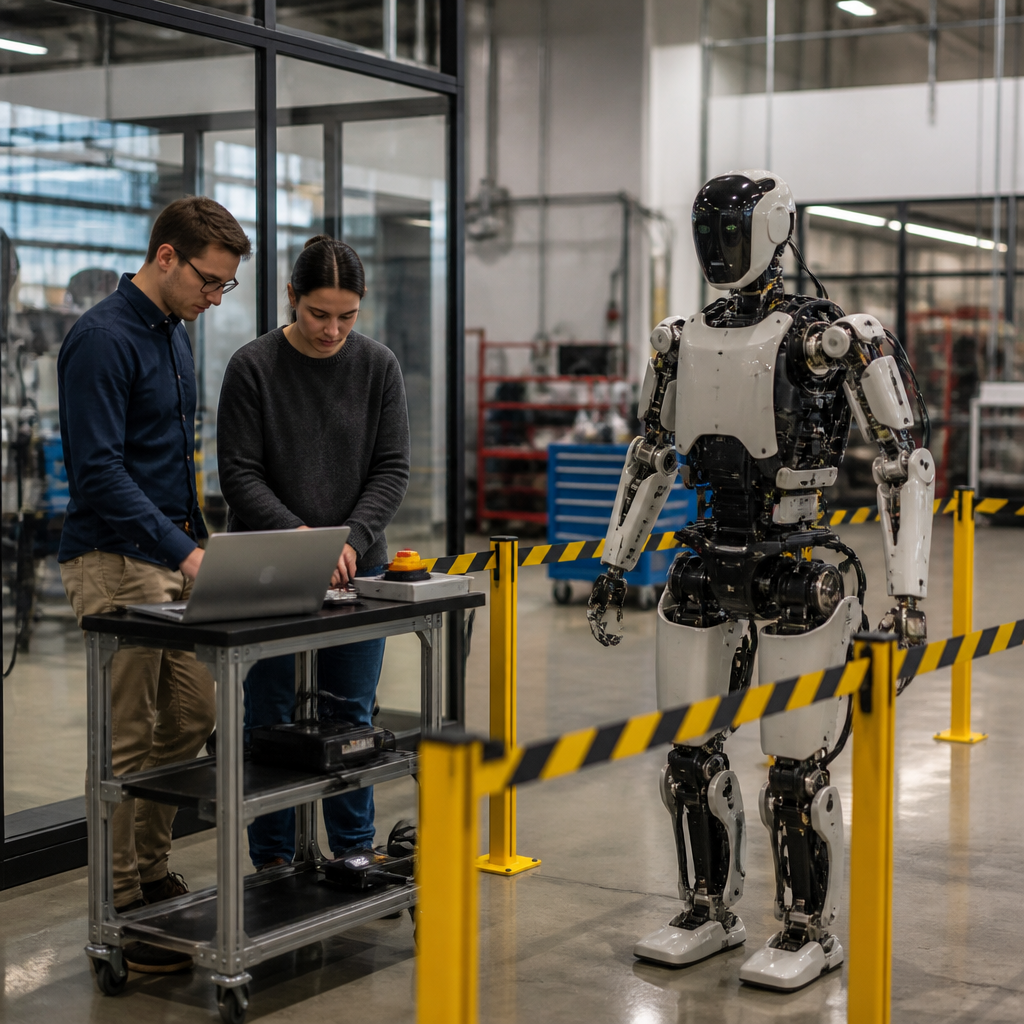
Silicon Valley’s startup culture has strongly influenced K-12 coding, robotics, and maker education. These tools aim to build computational thinking, problem solving, and design skills that map to both technical careers and broader academic success. Platforms such as Scratch-inspired coding environments, Arduino-compatible hardware kits, and robotics systems from companies like Sphero and littleBits have made hands-on engineering more accessible to elementary and secondary students.
What makes this category powerful is the blend of software and physical feedback. When students write code and watch a robot navigate a maze, abstract logic becomes concrete. In one elementary pilot I observed, students who struggled with traditional math explanations became deeply engaged when angles, distance, and sequencing controlled a moving device. The technology created a reason to persist through debugging, which is one of the most transferable habits in STEM education.
| Tool category | Primary classroom use | Best fit | Main implementation challenge |
|---|---|---|---|
| AI tutors | Personalized explanations and practice | Core subjects and homework support | Accuracy and guardrails |
| Assessment platforms | Real-time checks for understanding | Formative instruction | Teacher training and data use |
| AR/VR tools | Immersive concept exploration | Science, history, CTE | Device cost and logistics |
| Robotics kits | Coding and engineering projects | STEM labs and makerspaces | Storage, maintenance, pacing |
Maker ecosystems also support interdisciplinary learning. A project on sustainable cities can combine coding, sensors, 3D design, and presentation skills. Schools evaluating these tools should look beyond the hardware. Curriculum quality, teacher professional development, replacement parts, and alignment to standards such as the CSTA K-12 Computer Science Standards matter just as much as the kit itself.
Accessibility, language support, and inclusive design
Some of the most meaningful educational technology innovations are not flashy. They improve access for learners who have historically been underserved. Silicon Valley companies have developed stronger speech-to-text, text-to-speech, translation, captioning, and reading support features that help students with disabilities and multilingual learners participate more fully. Microsoft Immersive Reader, Google accessibility tools, and newer startups focused on dyslexia support show how inclusive design can benefit mainstream classrooms as well as students with formal accommodations.
Real-time captioning helps deaf and hard-of-hearing students, but it also supports students in noisy environments and those processing academic English. Translation tools help families engage with school communication, though they still require human review for sensitive information. Reading support layers that adjust spacing, font, and audio reinforcement can reduce barriers without stigmatizing students. In practice, inclusive features often become universal benefits.
Schools should still evaluate these tools carefully. Automated translation is imperfect. Accessibility claims should be tested against WCAG guidelines and actual user experience, not marketing language alone. The most reliable vendors provide clear documentation, interoperability, and evidence from district implementations rather than vague promises about equity.
What schools and families should evaluate next
The next phase of emerging educational tech will be defined less by novelty and more by evidence, interoperability, and responsible use. Decision-makers should ask direct questions. Does the tool improve outcomes in independent studies or well-run pilots? Can it integrate through standards such as LTI, OneRoster, or secure rostering APIs? What data does it collect, where is it stored, and how long is it retained? Can teachers override recommendations, review AI outputs, and control student access?
Families should ask simpler but equally important questions: Will this tool help my child practice more effectively, understand concepts more clearly, or communicate better with teachers? If the answer is unclear, the tool may be solving the wrong problem. Schools should also budget for implementation, not just licenses. The hidden costs are training, coaching, technical support, and curriculum alignment.
Silicon Valley will keep producing ambitious educational tools, but the winners will be those that fit classroom realities and show measurable value. The strongest products personalize learning without isolating students, save teachers time without reducing professional judgment, and expand access without compromising privacy. Use this hub as your starting point for exploring cutting-edge tech, then compare categories against your actual learning goals. That is how innovation becomes educational progress.
Frequently Asked Questions
What kinds of educational technology tools are emerging from Silicon Valley today?
Silicon Valley is producing a wide range of educational technology tools that go far beyond basic classroom software. Many of the most influential products fall into a few major categories: adaptive learning platforms, AI-powered tutoring systems, classroom collaboration tools, assessment and analytics dashboards, learning management systems, and administrative automation software. There is also growing innovation in areas such as virtual and augmented reality for immersive learning, speech and language tools for literacy support, and accessibility technologies designed to help students with diverse learning needs participate more fully in class.
What makes these tools stand out is their focus on personalization and scale. Instead of offering the same lesson to every student in the same way, many newer platforms use real-time performance data to adjust difficulty, pacing, and content recommendations. Teachers can often see which students are struggling, which concepts need review, and where enrichment opportunities exist. At the same time, schools benefit from tools that simplify attendance, grading, parent communication, scheduling, and compliance reporting. In practical terms, Silicon Valley innovation is shaping a classroom ecosystem where instruction, feedback, and school operations are increasingly connected through digital platforms.
Why does Silicon Valley have such a strong influence on education technology?
Silicon Valley’s influence comes from a rare combination of resources that are difficult to replicate elsewhere. The region brings together venture capital, top engineering talent, research universities, startup incubators, and a culture that rewards rapid experimentation. When founders identify a challenge in education, they often have immediate access to funding, technical expertise, and strategic advisors who can help turn an idea into a market-ready tool quickly. That speed matters in edtech, where schools are constantly searching for better ways to improve outcomes, reduce administrative burden, and support students with different learning styles.
Another major factor is the region’s close connection to both research and real-world implementation. Universities in and around Silicon Valley contribute work in artificial intelligence, cognitive science, human-computer interaction, and data analytics, all of which directly influence educational product design. At the same time, many startups build partnerships with school systems, districts, and higher education institutions to test and refine their tools. This creates a feedback loop: schools identify problems, companies build solutions, users respond, and products evolve. As a result, many technologies that eventually become standard in classrooms begin as experiments or pilot programs in this innovation-rich environment.
How are these tools changing the way students learn and teachers teach?
For students, innovative educational tech tools are making learning more personalized, interactive, and flexible. Instead of relying only on lectures, textbooks, and one-size-fits-all assignments, students can now engage with digital lessons that respond to their progress in real time. A math platform might provide extra practice when a student misses a concept, while a reading tool may adjust text complexity or offer pronunciation support. Collaboration tools also allow students to work together across devices, contribute to shared projects, and receive faster feedback. In many cases, learning becomes more active because students are not just consuming information—they are interacting with content, data, simulations, and peers.
For teachers, these tools can significantly improve visibility into student performance and free up time for more meaningful instruction. Dashboards can highlight trends that would otherwise take hours to identify manually, such as which standards a class has mastered or where intervention is needed. Automated grading and lesson planning support can reduce repetitive tasks, allowing teachers to focus more on small-group instruction, discussion, and individualized support. Importantly, the best tools do not replace teachers; they enhance what teachers can do. They provide better information, more instructional options, and more efficient workflows, which can lead to stronger classroom engagement and better learning outcomes when implemented thoughtfully.
What should schools look for before adopting new edtech tools from Silicon Valley?
Schools should begin by evaluating whether a tool solves a real instructional or operational problem, rather than adopting technology simply because it is new or well marketed. A strong edtech product should align with curriculum goals, support teacher workflows, and demonstrate clear value for students. Decision-makers should ask practical questions: Does the platform integrate with existing systems? Is it easy for teachers and students to use? What training is required? Can it support a range of learners, including students with disabilities and multilingual learners? Schools should also review whether the vendor offers meaningful customer support and a realistic implementation plan.
Data privacy, security, and evidence of effectiveness are equally important. Because many edtech tools collect student information, schools need to understand exactly what data is being gathered, how it is stored, who can access it, and whether it complies with local, state, and federal privacy requirements. Beyond compliance, schools should look for credible research, pilot results, or case studies that show measurable impact. It is also wise to involve teachers early in the selection process, since classroom adoption often depends on whether the technology genuinely helps educators rather than adding complexity. The most successful implementations usually happen when a tool is chosen strategically, introduced gradually, and supported with ongoing training and feedback.
Are there any challenges or concerns associated with the rapid growth of educational technology?
Yes, and these concerns deserve serious attention. One of the biggest challenges is equity. Not every student has reliable internet access, updated devices, or a quiet place to learn outside school. If a tool assumes constant connectivity or extensive screen time, it may unintentionally widen achievement gaps. There are also valid concerns about student data privacy, algorithmic bias, and the risk of relying too heavily on automation in decisions about learning progress or intervention. Even highly advanced tools can reflect the limitations of their design, especially if they are trained on incomplete data or used without proper oversight.
Another concern is implementation fatigue. Schools are often approached by multiple vendors promising transformation, but too many disconnected tools can overwhelm teachers and confuse students. Technology is most effective when it supports sound pedagogy, not when it becomes the center of the learning experience. There is also the broader question of balance: students still benefit from human interaction, discussion, creativity, and offline learning experiences that no platform can fully replace. The most responsible approach is to treat innovative edtech as a powerful support system rather than a standalone solution. When schools combine strong teaching practices with carefully chosen technology, they are far more likely to see meaningful, sustainable results.