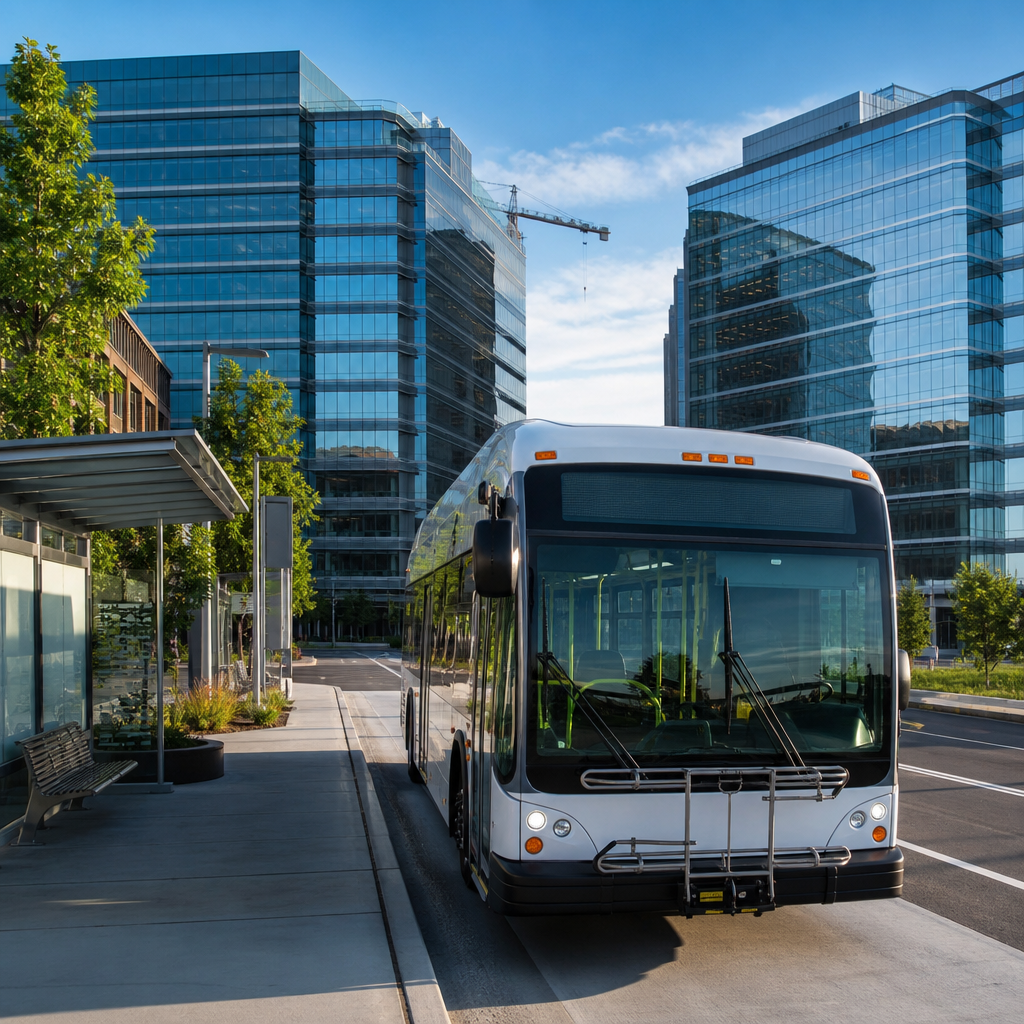
Silicon Valley is reshaping public transportation technology by applying software-first thinking, advanced sensors, electrification, and data-driven operations to buses, trains, shuttles, and shared mobility networks. In practical terms, public transportation technology includes the hardware, software, communications systems, and operating models that move large numbers of people safely, efficiently, and affordably. Silicon Valley matters in this space because it concentrates venture capital, engineering talent, university research, semiconductor design, cloud infrastructure, and startup culture in one region. That combination accelerates experimentation, especially in areas such as autonomous driving, battery systems, routing algorithms, ticketing platforms, and mobility analytics.
From my work reviewing transit procurement pilots and mobility software deployments, the biggest shift is not a single invention. It is the convergence of technologies that were once separate. Vehicles now generate telemetry in real time. Fare payment is increasingly account based rather than tied to a plastic card. Traffic signals can communicate with buses. Agencies can model ridership changes with machine learning instead of relying only on annual surveys. Riders expect trip planning, payment, disruption alerts, and customer support to work through one mobile interface. For cities facing congestion, emissions targets, labor constraints, and aging infrastructure, these changes are no longer optional experiments. They are becoming core operating tools.
This hub article examines the future of public transportation technology through the lens of Silicon Valley innovation. It explains where breakthroughs are happening, which companies and concepts are shaping the market, what benefits agencies can realistically capture, and where the limits remain. The most important point is simple: better transit technology does not replace public policy, capital investment, or good service design. It strengthens them. When deployed with clear goals, modern systems can cut delays, reduce operating costs, improve accessibility, and make transit a more reliable alternative to private car ownership.
Autonomous transit, connected vehicles, and the software-defined fleet
Autonomous vehicle research receives outsized attention, and Silicon Valley has played a central role through companies such as Waymo, Zoox, and Nuro, as well as the sensor and compute ecosystem around NVIDIA, Intel’s Mobileye competitors, lidar developers, and mapping platforms. For public transportation, the near-term opportunity is not fully driverless metro-scale service everywhere. It is targeted automation in controlled environments: airport circulators, business parks, university campuses, dedicated bus lanes, and late-night microtransit zones. In those contexts, low-speed autonomous shuttles can extend service without the full cost structure of fixed routes.
Connected vehicle technology is moving faster than full autonomy and is already useful. Vehicle-to-infrastructure communication allows buses to request signal priority, reducing dwell-to-dwell travel time. Agencies in Los Angeles, San Jose, and elsewhere have tested transit signal priority with measurable impacts on schedule adherence. Software-defined fleets go further by turning each bus or rail car into a networked asset. Operators can monitor battery health, engine diagnostics, door cycles, braking events, wheelchair ramp usage, and HVAC performance remotely. Predictive maintenance models then flag components likely to fail before a roadside breakdown disrupts service.
The strategic lesson is that autonomy should be evaluated as one layer within a broader intelligent fleet architecture. A transit agency gets immediate value from computer vision safety systems, collision avoidance, lane assistance, and cloud-based dispatch tools long before it reaches Level 4 automation. The future is incremental: driver assistance first, operations automation second, fully autonomous service only where the geography, regulation, and economics support it.
Electrification, batteries, and charging infrastructure
The electrification of buses is one of the most tangible transportation technology shifts now underway. Silicon Valley’s influence appears through battery management software, charging optimization, power electronics, and energy platform startups more than through bus manufacturing alone. Companies working on lithium-ion chemistries, fleet charging orchestration, and grid analytics are helping transit agencies transition from diesel and compressed natural gas fleets to battery-electric operations. California’s Innovative Clean Transit regulation has also pushed agencies to plan for zero-emission fleets, creating a proving ground for vendors and utilities.
In real deployments, the technical challenge is not merely buying electric buses. It is matching route blocks, depot layouts, charging windows, utility rates, and battery degradation profiles. Short urban circulators with regenerative braking behave differently from long suburban routes with high-speed segments and heavy HVAC use. Smart charging platforms can stagger charging sessions overnight, avoid peak demand charges, and reserve capacity for vehicles assigned to the earliest pull-outs. Agencies that ignore these details risk range anxiety, underused chargers, and costly infrastructure oversizing.
Battery innovation will continue, but operations software may deliver equal value. Better state-of-charge forecasting, thermal management, and charger uptime monitoring often produce faster returns than chasing every next-generation chemistry headline. Over time, vehicle-to-grid integration may let depots act as distributed energy resources, though that model still depends on utility rules, interconnection timing, and battery warranty terms.
Data platforms, payment systems, and rider experience
Public transportation technology succeeds or fails at the rider interface. Silicon Valley’s strongest contribution here is platform design: mobile applications, cloud APIs, digital identity systems, and payment infrastructure that remove friction from every trip. Riders want accurate arrival times, transparent fares, multimodal trip planning, disruption alerts, and accessible customer support. Agencies increasingly deliver these through open data standards such as GTFS and GTFS Realtime, while account-based ticketing lets users tap bank cards, phones, or wearables instead of managing separate fare media.
Mobility data platforms also help agencies allocate service. By combining automatic passenger counters, anonymized location data, fare validations, and event calendars, planners can identify overcrowded trips, underperforming segments, and first-mile gaps. During the pandemic recovery period, agencies used these tools to detect the rise of all-day travel patterns rather than traditional commuter peaks. That matters because schedules built only for nine-to-five demand miss healthcare workers, service employees, students, and weekend riders.
| Technology area | Primary benefit | Common challenge | Practical example |
|---|---|---|---|
| Account-based ticketing | Faster boarding and easier fare capping | Legacy back-office integration | Open-loop tap payment on buses and rail |
| Transit signal priority | Improved travel time and reliability | Coordination with city traffic departments | Buses extending green lights at intersections |
| Predictive maintenance | Fewer breakdowns and better spare ratio planning | Inconsistent sensor data quality | Detecting battery or brake failures early |
| Autonomous shuttles | Flexible service in controlled zones | Safety validation and regulation | Campus or airport circulator routes |
The best rider-facing systems do one thing extremely well: they reduce uncertainty. A passenger may tolerate a ten-minute wait more easily if the app, platform display, and service alerts all agree on what is happening and what alternatives exist. That consistency requires disciplined data governance, not just attractive interfaces.
Startups, procurement, and the public-private innovation gap
Silicon Valley startups often move faster than transit agencies, which creates both opportunity and friction. Startups are built to iterate quickly, pursue product-market fit, and scale software across many customers. Public transportation agencies, by contrast, operate under procurement law, labor agreements, safety certification requirements, equity mandates, and long asset life cycles. A rail signaling system or fare platform cannot be updated with the same risk tolerance as a consumer app. I have seen promising pilots stall not because the idea was weak, but because cybersecurity reviews, insurance terms, or data ownership clauses were unresolved.
Successful partnerships share several traits. First, agencies define the operational problem before evaluating the vendor. “Reduce bus bunching on three corridors” is better than “buy AI dispatch.” Second, contracts specify interoperability standards, service-level agreements, and exit terms so the agency is not trapped in a proprietary system. Third, pilot metrics are clear: on-time performance, mean distance between failures, boarding time reduction, customer satisfaction, or cost per passenger. Fourth, labor is brought in early when technology changes operator workflows.
This is where a hub approach to exploring cutting-edge tech is useful. Technologies should not be assessed in isolation. Payment platforms affect dwell time. Electrification changes maintenance staffing. Real-time data improves customer communications and planning. A strong innovation program connects these domains instead of treating each purchase as a standalone gadget.
What comes next: AI, digital twins, and equitable deployment
The next phase of public transportation technology will be shaped by artificial intelligence, simulation, and more rigorous equity analysis. AI is already useful for demand forecasting, incident classification, customer service triage, and timetable optimization. The most effective systems are narrow and accountable, not magical black boxes. For example, machine learning can predict where bus bunching is likely within a route based on traffic, boarding patterns, and weather, allowing dispatchers to intervene earlier. Digital twins extend this logic by creating virtual models of depots, stations, corridors, or entire networks so agencies can test service changes before implementing them in the field.
Yet the future of public transportation technology is not simply a technical competition. Equity and accessibility determine whether innovation serves the public interest. A brilliant app does little for riders without smartphones, bank accounts, language access, or reliable cellular service. Autonomous features must perform safely for pedestrians, cyclists, wheelchair users, and visually impaired travelers in dense urban environments, not just in clean test zones. Agencies should require accessibility audits, offline payment options, multilingual support, and transparent performance reporting as standard practice.
Silicon Valley will continue to influence transit because it excels at turning complex systems into scalable products. The winners, however, will be the cities and agencies that pair those tools with durable funding, thoughtful regulation, and service planning rooted in rider needs. If you are building a transit strategy or tracking tech startups, use this hub as your starting point, then map each innovation to a real operating problem, a measurable outcome, and a clear public benefit.
Frequently Asked Questions
1. How is Silicon Valley changing public transportation technology?
Silicon Valley is changing public transportation technology by bringing a software-first mindset to systems that were historically built around heavy infrastructure and slow procurement cycles. Instead of treating buses, trains, and transit stations as isolated assets, many technology companies now approach them as connected platforms that can be continuously improved through data, automation, and digital services. That shift affects everything from route planning and fare collection to vehicle diagnostics, rider communications, and traffic signal coordination.
In practical terms, this means transit agencies can use real-time data to monitor vehicle locations, predict delays, optimize dispatching, and better match service to demand. Advanced sensors and onboard computing help operators understand passenger loads, track mechanical issues before breakdowns happen, and improve safety through collision avoidance and driver-assistance features. Cloud-based software platforms also make it easier to integrate different parts of the transportation network, such as buses, rail, microtransit, bike share, and paratransit, into a more unified rider experience.
Silicon Valley’s influence also comes from its concentration of venture capital, engineering talent, and startup culture. That environment encourages experimentation with electrification, autonomous shuttles, digital ticketing, mobility-as-a-service apps, and communications systems that connect vehicles to infrastructure. While not every idea succeeds, the region has accelerated the pace of innovation by treating public transportation as a technology problem as much as an infrastructure one. The result is a growing push toward transit systems that are smarter, more efficient, more responsive, and easier for the public to use.
2. What technologies are most important to the future of public transportation?
Several technologies stand out as especially important, and the most transformative transit systems will likely combine all of them rather than rely on a single breakthrough. First, software and data analytics are foundational. Agencies increasingly depend on platforms that collect and analyze information from vehicles, stations, fares, maintenance systems, and passenger demand. These tools help transit operators make better decisions about scheduling, resource allocation, and service reliability.
Second, electrification is central to the future of public transportation. Electric buses, battery-electric shuttle fleets, and electrified rail systems can reduce fuel costs, lower emissions, and improve urban air quality. However, electrification is not just about swapping engines. It also requires charging infrastructure, energy management software, depot redesign, grid coordination, and careful planning around vehicle range and route performance. Silicon Valley companies have been active in building the battery systems, charging tools, and fleet intelligence software needed to support that transition.
Third, sensors, communications systems, and connected infrastructure are becoming essential. Cameras, lidar, radar, GPS, and telematics allow agencies to better monitor vehicles and roadway conditions. Vehicle-to-infrastructure communication can help buses move more efficiently through intersections, while condition-monitoring systems can detect track or equipment issues before they lead to service disruptions. Riders benefit as well through more accurate arrival predictions and better service alerts.
Fourth, digital rider-facing tools are reshaping expectations. Mobile payment, contactless ticketing, multimodal trip planning, and integrated mobility apps make transit easier to navigate and use. These systems can reduce friction, especially for occasional riders who may be intimidated by fragmented payment systems or unclear route information. Finally, automation and autonomy remain an emerging but important category, particularly in controlled environments such as campus shuttles, dedicated lanes, or low-speed circulators. Although fully autonomous mass transit remains a long-term challenge, the technologies being developed today are already improving safety, operational efficiency, and system awareness.
3. Why does a software-first approach matter so much for buses, trains, and shared mobility networks?
A software-first approach matters because modern public transportation is no longer just about vehicles following fixed routes. It is about orchestrating a complex, dynamic network in real time. Buses get delayed by traffic, rail systems face maintenance constraints, rider demand changes by hour and neighborhood, and shared mobility services must constantly rebalance supply. Software helps agencies and operators manage that complexity with far greater precision than traditional manual systems.
For example, scheduling software can adapt service levels based on observed ridership patterns, special events, weather, or disruptions. Maintenance platforms can use predictive analytics to flag components that are likely to fail before a vehicle goes out of service. Operations centers can combine GPS feeds, dispatch data, and passenger information systems to respond more quickly when incidents occur. Instead of simply reacting to problems after they happen, agencies can move toward a more proactive operating model.
This approach also improves the rider experience. Software-driven systems support more accurate arrival times, better trip planning, personalized alerts, easier payments, and more seamless transfers between different transportation modes. From a policy and budget perspective, software can also help public agencies do more with limited resources by improving asset utilization, reducing downtime, and identifying underperforming services that need redesign. In short, software turns public transportation from a static service into a flexible, measurable, continuously improvable network, which is exactly why Silicon Valley’s methods have become so influential in the sector.
4. What are the biggest challenges in bringing Silicon Valley innovation into public transportation?
The biggest challenge is that public transportation operates under very different conditions than consumer technology. Transit agencies are responsible for safety, accessibility, equity, labor coordination, public accountability, and long-term reliability. They cannot simply move fast and break things. A bus fleet, rail signal system, or citywide fare platform must work consistently for large populations, including people who do not have smartphones, bank accounts, or flexible travel options. That makes implementation slower and more complex than many private-sector technology companies initially expect.
Procurement and governance are another major hurdle. Public agencies often purchase technology through formal bidding processes, strict compliance requirements, and multi-year budgeting cycles. Startups that are used to rapid product iteration may struggle with those timelines. Integration is also difficult because many transit systems rely on legacy infrastructure that was not designed to communicate with modern cloud platforms or sensor-rich equipment. Upgrading one layer of the system often requires changes across operations, training, cybersecurity, and maintenance.
There are also serious concerns around privacy, cybersecurity, and algorithmic decision-making. As transit becomes more connected and data-driven, agencies must protect sensitive rider and operational information while ensuring that technology choices do not unintentionally reduce service quality for vulnerable communities. Equity is especially important. If innovation primarily benefits affluent riders, premium corridors, or smartphone users, it can undermine the core public mission of transit. Labor implications matter too, since automation and new operating models can change workforce roles and require substantial retraining.
Ultimately, the challenge is not whether Silicon Valley can generate useful ideas. It can. The real challenge is adapting those ideas to the public sector’s duty to provide safe, affordable, inclusive, dependable mobility at scale. The most successful partnerships tend to happen when technology companies understand transit’s operational realities and when agencies adopt innovation in ways that strengthen, rather than disrupt, the public value of the system.
5. What does the future of public transportation technology likely look like over the next decade?
Over the next decade, public transportation technology will likely become more integrated, electrified, connected, and operationally intelligent. Riders should expect transit to feel less fragmented. Instead of navigating separate apps, fare systems, and schedules for buses, trains, shuttles, and other mobility services, many regions will move toward more unified digital platforms. That means trip planning, payments, service updates, and transfers could increasingly happen through a single interface, making public transportation easier to use for both regular commuters and occasional riders.
Electrification will likely expand significantly, especially in bus fleets and municipal shuttle services. As battery performance improves and charging ecosystems mature, more transit agencies will transition from diesel to electric vehicles. This shift should reduce emissions and noise while also changing how fleets are managed behind the scenes. Agencies will rely more heavily on software to monitor battery health, optimize charging schedules, and align vehicle deployment with route demands and energy availability.
Operations will become more predictive and data-driven. Instead of relying mainly on static schedules and fixed service assumptions, agencies will use real-time and historical data to redesign routes, improve frequencies, and reduce service gaps. Maintenance will become smarter through connected diagnostics and condition-based monitoring. Traffic management systems may give buses signal priority more dynamically, helping improve speed and reliability on congested corridors. In rail, better sensing and analytics can support safer and more resilient infrastructure management.
Autonomous technology will likely play a more targeted role than some early predictions suggested. Rather than replacing traditional transit overnight, autonomy may first succeed in specific use cases such as low-speed circulators, depot operations, dedicated-lane shuttles, or first-mile and last-mile connectors. At the same time, driver-assistance systems and safety automation will become increasingly common across mainstream transit fleets.
Perhaps most importantly, the future will be defined by whether technology helps public transportation deliver on its core promise: moving large numbers of people safely, efficiently, and affordably. The most meaningful advances will not just be flashy innovations. They will be the systems that improve reliability, expand access, strengthen sustainability, and make transit more useful in everyday life. That is where Silicon Valley’s influence could be genuinely transformative—if innovation remains aligned with public needs.