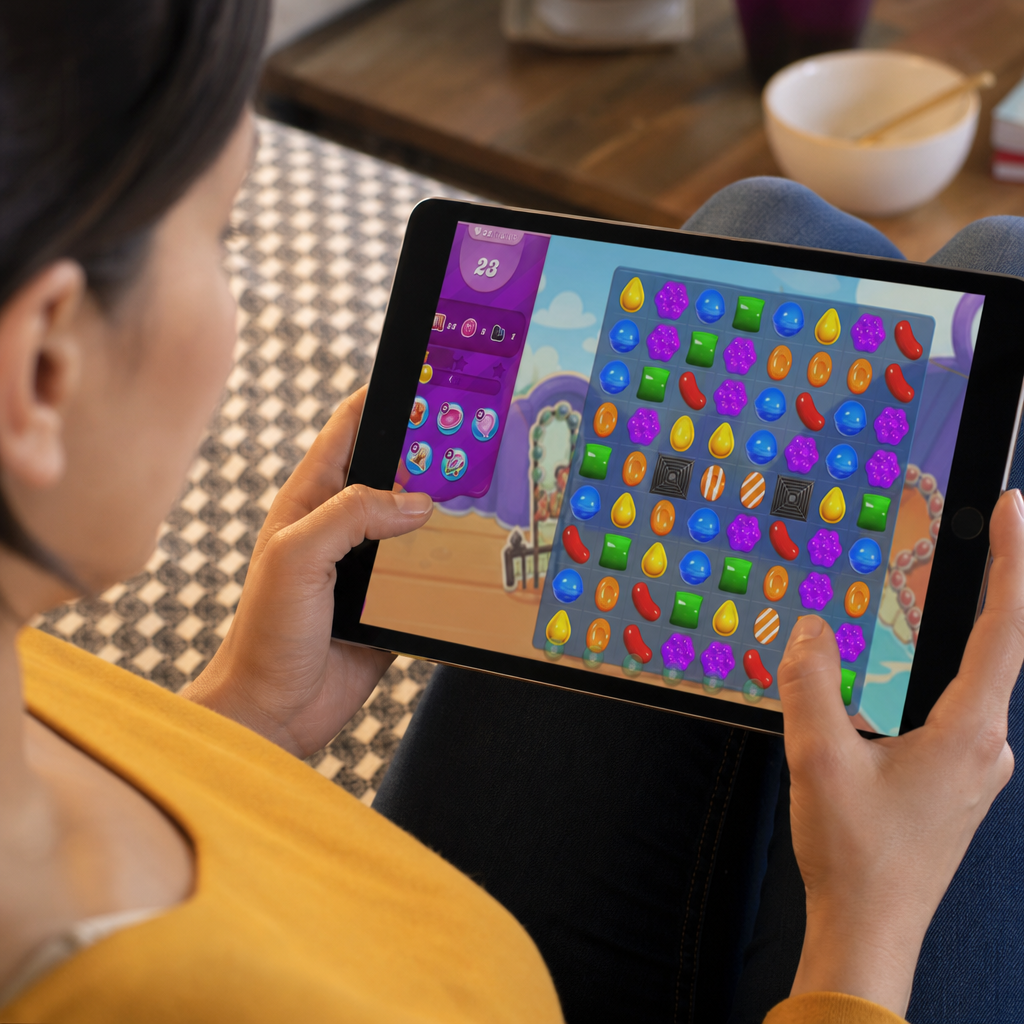
King Digital Entertainment turned casual gaming into a global habit by mastering short play sessions, data-led design, and relentless live operations. Best known for Candy Crush Saga, the company is more than a mobile game publisher; it is a case study in how a studio scales simple mechanics into durable entertainment franchises. In the Company Spotlights category, this Movers and Shakers hub explains why King matters, what made its business model so effective, and how its decisions influenced the wider games market. Casual gaming refers to games built for broad accessibility, quick onboarding, and repeatable sessions rather than steep learning curves or niche hardware. Mastery, in King’s case, means combining player psychology, puzzle balancing, monetization, analytics, user acquisition, brand management, and platform distribution into one disciplined operating system.
I have worked on mobile content and growth planning long enough to recognize how unusual King’s consistency was during the sector’s boom years. Many studios produced one hit; King built processes that repeatedly identified retention drivers, polished level funnels, and converted engagement into revenue without requiring players to make large upfront commitments. That matters because casual gaming is one of the clearest examples of modern digital entertainment economics. It shows how intellectual property can emerge from mechanics first, how free-to-play can fund massive scale, and how a game studio can become a consumer brand recognized far beyond core gaming circles. Understanding King also helps explain the evolution of app stores, social gaming, and mobile advertising.
As a hub for Movers and Shakers coverage, this article maps the company’s rise, the operating practices behind its growth, the commercial lessons competitors copied, and the strategic questions that followed its success. If you want a concise answer, it is this: King mastered casual gaming by making frictionless puzzle experiences, testing everything, extending player lifetime through live content, and building a monetization loop that rewarded patience as much as spending. The details behind that formula are where the real value lies.
The Rise of King and the Social-to-Mobile Shift
King was founded in 2003 and spent its early years making browser-based and portal games before becoming a defining force in social and mobile gaming. That origin matters. Unlike companies born directly into smartphone app stores, King learned to distribute games across web portals, Facebook, and then mobile devices, giving it an unusual understanding of audience migration. When Facebook gaming surged around the late 2000s, King used social channels to reach mainstream users who did not identify as traditional gamers. That audience later followed puzzle franchises onto iOS and Android, where the market opportunity became dramatically larger.
The turning point was Candy Crush Saga, launched on Facebook in 2012 and on mobile soon after. The game’s match-three mechanics were familiar, but King executed them with uncommon precision: bright visual language, immediate objectives, escalating difficulty curves, and synchronized progress across platforms. In plain terms, players could understand the game in seconds, fail without feeling punished, and return repeatedly because the next attempt always felt achievable. This structure drove high retention. Industry analysts and public filings later showed how central Candy Crush became to King’s revenue mix, while the brand itself entered mainstream culture in a way few mobile games have managed.
King’s rise also reflects timing. Smartphone adoption accelerated, app store billing became easier, and free-to-play design normalized. Players no longer needed to buy a boxed game or learn complex systems to participate. King occupied that moment with a product portfolio that felt welcoming, colorful, and endlessly renewable. For a Movers and Shakers hub, this is the core historical lesson: major companies often win not simply by inventing a genre, but by arriving when technology, distribution, and consumer habits align, then operating better than everyone else.
The Design Formula Behind Casual Gaming Success
King’s games look simple, but simplicity is the result of heavy refinement. The company excelled at what product teams call onboarding, compulsion loop design, and difficulty pacing. Onboarding meant teaching core actions with minimal text and fast feedback. In Candy Crush, a player learns to swap candies, create special pieces, and complete level goals through interaction rather than reading a long tutorial. That reduction of cognitive load is essential in casual gaming, where many users will abandon a game within minutes if the first session feels confusing.
Difficulty pacing was equally important. King balanced levels so players experienced frequent wins early, then periodic friction later, creating a pattern of confidence followed by challenge. This is not manipulation in a simplistic sense; it is structured game design. Too easy, and players get bored. Too hard, and they churn. King’s level systems introduced blockers, move limits, and objective variants gradually, preserving novelty while reinforcing learned behaviors. The company also used map progression, celebratory animations, and event layers to make advancement visible.
Another strength was session architecture. Casual players often open a game while commuting, waiting in line, or taking a short break. King designed levels that could be completed quickly, but chained together in a way that encouraged “just one more try” behavior. Lives systems, streaks, and limited-time events extended the relationship without demanding long uninterrupted play sessions. This fit mobile life perfectly and widened the audience to people who had never owned a console.
| Design Element | How King Used It | Why It Worked |
|---|---|---|
| Fast onboarding | Interactive tutorials with minimal text | Reduced confusion and improved first-session retention |
| Level pacing | Early wins followed by controlled difficulty spikes | Balanced motivation and challenge |
| Short sessions | Levels built for quick completion on mobile | Matched real-world player behavior |
| Live events | Time-limited challenges and rewards | Created reasons to return frequently |
| Visual clarity | Readable colors, obvious goals, strong feedback | Made gameplay intuitive across age groups |
Monetization, Analytics, and Live Operations Discipline
King’s commercial model depended on free-to-play done at scale. Players could start without paying, then spend on boosters, extra moves, or other convenience-based items when they hit friction points. The smartest part of this system was not simply selling advantages; it was preserving the game for non-spenders while offering committed players ways to smooth progression. In successful free-to-play economies, conversion is only one metric. Retention, session frequency, payer satisfaction, and long-term lifetime value are equally important. King understood that better than many rivals that chased aggressive monetization and damaged user trust.
Analytics sat at the center of decision-making. Teams tracked completion rates, fail points, tutorial exits, purchase triggers, and cohort retention. In practical terms, if too many players abandoned a level cluster, designers could adjust objectives, moves, or reward timing. If a live event improved seven-day retention without hurting monetization, it could be expanded. This test-and-learn culture separated King from studios driven mainly by creative instinct. Creativity still mattered, but it operated within a rigorous measurement framework. Tools varied across the industry, but the underlying practice aligned with product analytics standards used by leading mobile companies: event instrumentation, A/B testing, segmentation, and funnel analysis.
Live operations sustained engagement after launch. New levels, seasonal content, and event calendars turned a game into an ongoing service. This was crucial because mobile markets became crowded quickly. User acquisition costs rose, and relying on constant new downloads became expensive. By increasing player lifetime, King improved return on acquisition spend and reduced dependence on one-time bursts of attention. That operational discipline remains one of the company’s most influential contributions to the business of casual gaming.
Marketing Power, Platform Strategy, and Industry Influence
King did not grow through design alone. It paired product strength with sophisticated user acquisition, cross-promotion, and brand recognition. Performance marketing helped the company buy traffic efficiently, while its portfolio let it promote one title to the audience of another. Once a company reaches scale, every active player becomes a distribution asset. King exploited that advantage well, especially when app store discovery became more competitive. Strong iconography, familiar characters, and consistent visual branding also improved click-through and recall, especially among mainstream users scanning crowded storefronts.
Platform strategy was another advantage. King benefited from Facebook virality in an earlier era, then moved decisively into mobile as smartphones became the dominant play environment. Cross-device synchronization mattered more than it may seem today. It reduced friction for users switching between desktop and mobile and made progress feel persistent. That persistence strengthened habits. Later, King operated within a larger corporate structure after Activision Blizzard acquired the company in 2016 for $5.9 billion, a deal that underscored mobile gaming’s strategic value to established publishers seeking broader reach.
The company’s influence spread across the industry. Competitors studied its level maps, event systems, economy tuning, and ad creative. Product managers adopted more disciplined experimentation. Publishers recognized that casual audiences could support enormous franchises, not just disposable time-fillers. Even studios outside puzzles borrowed from King’s live-ops cadence and retention design. There are limits to imitation, of course. Copying surface features without the underlying analytics culture rarely works. King’s real advantage was not candy-themed art or a match-three board; it was the operating system behind them.
What King’s Legacy Means for Movers and Shakers Coverage
King belongs in any serious Movers and Shakers hub because its story connects product design, market timing, consumer behavior, and corporate strategy in one company profile. It shows how entertainment businesses can turn broad accessibility into global scale, and how disciplined operations can matter as much as breakthrough creativity. For readers exploring related Company Spotlights articles, King provides a useful benchmark. When assessing other influential game companies, ask the same questions King forces into view: How do they acquire users? How do they retain them? What makes their monetization sustainable? Which capabilities are brand-driven, and which are process-driven?
The most practical takeaway is straightforward. Casual gaming leadership is not accidental. It is built through clear design, rigorous analytics, patient iteration, and live-service execution that respects player time while supporting revenue. King Digital Entertainment mastered those fundamentals and, in doing so, reshaped expectations for what a mobile-first company could become. If you are using this hub to understand the figures and firms that moved the games business, start with King, then follow the adjacent Company Spotlights to compare how other leaders built, scaled, and defended their positions in a fast-changing market.
Frequently Asked Questions
Why is King Digital Entertainment considered a defining force in casual gaming?
King Digital Entertainment is widely seen as a defining force in casual gaming because it proved that simple, accessible game mechanics could scale into massive, long-lasting global entertainment brands. Before companies like King fully demonstrated the model, many still viewed mobile and casual games as lightweight distractions with limited staying power. King changed that perception by building games that were easy to understand in seconds, satisfying to play in short bursts, and compelling enough to bring players back day after day. That combination turned casual gaming from a niche pastime into a mainstream daily habit for millions of people.
The company’s biggest breakthrough came with Candy Crush Saga, but King’s importance goes beyond one hit title. It refined a repeatable system for designing, testing, launching, and operating games at scale. Rather than relying solely on flashy innovation, King focused on polish, usability, progression pacing, retention mechanics, and constant iteration. It understood that for casual audiences, success often depends less on complexity and more on removing friction, creating positive feedback loops, and making every session feel rewarding.
King also helped define the modern mobile business playbook. It blended free-to-play accessibility with highly optimized monetization, live operations, content updates, and data-led product decisions. In doing so, it influenced not just puzzle games, but mobile game development more broadly. Its success showed the wider industry that durable franchises could be built from straightforward mechanics if the surrounding systems—progression, social connection, event cadence, and user experience—were engineered with discipline. That is why King matters in any serious discussion about the evolution of casual gaming.
What made Candy Crush Saga such an effective and durable success?
Candy Crush Saga became such an effective and durable success because it combined universal accessibility with unusually sophisticated underlying design. At first glance, it is a match-three puzzle game with bright visuals and approachable rules. That surface simplicity is exactly what made it so powerful: almost anyone could start playing immediately without needing gaming experience, a long tutorial, or a major time commitment. Yet underneath that simplicity was a deeply tuned system of level design, difficulty pacing, goals, boosters, and progression hooks that kept players engaged over the long term.
One of the game’s greatest strengths was how well it fit real-world behavior. Sessions were short, making it ideal for commutes, breaks, waiting rooms, and spare moments throughout the day. Players did not need to carve out an hour to make progress. They could dip in, attempt a level or two, and feel a sense of completion. That session structure aligned perfectly with smartphone usage patterns and helped turn the game into a routine rather than an occasional activity.
Its progression model was also critical. Candy Crush Saga constantly gave players near-term goals, visible advancement, and small bursts of accomplishment. When difficulty increased, it often did so in ways that created tension without immediately feeling unfair. Lives systems, level retries, boosters, and social prompts all contributed to an ecosystem that encouraged persistence. Importantly, the game was not static. King continually added new levels and events, which meant the game felt alive and ongoing rather than finite and disposable. That steady live support transformed a popular app into a long-running entertainment service, and that is a major reason it remained relevant far longer than many mobile hits.
How did King use data-led design without losing the human side of game development?
King’s reputation for data-led design comes from its rigorous use of analytics to understand player behavior, optimize progression, improve retention, and refine monetization. But what made the company particularly effective was that it did not treat data as a substitute for design judgment. Instead, it used data as a decision-support system. Metrics could show where players dropped off, which levels were too difficult, where conversion rates improved, or how event participation changed over time. That information gave King extraordinary visibility into how its games were actually being experienced at scale.
In practical terms, this meant the company could test changes with precision. It could adjust level balance, tune reward structures, experiment with interface changes, and assess whether updates made the game more enjoyable or more frustrating. A/B testing and behavioral analysis allowed King to reduce guesswork and improve consistency. For a live-service game serving millions of users, that discipline became a competitive advantage. Small improvements, repeated over months and years, compound into huge gains in engagement and revenue.
At the same time, successful casual games cannot be built on spreadsheets alone. Data can identify patterns, but it does not invent charm, emotional satisfaction, or the intuitive feel of a good puzzle loop. King’s strongest products worked because they married measurable optimization with strong creative instincts. The company understood that player psychology matters: anticipation, relief, delight, frustration, momentum, and reward all shape whether someone comes back tomorrow. In that sense, King’s mastery was not simply being “data-driven.” It was being data-informed while still respecting that game design is ultimately about creating enjoyable experiences for human beings.
What role did live operations play in King’s business model and long-term growth?
Live operations were central to King’s business model because they allowed its games to function as evolving services rather than one-time products. In a traditional boxed-game model, most of the commercial outcome is decided around launch. In King’s model, launch was only the beginning. The real value came from continually managing the player experience over time through new levels, limited-time events, seasonal content, rewards, promotions, balancing updates, and engagement campaigns. This approach helped extend the lifespan of successful titles far beyond what older gaming models typically allowed.
For players, live operations created a sense that the game world was active and responsive. There was always something new to do, another milestone to reach, or a fresh event to participate in. That helped prevent churn, especially in a category where many users are quick to switch attention. For the business, live ops improved retention, monetization, and forecasting. A player who stays engaged for months or years is vastly more valuable than a player who tries a game once and leaves. King’s operational discipline turned retention into a strategic engine.
Live operations also gave King flexibility. If player behavior shifted, the company could respond. If an event format worked, it could be expanded. If progression felt too punishing, it could be tuned. This continuous feedback loop made the company less dependent on constantly finding brand-new blockbuster hits. Instead, it could deepen and defend the value of existing franchises. That distinction is important: many gaming companies can launch a successful game, but far fewer can operate one effectively at scale for years. King’s strength in live ops is a major reason its games became durable franchises instead of short-lived trends.
How did King influence the wider mobile games industry and the way studios think about growth?
King influenced the wider mobile games industry by showing that scale in casual gaming comes from operational excellence as much as creative concept. Plenty of companies had simple game ideas, but King demonstrated how to turn simplicity into a systematized growth engine. Its success encouraged studios across the industry to take retention, monetization design, analytics, event scheduling, and content cadence far more seriously. In effect, it helped normalize the idea that mobile game development is not just about building the core game loop—it is about managing the full lifecycle of player engagement.
Its impact can be seen in how studios now approach onboarding, level progression, personalization, social features, and economy tuning. King proved that reducing friction at every stage matters enormously, especially for broad audiences. If a game is confusing in the first minute, punishing too early, or inconsistent in rewards, players leave. The company’s best-known titles showed that broad accessibility is not a compromise; it can be the foundation of enormous commercial success when paired with disciplined product management.
King also helped validate the franchise mindset in mobile. Rather than treating mobile games as disposable apps, it treated them as entertainment properties that could be updated, extended, and sustained over long periods. That influenced investor expectations, acquisition strategies, and development roadmaps across the sector. More broadly, King became a case study in how a company can build a global entertainment business from mechanics that seem deceptively simple. Its legacy is not just a famous puzzle brand, but a blueprint for how casual games can become enduring habits, scalable products, and major cultural touchpoints.