Silicon Valley, the globally renowned innovation hub, is home to some of the most groundbreaking tech companies. This hotbed of technological advancements is not only shaping industries like software, hardware, and telecommunications but also exerting a significant influence on the tourism industry. As more and more people travel for both pleasure and business, there is an ever-growing demand for new technologies that enhance travel experiences. From personalized recommendations and streamlined booking systems to augmented reality tours and smart luggage, Silicon Valley’s innovations are transforming how we explore the world.
Tourism, an industry that thrives on making travel experiences seamless and enjoyable, has rapidly evolved thanks to technological advancements. The infusion of technology into tourism aims to solve common pain points faced by travelers, such as booking complexity, language barriers, and safety concerns. Through cutting-edge technologies, the travel experience has become more convenient, personal, and memorable.
This article dives deep into the contributions of Silicon Valley to the travel and tourism industry. We’ll explore the advancements in AI and machine learning, the promise of augmented reality, smart travel gadgets, and the rise of startups focusing on travel solutions. We’ll also look at how these innovations are being integrated into the practices of major travel companies, ultimately providing a more enhanced and personalized travel experience for consumers.
Artificial Intelligence and Machine Learning for Seamless Travel
One of the most significant contributions Silicon Valley has made to tourism is the application of artificial intelligence (AI) and machine learning. These technologies have transformed how we plan, book, and experience travel. Major companies like Google, Expedia, and Airbnb utilize AI-driven algorithms to offer personalized recommendations. By analyzing user data, these platforms provide customized suggestions for hotels, flights, and activities based on individual preferences and past behaviors.
Furthermore, chatbots powered by AI are becoming increasingly popular in providing real-time customer support. These virtual assistants can answer queries, provide booking modifications, and even recommend local attractions, enhancing the pre-and-post travel experience. This not only improves customer satisfaction but also reduces the workload on human customer service agents.
Machine learning algorithms also play a significant role in optimizing pricing strategies. Dynamic pricing models, which use machine learning to predict demand trends, help both consumers and businesses by offering competitive rates. For instance, airline companies use these models to adjust ticket prices in real-time, ensuring maximized revenue while offering cost-effective options for travelers.
Augmented Reality: The Future of Interactive Travel Experiences
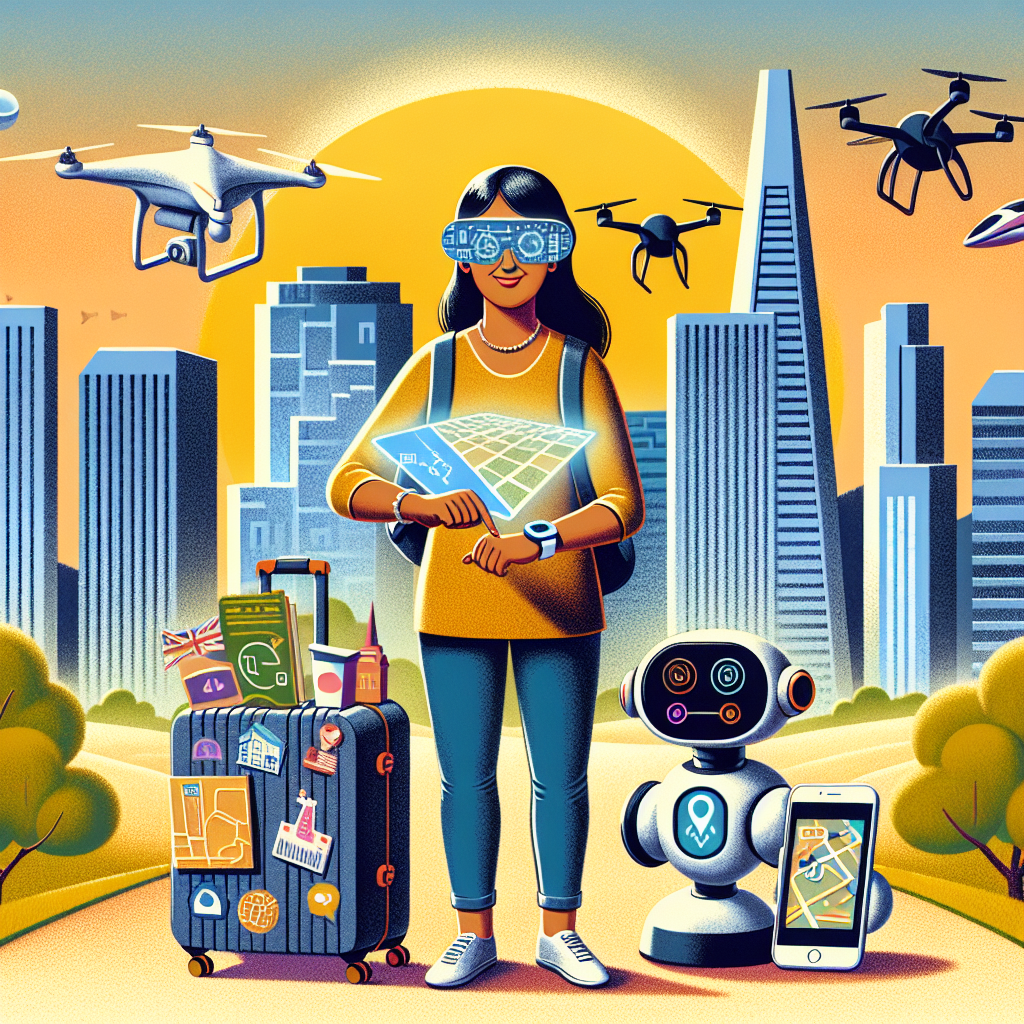
Augmented Reality (AR) has enormous potential to revolutionize the way tourists explore new destinations. By overlaying digital information onto the physical world, AR applications provide enriched experiences that traditional guidebooks simply can’t match. Travelers can use their smartphones or AR glasses to view historical facts, restaurant reviews, or even translate signs in real-time.
One notable example is Google’s AR-based navigation system in Google Maps, which makes it easier for travelers to find their way around by providing digital arrows superimposed on actual streets. Similarly, companies like CityGuideTour offer AR-enhanced guided tours, enabling users to see historical figures and landmarks come to life.
AR technology also improves the accessibility of travel information. By integrating AR into visitor centers and tourism offices, travelers can quickly access valuable information without interacting with staff. This is particularly beneficial in environments where language barriers exist, ensuring that all travelers, regardless of linguistic background, can fully experience what a destination has to offer.
Smart Gadgets: Enhancing Travel Convenience
Silicon Valley has spawned a variety of smart gadgets designed to make travel more convenient and enjoyable. Smart luggage, for example, is equipped with GPS tracking, electronic locks, and even built-in scales to help travelers avoid overpacking. Brands like Away and Rimowa are leading this innovation, making it easier for travelers to manage their belongings and reduce the stress associated with lost luggage.
Wearable tech, such as smartwatches and fitness trackers, has also become indispensable for modern travelers. Apart from keeping track of time and physical activity, these devices offer features like navigation, remote payment, and language translation. Companies like Apple and Garmin continue to innovate in this space, offering travelers multifunctional tools that enhance the travel experience.
Another notable development is the rise of smart home devices that offer travel-specific functionalities. For instance, Amazon Echo and Google Home can provide valuable travel information, help plan itineraries, and even notify travelers about weather conditions at their destination. These devices can play a crucial role in pre-travel preparation, ensuring travelers are well-informed and ready for their journey.
Startups Revolutionizing the Travel Industry
Startups play a pivotal role in driving innovation within the travel industry, and Silicon Valley is a breeding ground for these agile companies. Startups bring fresh perspectives and bold solutions to long-standing industry challenges, continually pushing the boundaries of what is possible through technology.
Companies like Hopper are changing the way we book flights and accommodations by using predictive analytics to provide travelers with insights on the best times to book. Similarly, TripActions employs AI to deliver personalized travel experiences for business travelers, focusing on the unique needs of corporate clients.
Startups like AirGo are innovating in the realm of airport experiences. By using facial recognition technology, they offer a more efficient and secure way for travelers to check into flights and clear security. BlueSmart, another emerging company, has introduced the concept of “connected luggage,” integrating IoT technology to provide travelers with real-time updates on the whereabouts of their bags.
The focus on sustainability is also gaining traction among travel-tech startups. Companies like RoomRaccoon are emphasizing eco-friendly practices, offering solutions that help hotels manage resources more efficiently. This shift towards sustainable travel not only benefits the environment but also caters to the growing number of eco-conscious travelers.
Integration of Innovations by Major Travel Companies
Major travel companies are not just passive observers of the technological evolution but active participants. Giants like Delta Airlines, Marriott International, and Hilton Worldwide are increasingly adopting technologies that originated in Silicon Valley to enhance their services.
Delta Airlines, for example, has implemented facial recognition technology for check-ins and boarding, significantly reducing wait times and enhancing security. Marriott has integrated AI and IoT into their hotel operations, enabling personalized experiences through smart room controls and customized guest services.
Hilton Worldwide is another example of a hospitality giant embracing technological advancements. The company offers a digital key feature on its mobile app, allowing guests to check in and access their rooms with their smartphones. This not only provides convenience but also ensures a touchless, hygienic experience, which has become increasingly important in the post-pandemic world.
In the realm of entertainment, companies like Disney have leveraged VR and AR to offer immersive experiences at their parks and resorts. These tech integrations not only enhance the visitor experience but also attract a tech-savvy clientele eager to explore new ways of engaging with their environment.
The Future of Travel: A Tech-Driven Journey
The travel sector continues to evolve at a breakneck pace, driven largely by technological advancements from Silicon Valley. As we look towards the future, the integration of AI, AR, smart gadgets, and innovative solutions from startups will only become more pronounced.
One of the most exciting prospects is the potential for more personalized travel experiences through the use of big data and predictive analytics. As companies gather and analyze more data, they can offer hyper-personalized recommendations that cater to individual preferences. This level of customization will make travel more enjoyable, efficient, and memorable.
Blockchain technology also holds promise for the travel industry, particularly in enhancing security and transparency. From secure payment methods to verified reviews, blockchain can address various concerns that travelers typically face. Startups and established companies alike are exploring ways to integrate blockchain into travel platforms, promising a more robust and reliable way to manage travel transactions and data.
The continued growth of sustainable travel options is another area to watch. Innovations that focus on eco-friendly practices will become increasingly important as travelers become more conscious of their environmental impact. From electric airplanes to zero-waste hotels, the travel industry is poised to offer more eco-friendly options that do not compromise on experience.
Conclusion
From artificial intelligence and machine learning to augmented reality and smart gadgets, Silicon Valley’s innovations are revolutionizing the travel and tourism industry. By making travel more personalized, convenient, and enjoyable, these technological advancements are meeting the evolving needs of modern travelers.
Startups and established companies alike are pushing the boundaries of what is possible, offering new solutions to age-old problems and elevating the travel experience to unprecedented levels. Major travel companies are quick to integrate these innovations, ensuring that they stay competitive and provide the highest quality of service to their customers.
As technology continues to advance, the possibilities for enhancing travel experiences are virtually limitless. The travel industry stands at the cusp of a tech-driven transformation, with Silicon Valley leading the charge. Whether it’s through hyper-customized recommendations, seamless booking processes, or immersive AR experiences, the future of travel promises to be more exciting and fulfilling than ever before.
For travelers, this means a world where their journeys are not just about reaching a destination but about experiencing the magic of technology every step of the way. From the moment you start planning your trip to the time you return home, Silicon Valley’s innovations ensure that your travel experience is as seamless and enjoyable as possible.