Silicon Valley’s role in space tech and exploration has grown from a supporting engineering function into a driving force behind how rockets are built, satellites are operated, and missions are financed. In practical terms, space tech includes launch systems, spacecraft hardware, satellite networks, earth observation platforms, robotics, autonomous software, and the data infrastructure that turns raw signals into useful decisions. Exploration covers both government missions and commercial activity, from lunar landers and Mars instruments to broadband constellations and climate-monitoring satellites. I have worked with startup teams translating laboratory prototypes into deployable aerospace systems, and the pattern is clear: Silicon Valley changed the industry by importing a software mindset into a field once dominated by slow procurement cycles and vertically segmented contractors.
That shift matters because access to space now affects communications, defense, agriculture, disaster response, logistics, navigation, and scientific discovery. A wildfire map generated from orbital imagery can influence evacuations within hours. A cheaper launch vehicle can determine whether a university experiment flies this year or waits five. Venture-backed companies in Northern California helped normalize rapid iteration, private capital formation, cloud-native mission operations, and cross-disciplinary teams that combine AI, semiconductors, advanced materials, and aerospace engineering. The result is not that traditional aerospace became irrelevant; it is that the center of gravity moved toward faster development and tighter links between computing and hardware.
As a hub topic within tech innovations and startups, this article explains the core contributions Silicon Valley made to modern space activity, the technologies that define the sector, the business models that sustain it, and the limits that still shape progress. Understanding these contributions is essential for founders, operators, investors, and readers tracking cutting-edge tech, because many of today’s most important advances in autonomy, connectivity, climate intelligence, and advanced manufacturing are being proven first in space systems.
How Silicon Valley Changed the Economics of Space
The most important contribution from Silicon Valley was not a single rocket or satellite. It was a new economic model built on iteration, vertical integration, software control, and risk tolerance. Earlier aerospace programs were usually organized through long contracting chains, extensive documentation gates, and hardware schedules measured in years. Valley-style companies borrowed from consumer electronics and enterprise software: shorten development loops, own critical subsystems, gather telemetry continuously, and improve products after deployment.
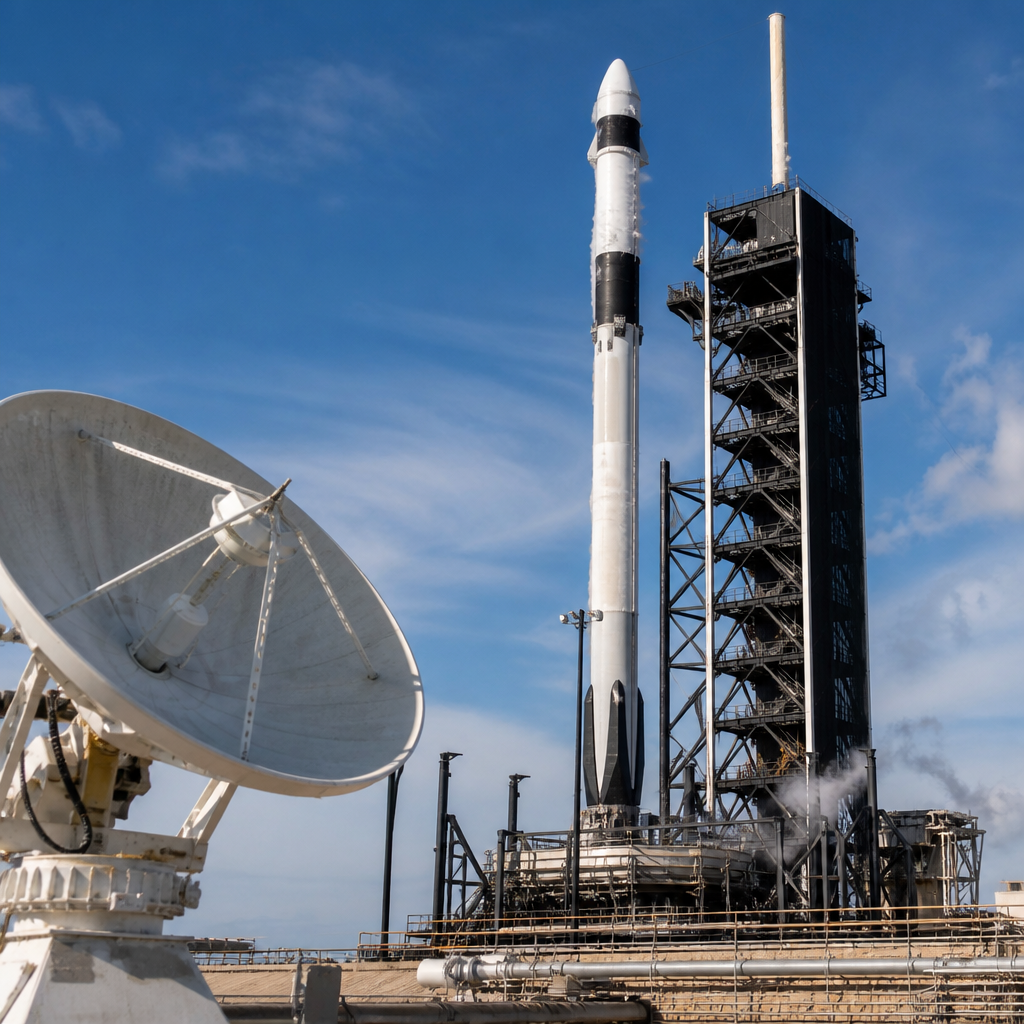
SpaceX, though headquartered in Southern California, drew heavily from the Valley’s engineering culture and funding logic. Its work on reusable launch vehicles reset price expectations across the launch market. Falcon 9 demonstrated that first-stage recovery could move from theory to routine operations, changing how customers evaluate cost per kilogram and schedule reliability. Reusability does not eliminate physics or regulation, but it lowers barriers for satellite operators, research missions, and defense payloads. That single change rippled through startup formation because investors could finally model launch access as a repeatable service instead of an exceptional event.
Planet, based in San Francisco, made a parallel contribution on the satellite side. Rather than building a few exquisite spacecraft, Planet deployed fleets of smaller Earth-imaging satellites and emphasized frequent revisit rates. This is a classic Silicon Valley move: use scale, software, and data pipelines to outperform bespoke hardware on many commercial tasks. Daily global imagery now supports agriculture analytics, methane detection, insurance assessment, supply chain monitoring, and humanitarian mapping. The technical contribution was not only miniaturization; it was the orchestration of many assets as a continuously improving information system.
Core Technologies Driving Modern Space Exploration
Several technology domains explain why Silicon Valley became so influential in space exploration. First is advanced computing. Radiation-tolerant processors still matter, but onboard software, edge inference, and fault management are increasingly strategic. Startups now design spacecraft that can classify images, optimize power use, and reprioritize observations without waiting for ground commands. That autonomy is essential for deep-space missions, where communication delays make constant human supervision impossible.
Second is miniaturization enabled by consumer electronics supply chains. CubeSats and small satellites benefit from compact sensors, efficient batteries, lighter avionics, and lower-cost communications modules. Not every consumer-grade part can survive vacuum, radiation, or temperature cycling, yet the Valley’s expertise in electronics integration reduced the cost of experimentation dramatically. Universities, startups, and defense teams can validate subsystems in orbit faster than legacy approaches allowed.
Third is launch and propulsion innovation. Reusable boosters receive the most attention, but propulsion advances also include electric thrusters for station-keeping, green propellants that reduce handling hazards, and precise guidance software tied to high-rate telemetry. Companies such as Astra and Rocket Lab pushed the conversation around responsive launch, even when their business paths proved difficult. The broader lesson is that Silicon Valley rewards infrastructure bets that compress timelines for everyone else.
Fourth is cloud infrastructure and geospatial analytics. Space missions now depend on terrestrial computing stacks built with Kubernetes, GPU processing, machine learning pipelines, and object storage. Satellite data has little value if customers cannot search, process, and act on it quickly. I have seen mission teams spend as much time on calibration workflows and API design as on spacecraft mechanics, because downstream usability determines whether a technical success becomes a business.
| Technology area | Silicon Valley contribution | Real-world impact |
|---|---|---|
| Reusable launch | Rapid iteration, software-heavy testing, private capital | Lower launch costs and more frequent missions |
| Small satellites | Electronics miniaturization and standardized buses | Affordable imaging, communications, and research payloads |
| Geospatial AI | Cloud analytics, computer vision, API-first platforms | Faster wildfire, crop, and infrastructure monitoring |
| Autonomous systems | Embedded software and onboard decision-making | More efficient operations in orbit and deep space |
Startups, Capital, and the New Commercial Space Stack
Silicon Valley also contributed a financing model that made commercial space more than a niche. Venture capital historically avoided aerospace because hardware cycles were long, regulation was heavy, and exits were uncertain. That changed as launch prices declined, government agencies opened procurement to newer entrants, and satellite data found commercial buyers. Founders could now build around recurring revenue from analytics, connectivity, or platform services rather than relying only on giant one-off contracts.
Y Combinator-backed and venture-backed space companies helped normalize early customer discovery in a field once driven mainly by technical possibility. Instead of asking only whether a payload could be flown, startups asked who would pay for the resulting data, communication capacity, or component reliability. Capella Space pursued synthetic aperture radar imagery valuable in all weather and at night. Loft Orbital focused on shared satellite infrastructure, letting customers buy mission capacity without building an entire spacecraft. These models reduce friction in the same way cloud providers reduced the need to own servers.
Government remained central. NASA’s Commercial Orbital Transportation Services program and later commercial crew initiatives proved that milestone-based public procurement could catalyze private capability. The U.S. Space Force and National Reconnaissance Office also expanded demand for launch, sensing, and resilient architectures. Silicon Valley’s contribution here was not replacing the state but creating companies agile enough to respond to government demand while also serving commercial markets. That dual-market strategy is one reason the ecosystem became durable.
The commercial stack now spans launch providers, bus manufacturers, component suppliers, mission software firms, ground-station networks, earth observation platforms, in-space servicing concepts, and domain-specific analytics companies. This layered market structure resembles the software industry more than classic aerospace. It allows specialization, partnerships, and acquisitions, which in turn increases the speed of innovation across the entire space economy.
Exploration Beyond Earth: Robotics, Science, and Infrastructure
Silicon Valley’s influence extends beyond commercial satellites into exploration technologies that support lunar, planetary, and deep-space missions. Robotics is a major example. Advances in computer vision, SLAM, autonomy, and low-power AI chips help rovers navigate uneven terrain, inspect hardware, and prioritize scientific targets. Techniques refined for autonomous vehicles and warehouse robotics are now relevant to spacecraft docking, planetary mobility, and orbital servicing.
Semiconductor and materials expertise from the region also supports exploration. Radiation effects remain a constraint, but improvements in sensors, imaging systems, composite materials, and manufacturing tools have expanded what smaller teams can build. Additive manufacturing, digital twins, and hardware-in-the-loop simulation reduce testing bottlenecks before flight. When a startup can run integrated simulations linking thermal behavior, power budgets, communications windows, and attitude control, it shortens design cycles without discarding safety discipline.
Communications infrastructure is another critical contribution. High-throughput satellite networks, phased-array antennas, laser communications research, and smarter network routing all improve how missions send data home. Exploration is limited not just by propulsion, but by bandwidth, latency, and reliability. Better communications make science more valuable because instruments can transmit larger datasets and operators can coordinate assets more effectively across orbit, lunar space, and eventually Mars missions.
Still, some limits are nonnegotiable. Space hardware cannot be patched as casually as consumer apps. Radiation, debris, launch vibration, export controls, spectrum regulation, and insurance requirements impose discipline that every founder eventually learns. The strongest Valley space companies succeed because they combine startup speed with aerospace rigor, not because they ignore the constraints.
Why This Hub Matters for Cutting-Edge Tech
Silicon Valley’s contributions to space tech and exploration are best understood as a convergence story. Reusable launch lowered access costs. Small satellites increased experimentation. Cloud platforms turned orbital data into operational intelligence. Venture capital and public procurement created a market large enough to sustain specialized startups. Robotics, AI, semiconductors, and advanced manufacturing pushed exploration systems forward. Together, these forces transformed space from a narrow government domain into a broader innovation platform.
For readers following cutting-edge tech, space is no longer isolated from mainstream startup activity. It is where frontier technologies are stress-tested under extreme conditions, then adapted back into terrestrial industries such as climate analytics, telecommunications, autonomy, logistics, and defense. The practical lesson is simple: to understand where advanced innovation is heading, watch the companies building the space stack and the software layers around it.
Use this hub as a starting point for deeper study into launch systems, satellite analytics, orbital infrastructure, robotics, and venture-backed aerospace. The most important opportunity is not merely reaching orbit. It is building reliable technologies and businesses that make space data, connectivity, and exploration capabilities useful on Earth and beyond. Keep exploring this topic, and follow the companies turning ambitious engineering into operational reality.
Frequently Asked Questions
1. How has Silicon Valley influenced modern space technology and exploration?
Silicon Valley has helped reshape space technology by bringing software-first thinking, rapid product development, and venture-backed risk tolerance into an industry that was once dominated almost entirely by governments and large aerospace contractors. Instead of treating space systems as rare, custom-built hardware projects with extremely long development cycles, many companies influenced by the Valley approach them more like scalable technology platforms. That shift has affected everything from rocket design and satellite manufacturing to mission planning, onboard autonomy, and the processing of space-derived data.
One of the biggest contributions has been the integration of advanced computing into nearly every layer of the space economy. Silicon Valley’s strengths in semiconductors, cloud infrastructure, artificial intelligence, machine learning, robotics, and networking have made spacecraft and satellite systems smarter, more responsive, and more commercially useful. Satellites can now collect larger amounts of data, process portions of it more efficiently, and deliver insights faster to customers in agriculture, defense, logistics, climate monitoring, and communications. In that sense, Silicon Valley has not only contributed tools to space exploration; it has changed the business logic of the sector.
Equally important is the cultural impact. The Valley’s startup model encourages iteration, private investment, vertical integration, and ambitious long-term goals. That has helped normalize ideas such as reusable launch systems, mega-constellations, autonomous spacecraft operations, and commercial participation in deep-space missions. While traditional aerospace engineering remains essential, Silicon Valley has pushed the industry toward faster experimentation and broader commercialization, making space more accessible to private companies, universities, and even smaller nations that can now buy services instead of building entire systems from scratch.
2. What specific technologies from Silicon Valley are most important to the space industry?
Several categories of technology stand out. First, software and data systems are among the most important. Modern space missions depend heavily on mission control software, flight simulation, telemetry analysis, autonomous navigation, and data fusion platforms that can interpret signals from satellites, sensors, and spacecraft. Silicon Valley’s expertise in building reliable, scalable software has made it possible to operate increasingly complex fleets of assets in orbit with fewer manual interventions and lower operational overhead.
Second, semiconductor and electronics innovation plays a major role. Spacecraft rely on processors, sensors, imaging chips, communications hardware, and power management systems that have all benefited from decades of innovation in and around Silicon Valley. Even when components must be specially adapted or hardened for space environments, the underlying advances in miniaturization, computing performance, and energy efficiency often originate in the broader technology ecosystem the Valley helped build. These improvements enable smaller satellites to perform tasks that once required much larger and more expensive spacecraft.
Third, Silicon Valley has been central to autonomous systems and robotics. That matters for orbital servicing, planetary exploration, docking, terrain navigation, manufacturing automation, and satellite constellation management. Technologies originally advanced for self-driving systems, industrial automation, and AI-assisted decision-making can be adapted for space environments where communications delays, harsh conditions, and limited human intervention are constant challenges. Earth observation platforms also benefit from the Valley’s capabilities in machine learning, allowing operators to transform raw imagery into actionable intelligence for disaster response, infrastructure planning, environmental monitoring, and national security.
Finally, cloud computing and networked infrastructure are essential contributions. Space missions now generate huge volumes of data, and storing, processing, securing, and distributing that data requires robust digital back-end systems. Silicon Valley’s contribution here is not glamorous in the traditional rocket-science sense, but it is foundational. Without scalable cloud services, APIs, cybersecurity tools, and analytics platforms, much of the value generated by satellites and exploration missions would remain trapped in raw data streams rather than converted into practical use.
3. Why is Silicon Valley so important for financing and scaling commercial space companies?
Silicon Valley matters because it provides more than money; it provides a framework for turning technically ambitious ideas into fast-growing companies. Venture capital firms in the region have long experience funding businesses that require large upfront investment but offer the possibility of transformative long-term returns. That mindset has gradually extended from internet and software startups into aerospace, where investors now back launch providers, satellite operators, in-space logistics firms, earth observation platforms, and space infrastructure companies.
This financing model has helped commercial space companies move faster than they might have under traditional procurement-only pathways. Rather than relying exclusively on slow government contract cycles, newer firms can raise private capital to prototype, hire engineering teams, secure manufacturing capabilities, and test new business models earlier. In many cases, that capital helps companies bridge the difficult gap between technical proof of concept and reliable commercial service. It also encourages competition, which can lower costs and accelerate innovation across the broader industry.
Just as important, Silicon Valley investors often understand platform economics and network effects, which are increasingly relevant in space. A satellite company, for example, may not simply sell hardware; it may build a recurring-revenue business around connectivity, geospatial analytics, or subscription-based intelligence services. A launch company may be valuable not only for launches, but also for its role in enabling an ecosystem of downstream applications. That perspective has encouraged founders to think beyond one-off contracts and toward scalable operating models. Of course, space remains capital-intensive and technically unforgiving, so not every company succeeds. But Silicon Valley has undeniably expanded the pool of available capital and made it easier for private firms to participate meaningfully in exploration and space infrastructure.
4. How does Silicon Valley contribute to satellite networks, earth observation, and data-driven space services?
Silicon Valley’s contribution is especially visible in the shift from isolated spacecraft to integrated, software-managed networks. In the past, many satellites were treated as standalone assets with narrow missions. Today, companies increasingly operate constellations that function more like distributed computing systems in orbit. That requires expertise in networking, automation, cloud integration, cybersecurity, and user-facing software platforms, all of which are core strengths of the Valley’s technology ecosystem.
In satellite communications, Silicon Valley has influenced how broadband networks are designed, optimized, and monetized. Companies use advanced software to manage bandwidth, reduce latency, route traffic intelligently, and serve a growing mix of consumer, enterprise, defense, and mobility markets. In earth observation, the contribution goes far beyond launching imaging satellites. The real value often comes from processing imagery, radar outputs, thermal data, and other sensor feeds into decision-grade information. That is where AI models, data pipelines, and scalable analytics platforms become essential.
For example, a raw satellite image has limited value unless it can be interpreted quickly and accurately. Silicon Valley-style data systems can help detect crop stress, monitor wildfires, track supply chain activity, measure emissions, assess storm damage, or identify changes in infrastructure. This ability to turn orbital data into operational insight has made space services relevant to industries that may never think of themselves as part of the space sector. In practical terms, that means Silicon Valley has helped move satellites from being specialized scientific tools to becoming part of mainstream digital infrastructure used in everyday economic and government decision-making.
Another key contribution is productization. Many space-based services once required expert users to extract value from highly technical datasets. Silicon Valley companies have pushed the market toward intuitive dashboards, APIs, automated alerts, and integrated enterprise workflows. That makes space-derived data easier to adopt at scale. As a result, the impact of space technology is no longer limited to launch events or high-profile missions; it increasingly appears in ordinary business operations, public policy analysis, emergency response, and environmental stewardship.
5. What challenges and future opportunities lie ahead for Silicon Valley in space exploration?
Despite its influence, Silicon Valley faces real constraints in space. Hardware development remains difficult, expensive, and slower than software iteration. Rockets, spacecraft, propulsion systems, and orbital infrastructure must meet demanding safety and reliability standards, and failures can be catastrophic. Regulatory complexity is another challenge, especially in areas such as launch licensing, spectrum allocation, remote sensing rules, export controls, national security review, and orbital debris mitigation. Silicon Valley’s fast-moving culture can be a strength, but in space it must be balanced with engineering discipline, long testing cycles, and international compliance requirements.
There are also strategic questions around sustainability and governance. As more companies deploy satellites and pursue ambitious commercial missions, the risks of orbital congestion, space debris, radio interference, and uneven access to key orbits and frequencies become more serious. Silicon Valley firms that thrive on rapid scaling will increasingly need to work with regulators, defense agencies, international organizations, and traditional aerospace partners to ensure that growth in space remains safe and responsible. That collaboration will be essential if commercial expansion is to support, rather than complicate, scientific and public-interest missions.
At the same time, the future opportunities are substantial. Silicon Valley is well positioned to contribute to in-space manufacturing, autonomous mission operations, orbital servicing, debris tracking and removal, lunar logistics, advanced robotics, and next-generation earth intelligence platforms. It can also help build the digital backbone for future exploration, including simulation environments, AI-assisted spacecraft operations, resilient communications networks, and tools that connect space assets with terrestrial industries in real time. As government agencies and private firms expand their ambitions beyond low Earth orbit toward the Moon and potentially Mars, the demand for integrated hardware-software systems will only grow.
In the long run, Silicon Valley’s most lasting contribution may be its ability to connect exploration with usable infrastructure. Space exploration is no longer just about reaching new destinations;