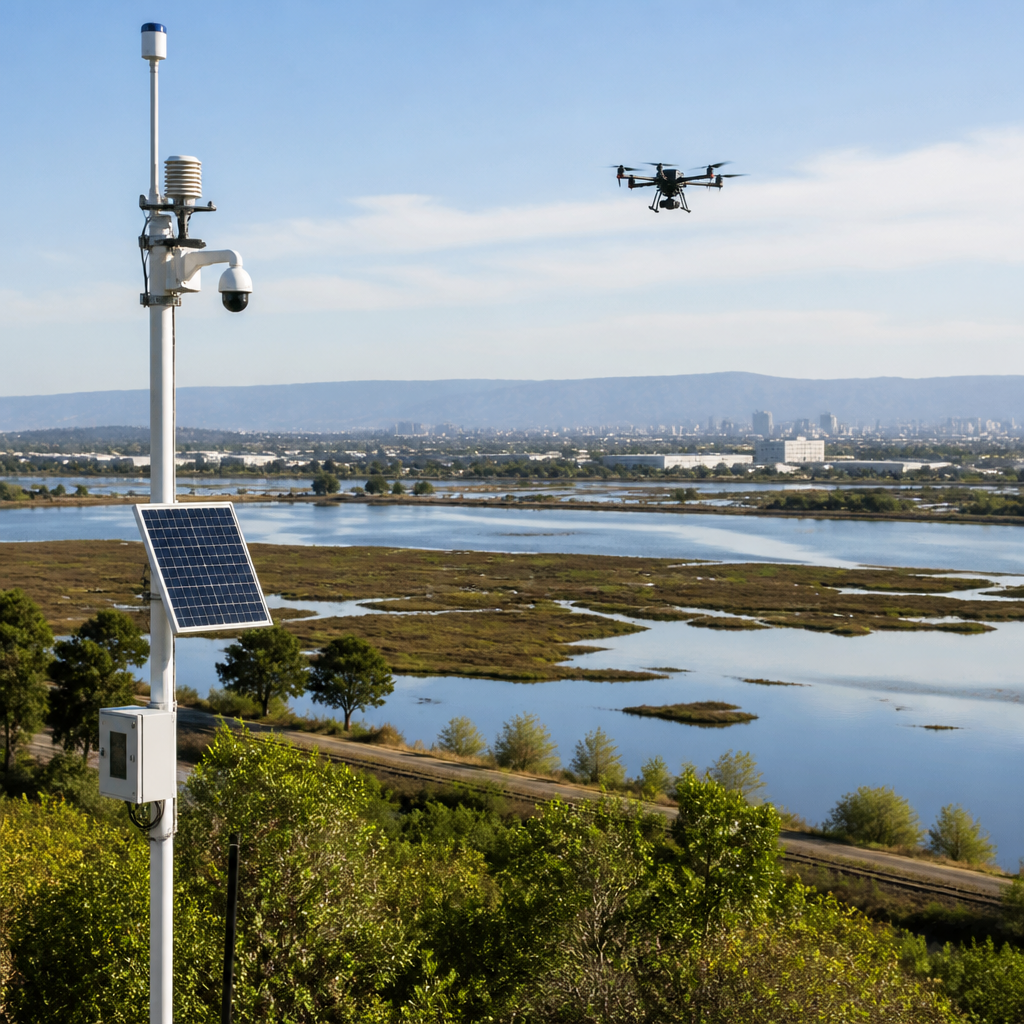
Silicon Valley’s latest in AI-powered environmental tech is reshaping how companies measure emissions, manage energy, protect water, and restore ecosystems. In this context, AI-powered environmental tech means software, sensors, robotics, and data systems that use machine learning, computer vision, optimization models, and large-scale analytics to solve environmental problems faster and more accurately than traditional tools alone. I have worked with startup teams evaluating climate products, and the pattern is clear: the strongest companies are not simply adding AI to sustainability claims. They are pairing high-quality data, domain expertise, and operational workflows to deliver measurable outcomes such as lower energy costs, better grid balancing, earlier wildfire detection, and more reliable carbon accounting. That matters because regulators, investors, and customers now expect environmental performance to be quantified, auditable, and tied to business results. California disclosure rules, the SEC’s climate-related focus, and global frameworks such as the Greenhouse Gas Protocol have pushed environmental reporting from a communications exercise into a data discipline. Silicon Valley sits at the center of that shift because it combines venture capital, cloud infrastructure, semiconductor design, and a deep bench of software talent. The result is a fast-growing cluster of startups and established firms building tools that turn environmental complexity into operational decisions. This hub article explains the main categories, where the technology is delivering value today, and where limitations still deserve careful scrutiny.
Why AI environmental technology is accelerating now
The recent surge is driven by three converging factors: cheaper sensing, more abundant computing, and stronger market pressure for verifiable environmental performance. Ten years ago, many sustainability teams relied on spreadsheets, annual utility bills, and manual site audits. Today, companies can ingest real-time data from smart meters, building management systems, satellite imagery, drones, industrial controls, and logistics platforms. AI models can then detect anomalies, forecast demand, classify land cover, estimate methane plumes, or recommend process changes.
Silicon Valley startups benefit from mature cloud stacks from Amazon Web Services, Google Cloud, and Microsoft Azure, plus open-source frameworks such as PyTorch, TensorFlow, XGBoost, and Ray. Those tools reduce the cost of prototyping. At the same time, environmental use cases have become commercially urgent. Data center operators need cooling optimization as AI workloads increase electricity demand. Utilities need better forecasting as solar and wind add variability. Manufacturers need automated emissions tracking across suppliers. Insurance firms need more accurate wildfire and flood models. In practice, the strongest products are decision-support systems embedded in operations, not dashboards that merely visualize problems.
Core categories defining Silicon Valley’s latest environmental startups
AI-powered environmental tech in Silicon Valley clusters into several categories. Carbon management platforms help enterprises calculate Scope 1, 2, and 3 emissions, often integrating ERP systems such as SAP or Oracle NetSuite and procurement data from tools like Coupa. Energy optimization companies use reinforcement learning and predictive control to reduce HVAC loads, battery cycling costs, and industrial waste heat. Climate risk analytics firms combine geospatial data with catastrophe modeling to estimate asset-level exposure to wildfire, flood, drought, and extreme heat. Nature and agriculture startups use computer vision, remote sensing, and edge devices to improve irrigation, fertilizer timing, soil monitoring, and biodiversity measurement.
Waste and circularity platforms are another active area. They classify material streams with machine vision, optimize collection routes, and improve contamination detection in recycling facilities. Water technology startups use AI for leak detection, pump scheduling, demand forecasting, and contaminant monitoring. A final category is environmental robotics, including autonomous drones for infrastructure inspection, underwater systems for habitat surveys, and field robots for precision weeding that reduce herbicide use. Each category addresses a different bottleneck, but the common thread is turning noisy environmental data into timely action.
Where the technology is delivering clear business and environmental value
Energy management is one of the clearest near-term wins. Commercial buildings waste substantial energy through poor scheduling, simultaneous heating and cooling, and equipment drift. AI systems trained on occupancy patterns, weather forecasts, and building telemetry can cut energy use by adjusting setpoints continuously rather than following static rules. Grid-interactive software also helps batteries charge when electricity is cheap and discharge during peak periods, lowering bills and reducing stress on the grid.
Methane monitoring is another high-value use case because methane has far greater warming potential than carbon dioxide over a 20-year period. AI models processing infrared imagery, fixed sensors, or satellite data can identify leaks faster than manual inspection rounds. In water management, utilities use anomaly detection to spot leaks, pressure changes, and pump inefficiencies before failures become expensive. Agriculture companies apply computer vision and weather models to reduce water use while preserving yields, a critical advantage in drought-prone California. These are not abstract climate benefits. They are operating improvements that also reduce environmental impact.
Representative use cases, data sources, and deployment hurdles
Across projects I have reviewed, the same question comes up first: what data does the model actually need? Environmental AI depends on inputs that are often fragmented, delayed, or inconsistent. A carbon accounting platform may need utility invoices, fuel receipts, travel records, supplier questionnaires, and emissions factors from databases such as EPA eGRID or DEFRA. A wildfire detection model may combine satellite feeds, camera networks, topography, humidity, and wind data from NOAA. A smart irrigation system may require soil moisture sensors, evapotranspiration models, and local weather forecasts.
| Use case | Typical data sources | Main value | Common hurdle |
|---|---|---|---|
| Building energy optimization | Smart meters, BAS telemetry, occupancy, weather | Lower energy costs and peak demand | Poor sensor calibration |
| Carbon accounting | ERP, invoices, travel, supplier data, emissions factors | Faster reporting and better audit trails | Scope 3 data quality |
| Wildfire detection | Cameras, satellites, wind, humidity, terrain | Earlier response and reduced losses | False positives |
| Water leak detection | Pressure sensors, flow meters, SCADA logs | Reduced non-revenue water | Legacy infrastructure integration |
Deployment hurdles are usually operational rather than algorithmic. Facilities may have outdated controls. Suppliers may not share primary emissions data. Field conditions can degrade sensors. Models need retraining when equipment changes or climate patterns shift. Teams that plan for data governance, integration, and human review outperform teams that treat AI as a plug-and-play layer.
How leading companies build trust, measurement, and defensibility
The most credible environmental tech companies are disciplined about measurement. They define a baseline, document assumptions, run pilots with control groups where possible, and separate modeled estimates from directly measured values. For carbon accounting, that means mapping activity data to recognized emissions factors and preserving an audit trail. For grid or building optimization, it means using established measurement and verification approaches such as IPMVP to distinguish real savings from weather noise or occupancy changes. For land and biodiversity claims, it means being cautious about over-interpreting remote sensing outputs without field validation.
Defensibility usually comes from proprietary workflows more than proprietary models. Many startups use standard machine learning architectures. Their edge comes from integrations, labeled datasets, domain-specific ontologies, compliance logic, and customer success teams that turn insights into operational changes. That is why some of the strongest Silicon Valley environmental tech firms look part software company, part services organization. The software identifies opportunities, but experienced engineers, sustainability analysts, and project managers help customers capture value. Trust grows when vendors are transparent about uncertainty ranges, implementation timelines, and the difference between estimated and realized impact.
Limits, risks, and what buyers should evaluate before adopting
Not every AI-powered environmental product delivers on its promise. Buyers should examine five issues closely. First, data provenance: if inputs are weak, outputs will be weak, even with sophisticated models. Second, interoperability: the platform must connect cleanly with existing meters, SCADA systems, ERP tools, GIS layers, and procurement platforms. Third, explainability: operations teams need to understand why a model recommends a change, especially in regulated environments. Fourth, security and privacy: utility infrastructure, industrial systems, and location data are sensitive. Fifth, economics: pilots should show payback periods, not just aspirational emissions reductions.
There is also an energy-use paradox worth acknowledging. Training and running AI models consumes electricity, and data centers are under growing scrutiny for power and water demand. That does not negate the value of environmental AI, but it raises the bar. The best solutions produce reductions that clearly exceed their computational footprint and are deployed with efficient architectures, targeted inference, and disciplined data retention. Buyers should ask vendors for implementation case studies, baseline methodology, and evidence that results persisted beyond an initial pilot.
Silicon Valley’s latest in AI-powered environmental tech is best understood as a practical operating layer for the low-carbon economy, not a marketing label. The companies leading this space are solving concrete problems: cutting wasted energy in buildings and data centers, detecting methane leaks sooner, improving water resilience, automating carbon reporting, and helping utilities and insurers respond to climate risk with better forecasts. Their advantage comes from combining AI techniques with trusted environmental methods, reliable data pipelines, and workflows that fit how facilities, supply chains, and field teams actually operate.
For readers exploring cutting-edge tech, this hub is the starting point because the field is broad but the evaluation principles are consistent. Look for products with strong measurement discipline, clear integrations, transparent assumptions, and evidence of sustained results. Be wary of vague claims detached from baselines, standards, or operational adoption. The real benefit of AI-powered environmental technology is not automation for its own sake. It is faster, better environmental decisions that stand up to financial scrutiny and regulatory review. Use this overview to guide deeper research into carbon platforms, energy optimization, climate risk analytics, water systems, and environmental robotics, then shortlist the tools that match your organization’s data maturity and measurable goals.
Frequently Asked Questions
What is AI-powered environmental tech, and why is Silicon Valley investing in it so aggressively?
AI-powered environmental tech refers to tools that combine environmental science with technologies such as machine learning, computer vision, predictive analytics, optimization software, connected sensors, and robotics. In practical terms, these systems help organizations detect patterns, forecast risks, automate monitoring, and make better environmental decisions in far less time than traditional manual methods. Instead of relying only on periodic audits, spreadsheets, or isolated field inspections, companies can now use real-time data streams and AI models to track emissions, optimize building and grid performance, detect leaks, monitor water quality, and even map ecosystem health at scale.
Silicon Valley is investing heavily because the market need is large, urgent, and increasingly measurable. Businesses face growing pressure from regulators, investors, customers, and their own operating costs to improve sustainability performance. At the same time, climate and environmental challenges generate massive amounts of data, which makes them especially well suited to AI-driven approaches. For startups and investors, that creates an opportunity: if a company can reduce energy waste, improve emissions reporting, prevent water loss, or speed up environmental remediation, the value proposition is immediate and tangible. In other words, this is not just a mission-driven category; it is also a productivity, compliance, and infrastructure category, which is why it continues to attract technical talent and capital.
How is AI being used to measure and reduce carbon emissions more accurately?
One of the most important applications of AI in environmental tech is emissions measurement and management. Traditionally, carbon accounting has depended on manual data collection, broad assumptions, delayed reporting cycles, and inconsistent supplier information. AI improves this process by pulling together data from energy systems, procurement tools, logistics platforms, industrial equipment, utility bills, satellite imagery, and IoT sensors. Machine learning models can then classify emissions sources, identify data gaps, estimate missing values more consistently, and highlight which operations or vendors are driving the largest footprint.
Just as important, AI is not limited to reporting what already happened. It can also support reduction strategies. Optimization models can recommend lower-emission shipping routes, more efficient production schedules, smarter HVAC controls, and cleaner sourcing decisions. Predictive systems can show how future demand, weather, equipment performance, or policy changes may affect emissions over time. That allows companies to move from static annual carbon reports to dynamic decision-making. The best platforms do not simply produce a dashboard; they help environmental teams and operators prioritize actions with the highest impact, lowest cost, and fastest implementation timeline.
What role does AI play in energy management and grid efficiency?
AI is becoming central to how buildings, campuses, factories, utilities, and distributed energy systems manage power consumption. Energy use is highly variable and influenced by occupancy, equipment behavior, weather, utility pricing, maintenance conditions, and production schedules. AI systems can process all of these variables at once and continuously adjust operations to reduce waste. For example, smart energy platforms can optimize heating and cooling in commercial buildings, shift loads away from expensive peak periods, forecast demand more accurately, and identify underperforming assets before they create larger inefficiencies.
At the grid level, AI helps operators integrate more renewable energy sources, which are often intermittent and decentralized. Solar and wind generation can fluctuate with cloud cover, wind patterns, and seasonal changes, so grid balancing becomes more complex as clean energy adoption rises. AI models can improve short-term forecasting, coordinate battery storage, and support demand response programs that reduce stress on the system. In Silicon Valley, this matters because many startups are focused not just on software visibility, but on intelligent control. The most promising energy tools are moving beyond monitoring into automated optimization, where the system can recommend or even execute decisions that cut costs, improve reliability, and lower emissions at the same time.
Can AI-powered environmental tech really help with water protection and ecosystem restoration?
Yes, and this is one of the most exciting areas of development. Water systems and ecosystems are difficult to manage because conditions change constantly across large geographies, and traditional monitoring can be expensive, slow, and incomplete. AI helps by combining sensor networks, aerial imaging, satellite data, hydrological models, and field observations into a more continuous picture of what is happening. In water management, that can mean identifying leaks in municipal infrastructure, forecasting contamination risks, optimizing irrigation, predicting drought stress, or improving wastewater treatment performance. Computer vision and anomaly detection are especially useful where human inspection alone would be too limited or too slow.
For ecosystem restoration, AI can support habitat mapping, biodiversity tracking, invasive species detection, wildfire risk analysis, soil health assessment, and reforestation planning. Drones and imaging systems can capture detailed data over forests, wetlands, coastlines, and agricultural land, while machine learning models help interpret that information faster than manual review. That said, the strongest environmental outcomes usually come from combining AI with on-the-ground expertise. Ecologists, hydrologists, engineers, and local stakeholders still play a critical role in validating findings and designing interventions. AI is most powerful when it amplifies expert judgment rather than pretending to replace it.
What should companies look for before adopting an AI-powered environmental solution?
Companies should start by evaluating whether the product solves a clearly defined operational or environmental problem, not just whether it uses advanced technology. Strong solutions tend to have reliable data inputs, transparent methodologies, and a clear path from insight to action. Buyers should ask where the data comes from, how the model handles incomplete or noisy information, whether recommendations can be audited, and how results are validated in real-world conditions. It is also important to understand whether the system integrates with existing infrastructure such as ERP platforms, building management systems, procurement software, industrial controls, GIS tools, or utility data sources.
Another key factor is credibility. In environmental applications, errors can create financial, regulatory, and reputational consequences. Companies should look for evidence that the platform has domain expertise behind it, not just technical sophistication. That includes partnerships with scientists or engineers, strong measurement standards, customer case studies, and realistic claims about what the AI can and cannot do. Finally, organizations should assess usability and change management. Even the best model will underperform if internal teams cannot trust it, interpret it, or act on it. The most effective AI-powered environmental tech products are the ones that fit into real workflows, produce measurable outcomes, and help decision-makers move from fragmented sustainability efforts to continuous environmental performance improvement.