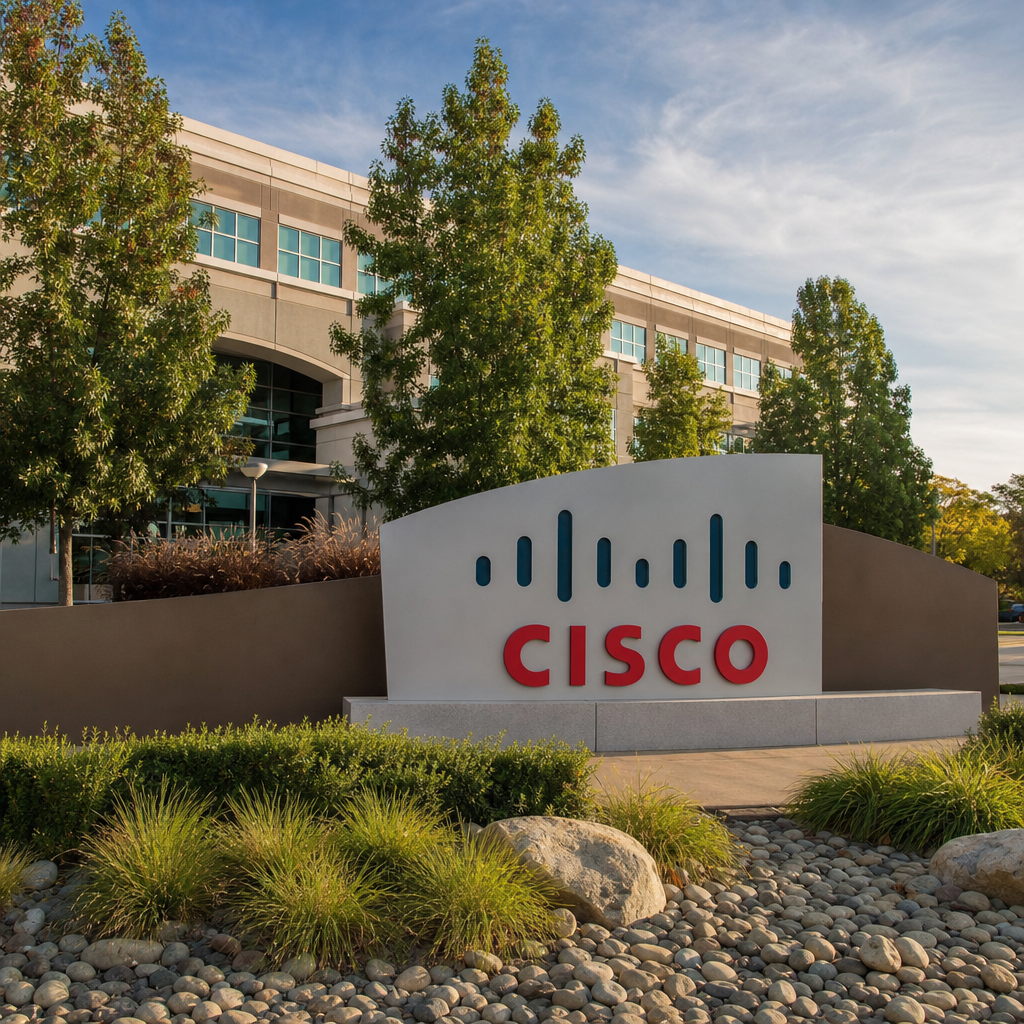
Cisco Systems has shaped the modern internet more than most consumers realize, turning enterprise networking from a back-office function into critical infrastructure for the digital age. Founded in 1984 and headquartered in San Jose, Cisco became synonymous with routers and switches, yet its importance now stretches far beyond hardware. In today’s market, Cisco Systems sits at the center of cloud connectivity, cybersecurity, collaboration software, observability, and data center operations. For readers exploring tech innovators and market leaders, Cisco offers a valuable case study because its story shows how a company can evolve repeatedly while defending a dominant position in fast-moving markets.
When people ask what Cisco Systems actually does, the clearest answer is this: Cisco builds and manages the networks that let organizations move data securely between people, applications, devices, and clouds. Networking refers to the systems that connect computers and digital services. Routing determines how data travels between networks, switching moves data within networks, and security tools inspect and protect that traffic. Cisco’s portfolio spans all three areas, which is why its products appear in hospitals, schools, factories, banks, government agencies, telecom providers, and global enterprises. In my work reviewing enterprise technology stacks, Cisco has consistently appeared not as a single product vendor but as an operational backbone.
This matters because digital transformation is impossible without resilient connectivity. A company can buy the best software in the world, but if branch offices cannot connect to applications, if remote workers cannot collaborate securely, or if a data center lacks visibility into traffic, operations slow down immediately. Cisco became a market leader by solving those practical problems at scale. The company’s evolution also reflects larger industry shifts: from on-premises infrastructure to hybrid cloud, from perimeter security to zero trust, and from one-time hardware purchases to recurring software and services revenue. As a hub within company spotlights, this article explains Cisco’s business, technologies, strategy, and influence so readers can better understand where the company leads, where it competes, and why it remains central to the technology landscape.
Cisco’s rise from router pioneer to infrastructure platform
Cisco’s early growth came from routers, the devices that direct packets across networks using protocols such as IP. During the 1990s internet buildout, enterprises and service providers needed reliable routing equipment, and Cisco established a reputation for performance, compatibility, and support. It expanded through aggressive product development and acquisitions, then reinforced customer loyalty through certification programs like CCNA and CCIE. Those credentials mattered in real deployment environments because they created a labor force already trained on Cisco command-line tools, network design patterns, and operational procedures. Few technology companies have matched that ecosystem advantage.
Over time, switching became just as important as routing, especially inside campus networks and data centers. Cisco’s Catalyst line became standard equipment in many corporate offices, while Nexus products targeted high-performance data center environments. The business logic was straightforward: if Cisco could control both inter-network routing and internal traffic switching, it could shape the architecture of entire enterprise networks. That position produced durable revenue because infrastructure refresh cycles are long, integration costs are high, and network downtime is expensive.
Cisco also learned a lesson many hardware-centric companies miss: market leadership depends on adapting before the core franchise weakens. As networking became more software-defined, Cisco pushed into subscriptions, cloud management, and automation. Platforms such as Meraki simplified branch networking through cloud dashboards, while intent-based networking introduced policy-driven management across campus environments. In practice, these moves helped Cisco defend its installed base against simpler, cloud-native challengers and lower-cost competitors.
Core business segments and where Cisco competes today
Cisco reports revenue across broad categories that reflect how customers now buy technology. Networking remains foundational, including switches, routers, wireless access points, and software for campus, branch, and data center environments. Security has become a major strategic pillar, covering firewalls, secure access service edge capabilities, identity controls, threat detection, and endpoint protection. Collaboration includes Webex meetings, calling, messaging, and contact center tools. Observability and application performance monitoring gained prominence through acquisitions such as AppDynamics and Splunk, the latter adding significant data analytics and security operations depth.
The range can seem sprawling, but the logic is coherent. Modern enterprises want fewer disconnected tools. They need a secure path from user to application, visibility into what happens along that path, and governance over every endpoint and workload. Cisco competes by bundling infrastructure, management, and security into an integrated architecture. That approach works especially well in regulated industries and large distributed organizations where buying decisions prioritize reliability, compliance, and vendor accountability over the lowest sticker price.
| Segment | Key Cisco Offerings | Primary Customer Need | Typical Competitors |
|---|---|---|---|
| Networking | Catalyst, Nexus, Meraki, Silicon One | Reliable connectivity, automation, scalability | Juniper, HPE Aruba, Arista |
| Security | Secure Firewall, Duo, XDR, Umbrella | Threat prevention, identity control, secure access | Palo Alto Networks, Fortinet, Zscaler |
| Collaboration | Webex Suite, Contact Center | Meetings, calling, hybrid work communication | Microsoft Teams, Zoom |
| Observability | AppDynamics, ThousandEyes, Splunk | Performance monitoring, incident response, analytics | Datadog, Dynatrace, New Relic |
Cisco’s challenge is that each category includes specialized rivals with strong momentum. Arista is formidable in cloud data center switching. Palo Alto Networks has become a security powerhouse. Microsoft dominates collaboration inside many enterprise productivity suites. Cisco’s answer has been to emphasize cross-domain integration, global support, and lifecycle services. Whether that strategy outperforms best-of-breed alternatives depends on customer priorities, but it has kept Cisco highly relevant.
How Cisco drives hybrid work, cloud networking, and security
The digital age is defined by users connecting from anywhere to applications running everywhere. That shift changed networking requirements dramatically. Five years ago, many enterprises still routed remote access through a central corporate perimeter. Today, a branch office may use cloud-managed Wi-Fi, remote employees may authenticate through multifactor identity systems, and workloads may span private data centers, AWS, Microsoft Azure, and Google Cloud. Cisco’s portfolio is designed for that fragmented reality.
Meraki is one of the clearest examples of Cisco adapting to modern IT operations. Instead of configuring each device locally, administrators can manage firewalls, switches, access points, cameras, and mobile device policies through a centralized cloud dashboard. For small businesses and distributed retailers, that simplicity is powerful. I have seen teams with limited network staff deploy new branch locations faster because templates reduced manual configuration errors. Meraki is not ideal for every deeply customized environment, but it solved operational pain points that traditional networking often created.
On the security side, Cisco has assembled a broad stack that reflects the industry’s move toward identity-first protection. Duo provides multifactor authentication and device trust, Umbrella secures DNS-layer requests, and secure access tools help enforce policy based on user context rather than just network location. ThousandEyes adds internet and cloud visibility, which is increasingly essential because many performance problems occur outside a company’s owned infrastructure. This is a key point: network reliability today is not just about packets moving inside a building; it is about understanding the entire digital delivery chain.
Webex illustrates both Cisco’s opportunity and its competitive pressure. The platform remains strong in enterprise-grade meetings, calling, devices, and contact center use cases, especially where regulated communication and hardware integration matter. However, the pandemic years intensified competition from Zoom and Microsoft Teams. Cisco responded by improving usability, AI-powered meeting features, and interoperability. The broader lesson is that even established market leaders must keep refining the user experience, not just the architecture.
Strategy, acquisitions, and Cisco’s role among market leaders
Cisco has long used acquisitions to enter adjacent markets and accelerate product shifts. Historically, deals helped it expand in switching, wireless, security, and collaboration. More recently, acquisitions such as ThousandEyes strengthened internet visibility, Duo deepened identity security, and Splunk gave Cisco a larger role in security operations and machine data analytics. These deals are not random. They reflect a strategic pattern: buy technologies that improve visibility, control, and automation across distributed environments.
That strategy matters in financial terms because investors increasingly reward recurring software revenue, platform stickiness, and data-driven services over pure hardware dependence. Cisco has steadily increased subscription revenue through licenses, cloud management, maintenance, and software bundles. This transition is not trivial. Customers accustomed to capital purchases often resist pricing changes, and integrating acquired platforms can be messy. Still, Cisco’s shift toward software has made its business more resilient and more aligned with how enterprises consume technology.
Among tech innovators and market leaders, Cisco stands out for durability rather than disruption theater. It rarely receives the same consumer-facing attention as Nvidia, Apple, or Microsoft, yet it remains essential to how those ecosystems function in enterprises. Cisco’s silicon work, including Silicon One, shows that it still invests deeply in foundational engineering. Its certification ecosystem continues to influence hiring and training. Its channel partner network gives it reach into midsize businesses, global systems integrators, and public sector procurement. Those advantages are difficult to replicate quickly.
At the same time, Cisco’s scale can slow product simplification, and some customers view parts of its portfolio as complex or premium-priced. That criticism is fair. In competitive evaluations, Cisco does not always win on cost or ease of deployment. It often wins when organizations need lifecycle support, broad interoperability, and accountable vendor relationships across multiple infrastructure layers. Understanding that tradeoff is crucial when assessing why Cisco remains a leader despite intense competition.
What businesses and investors should watch next
The next phase of Cisco’s story will be shaped by artificial intelligence, security consolidation, and infrastructure observability. AI workloads require high-performance networking inside data centers, faster optical connections, and better traffic management between compute clusters and storage. Cisco is investing in these areas, but it faces strong competition from cloud-native vendors and specialized data center players. Success will depend on whether it can translate engineering depth into designs that AI-focused customers actually prefer.
Security is another major watch point. Enterprises are overwhelmed by fragmented tools, so vendors that unify identity, access, telemetry, and incident response have an advantage. Cisco now has the assets to offer that broader platform, especially with Splunk in the portfolio. The real test is execution: integrated workflows, consistent licensing, and measurable reduction in operational complexity. Customers do not need more dashboards; they need faster detection and cleaner policy enforcement.
For readers following company spotlights, Cisco demonstrates that market leadership in technology is not only about inventing a category first. It is about maintaining relevance as customer needs shift from hardware performance to software control, from office connectivity to hybrid access, and from isolated monitoring to full-stack visibility. Cisco Systems remains one of the most important companies in enterprise technology because it connects those needs into a practical operating model. Watch how it integrates networking, security, and observability over the next few years, then explore related company profiles to compare how other innovators are approaching the same digital infrastructure challenge.
Frequently Asked Questions
What is Cisco Systems best known for, and why has it been so important to the growth of the internet?
Cisco Systems is best known for its foundational role in networking, especially through its routers and switches, which direct and manage data traffic across local networks, enterprise systems, and the broader internet. In practical terms, Cisco helped build much of the digital plumbing that allows information to move reliably between offices, data centers, cloud platforms, and end users around the world. While many consumers may not interact with Cisco products directly, businesses, governments, schools, hospitals, and service providers have depended on Cisco infrastructure for decades to keep mission-critical systems connected and secure.
Its importance comes from both timing and scale. Cisco emerged during a period when organizations were rapidly expanding their digital capabilities, and it offered reliable, enterprise-grade networking solutions at a time when connectivity was becoming essential. Over the years, Cisco became a trusted name because its products were designed to support large, complex environments where downtime was costly and performance mattered. As the internet evolved from a research and business tool into a core part of everyday life, Cisco’s technologies helped support the networks behind email, video communication, e-commerce, financial services, and cloud computing. That is why Cisco is often seen not just as a hardware company, but as one of the companies that helped make the modern digital economy possible.
How has Cisco evolved beyond routers and switches in today’s technology landscape?
Although Cisco built its reputation on networking hardware, the company has transformed into a much broader technology provider. Today, its portfolio extends into cybersecurity, cloud connectivity, collaboration tools, software-defined networking, observability, and data center operations. This evolution reflects a major shift in enterprise technology: organizations no longer just need physical devices to connect offices and servers, they need integrated platforms that can manage distributed users, hybrid cloud environments, remote work, application performance, and constantly changing security risks.
One of Cisco’s most visible expansions has been in collaboration software through products like Webex, which supports meetings, messaging, and hybrid work. In cybersecurity, Cisco offers solutions designed to protect networks, users, devices, applications, and data from increasingly sophisticated threats. In cloud and data center environments, Cisco has developed technologies that help businesses connect workloads across on-premises systems and multiple cloud providers while maintaining visibility and control. The company has also invested heavily in software and recurring services, recognizing that enterprises now want automation, analytics, and centralized management alongside physical infrastructure. As a result, Cisco’s role in the market is no longer limited to moving packets from one point to another; it now helps organizations build, secure, monitor, and optimize entire digital ecosystems.
Why does Cisco remain relevant for businesses in an era dominated by cloud computing and software services?
Cisco remains highly relevant because cloud computing does not eliminate the need for networking; it actually makes networking more critical and more complex. Businesses today operate across branch offices, home offices, private data centers, public clouds, mobile devices, and edge environments. All of these locations and systems must be connected securely, efficiently, and with enough visibility to maintain performance. Cisco’s technologies address exactly these challenges by helping organizations manage traffic flow, enforce policy, maintain uptime, and secure data as it moves across increasingly distributed environments.
Another reason Cisco stays relevant is trust. Large enterprises tend to prioritize stability, scalability, support, and interoperability when making infrastructure decisions. Cisco has spent decades building relationships with IT leaders and developing products that can operate in demanding, high-availability environments. It also continues adapting to newer operating models through software subscriptions, cloud-managed networking, automation tools, and security platforms that align with modern IT strategies. In other words, Cisco has stayed important not by resisting change, but by evolving with it. Even in a cloud-first world, organizations still need dependable connectivity, secure access, and end-to-end infrastructure management, and those remain areas where Cisco has deep expertise and market influence.
What role does Cisco play in cybersecurity and secure digital transformation?
Cisco plays a significant role in cybersecurity by integrating security across the network, users, applications, and cloud environments rather than treating it as a separate add-on. This is increasingly important because digital transformation has expanded the number of endpoints, identities, devices, and services that organizations must protect. Traditional security models built around a single office perimeter are no longer sufficient when employees work remotely, applications run in multiple clouds, and threats can emerge from anywhere. Cisco addresses this reality by offering solutions that help organizations detect threats, control access, segment networks, secure email and web traffic, and gain deeper visibility into activity across their environments.
Its approach matters because the network itself is often one of the best places to observe risk and enforce policy. Cisco combines networking intelligence with security capabilities so businesses can make security more proactive and more integrated into daily operations. This can include zero trust initiatives, secure access for remote workers, identity-aware controls, threat analytics, and centralized policy management. For companies pursuing digital transformation, cybersecurity is not optional; it is foundational. A business cannot confidently expand cloud adoption, support hybrid work, connect operational technology, or deploy AI-driven services unless its infrastructure is resilient and well protected. Cisco’s value in this space comes from helping organizations modernize while reducing the operational and security risks that come with change.
How does Cisco influence the future of enterprise technology, including AI, automation, and hybrid work?
Cisco influences the future of enterprise technology by focusing on the underlying systems that make innovation practical at scale. Technologies like artificial intelligence, automation, and hybrid work all depend on reliable networks, secure access, application visibility, and strong infrastructure management. AI workloads require high-performance connectivity and modern data center architectures. Automation depends on consistent policies, programmable systems, and centralized orchestration. Hybrid work demands seamless collaboration, secure remote access, and predictable user experiences across different locations and devices. Cisco operates at the intersection of all of these needs.
What makes Cisco especially influential is that it helps translate broad technology trends into deployable enterprise solutions. Rather than existing only at the application layer, Cisco works in the operational core where performance, uptime, compliance, and scalability are decided. Its investments in observability help IT teams understand how applications and networks are behaving in real time. Its automation capabilities help reduce manual configuration and improve consistency across complex environments. Its collaboration platforms support distributed teams, while its networking and security offerings make those experiences more reliable and secure. Looking ahead, Cisco is positioned to remain important because the future of technology will not be built on software alone. It will depend on intelligent, secure, and highly connected infrastructure, and that is precisely the domain where Cisco has long played a leading role.